

Written by: Ellie Pranckevicius, FNP-BC, Aesthetic Nurse Practitioner & Aesthetic Injector | Facial Restoration & Regenerative Injectable Specialist, Mirror Plastic Surgery | Last updated: August 29, 2026
Key Takeaways for Autoimmune Peptide Therapy
- Physician-supervised peptide therapy with Thymosin Alpha-1, BPC-157, or KPV requires batch-tested sourcing, baseline labs, and ongoing monitoring to reduce flare and contamination risk.
- Each peptide carries specific contraindications. Thymosin Alpha-1 has the highest risk in Th1-dominant diseases, BPC-157 is contraindicated in active cancer, and KPV requires caution with concurrent immunosuppressants.
- Compliant sourcing uses batch-specific COAs, third-party verification, and prescriptions from FDA-regulated compounding pharmacies. Static or missing documentation signals unacceptable risk.
- Serial lab monitoring of CBC, CMP, thyroid panel, inflammatory markers, and lymphocyte subsets at baseline and follow-up helps detect flares or organ stress early.
- Patients who want safe, lab-guided autoimmune peptide protocols should request a baseline lab review and protocol consultation at Mirror Plastic Surgery for individualized evaluation and monitoring.
Contraindications for Thymosin Alpha-1, BPC-157, and KPV
Contraindications differ meaningfully across these three peptides, and the wrong choice for a specific immune profile can trigger disease flares instead of relief. The table below ranks them by risk profile and lists absolute contraindications for each. Thymosin Alpha-1 carries the highest risk in Th1-dominant diseases, while KPV has the lowest systemic risk because of its gut-targeted mechanism.
| Peptide | Risk Ranking | Absolute Contraindications | Unsupervised-Use Risk | |||||||||||||||||||||||||||||||
|---|---|---|---|---|---|---|---|---|---|---|---|---|---|---|---|---|---|---|---|---|---|---|---|---|---|---|---|---|---|---|---|---|---|---|
| Thymosin Alpha-1 | Highest in Th1-dominant disease |
The following are absolute contraindications:
The following are absolute contraindications:
The following are absolute contraindications:
Review your contraindication profile with Ellie before starting any peptide protocol. She evaluates your autoimmune history, current medications, and baseline labs to determine which peptides are appropriate for your condition. Safe Peptide Sourcing for Autoimmune PatientsSourcing quality often determines whether a peptide protocol remains safe or exposes patients to contamination and dosing errors. Producers of research-grade peptides sold online have no obligation to guarantee freedom from contaminants, and real-world testing of successive batches from one manufacturer showed HPLC purity declining from 98.5% in March to 92.8% in July. Product-line testing that reuses a single certificate of analysis across batches hides this variance. A compliant sourcing checklist includes:
Red flags that indicate unacceptable sourcing risk include:
Mirror Plastic Surgery sources peptides only from reputable compounding pharmacies that provide batch-specific COAs with HPLC purity, LC-MS identity confirmation, and LAL endotoxin data. Ellie Pranckevicius reviews this documentation before any protocol begins. Lab Monitoring Requirements During Peptide TherapyPeptide therapy for autoimmune conditions relies on serial monitoring of immune and organ-function markers, not one-time screening. The table below outlines the required panels, timing, and clinical rationale.
Ellie’s Step-by-Step Autoimmune Peptide ProtocolEllie Pranckevicius, FNP-BC, leads all peptide protocols at Mirror Plastic Surgery. She is a board-certified Family Nurse Practitioner who obtained her Bachelor’s and Master’s in Nursing from the University of South Florida. Her background includes four years in the Neuroscience ICU at Tampa General Hospital, which helps her connect complex physiology with each patient’s goals. 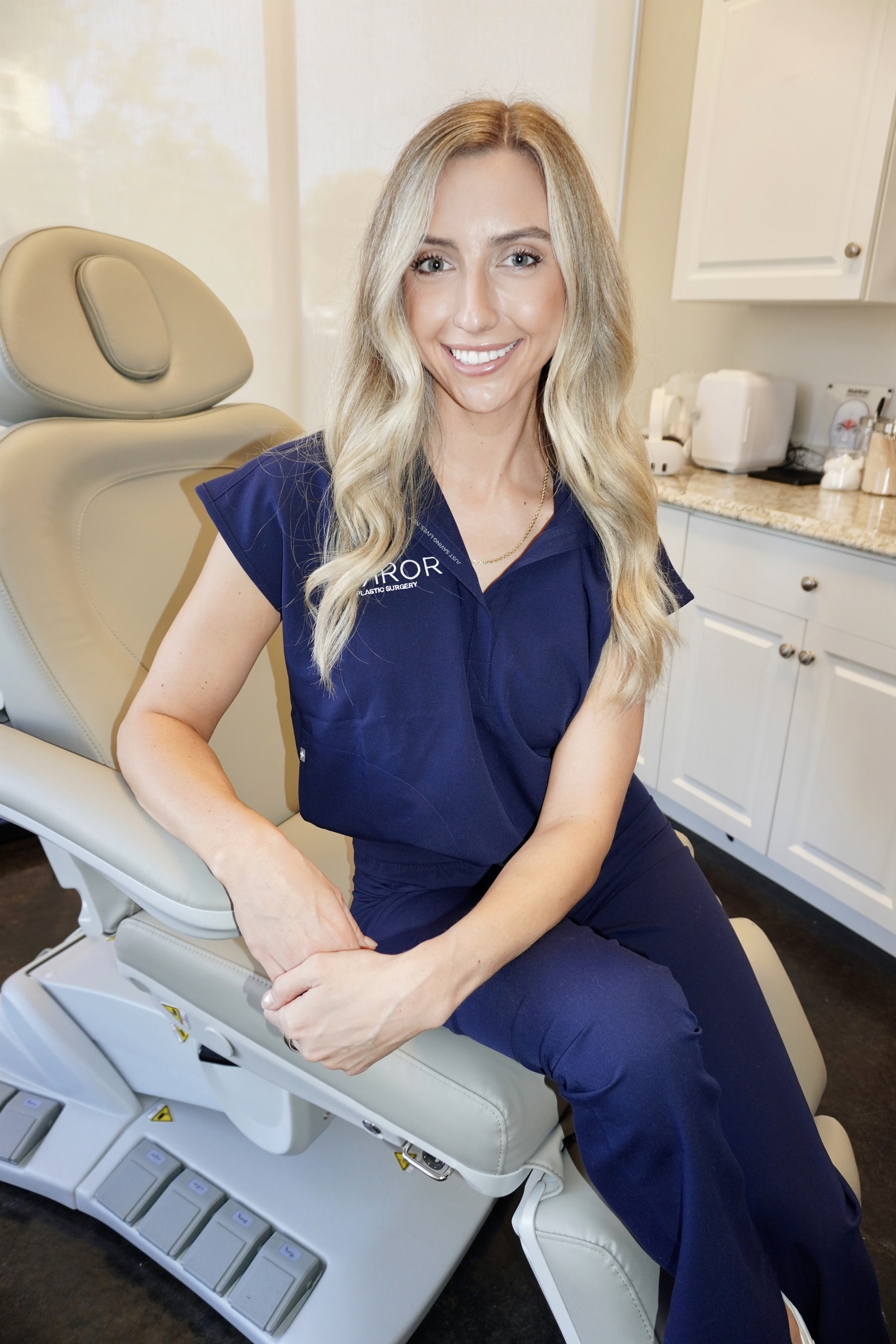 Every autoimmune peptide protocol at Mirror Plastic Surgery follows this sequence:
This model contrasts with online peptide retailers that provide no prescription, no baseline labs, no lot-matched COAs, and no clinical follow-up. It also differs from high-volume telemedicine platforms that may offer peptides without the depth of one-on-one evaluation that autoimmune complexity requires. The clinical oversight framework at Mirror Plastic Surgery follows standards established by Dr. Akash Chandawarkar, a Harvard-educated physician, Johns Hopkins-trained plastic surgeon, and fellowship-trained aesthetic surgeon. Ellie’s peptide protocols operate within this rigorous, evidence-referenced practice environment. Schedule a custom autoimmune peptide protocol review with Ellie to receive a baseline lab assessment and a plan tailored to your immune profile. Timelines and Maintenance for Autoimmune Peptide TherapyResponse timelines vary by peptide and by condition severity. Anti-inflammatory effects from KPV and BPC-157 may appear within two to four weeks, while deeper immune retraining, such as regulatory T cell expansion and restoration of self-tolerance, usually requires months.1
Most autoimmune patients need maintenance dosing rather than a single short course. A commonly described KPV protocol uses 8 weeks on followed by 8 weeks off, and many patients report gut improvements that last weeks to months after stopping. For those with active chronic inflammation, stopping therapy usually allows inflammatory markers to drift back toward pre-treatment levels.1 Ellie structures maintenance protocols around serial CRP and disease-activity reassessment instead of fixed calendar intervals. Conclusion: Safe Autoimmune Peptide Use with Clinical OversightThymosin Alpha-1, BPC-157, and KPV each have distinct risk profiles, contraindications, and monitoring requirements. None suits unsupervised self-administration in an autoimmune population. Verified sourcing, baseline immunophenotyping, and serial inflammatory-marker monitoring form the core of a safe protocol. Mirror Plastic Surgery’s concierge model provides what unregulated online sourcing cannot. Patients receive batch-tested peptides, individualized lab-guided protocols, and direct clinical access to Ellie Pranckevicius throughout treatment. Disclaimer: Peptide therapies discussed in this article are not FDA-approved for the treatment of autoimmune conditions. Results vary significantly between individuals based on genetics, disease activity, lifestyle, and protocol adherence. This article is for educational purposes only and does not constitute medical advice. Consult a licensed healthcare provider before initiating any peptide therapy. Start a supervised, lab-monitored peptide plan with Ellie at Mirror Plastic Surgery in St. Petersburg, FL, or remotely across the United States, to tailor therapy to your autoimmune profile. |
1 Results may vary from person to person. Editorial content, before and after images, and patient testimonials do not constitute a guarantee of specific results.
Peptide therapy is intended for wellness and optimization purposes and is not prescribed to diagnose, treat, cure, or prevent disease unless specifically stated. Many peptides are not FDA-approved and may be used off-label. Some have limited long-term safety data, with a potential for unknown risks, complications, or desensitization with prolonged use.


