
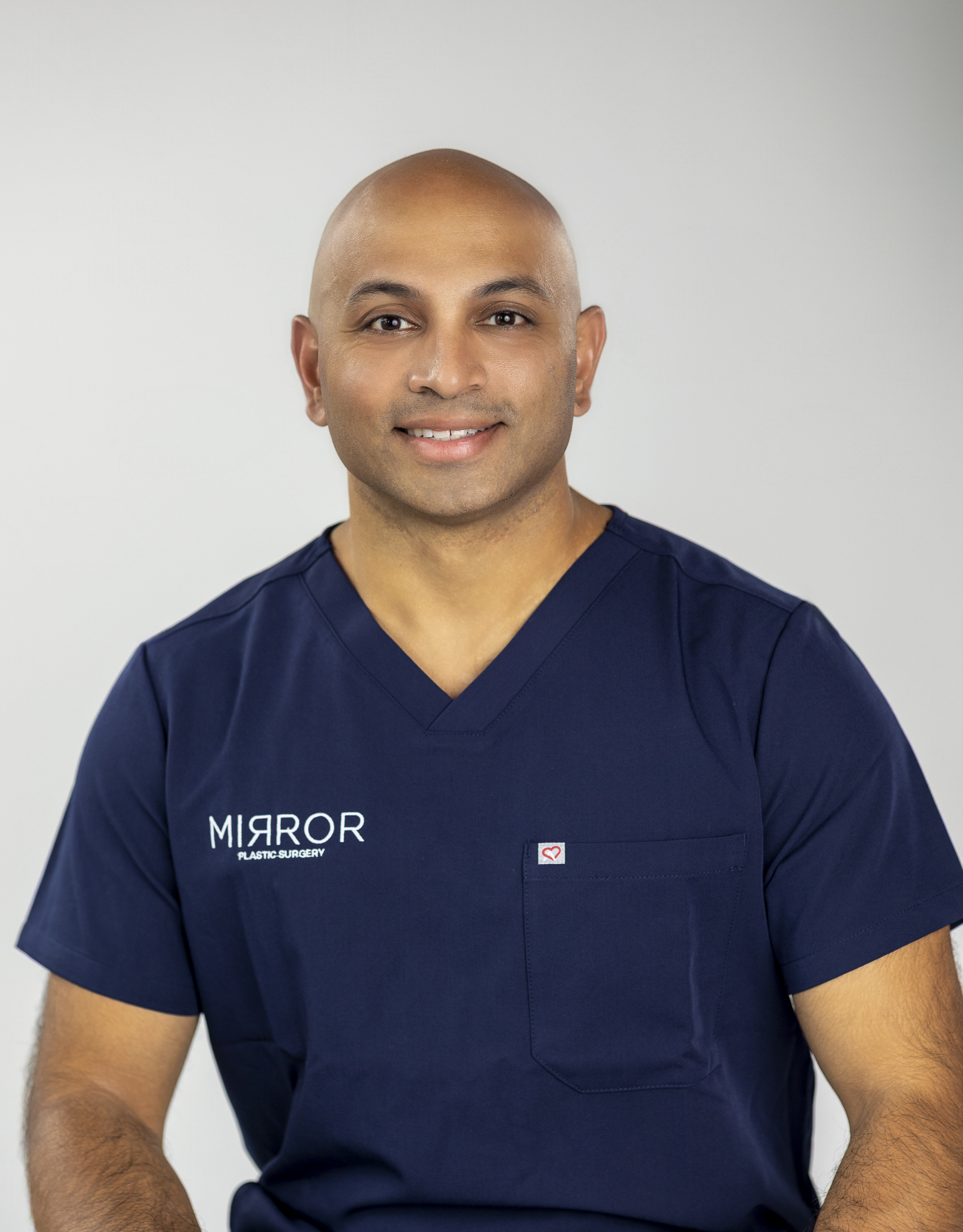
Written by: Dr. Akash Chandawarkar, Board Certified Plastic Surgeon, Mirror Plastic Surgery | Last updated: July 6, 2026
Key Takeaways for Functional Rhinoplasty
- Functional rhinoplasty restores nasal airflow by correcting structural issues such as a deviated septum, collapsed nasal valves, and enlarged turbinates.
- The procedure follows a safety-first, function-second, aesthetics-third hierarchy, with appearance changes occurring as a secondary result of improved breathing.
- Preoperative evaluation uses validated questionnaires, physical exams, nasal endoscopy, and CT imaging to pinpoint obstruction causes and determine insurance eligibility.
- Key surgical steps include anesthesia, incision placement, septal correction, cartilage grafting, internal and external valve repair, turbinate reduction, and intraoperative airflow assessment.
- Patients who want a detailed evaluation of nasal anatomy and breathing concerns can schedule a consultation at Mirror Plastic Surgery for personalized surgical planning.
Preoperative Evaluation for Breathing-Focused Nasal Surgery
Candidacy for functional rhinoplasty starts with a structured clinical workup. Patients complete validated symptom questionnaires, the NOSE and SNOT-20 instruments, which quantify obstruction severity and guide surgical planning. Physical examination includes anterior rhinoscopy, nasal endoscopy, and the modified Cottle maneuver to identify whether valve collapse is static, dynamic, internal, external, or combined. CT imaging maps septal deviation, turbinate hypertrophy, and sinus anatomy. Insurance coverage for reconstructive nasal surgery generally requires documentation of visible alar or lateral wall collapse on deep inspiration, audible improvement on the Cottle maneuver, and photographic evidence of valve compromise, all of which Dr. Akash documents during Mirror Plastic Surgery’s hour-long consultations. Patients must also be in stable overall health, be non-smokers or willing to stop well before surgery, and have completed facial skeletal growth.
Step-by-Step Functional Rhinoplasty Technique
The safety-first, function-second, aesthetics-third hierarchy guides every phase of surgery. Each decision, from incision placement to graft selection, aims to maximize airway improvement while keeping risk low.
- Anesthesia administration. Functional nasal procedures are most commonly performed under general anesthesia with a board-certified physician anesthesiologist to ensure complete patient comfort, eliminate movement, and allow precise surgical work. Mirror Plastic Surgery uses only board-certified physician anesthesiologists, which serves as a non-negotiable safety standard.
- Antiseptic preparation and draping. The surgical field is prepared and the patient is positioned to improve visualization of both the internal and external nasal structures.
- Incision placement. Posterior septal deviations are addressed through a closed endonasal incision that produces no external change. Anterior deviations or those causing external crookedness require a small columellar incision for an open approach that exposes the full septal framework.
- Septal correction. The mucoperichondrial flaps are elevated in the subperichondrial plane. When a severely deviated or dislocated septum cannot be corrected by standard septoplasty alone, functional rhinoplasty allows full mobilization, reshaping, removal, and reconstruction of the septum before reinsertion for a structurally sound result. The surgeon preserves the mucoperichondrium throughout dissection to reduce the risk of septal perforation.
- Cartilage harvesting. The choice of graft material affects long-term structural stability and complication risk. Autogenous cartilage is the graft material of choice over bone or synthetic implants because it has lower risk of resorption, infection, extrusion, and antigenic reaction. Donor sites include the posterior septum, ear, or rib. When autologous donor sites are limited, cadaveric tissue can supplement a patient’s own cartilage.
- Internal nasal valve repair with spreader grafts. Spreader grafts, which are thin strips of cartilage placed between the dorsal septum and upper lateral cartilages, widen the internal nasal valve and prevent alar collapse during forced inspiration. The open approach provides better visualization for precise placement.
- External nasal valve reinforcement. Alar batten grafts place curved cartilage pieces along the lateral nasal wall to prevent nostril collapse during inspiration. Lateral crural strut grafts support the full length of the lower lateral cartilage for greater stability when cartilage is weak or malpositioned.
- Turbinate management. Inferior turbinate reduction, performed through out-fracturing, submucous resection, or partial bone removal, increases the valve aperture and improves airflow when turbinate hypertrophy contributes to obstruction. This step is performed conservatively to preserve mucosal function.
- Intraoperative airflow assessment. Once grafts and sutures are in place, the surgeon evaluates the nasal airway for adequate support, symmetry, and reduced airflow resistance before proceeding to closure. Any asymmetry or residual collapse is corrected at this stage.
- Wound closure and splinting. Dissolvable sutures close internal incisions after graft placement, and external columellar sutures are removed at the first postoperative visit. Internal splints support the repaired structures during early healing.
The number and complexity of these steps influence how long a given surgery will take from anesthesia to closure.
How Long Does Functional Rhinoplasty Take?
Nasal valve surgery performed under general anesthesia typically lasts under one hour for isolated valve repair. Cases that combine septal reconstruction, bilateral valve grafting, and turbinate reduction often extend operative time to two to three hours, depending on anatomical complexity. Mirror Plastic Surgery performs one to two surgeries per day, in direct contrast to high-volume practices that may schedule five to ten cases daily. That schedule means Dr. Akash and the entire surgical team focus on one patient at a time throughout the procedure, the recovery room, and the early postoperative period.
What to Expect From Functional Rhinoplasty Pain and Comfort
Most patients describe postoperative discomfort as pressure and congestion rather than sharp pain. Patients receive prescriptions for pain medication and are instructed to use saline nasal sprays and antibiotic ointment during the early recovery period. In Tampa Bay’s warm, humid climate, patients should avoid strenuous outdoor activity, including running and water sports, for at least two to three weeks to prevent elevated blood pressure that can increase swelling and bleeding risk. Sleeping with the head elevated and avoiding nasal blowing during the first week are standard activity restrictions that significantly reduce discomfort.
Discuss your specific pain management plan and activity timeline with Dr. Akash before scheduling surgery.
How Functional Rhinoplasty Can Change Nose Shape
Functional rhinoplasty can create visible changes to nasal appearance, although those changes occur as a byproduct of structural correction rather than as the primary goal. Spreader grafts that widen a collapsed internal valve can slightly broaden the middle third of the nose. Septal reconstruction that straightens a severely deviated septum may reduce external crookedness. A septoplasty focused entirely on airflow produces no visible external change, while a combined functional and cosmetic rhinoplasty addresses both structure and appearance in a single operation.
Patients whose primary goal is breathing improvement should understand that grafts placed for airway function are sized and positioned for structural support, not cosmetic refinement. Patients who want both functional and cosmetic changes are candidates for combined rhinoseptoplasty, which Dr. Akash evaluates based on each patient’s anatomy.
Timeline for Functional Rhinoplasty Recovery
The first postoperative visit usually occurs at five to seven days for splint and suture removal. Many patients can return to work within one to two weeks, while full resolution of swelling can take up to one year. Breathing improvement does not occur immediately, because internal swelling can temporarily worsen airflow before it improves over the following weeks to months. Multiple studies have shown that functional rhinoplasty can produce significant and sustained improvement in nasal obstruction lasting at least 12 months.1 Tampa-area patients should plan to avoid intense sun and heat during the first month, because vasodilation from heat exposure can prolong swelling.
Septoplasty vs Functional Rhinoplasty
Septoplasty focuses entirely on improving airflow by correcting an off-center, twisted, or irregular septum and does not change the external appearance of the nose. It suits patients whose septum is the only source of obstruction and whose nasal valves and turbinates remain structurally sound. Functional rhinoplasty is indicated when obstruction involves the nasal valves, when septal deviation is so severe that standard septoplasty cannot achieve adequate correction, or when external nasal crookedness accompanies internal dysfunction.
Functional rhinoplasty typically combines septoplasty or nasoseptal reconstruction with inferior turbinate reduction and cartilage grafts, including spreader grafts, alar batten grafts, lateral crural strut grafts, or columellar strut grafts, to restore structural airway support. Primary rhinoplasty is considered reconstructive and medically necessary when nasal airway obstruction is caused by nasal bone and septal deviation that cannot be corrected by septoplasty alone.
Key Factors to Compare When Choosing a Surgical Plan
Open versus closed approach. The closed approach places all incisions inside the nostrils, leaves no external scar, and suits isolated posterior septal deviations or minor valve repairs. The open approach adds a small columellar incision, provides direct visualization of the entire nasal framework, and is preferred for complex septal reconstruction, bilateral valve grafting, or cases that require precise tip work.
Graft materials. The choice of graft material directly affects long-term structural stability and complication risk. Autogenous cartilage from the septum, ear, or rib is preferred over synthetic implants because it integrates naturally with surrounding tissue and has lower rates of resorption, infection, extrusion, and immune reaction. When a patient’s own cartilage supply is limited, such as after previous nasal surgery, cadaveric cartilage serves as a secondary option that still avoids the risks associated with synthetic materials.
Turbinate management strategy. Conservative turbinate reduction preserves mucosal moisture and cilia function. Aggressive resection increases the risk of empty nose syndrome, a permanent condition of paradoxical nasal obstruction despite open airways. Dr. Akash’s anatomical approach targets the minimum tissue removal needed to achieve adequate airflow.
Anesthesia choice. General anesthesia with a board-certified physician anesthesiologist is the standard for combined functional procedures. Isolated LATERA implant placement for lateral wall support can be performed under local anesthesia in an office setting in under one hour. Mirror Plastic Surgery’s safety protocols require anesthesia decisions to be made on a patient-specific basis.
Expert Context: Dr. Akash’s Training and Experience
Dr. Akash completed his undergraduate studies in neuroscience and nuclear engineering at MIT before earning his M.D. with Honors from Harvard Medical School through the Harvard-MIT Division of Health Sciences and Technology. His seven-year integrated plastic and reconstructive surgery residency at Johns Hopkins University included rotations at the Johns Hopkins Hospital, the R Adams Cowley Shock Trauma Center, and the Curtis National Hand Center. He then completed an aesthetic surgery fellowship at the Manhattan Eye, Ear and Throat Hospital (MEETH), one of the most competitive programs in the country for advanced facial surgery training.
A Stanford University Biodesign Innovation Fellowship further distinguishes his background in surgical technology development. Dr. Akash is a leading researcher on the application of artificial intelligence for objective analysis in rhinoplasty and has presented at The Rhinoplasty Society Annual Meeting. He has been named to Newsweek’s America’s Best Plastic Surgeons list for two consecutive years, including 2025. He is board certified by the American Board of Plastic Surgery and holds hospital privileges that provide an additional safety net in the rare event of a surgical complication.
Reader Checklist: Questions to Ask Before Choosing a Surgeon
- Is the surgeon board certified by the American Board of Plastic Surgery or the American Board of Otolaryngology with subspecialty training in rhinoplasty?
- Does the facility hold accreditation from a recognized body such as AAAASF or AAAHC?
- Will a board-certified physician anesthesiologist, not a CRNA alone, administer anesthesia?
- How many surgeries does the practice perform per day, and who monitors your recovery immediately after surgery?
- Can the surgeon provide before-and-after examples of functional cases with documented breathing outcomes, not only cosmetic results?
- Red flag: any practice that cannot clearly explain the safety-function-aesthetics hierarchy, rushes the consultation, or cannot document the specific structural cause of your obstruction before recommending surgery.
Bring this checklist to your appointment with Dr. Akash at Mirror Plastic Surgery’s St. Petersburg location so you can review each point together.
Frequently Asked Questions
How much time off work is needed after functional rhinoplasty?
Most patients return to desk-based or remote work within one to two weeks of surgery, once the external splint is removed and acute swelling subsides. Patients in physically demanding occupations, such as construction, athletics, or patient-facing healthcare, typically require three to four weeks before resuming full duties. Tampa-area patients should factor in heat exposure, because outdoor work environments that elevate core body temperature can prolong swelling and should be avoided for at least three to four weeks after surgery.
When can exercise be resumed after functional rhinoplasty?
Light walking is generally permitted within the first week. Moderate cardiovascular activity, including cycling, swimming, and yoga, is typically cleared at three to four weeks once the risk of elevated blood pressure causing postoperative bleeding has passed. High-impact activities such as running, contact sports, and resistance training are usually restricted for six weeks. Dr. Akash provides individualized clearance based on each patient’s healing progress at scheduled postoperative visits rather than using a single fixed timeline.
How long do the breathing improvements from functional rhinoplasty last?
Structural corrections achieved through cartilage grafting and septal reconstruction are designed to be permanent.1 Spreader grafts, batten grafts, and lateral crural strut grafts integrate with the surrounding tissue and maintain their supportive function long-term.1 Swelling continues to resolve for up to 12 months, so the full breathing benefit is experienced gradually rather than immediately after surgery. Factors that can affect long-term outcomes include scar tissue formation, recurrent allergic rhinitis, and natural aging of nasal soft tissue, all of which Dr. Akash discusses during the preoperative consultation so patients have realistic expectations.
Is functional rhinoplasty covered by insurance?
Coverage depends on the specific insurer, the documented diagnosis, and whether conservative medical management was attempted first. Insurers generally require evidence of persistent nasal obstruction despite at least four weeks of medical therapy such as nasal steroid sprays, documented visible valve collapse on physical examination, and photographic evidence of the structural cause. The cosmetic component of any combined procedure is not covered. Mirror Plastic Surgery’s team assists patients in gathering the clinical documentation needed to support a coverage determination, although final authorization decisions rest with the insurer.
What makes Mirror Plastic Surgery different from a high-volume nasal surgery practice?
Mirror Plastic Surgery’s one-to-two-procedure daily limit, mentioned earlier, is a deliberate patient safety decision that ensures Dr. Akash and the entire care team maintain full focus on each patient before, during, and after surgery, rather than rotating between operating rooms. Consultations run up to one hour and include thorough anatomical assessment, imaging review, and honest discussion of realistic outcomes, which provides a level of attention that compressed schedules cannot match.
Conclusion: Choosing Functional Rhinoplasty With Confidence
Functional rhinoplasty is a structurally complex procedure that requires precise preoperative diagnosis, a clear surgical sequence, and a surgeon whose training spans both the functional and reconstructive dimensions of nasal anatomy. The ten steps outlined above, from anesthesia through intraoperative airflow assessment to wound closure, reflect the evidence-based approach that Mirror Plastic Surgery applies to every nasal airway case. Safety remains non-negotiable. Function guides every technical decision. Aesthetics follow as a natural consequence of restoring correct anatomy.
Tampa Bay adults who have struggled with chronic nasal obstruction and want a thorough, unhurried evaluation from a Johns Hopkins-trained, MEETH fellowship-trained surgeon named to Newsweek’s America’s Best Plastic Surgeons for two consecutive years have a clear next step. Book a consultation with Dr. Akash at Mirror Plastic Surgery, 780 4th Ave S, St. Petersburg, FL 33701, and receive the anatomical clarity your decision deserves.
1 Results may vary from person to person. Editorial content, before and after images, and patient testimonials do not constitute a guarantee of specific results.