
Written by: Dr. Akash Chandawarkar, Board Certified Plastic Surgeon, Mirror Plastic Surgery | Last updated: July 10, 2026
Key Takeaways for Tampa Hair Transplant Patients
- High-volume clinics often chase graft counts instead of focusing on physician involvement, donor preservation, and long-term natural results.
- Natural outcomes rely on micro-irregular hairlines, conservative density gradients, preserved donor reserves, and age-appropriate planning.
- Direct physician involvement in hairline design, incisions, and graft placement helps prevent unnatural results and donor damage.
- Responsible donor management limits extraction to protect long-term reserves and maintain a natural appearance over 5 to 10 years.1
- Schedule your personalized consultation at Mirror Plastic Surgery for a physician-led evaluation designed for undetectable, lasting results.
How Natural Hair Transplant Results Are Defined in 2026
Success in modern hair restoration now centers on how undetectable the result looks in real life. By 2026, success is measured by high-fidelity restoration, not by graft count or surface coverage. Four evidence-based criteria define this standard.
First, an undetectable hairline uses a micro-irregular frontal edge built with single-hair grafts placed at 10 to 30 degree angles. The design respects age-consistent temple recession instead of creating an artificially straight or aggressively low line. Research published in Aesthetic Plastic Surgery found that irregular hairline patterns significantly enhance perceived naturalness.
That irregular edge alone does not guarantee a natural look. The density behind the hairline must also mimic how hair grows in nature.
Second, conservative density creates a gradual gradient instead of a dense wall. Optimal distribution uses about 35 follicular units per cm² in the transition zone and 50 to 55 FU/cm² behind it.
Third, preserved donor reserves protect future options. The average person has about 12,500 follicular units in the donor area, and residual donor density must remain at 40 to 50 FU/cm² to keep that area looking satisfactory.
Fourth, long-term aging compatibility keeps the hairline natural at ages 50 to 60 as native hair continues to thin. Hairlines designed for 30-year-olds often look artificial later, so age-appropriate planning functions as a clinical requirement rather than a stylistic preference.
Step 1: Confirm Direct Surgeon Involvement in Every Critical Step
The most consequential factor in any hair transplant is who performs the critical steps. The physician should personally design the hairline, create recipient-site incisions, and directly supervise graft harvesting and anesthesia to control angle, density, and donor protection. Technician-only procedures raise the risk of unnatural results and donor damage.
Use this checklist when evaluating any Tampa practice. Each question focuses on a specific part of surgeon involvement that directly affects your long-term result.
- Does the surgeon personally draw and approve the hairline before any incision is made?
- Does the surgeon create all recipient-site incisions and control angle, depth, and density?
- Is the surgeon present and actively involved throughout extraction and implantation, not only at the start?
- How many procedures does the surgeon perform per day? More than two usually dilutes attention.
- Are technicians performing any steps without direct physician supervision?
- Can the clinic provide unedited video documentation of results that shows graft angle and donor area?
Schedule your physician-led evaluation with Dr. Akash to experience direct surgeon involvement from the first conversation.
Step 2: Compare FUE Techniques and 2025–2026 Planning Advances
FUE accounts for more than 85% of male hair transplant procedures globally as of 2025. Patients favor FUE for the lack of a linear scar and its suitability for shorter hairstyles. Within FUE, several refinements now shape outcomes.
Sapphire FUE became a leading refinement during 2025 and 2026, allowing finer incisions, faster healing, and less trauma to surrounding tissue compared with standard steel blades. This precision matters most in the frontal zone, where single-hair units must sit at exact angles. DHI using the Choi Implanter Pen shortens graft time outside the body by combining extraction and implantation. This approach can improve survival rates and enhance the natural appearance at the hairline edge.
Beyond refinements in hands-on technique, pre-operative planning has also advanced.
AI-assisted planning tools in 2026 can analyze scalp angle, density, and future hair-loss projection to simulate outcomes before the first incision. These tools support planning while leaving artistic judgment and real-time decisions with qualified surgeons. AI assists with donor density measurement, trichoscopic analysis, facial symmetry assessment, hairline simulation, and graft distribution modelling, but it cannot replace surgeon judgment on aesthetics and aging.
Technique names function mainly as marketing when physician oversight is weak. Graft survival depends more on surgeon skill and team handling than on the specific tool or technique label. Elite surgeons consistently achieve low transection rates, and average clinics show higher rates. That difference directly determines how many viable grafts a patient actually receives.
Step 3: Plan for 5–10-Year Outcomes and Donor Preservation
Donor hair behaves like a finite, non-renewable biological asset. The permanent donor area contains a limited lifetime supply of approximately 6,000 to 8,000 grafts, so responsible surgeons cap individual FUE sessions at 2,000 to 3,000 grafts to protect the donor bank and avoid overharvesting.
Safe harvesting is capped at 40 to 50% of total donor capacity over a lifetime to maintain a natural donor area. Within that lifetime limit, per-session density should stay at 20 to 30 grafts per cm² to prevent visible thinning in any single region. Contemporary FUE practice further refines this by limiting extraction to 10 to 20% of baseline follicular unit density per session, with uniform distribution and tapered margins, to preserve long-term donor integrity.
Transplanted grafts remain permanent because donor-zone follicles resist DHT, while surrounding native hair continues to thin.1 Long-term analyses show that transplanted follicles in the frontal and mid-scalp zones can maintain high density over many years when medical management continues.1 Oral finasteride is prescribed always or often by 69.1% of ISHRS members, according to the 2022 ISHRS Practice Census. Oral minoxidil prescriptions have also increased, reflecting the profession’s view that medication and surgery belong in the same long-term plan.
Step 4: Spot Red Flags in High-Volume Hair Transplant Clinics
The 2025 ISHRS Practice Census reports that 6.9% of all hair transplants performed in 2024 were repair procedures, up from 5.4% in 2021, with hairline design mistakes causing about 20% of corrective surgeries. Many of these repairs trace back to predictable warning signs.
Watch for these warning signs during your consultation. If a clinic shows two or more of these patterns, it likely prioritizes volume over individualized care.
- Rushed consultations: Any evaluation shorter than 45 to 60 minutes cannot fully assess donor density, hair-loss progression, facial proportions, and long-term planning needs.
- Inflated graft counts: A clinic quoting “6,000 hairs” usually offers 2,500 to 3,000 grafts, and some providers split multi-hair grafts into single-hair grafts to inflate counts and fees.
- Overharvesting risk: Excessive extraction density or repeated sessions without proper donor assessment can cause visible thinning, a moth-eaten look, or permanent donor depletion that harms 5- to 10-year outcomes.
- Technician-led procedures: Clinics performing five to ten surgeries per day cannot provide the level of physician oversight discussed in Step 1.
- No medical management discussion: Clinics that ignore finasteride, minoxidil, or biological support are not planning for long-term stability.
- Marketing-only photo evidence: High-quality, continuous video footage is needed to verify graft angle, growth direction, and donor scarring, because still photographs can be altered with AI or editing software.
Consultation Scorecard: How to Evaluate Any Tampa Hair Clinic
Bring this scorecard to every consultation. A trustworthy clinic answers each question directly and without hesitation, and vague replies or deflection to marketing materials signal a problem.
- Artistry: Will you personally design my hairline, and can you explain your reasoning based on my facial proportions, age, and ethnicity?
- Physician involvement: Which steps will you perform personally, and which will you delegate to technicians?
- Donor assessment: What is my current donor density, how many lifetime grafts do I have available, and how many will this session use?
- Session limits: How many procedures do you perform per day, and will I be your only or primary patient?
- Technique rationale: Why are you recommending FUE, Sapphire FUE, or DHI for my specific anatomy rather than using a default approach?
- Long-term planning: How does this session fit into a 10-year plan that accounts for continued hair loss?
- Medical management: What medications or biological therapies do you recommend before and after surgery, and why?
- Follow-up protocol: What does post-operative monitoring include at 3, 6, and 12 months?
- Transection rate: What is your average transection rate, and how do you measure it?
- Repair experience: Have you performed corrective procedures, and can you show those outcomes?
Why Mirror Plastic Surgery’s Concierge Model Protects Your Donor and Result
Mirror Plastic Surgery was built around the same standards described in this guide. Dr. Akash, a Harvard Medical School graduate and Johns Hopkins-trained plastic surgeon, completed an aesthetic surgery fellowship at the Manhattan Eye, Ear and Throat Hospital (MEETH). Named to Newsweek’s America’s Best Plastic Surgeons list for two consecutive years, he applies a safety-first, evidence-based philosophy to hair restoration and every other procedure at the practice.
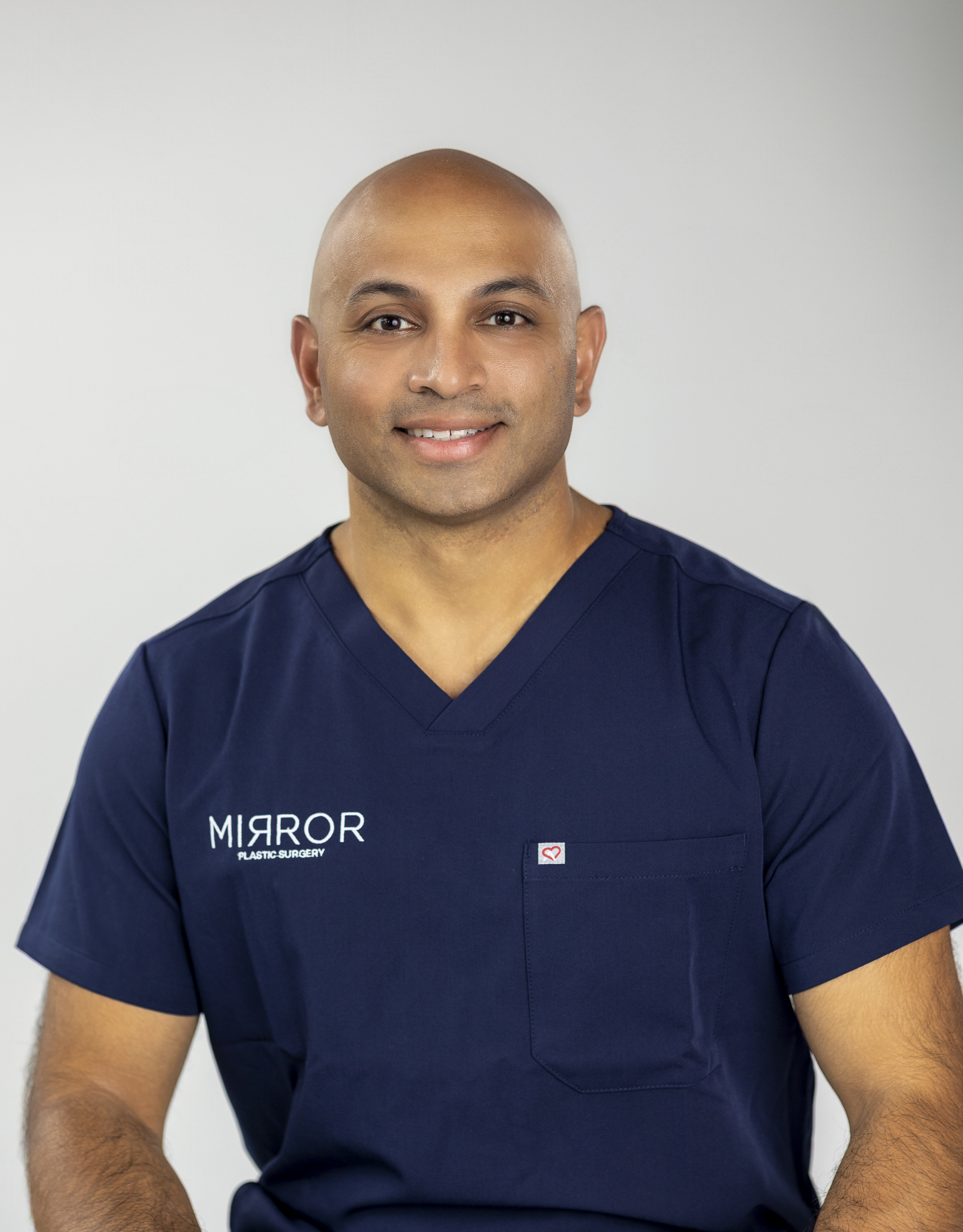
The concierge model implements the one-to-two-patient limit discussed earlier. This structure keeps Dr. Akash focused on a single patient during hairline design, recipient-site creation, and graft placement. Initial consultations can last up to an hour and cover donor density assessment, facial proportion analysis, Norwood staging, long-term progression planning, and medical management.
The practice follows a clear hierarchy: safety first, function second, aesthetics third. Donor preservation falls under safety. Correct graft angle and density support function. An undetectable, age-appropriate result follows when safety and function receive proper attention.
Book a consultation with Dr. Akash to receive a personalized, hour-long evaluation that covers your donor profile, long-term hair-loss trajectory, and a surgical plan designed to remain natural for decades.
Frequently Asked Questions About Natural Hair Transplants
What creates the most natural-looking hair transplant?
The most natural-looking hair transplant comes from a physician who accounts for age, facial proportions, ethnicity, hair characteristics, and future hair loss. Technique names alone do not define natural results. A natural outcome uses a micro-irregular hairline with single-hair grafts at the leading edge, a gradual density gradient, graft angles that match native hair, and a preserved donor area without visible thinning. Sapphire FUE and DHI can support these goals, but the surgeon’s judgment and direct involvement in every critical step determine whether the result stays undetectable. At Mirror Plastic Surgery, Dr. Akash personally designs every hairline and creates all recipient-site incisions so artistry and anatomy guide each decision.
What does a hair transplant look like after 10 years?
Transplanted follicles from the permanent donor zone resist DHT and usually remain for life. A 10-year retrospective analysis presented at the ISHRS World Congress found that transplanted follicles in the frontal and mid-scalp zones maintained more than 90% of their original density at the decade mark.1 Native hair around those grafts continues to thin, which makes age-appropriate hairline design and ongoing medical management with finasteride or minoxidil essential. A hairline placed too low or too aggressively in a patient’s 30s can look isolated and unnatural by their 50s as native hair recedes behind it. Long-term success depends on planning that anticipates this progression from the first session and preserves enough donor grafts for future refinements.
How can I avoid donor overharvesting?
Avoiding overharvesting starts with a thorough pre-operative donor assessment. The surgeon should use trichoscopy or high-resolution scalp analysis to measure follicular density, hair shaft diameter, and safe extraction zones. Responsible surgeons limit per-session extraction to 10 to 20% of baseline follicular unit density, cap lifetime harvesting at 40 to 50% of total donor capacity, and spread extractions evenly to prevent patchiness. Red flags include clinics that quote very high graft numbers without discussing donor limits, schedule multiple large sessions in quick succession, or skip medical therapy in the plan. At Mirror Plastic Surgery, donor management is treated like long-term capital allocation, so conservative, strategic extraction guides every session.
How should I think about cost for 3,000 FUE grafts in the USA?
Mirror Plastic Surgery does not publish fixed pricing because anatomy, donor density, hair characteristics, and surgical complexity vary widely. The team provides a personalized quote after a complete evaluation. Price alone works poorly as a selection criterion. The cost of corrective surgery after overharvesting or poor hairline design often exceeds any savings from a lower-cost, high-volume clinic. The consultation at Mirror Plastic Surgery gives patients a clear, transparent picture of what their case requires and why.
Conclusion: Use a Clear Framework for Your Tampa Hair Transplant
Choosing a hair transplant clinic in Tampa creates permanent consequences. This framework of verifying physician involvement, reviewing technique rationale, assessing donor management, and spotting high-volume red flags gives you practical tools to evaluate any practice on the factors that shape 5- to 10-year outcomes. Natural, undetectable results come from physician-led artistry, conservative donor stewardship, and planning that respects how a face and hairline age together.
Mirror Plastic Surgery’s concierge model, led by Dr. Akash, is designed to meet every standard in this guide. The practice limits daily surgeries, offers hour-long consultations, and maintains direct physician involvement at every critical step. A safety-first philosophy treats donor preservation with the same seriousness as the visible aesthetic result.
Book a consultation with Dr. Akash to begin a personalized evaluation and receive a long-term hair restoration plan designed for results that stay natural for decades.1
1 Results may vary from person to person. Editorial content, before and after images, and patient testimonials do not constitute a guarantee of specific results.