
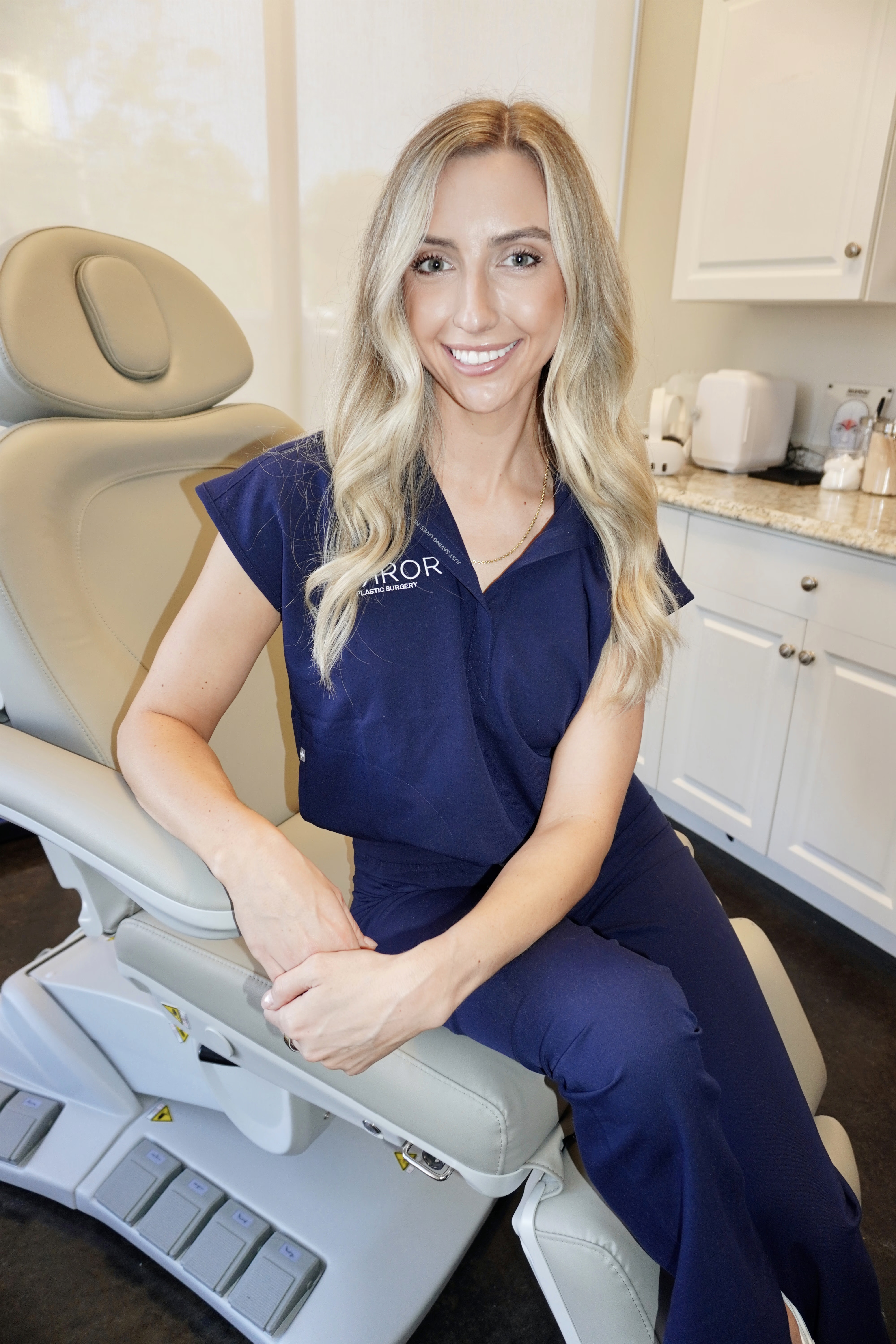
Written by: Ellie Pranckevicius, FNP-BC, Aesthetic Nurse Practitioner & Aesthetic Injector | Facial Restoration & Regenerative Injectable Specialist, Mirror Plastic Surgery | Last updated: September 2, 2026
Key Takeaways
- Hormone optimization is a medically supervised approach that combines lifestyle changes and targeted treatments to bring hormone levels into an ideal range for your age, sex, and health goals.
- Common symptoms of hormonal imbalance include unexplained fatigue, weight gain, low libido, brain fog, mood swings, poor sleep, and hair thinning, yet many patients are told their standard bloodwork is “normal.”
- Comprehensive testing that measures total and free testosterone, estradiol, thyroid hormones, cortisol, insulin, and other markers supports accurate diagnosis and personalized treatment planning.
- Lifestyle interventions such as quality sleep, resistance training, balanced nutrition, and stress management can significantly improve hormone levels and should be the first step before considering medical therapies.1
- Ready to explore a personalized, medically supervised hormone evaluation? Schedule your consultation at Mirror Plastic Surgery to begin your journey toward lasting results.
Signs of Hormonal Imbalance: When Your Body Sends a Warning
Hormones act as the body’s chemical messengers and regulate nearly every physiological process. Even small deviations from normal hormone levels can have significant effects across multiple body systems, including mood, sleep, metabolism, skin, and reproductive function. These symptoms can also be caused by other conditions, which makes objective testing essential.
Common signs that your hormones may be out of balance include:
- Unexplained, persistent fatigue disproportionate to your activity level or sleep
- Weight gain, especially around the midsection, or difficulty losing weight despite consistent effort
- Low libido or sexual dysfunction
- Brain fog, poor concentration, or memory issues
- Mood swings, irritability, anxiety, or depression
- Poor sleep, insomnia, or night sweats
- Hot flashes (in women) or night sweats linked to estrogen fluctuation
- Hair thinning or loss
- Decreased muscle mass or strength
- Erectile dysfunction (in men) or irregular periods (in women)
In men, sexual and reproductive symptoms such as low libido, fewer spontaneous erections, and reduced ejaculate volume carry more diagnostic weight for androgen deficiency than nonspecific symptoms like fatigue alone. In women, menstrual irregularities, including cycles that are too short, too long, too heavy, or absent, are among the most clinically meaningful early indicators of hormonal disruption.
The First Step: Natural Strategies for Hormone Optimization
Lifestyle interventions form the critical first line of defense for hormone health. The Endocrine Society identifies obesity, type 2 diabetes, opioid use, and excessive exercise as common reversible causes of functional hypogonadism and recommends treating the underlying condition before initiating testosterone therapy. This principle applies broadly by prioritizing modifiable causes before medications.
Sleep: A University of Chicago study published in JAMA found that restricting healthy young men to 5 hours of sleep per night for one week reduced daytime testosterone by 10–15%. That effect is equivalent to aging a decade. The National Sleep Foundation and the American Academy of Sleep Medicine recommend 7–9 hours per night for adults. Approximately 70% of daily growth hormone secretion occurs during slow-wave sleep, so both sleep quality and duration influence hormone production.
Exercise: A 2021 meta-analysis examining 32 studies found that resistance training lasting 4 to 12 weeks increased total testosterone by a weighted mean of 49.1 ng/dL in previously sedentary men with obesity.1 Heavy compound lifts at 70–85% of one-rep max produce the largest acute testosterone response. A randomized trial found that HIIT increased free testosterone by 17.1%, while moderate-intensity continuous training showed no significant change.1
Nutrition: A balanced diet rich in whole foods, healthy fats, and adequate protein supports hormone production and metabolic health. Protein intake of 1.6 to 2.2 g/kg/day preserves lean mass during a caloric deficit. Vitamin D, zinc, and magnesium can support baseline hormone production in deficient individuals. Supplements work best alongside medical evaluation rather than as a replacement.
Stress Management: One night of total sleep deprivation raised evening cortisol by 37–45% the following day. This spike disrupts the HPA axis and creates a self-reinforcing cycle of poor sleep and elevated cortisol. Chronic psychological stress suppresses reproductive hormone production and worsens insulin resistance. Mindfulness, meditation, and structured breathing exercises provide evidence-supported tools for cortisol management.
Key Takeaway: In obese men with functional hypogonadism, weight loss of 5–10% often restores testosterone to the normal range.1 Many people experience meaningful symptom improvement from these lifestyle changes alone.
Medical Treatments: When Lifestyle Changes Are Not Enough
Some patients continue to experience symptoms despite diligent lifestyle efforts. In those cases, medical interventions guided by comprehensive testing can help. A personalized protocol built on accurate data replaces guesswork with targeted care.
The Importance of Comprehensive Hormone Testing
Standard annual bloodwork typically includes only TSH and a basic metabolic panel, which misses most hormonal imbalances. A comprehensive hormone panel should include:
- Total and Free Testosterone
- Estradiol
- LH and FSH
- SHBG (Sex Hormone-Binding Globulin)
- TSH, Free T3, and Free T4
- Cortisol (AM draw)
- PSA (for men over 40)
- Fasting insulin, fasting glucose, and HbA1c
Timing affects accuracy. The American Urological Association recommends diagnosing low testosterone only after two total testosterone measurements taken on separate occasions, both conducted in an early morning fashion, which is a Strong Recommendation at Evidence Level Grade A. A single low reading does not support a diagnosis or treatment decision. The AUA uses a total testosterone level below 300 ng/dL as a reasonable cut-off to support the diagnosis of low testosterone in men when combined with symptoms, so both lab values and clinical presentation matter.
Bioidentical Hormone Replacement Therapy (BHRT)
Bioidentical hormones are chemically identical to the hormones produced by the human body. 17β-oestradiol and micronized progesterone are structurally identical to endogenous hormones and are believed to have a more favorable cardiovascular risk profile than synthetic alternatives, while synthetic progestins such as medroxyprogesterone acetate may blunt estrogen’s vascular benefits.
The regulatory landscape shapes safe prescribing. The FDA states that compounded drugs, including compounded bioidentical hormones, do not undergo premarket review for safety, effectiveness, or quality, and the agency is not aware of credible scientific evidence supporting claims that compounded bioidentical hormones are safer or more effective than FDA-approved menopausal hormone therapies. FDA-approved bioidentical options such as transdermal estradiol and micronized progesterone represent the standard of care and are generally preferred when available. The AUA similarly recommends prescribing commercially manufactured testosterone products rather than compounded testosterone when possible.
Regulators continue to update safety guidance. In November 2025, the FDA proposed labeling changes to remove risk statements about cardiovascular diseases, breast cancer, and probable dementia from the Boxed Warnings for menopausal hormone therapies, reflecting a comprehensive reassessment of the evidence since the Women’s Health Initiative trials. For more on how bioidentical and synthetic hormones compare in clinical practice, ask our team during your consultation.
Peptide Therapy: An Emerging Frontier
Peptide therapy expands the toolkit for hormone optimization and metabolic support. Peptides like Sermorelin and Ipamorelin stimulate the body’s own growth hormone production, which supports muscle retention, recovery, and metabolic health. GLP-1 and newer GLP-3R peptides support weight management and address insulin resistance with a potentially more favorable side-effect profile than older formulations. NAD+ targets cellular mitochondria for energy production and anti-aging effects, while PT-141 addresses libido and sexual function.
Regulation of peptides varies by compound and indication, so sourcing and medical supervision become crucial. At Mirror Plastic Surgery, the team builds personalized peptide protocols supported by in-depth lab analysis and sources from providers with rigorous batch testing. This approach contrasts with unverified online retailers where product purity and dosing accuracy cannot be confirmed.
Explore peptide therapy with a personalized consultation to see whether these treatments fit your health profile and goals.
Is Hormone Optimization Safe?
Hormone optimization carries potential risks, similar to any medical treatment. Safety improves when a qualified provider uses proper testing, appropriate dosing, and ongoing monitoring.
For testosterone therapy in men, the AUA recommends that clinicians measure hemoglobin and hematocrit prior to offering testosterone therapy and inform patients about the increased risk of polycythemia. Clinicians should also inform testosterone-deficient patients that low testosterone is a risk factor for cardiovascular disease, while acknowledging that current evidence does not definitively show whether testosterone therapy increases or decreases the risk of cardiovascular events.
For women, a 2026 real-world cohort study of approximately 111 million patients found that postmenopausal HRT initiated within one year after menopause diagnosis was associated with lower hazards of several conditions, including type 2 diabetes, cardiovascular disease, compression fractures, breast cancer, colorectal cancer, and venous thromboembolism, in women who experienced menopause at age 60 or younger. The authors still emphasize individualized risk-benefit assessment. The North American Menopause Society endorses initiating HRT in women under age 60 or within 10 years of menopause onset.
Unregulated online products present a different risk category. Without third-party batch testing, there is no assurance of contents, concentration, or sterility. A qualified provider orders baseline labs, reviews your full medical history, monitors progress at regular intervals, and adjusts protocols based on objective data. For a deeper look at the safety profiles of specific bioidentical hormones, see our article on Bioidentical Hormone Therapy Results: Week-by-Week Timeline.
Insurance and Costs: What to Expect With Hormone Care
Insurance coverage for hormone optimization varies by treatment type, medical indication, and individual plan. Understanding these basics helps you plan financially before starting therapy.
As of 2026, testosterone replacement therapy for clinically diagnosed hypogonadism, using the clinical threshold for hypogonadism mentioned earlier with symptoms, is covered by approximately 85% of major insurers. Insurance typically covers TRT medication only when the patient meets FDA-approved criteria for clinical hypogonadism, rather than for general aging, fatigue, or athletic enhancement, and prior authorization may be required.
FDA-approved HRT such as oral estradiol, estradiol patches, and oral micronized progesterone is typically covered by commercial insurance plans and Medicare Part D, though the specific tier, prior authorization requirements, and copay vary by plan. Compounded bioidentical hormones are generally excluded from coverage and are almost never reimbursed. Most peptide therapies, particularly those used for anti-aging, wellness, or performance enhancement, are considered elective and are typically cash-pay, although a few FDA-approved peptides prescribed for specific medical conditions may be covered.
Medically prescribed hormone therapy qualifies for FSA and HSA reimbursement when treating a diagnosed condition with proper documentation. Patients should contact their insurer directly to confirm formulary placement, prior authorization requirements, and copay tiers before beginning treatment. Mirror Plastic Surgery provides personalized quotes during consultation based on each patient’s unique situation and goals.
How to Talk to Your Doctor: A Checklist for Your Consultation
Arriving prepared to a hormone consultation leads to clearer communication and better outcomes. The following questions help your provider gather the information needed to build an accurate, personalized protocol:
- “What specific tests will I need, and what are we looking for?”
- “What are the risks and benefits of the treatments you are recommending?”
- “How will we monitor my progress and adjust my protocol?”
- “Are there any lifestyle changes I should make first?”
- “What is your experience with this specific treatment, including peptide therapy?”
- “How do you distinguish between ‘normal’ lab values and what is optimal for me?”
A qualified provider listens, explains the physiology behind each recommendation in plain language, and prioritizes your long-term results. Mirror Plastic Surgery maintains a concierge philosophy and tells patients when a service or product is not yet necessary for them.
Conclusion: Your Path to Feeling Like Yourself Again
Hormone optimization functions as a personalized, ongoing process rather than a single intervention. It begins with recognizing symptoms that standard medicine may have dismissed and continues through comprehensive testing that goes beyond routine bloodwork. Your plan may include lifestyle changes, FDA-approved hormone therapy, or medically supervised peptide protocols tailored to your physiology and goals.
The quality of supervision often determines whether you achieve meaningful results. At Mirror Plastic Surgery in St. Petersburg, FL, board-certified practitioners with backgrounds in critical care, aesthetics, and advanced clinical medicine provide concierge-level, evidence-based care that high-volume clinics and unregulated online retailers cannot match.
Arrange a hormone optimization visit at Mirror Plastic Surgery to explore a personalized, medically supervised path to feeling your best.
Mirror Plastic Surgery is located at 780 4th Ave S, St. Petersburg, FL 33701. Call or text: 727-361-6515. Email: hello@mirrorplasticsurgery.com. Follow on Instagram: @dr.akashplasticsurgery.
Frequently Asked Questions
How do I know if I should schedule a hormone consultation?
You may benefit from a hormone consultation if you experience several symptoms discussed above, such as low energy, weight changes, low libido, or brain fog, especially when basic labs appear “normal.” A history of thyroid disease, early menopause, polycystic ovary syndrome, or prior testosterone use also increases the value of a focused hormone evaluation. During your visit, the Mirror Plastic Surgery team reviews your symptoms, medical history, medications, and existing labs to decide whether further testing or treatment makes sense.
What is the difference between standard bloodwork and a comprehensive hormone panel?
Standard annual bloodwork usually checks a basic metabolic panel and TSH, which offers only a limited view of hormone status. As detailed above, a comprehensive panel expands this view to reproductive, thyroid, adrenal, and metabolic markers so your clinician can identify subclinical imbalances that fall within “normal” reference ranges yet feel suboptimal for you. Timing also matters, including early-morning testosterone draws and cycle-specific testing for women. At Mirror Plastic Surgery, Ellie reviews existing lab results or orders a targeted panel as part of the initial consultation.
How long does it take to see results from hormone optimization therapy?
The timeline depends on treatment type, severity of imbalance, and individual physiology. Lifestyle interventions such as improved sleep, structured resistance training, and weight loss can produce measurable changes in testosterone and cortisol within 4 to 12 weeks of consistent adherence.1 For bioidentical hormone replacement therapy, vasomotor symptom relief such as hot flashes and night sweats often begins within the first few weeks.1 Bone density improvements are measurable at 12 months, and body composition changes may take 3 to 12 months.1 Mood improvements typically occur within weeks to a few months.1
Peptide therapies vary by compound. Some patients notice changes in energy or inflammation within the first week, while others require longer protocols to reach their goals.1 Ongoing monitoring and protocol adjustments remain essential throughout the process, so concierge-level follow-up supports effective hormone optimization.
Are peptide therapies safe, and how does Mirror Plastic Surgery ensure quality?
Peptide therapies have been studied and used in clinical settings for over a century, beginning with insulin in the 1920s. They are used extensively worldwide, with over 60 peptide drugs approved in the US, Europe, and Japan and more than 150 in active clinical development. As noted earlier, the main risk relates to unregulated sources that lack third-party testing and medical oversight.
At Mirror Plastic Surgery, the team sources peptides exclusively from providers who conduct rigorous batch testing and performs a thorough medical history review and lab evaluation before starting any protocol. Patients receive detailed instructions for reconstitution and self-administration, often with video demonstrations, along with ongoing concierge support that includes direct text access during treatment.
Can hormone optimization support weight loss efforts?
Hormonal imbalances frequently contribute to weight gain and difficulty losing weight. Elevated cortisol promotes central fat accumulation, hypothyroidism slows basal metabolic rate, insulin resistance drives abdominal fat storage, and low testosterone in men is associated with reduced lean muscle mass and increased adiposity. Addressing these imbalances through lifestyle changes, hormone therapy, or peptide protocols can improve metabolic function and support fat loss.
GLP-1 and GLP-3R peptides support weight management and address insulin resistance. Newer research also suggests that menopausal hormone therapy may enhance the effectiveness of weight-loss medications in postmenopausal women.1 Hormone optimization works best as part of a comprehensive plan that includes nutrition, exercise, and sleep strategies, all guided by a provider who has reviewed your lab results.
How is Mirror Plastic Surgery different from a high-volume hormone clinic or online peptide retailer?
Mirror Plastic Surgery operates on a concierge medicine model that emphasizes time, access, and personalization. Practitioners spend up to an hour in each consultation, review medical history in depth, interpret lab results in the context of your individual symptoms and goals, and build a custom protocol instead of using a one-size-fits-all template.
Patients have direct, ongoing access to the team via text for questions, refill requests, and protocol adjustments rather than routing everything through a call center or automated portal. Peptides are sourced from providers with documented batch testing, and no protocol begins without a thorough clinical evaluation. This level of personalized, evidence-based care reflects the practice philosophy: safety first, function second, aesthetics third.
Results may vary from person to person. Editorial content does not constitute a guarantee of specific results.
Peptide therapy is intended for wellness and optimization purposes and is not prescribed to diagnose, treat, cure, or prevent disease unless specifically stated. Many peptides are not FDA-approved and may be used off-label. Some have limited long-term safety data, with a potential for unknown risks, complications, or desensitization with prolonged use.
1 Results may vary from person to person. Editorial content, before and after images, and patient testimonials do not constitute a guarantee of specific results.
Peptide therapy is intended for wellness and optimization purposes and is not prescribed to diagnose, treat, cure, or prevent disease unless specifically stated. Many peptides are not FDA-approved and may be used off-label. Some have limited long-term safety data, with a potential for unknown risks, complications, or desensitization with prolonged use.