
Written by: Dr. Akash Chandawarkar, Board Certified Plastic Surgeon, Mirror Plastic Surgery | Last updated: September 9, 2026
Key Takeaways
- Tissue regeneration replaces damaged cells with functional equivalents, while scar formation produces structurally inferior tissue.
- Humans efficiently regenerate skin, liver, blood, and intestinal lining, and have limited capacity for heart muscle, cartilage, and complex structural tissues.
- Regenerative capacity declines with age as stem cells tire and chronic inflammation rises, but nutrition, sleep, and lifestyle still influence repair.
- Emerging therapies like peptide protocols can support and enhance natural regeneration when administered under proper medical supervision.1
- Mirror Plastic Surgery offers medically supervised peptide protocols designed to support the body’s innate regenerative capacity, so schedule your consultation today.1
What Is Tissue Regeneration?
Tissue regeneration is the biological process where the body replaces damaged or lost cells with new, functionally identical cells. This process restores full tissue architecture and function. Tissue repair, in contrast, produces scar tissue with reduced functionality.
Think of a brick wall. Regeneration replaces damaged bricks with identical new bricks that match the original design and strength. Repair fills the gap with quick-setting cement that holds but lacks the original structure. The NIH’s National Institute of General Medical Sciences defines regeneration as replacing or restoring damaged or missing cells, tissues, organs, and even body parts to full function, and notes that humans often form thick scars instead of fully regenerating tissue.
This distinction matters clinically. Most of what conventional medicine calls “healing” is actually repair. The result is functional enough to survive, yet not equivalent to the original tissue. True regeneration has become the central goal of an entire field of medicine.
How Tissue Regeneration Works In The Body
Three essential biological components drive tissue regeneration: stem cells, growth factors, and the extracellular matrix.
Stem cells are the body’s raw materials. Unlike most specialized cells, stem cells can both self-renew and differentiate into many cell types, which makes them essential for growth, repair, and renewal. They also release signaling molecules that coordinate how neighboring cells respond to injury and stress.
Growth factors are signaling proteins that direct cellular behavior. Key regulators include TGF-β, VEGF, PDGF, and FGF family members. Each plays context-dependent roles that can drive either regeneration or fibrosis, depending on tissue type and disease stage.
The extracellular matrix (ECM) is the scaffolding that guides new tissue formation. The ECM acts as a reservoir for growth factors, cytokines, and chemokines, regulates their spatial distribution and bioavailability, and through interactions with integrins and other surface receptors, influences keratinocyte proliferation, fibroblast activation, and endothelial cell behavior.
These three components operate across three overlapping phases of healing:
- Inflammation: Damaged tissue is cleared and immune cells are recruited.
- Proliferation: New cells are generated to replace lost tissue.
- Remodeling: Tissue is strengthened and organized over weeks to years.
Adult stem cells, including hematopoietic, neural, intestinal, and muscle satellite cells, reside in specific tissue niches and maintain homeostasis throughout life, but their function declines with age. This decline follows patterns driven by epigenetic drift and chronic low-grade systemic inflammation, often called “inflammaging.” Inflammaging disrupts the stem cell niche and shifts wound healing away from functional tissue replacement toward maladaptive fibrosis.
Tissue Regeneration In Humans: What Can And Cannot Regenerate
The human body’s regenerative capacity exists on a spectrum. Some tissues renew continuously and efficiently. Others have almost no capacity for true regeneration.
Excellent regenerators:
- Intestinal lining: Renews every 2–5 days, making it one of the fastest-regenerating tissues in the human body.
- Skin: Completes full renewal in roughly 4 weeks in young adults, with estimates ranging from 40–56 days depending on body region and age.
- Blood: Bone marrow stem cells continually produce new blood cells throughout life.
- Liver: Can regrow up to 70% of its mass following injury or surgical removal.
Limited regenerators:
- Cartilage: Avascular and aneural, with highly limited self-repair capacity.
- Peripheral nerves: Regenerate slowly at approximately 1–2 mm per day.
- Heart muscle: Cardiomyocytes regenerate very slowly, if at all.
The adult central nervous system and myocardium have severe regenerative restrictions, while the liver retains persistent but exhaustible resilience, illustrating organ-specific repair trajectories. For most complex injuries, the body defaults to scarring rather than true regeneration. Researchers are actively investigating whether stem cells can regenerate damaged heart muscle after heart attacks, replace dopamine-producing neurons in Parkinson’s disease, and repair spinal cord injuries, though many of these therapies remain in clinical trials.
The Four Types Of Regeneration
Regeneration science recognizes four distinct types, each representing a different scale of biological complexity:
- Cellular regeneration: Individual cell replacement, as seen continuously in blood cell production from bone marrow.
- Tissue regeneration: Structured restoration of a tissue layer, as in skin renewal following a superficial wound.
- Organ regeneration: Partial regrowth of an organ, as demonstrated by the liver’s capacity to restore up to 70% of its mass.
- Structural regeneration: Complex multi-tissue restoration involving bone, ligament, vasculature, and nerve. This pattern is rare in humans, but appears in salamander limb regrowth and, to a limited degree, in fetal healing and fingertip regrowth in young children.
Humans primarily achieve the first three types. The fourth, structural regeneration, remains the frontier of regenerative medicine research in adults. A landmark 2026 study from Texas A&M University published in Nature Communications showed that sequential treatment with growth factors FGF2 and BMP2 stimulated regeneration of bone, joint structures, and ligaments in amputated mouse digits. This work provided direct evidence that mammalian structural regeneration can activate when the right signals arrive in the right sequence.
What Helps With Tissue Regeneration?
As noted earlier, tissues like the intestinal lining and skin renew rapidly under ideal conditions. Those renewal rates depend on several factors that determine whether the body’s regenerative machinery operates at full capacity or falls short.
Age: The capacity for tissue repair and regeneration declines progressively across the human lifespan, shifting from the scarless plasticity of embryonic development to fibrotic scarring and organ failure in old age. Stem cell exhaustion and inflammaging drive much of this change.
Nutrition: A daily protein intake of about 1.6–2.2 g/kg/day, distributed evenly across meals, supports muscle preservation and collagen synthesis during rehabilitation. Vitamin C acts as a cofactor in collagen synthesis, so collagen production falters when vitamin C intake is inadequate, even with sufficient protein. Diet shapes tissue repair by regulating inflammation, redox balance, immune function, and the metabolic support needed for healing, including pathways such as NF-κB signaling and NLRP3 inflammasome activation.
Sleep: Growth hormone is released primarily during deep (slow-wave) sleep. The major secretory pulse occurs shortly after sleep onset in the first phase of slow-wave sleep. This release is critical for cellular regeneration and tissue repair. Poor sleep reduces this release and elevates cortisol, which suppresses immune function and slows tissue repair.
Lifestyle Factors: Smoking constricts blood vessels and reduces oxygen delivery to healing tissue. Chronic stress impairs immune function. Both factors directly compromise regenerative outcomes.
These foundational factors establish the baseline. Targeted medical interventions, including peptide therapies, represent the next frontier in supporting and amplifying what the body can do on its own. Regenerative medicine applies that science to real-world treatment.
Schedule A Peptide Consultation With Dr. Chandawarkar to discuss how a personalized protocol can support your body’s regenerative capacity.
Regenerative Medicine: From Biology To Breakthrough
Regenerative medicine is the clinical application of regeneration science. It translates biological mechanisms into treatments that restore, replace, or enhance damaged tissue.
Stem cell therapy is one of the most studied approaches. A 2026 meta-analysis of 24 randomized controlled trials involving 1,389 patients with knee osteoarthritis or cartilage defects found that mesenchymal stem cell therapy significantly improved pain, WOMAC scores, and cartilage volume compared with control interventions, with no significant increase in adverse event rates.1 These therapeutic effects arise predominantly from paracrine signaling and immunomodulatory mechanisms rather than direct differentiation into replacement cells.
Biomaterials and scaffolds provide the structural environment for regeneration. Modern regenerative biomaterials are engineered to mimic the extracellular matrix. They deliver controlled biological cues and interact dynamically with cells to drive tissue remodeling.
Peptide therapy offers an accessible, cutting-edge option that addresses the signaling deficits underlying impaired regeneration. Peptides are short chains of amino acids that function as signaling molecules and instruct cells to repair, reduce inflammation, and regenerate. Several peptides have demonstrated clinical relevance for tissue repair:
- BPC-157 (Body Protective Compound 157): Targets systemic inflammation and supports muscle, tendon, ligament, and joint repair.
- TB500 (Thymosin Beta-4): Addresses soft tissue inflammation and wound repair.
- GHK-Cu (Copper Peptide): Topical copper peptides mimic ECM fragments and signal fibroblast activity to stimulate collagen, elastin, and glycosaminoglycan production.
- KPV: Targets inflammation within the gut microbiome, with potential applications in inflammatory bowel conditions.
Peptides support regeneration by addressing inflammatory and signaling deficits that impair natural healing. They reactivate the body’s own repair programs rather than replacing them.
Why Choose Mirror Plastic Surgery For Peptide Therapy
Mirror Plastic Surgery offers medically supervised peptide therapy in the St. Petersburg and Tampa Bay area. Care is led by Dr. Akash Chandawarkar, a Harvard Medical School graduate, Johns Hopkins-trained plastic surgeon, Stanford Biodesign Innovation Fellowship alumnus, and board-certified member of the American Board of Plastic Surgery. His background in neuroscience, nuclear engineering, reconstructive surgery, and medical innovation gives him a comprehensive view of both the science and clinical application of regenerative therapies.
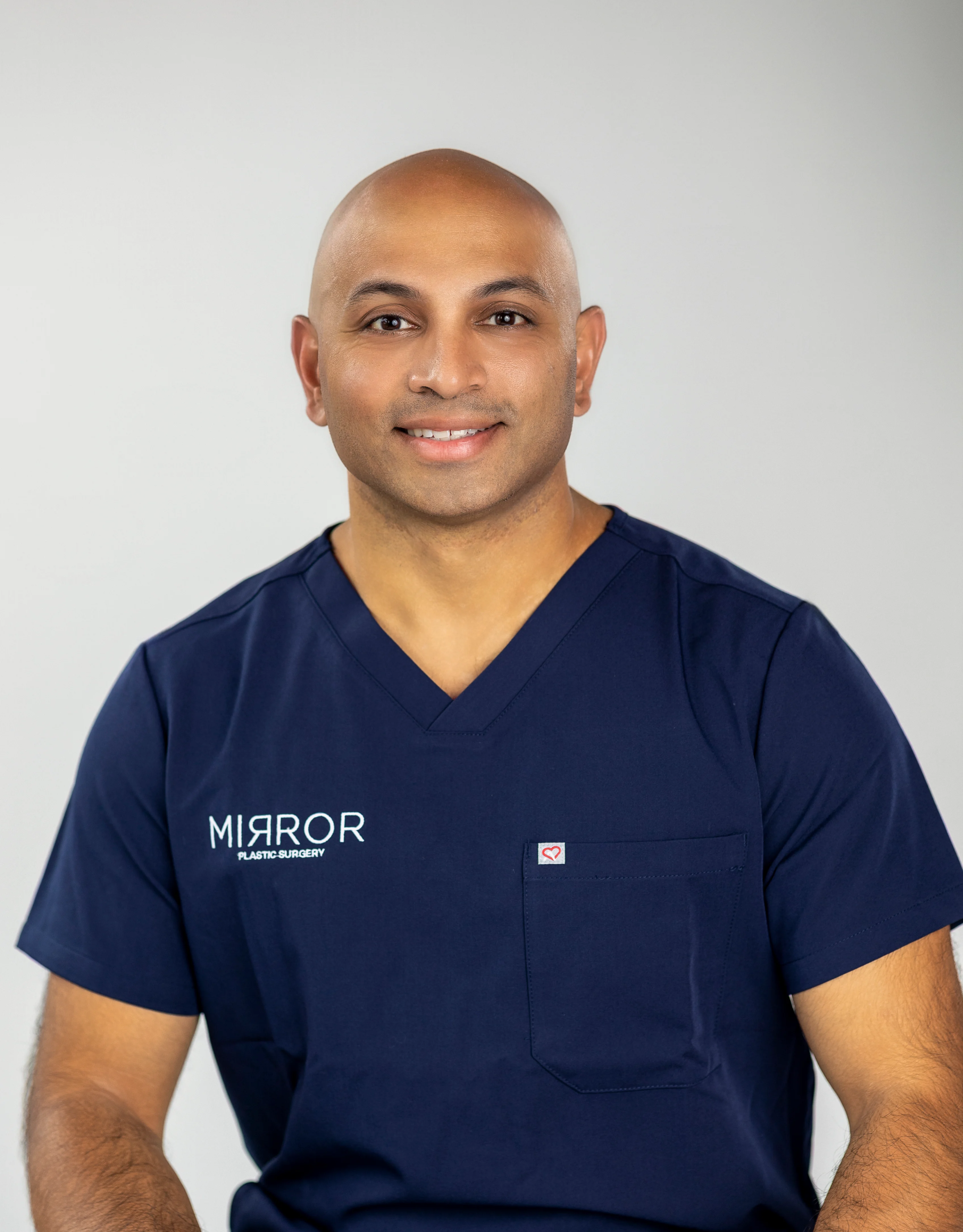
Every peptide protocol at Mirror Plastic Surgery begins with a 30–60 minute consultation. This visit includes a detailed review of medical history, health goals, and, when indicated, comprehensive lab analysis covering thyroid, liver, kidney, diabetes markers, and hormone panels. Custom peptide stacks are built around each patient’s individual physiology rather than a generic template.
Online peptide retailers often lack quality control, dosing supervision, and medical oversight. High-volume telemedicine platforms may offer peptides but rarely provide the depth of one-on-one concierge care. Peptides are not FDA-regulated, so the source and supervision of treatment remain critically important. Mirror Plastic Surgery sources exclusively from reputable suppliers with rigorous batch testing, and Dr. Akash is available via direct text or telemedicine for ongoing support throughout each patient’s journey.
Mirror Plastic Surgery’s peptide offerings include the Glow Stack (GHK-Cu, BPC-157, TB500) for systemic inflammation and skin health, NAD for cellular energy and healthy aging, Sermorelin/Ipamorelin for natural growth hormone stimulation, GLP-3R compounding for weight management and metabolic health, Selank for anxiety management, and additional protocols tailored to fertility, sexual wellness, and post-surgical recovery.
Book Your Peptide Therapy Appointment to explore how medically supervised treatment can support your body’s regenerative capacity.
The Future Of Tissue Regeneration
The frontier of regenerative science is advancing rapidly across three major domains.
Partial cellular reprogramming uses transient expression of reprogramming factors to reverse molecular hallmarks of aging without fully dedifferentiating cells. A 2026 review in Trends in Molecular Medicine from the Institut Pasteur reports that partial reprogramming can rejuvenate tissues, restore regenerative capacity, and in some models extend lifespan, while avoiding the tumorigenic risks linked to full reprogramming.
Organoid technology uses pluripotent stem cells or adult progenitor cells to grow self-organized three-dimensional structures that partially reproduce the structure and function of native organs. Scientists use stem cells to grow miniature, three-dimensional models of human organs, including brain, intestine, liver, and kidney organoids, to study human development, genetic diseases, and how viruses and cancers affect tissues. Clinical applications for liver failure, short bowel syndrome, and type 1 diabetes are moving through preclinical and early-phase trials.
Sequential growth factor therapy has shown that mammalian regenerative capacity is dormant rather than absent. The Texas A&M study described earlier demonstrated that this capacity can reactivate when the right signals arrive in the right order. Because BMP2 already holds FDA approval for certain uses and FGF2 is in multiple clinical trials, the path to clinical exploration may be more accessible than once assumed.
These advances support a principle that peptide therapy applies today. Regenerative capacity exists in the adult body and can respond to the right biological signals when delivered under appropriate medical supervision.
Frequently Asked Questions
Are Peptides FDA-Approved?
Many peptides are not FDA-regulated, yet they have been studied in clinical trials for over a decade and are used widely around the world. The primary risk often comes from obtaining them from unregulated sources that lack quality control, batch testing, and medical oversight. At Mirror Plastic Surgery, every peptide protocol is developed by Dr. Akash Chandawarkar after a thorough review of the patient’s medical history and lab results. Peptides are sourced exclusively from reputable suppliers with rigorous batch testing, and patients receive direct, ongoing medical supervision throughout treatment.
What Is The Fastest Regenerating Tissue In The Human Body?
As noted earlier, the intestinal epithelium is the fastest self-renewing tissue in mammals, renewing every 2–5 days in humans. This rapid turnover is maintained by intestinal stem cells residing in the crypts of the gut lining. Skin follows with full epidermal renewal over several weeks. Blood cells are also continuously produced by hematopoietic stem cells in the bone marrow. By contrast, cartilage, heart muscle, and neurons have very limited regenerative capacity and heal primarily through scarring rather than true tissue replacement.
Can Peptides Help With Post-Surgical Recovery?
Peptides such as BPC-157 and TB500 have demonstrated potential in reducing systemic inflammation and promoting tissue healing, which directly supports post-surgical recovery.1 Mirror Plastic Surgery offers peptide protocols specifically designed to complement surgical procedures and support the body’s natural repair processes during the critical proliferation and remodeling phases of healing. Because Dr. Akash Chandawarkar is both a board-certified plastic surgeon and the physician overseeing peptide therapy, post-surgical peptide protocols at Mirror reflect an integrated understanding of surgical physiology and recovery.
Will I Lose The Benefits If I Stop Taking Peptides?
Effects can diminish after stopping peptide therapy, similar to discontinuing other health regimens. For example, if peptides help manage chronic inflammation, that inflammatory state often returns when treatment ends. Maintenance protocols are frequently recommended to sustain benefits achieved during active treatment. Dr. Akash Chandawarkar develops personalized maintenance plans based on each patient’s goals, lab results, and response to treatment, so any transition occurs in a thoughtful and gradual way.
Are Results The Same For Everyone?
Results from peptide therapy vary significantly from person to person. Genetics, age, lifestyle, underlying health conditions, and the specific protocol all influence outcomes. This variability makes a personalized approach essential. Mirror Plastic Surgery’s protocols are built around comprehensive lab analysis and an in-depth consultation rather than a standardized formula. What works optimally for one patient may require adjustment for another, and Dr. Akash’s concierge model allows protocols to be refined continuously based on each patient’s individual response.
Conclusion: The Future Of Healing Is Here
Tissue regeneration is a natural process with remarkable capabilities and clear limits. The body efficiently renews skin, blood, intestinal lining, and liver tissue, yet struggles to regenerate cartilage, heart muscle, and complex structural tissues. Regenerative capacity declines with age as stem cell function diminishes and chronic inflammation accumulates. Nutrition, sleep, and lifestyle meaningfully influence how well the body’s repair mechanisms perform.
Regenerative medicine, and peptide therapy in particular, offers a science-backed way to support and amplify the body’s innate healing potential.1 The evidence base is growing, from meta-analyses of stem cell therapy in osteoarthritis to landmark studies showing that mammalian regenerative capacity can reactivate with the right biological signals. Across this research, the principle remains consistent: regenerative capacity exists and responds to activation.
Professional medical supervision shapes outcomes in this space. Supervision often marks the difference between a safe, effective, personalized protocol and an uncharacterized product purchased without oversight. Mirror Plastic Surgery provides concierge-level care, comprehensive lab analysis, custom peptide stacks, and direct access to a board-certified physician who understands both the science and the patient.
Talk With Dr. Chandawarkar About Reactivating Your Body’s Regenerative Potential to discover how medically supervised peptide therapy can support your body’s innate regenerative capacity.
Medical Disclaimer: This article is for informational purposes only and does not constitute medical advice. Results vary. Peptide therapies may not be FDA-regulated; consult a qualified physician before beginning any peptide protocol.
1 Results may vary from person to person. Editorial content, before and after images, and patient testimonials do not constitute a guarantee of specific results.
Peptide therapy is intended for wellness and optimization purposes and is not prescribed to diagnose, treat, cure, or prevent disease unless specifically stated. Many peptides are not FDA-approved and may be used off-label. Some have limited long-term safety data, with a potential for unknown risks, complications, or desensitization with prolonged use.