
Written by: Ellie Pranckevicius, FNP-BC, Aesthetic Nurse Practitioner & Aesthetic Injector | Facial Restoration & Regenerative Injectable Specialist, Mirror Plastic Surgery | Last updated: August 16, 2026
Key Takeaways for Injectable Pricing and Safety
- 2026 national pricing for neuromodulators, fillers, and biostimulators varies widely, and true value comes from expertise and individualized planning rather than advertised rates.
- Concierge practices prioritize comprehensive consultations, anatomical training, supplier-neutral product selection, and clear long-term maintenance planning instead of volume-driven throughput.
- High-volume medspas often compress assessments, limit product options, and skip key safety discussions, which raises the risk of suboptimal outcomes and complications.
- Ellie Pranckevicius combines advanced nursing credentials, esthetics training, and ICU experience to deliver precise, anatomy-driven injectable treatments at Mirror Plastic Surgery.
- Patients seeking safe, natural, and lasting results in St. Petersburg can schedule a personalized injectable assessment with Mirror Plastic Surgery for a tailored plan and transparent quote.1
Four Core Criteria for Comparing Injectable Providers
Price per unit is one variable among several that determine the true value of an injectable treatment. The criteria that most reliably predict safe, natural outcomes fall into four categories, each covering a different aspect of treatment quality.
Provider credentials and anatomical training determine whether the injector can safely navigate facial anatomy. Strong anatomical knowledge directly correlates with better outcomes and improved patient safety, including the ability to map vascular danger zones and understand tissue depth to prevent complications such as vascular compromise or nerve injury.
Consultation depth shows whether the practice prioritizes assessment over speed. A proper consultation is conducted separately from treatment and includes facial-anatomy assessment, medical-history review, discussion of risks and benefits, and development of a treatment plan without pressure to proceed immediately.
Product neutrality ensures that treatment choices reflect patient anatomy rather than supplier contracts. Supplier-neutral practices select the most appropriate product for a patient’s anatomy instead of defaulting to whatever the clinic has contracted or discounted.
Maintenance transparency sets realistic expectations from the start. Consistency and long-term planning play a critical role in achieving and maintaining meaningful, natural-looking results, a point high-volume practices rarely communicate upfront.1
2026 Pricing Ranges for Premium Injectables
The table below presents 2026 national pricing ranges drawn from verified provider data. Every patient at Mirror Plastic Surgery receives a personalized quote during their consultation, because treatment volume and product selection depend entirely on individual anatomy and goals.
| Product Category | Representative Brands | 2026 National Range |
|---|---|---|
| Neuromodulators | Botox, Dysport, Xeomin, Daxxify, Jeuveau | $4–$22 per unit; analyst predictions from 2019 indicated Jeuveau would run 20–30% below Botox nationally; Daxxify typically ranges from $12 to $25 per unit in most markets nationally |
| Hyaluronic Acid Fillers | Juvederm, RHA, Versa, Restylane, Evolysse | $500–$1,500 per syringe; concierge practices in major metros may charge premium rates |
| Biostimulators | Radiesse, Sculptra | Sculptra: $700–$1,200/vial; Radiesse: $600–$800/syringe (avg. $717) |
Product selection depends on onset speed, duration goals, and muscle mass for neuromodulators. For fillers, rheology (gel stiffness) determines placement depth and area suitability, and a full-face plan may require 4–10 syringes across multiple products rather than a single brand everywhere. Biostimulators are not reversible with hyaluronidase, so they require stricter patient selection and are better suited to diffuse volume loss or body contouring than to isolated, acute correction.
Schedule your personalized assessment to receive a transparent quote based on your anatomy and goals.
The 60-Minute Top-to-Bottom Assessment vs. Rushed Consultations
Mirror Plastic Surgery’s initial consultation extends up to one hour. During that time, Ellie Pranckevicius follows a structured diagnostic process that evaluates the upper, middle, and lower face as an integrated system, not as isolated problem areas. The session explores the emotional drivers behind a patient’s interest in treatment, their long-term goals, relevant medical history, and anatomical findings before any product recommendation.
High-volume medspas frequently compress consultation and treatment into a single appointment. This model, which industry compliance guidance identifies as a throughput pressure that leads to rushed assessments and out-of-scope shortcuts compromising patient care, often produces predictable warning signs.
- Consultation and injection scheduled in the same 30-minute block
- Per-area pricing quoted without disclosing unit count or syringe volume
- No discussion of medical history or contraindications before treatment
- Absence of baseline photography
- No mention of hyaluronidase availability or vascular occlusion protocol
- Immediate upsell to additional areas without anatomical rationale
Per-unit pricing for neuromodulators should be transparent, with unit counts aligned to FDA-label suggested ranges rather than vague per-area pricing, and Mirror Plastic Surgery applies this standard to every treatment plan.
Ellie’s Training: Esthetics, Nursing, and Cadaver Anatomy
Ellie Pranckevicius, FNP-BC, holds a Bachelor’s in Health Science from Boston University, completed a 600-hour hands-on aesthetics licensure program, and earned both her Bachelor’s and Master’s in Nursing from the University of South Florida. Before joining Mirror Plastic Surgery, she spent four years in the Neuroscience ICU at Tampa General Hospital, an environment that sharpened clinical judgment, physiological pattern recognition, and emergency response under pressure.
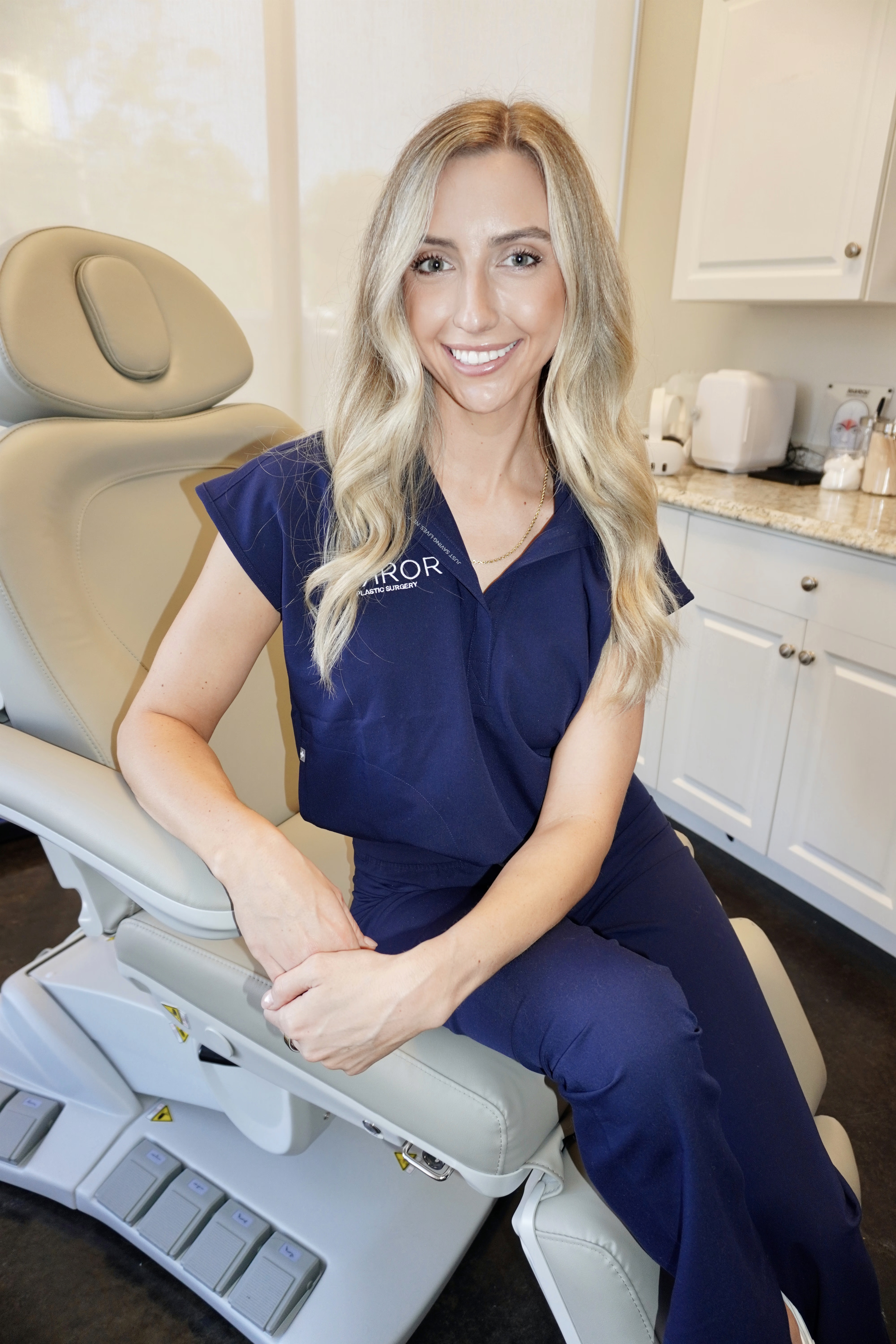
Her career began in 2019 at a high-end medical spa on Newberry Street in Boston, where she advanced from esthetician to medical esthetician. This dual background, combining surface skin physiology from esthetics training with subdermal anatomy from advanced nursing, creates a clinical perspective that neither credential alone provides. That foundation is further strengthened by the type of anatomical training Ellie has completed.
Cadaver-based anatomical training is the gold standard in aesthetic medicine education because it allows clinicians to study real human anatomy in three dimensions, including facial vascular pathways, nerve locations, fat compartments, and tissue planes. This spatial awareness goes beyond what textbooks and simulations can provide. Longer and more structured injector training is associated with lower rates of significant adverse events, faster recognition of vascular events, and better documented outcomes.1
Ellie’s injectable work is complemented, when clinically indicated, by Dr. Akash Chandawarkar, MD, a Harvard-educated physician, Johns Hopkins-trained plastic surgeon, and fellowship-trained aesthetic surgeon at Manhattan Eye Ear & Throat Hospital/Lenox Hill Hospital, with additional medical innovation training at Stanford University.
Supplier-Neutral Product Selection in Everyday Treatment Planning
Many high-volume medspas operate with contracted or discounted product portfolios, so the product recommended may reflect purchasing agreements rather than patient anatomy. Mirror Plastic Surgery maintains no supplier commitments, which allows Ellie to select across the full landscape of FDA-approved injectables. Understanding the clinical distinctions between products, rather than relying on a single contracted brand, makes supplier-neutral selection possible.
For neuromodulators, the relevant distinctions include track record, onset, diffusion, duration, and cost profile.
- Botox (onabotulinumtoxinA): The longest clinical track record and appropriate for most neuromodulator indications, including face, neck, massagers, TMJ, and trapezius muscles.
- Dysport (abobotulinumtoxinA): Faster onset and a broader diffusion pattern, which can be useful for larger muscle groups.
- Xeomin (incobotulinumtoxinA): Naked toxin formulation without accessory proteins, often preferred for patients who have developed resistance to complexed formulations.
- Daxxify (daxibotulinumtoxinA-lanm): Extended duration of up to six months, which suits patients who want fewer annual appointments.
- Jeuveau (prabotulinumtoxinA): Typically priced below Botox (see pricing table above), which makes it a cost-effective option for appropriate candidates.
For fillers and biostimulators, product selection is driven by treatment area, tissue depth, and correction goal.
- Juvederm, RHA, Versa, Restylane, Evolysse: Hyaluronic acid fillers with varying rheological profiles suited to lips, tear troughs, cheeks, nasolabial folds, and fine lines.
- Radiesse (calcium hydroxylapatite): A biostimulator appropriate for structural support and body contouring, including non-surgical BBL applications, with typical correction lasting 12–18 months nationally.
- Sculptra (poly-L-lactic acid): A biostimulator that works through gradual collagen induction. A series of 2–4 vials often provides 2–3 years of collagen-mediated volume and can be more cost-effective than repeated HA filler cycles for diffuse global volume loss.
Biostimulators cannot be dissolved with hyaluronidase. They require stricter patient selection, injector experience, and explicit consent that addresses irreversibility, a conversation Mirror Plastic Surgery conducts thoroughly before planning any biostimulator treatment.
Long-Term Maintenance Costs and Realistic Expectations
Ellie approaches aesthetics the way a dentist approaches oral health: professional treatments create results, and lasting outcomes depend on understanding and consistent maintenance.1 Most patients significantly underestimate their annual injectable investment because they track large invoices but overlook recurring injectable appointments and clinical skincare products. The following benchmarks, drawn from national data, illustrate the true annualized cost of maintaining results across different product categories.
- Neuromodulators: Most patients schedule sessions every three to four months, resulting in an annual cost of $600–$1,800 per area.
- HA fillers: Many patients return for maintenance every 6–12 months or longer depending on the product and area, which can reduce annual cost compared with more frequent replacement cycles.
- Biostimulators: These products carry higher upfront costs but longer durations (see pricing table above). Sculptra’s 2+ year duration comes from the patient’s own collagen production, which often makes it more cost-effective per month of correction than repeated HA filler cycles for diffuse volume loss. Radiesse typically provides about one year of correction, which translates to an amortized annual cost of roughly $900.
Home care, including medical-grade skincare, consistent SPF use, and hydration, directly extends the interval between professional treatments. Ellie explains the physiology behind each recommendation in plain terms so patients understand how to protect their investment between appointments.
Build your multi-year maintenance roadmap during a consultation aligned to your anatomy, lifestyle, and budget.
When Mirror Plastic Surgery Recommends Against Treatment
Transparency at Mirror Plastic Surgery includes telling patients when a treatment is not yet necessary or not the right fit. High-volume practices often depend on conversion rather than clinical judgment, so this conversation happens less frequently in those settings.
Two representative scenarios show how Ellie applies this principle in practice.
- Subtle facial enhancement: A patient in their early 30s with mild volume loss may hear that foundational restoration, such as medical-grade skincare, targeted neuromodulator use, and a single strategic filler placement, is sufficient. Ellie focuses first on revitalizing inherent facial characteristics. Volume augmentation becomes a consideration only after foundational restoration is complete. Recommending four syringes when one is appropriate reflects upselling, not concierge medicine.
- Non-surgical BBL for hip dips: Ellie offers non-surgical BBL using biostimulatory fillers including Radiesse and AlloClae to refine shape, smooth cellulite, reduce the appearance of stretch marks, and support gluteal symmetry.1 Patients whose anatomy or degree of correction goal exceeds what injectables can safely achieve are counseled toward surgical consultation with Dr. Akash instead of receiving an inadequate non-surgical treatment.
This willingness to recommend against an expensive service, or to refer internally to surgery when appropriate, forms the foundation of the long-term trust Mirror Plastic Surgery’s patients describe.
Frequently Asked Questions
What credentials should I look for in an aesthetic injector in St. Petersburg, Florida?
In Florida, aesthetic injectables must be performed by or under the supervision of a licensed medical professional. Beyond licensure, the most meaningful indicators of a qualified injector are advanced anatomical training, clinical experience in managing complications, and a practice environment that maintains hyaluronidase on site for emergency reversal of hyaluronic acid fillers. Ellie Pranckevicius holds a Family Nurse Practitioner board certification (FNP-BC), a Master’s in Nursing from the University of South Florida, 600 hours of hands-on esthetics training, and four years of Neuroscience ICU experience at Tampa General Hospital. Her dual background in esthetics and advanced nursing provides a comprehensive understanding of both surface skin physiology and subdermal anatomy that is uncommon among injectors in the Tampa Bay market.
How do complication rates differ between high-volume medspas and concierge practices?
Minor injection-site reactions such as bruising, swelling, and transient redness occur with filler treatments and are typically self-limiting in any practice setting. More clinically meaningful complications, including nodules, persistent inflammatory reactions, and vascular occlusion, cluster where regulatory oversight is thinnest, protocols are unwritten, and injector training consisted of short didactic courses with limited supervised practice. Vascular occlusion, a rare but serious event that can cause skin necrosis or vision loss, occurs infrequently when experienced clinicians treat patients in regulated settings. Mirror Plastic Surgery maintains hyaluronidase on site with a rehearsed vascular occlusion protocol, and Ellie’s ICU background supports the emergency clinical judgment that most aesthetic-only training programs do not develop.
Is a supplier-neutral practice actually different from a medspa that carries multiple brands?
Carrying multiple brands and being supplier-neutral are not the same. A practice can stock several filler lines while still defaulting to one brand because of purchasing volume discounts, sales representative relationships, or staff familiarity. Supplier neutrality means that product selection is driven exclusively by patient anatomy, treatment area, correction goal, and evidence of efficacy, with no financial incentive attached to any particular brand. At Mirror Plastic Surgery, Ellie selects across neuromodulators (Botox, Dysport, Xeomin, Daxxify, Jeuveau) and fillers (Juvederm, RHA, Versa, Restylane, Evolysse, Radiesse, Sculptra) based on what is clinically appropriate for each individual patient. This approach is possible only in a practice that does not operate on quota-driven volume targets.
How should I think about the total cost of injectables over time, not just per session?
The per-session price of any injectable is less informative than its annualized cost and the quality of outcome it produces over time. A neuromodulator treatment repeated three to four times per year represents a predictable recurring investment. Hyaluronic acid fillers, depending on the product and area, may require maintenance every 6–12 months or longer rather than every six months, particularly in patients who follow a consistent home-care regimen. Biostimulators like Sculptra and Radiesse carry higher upfront costs but longer durations, which often makes them more cost-effective per month of correction than repeated HA filler cycles for patients with diffuse volume loss. During your consultation, Ellie builds a multi-year maintenance roadmap so you understand the full investment, not just the first appointment.
Conclusion and Next Step
The difference between a concierge injectable practice and a high-volume medspa rests less on price and more on the depth of assessment, breadth of anatomical knowledge, neutrality of product selection, and honesty of the conversation before any treatment begins. For St. Petersburg and Tampa Bay professionals who value safety, natural elegance, and long-term outcomes, Mirror Plastic Surgery offers a model built around those priorities from the first consultation forward.
Experience the 60-minute assessment difference by booking a consultation with Ellie.
Mirror Plastic Surgery
780 4th Ave S, St. Petersburg, FL 33701
Phone: 727-361-6515
Email: hello@mirrorplasticsurgery.com
Instagram: @mirrorplasticsurgery | @dr.akashplasticsurgery | @perfectlyplastics
Disclaimer: Results may vary from person to person. Editorial content, before and after images, and patient testimonials do not constitute a guarantee of specific results.
1 Results may vary from person to person. Editorial content, before and after images, and patient testimonials do not constitute a guarantee of specific results.