
Written by: Ellie Pranckevicius, FNP-BC, Aesthetic Nurse Practitioner & Aesthetic Injector | Facial Restoration & Regenerative Injectable Specialist, Mirror Plastic Surgery | Last updated: July 28, 2026
Key Takeaways
- Hydrolyzed collagen peptides are absorbed as di- and tripeptides that signal fibroblasts to increase collagen synthesis, supporting both skin anti-aging and connective-tissue recovery.
- Skin-focused protocols typically use 2.5–5 g/day taken consistently for at least 8–12 weeks, while tendon recovery usually requires 10–30 g/day taken 30–60 minutes before exercise with vitamin C.
- Consistency over time matters more than chasing higher doses. Skin hydration often improves in 4 weeks, elasticity gains need 12 weeks, and tendon remodeling peaks at 3–6 months.1
- Age, menopausal status, gut health, training load, and inflammatory markers all influence the right protocol and whether lab-guided personalization is appropriate.
- At Mirror Plastic Surgery, Ellie Pranckevicius creates personalized collagen peptide protocols backed by lab analysis and concierge support. Book your consultation today to determine the best approach for your goals.
Collagen Peptide Dosing for Smoother, Hydrated Skin
The lowest dose of hydrolyzed collagen peptides with statistically significant skin outcomes in controlled trials is 2.5 g/day. A double-blind, placebo-controlled RCT by Proksch et al. (2014) randomizing 69 women aged 35–55 found that both 2.5 g/day and 5 g/day of specific hydrolyzed collagen peptides for 8 weeks significantly improved skin elasticity versus placebo, with effects more pronounced in women over 50.1 The same research group conducted a separate trial in 114 women aged 45–65 showing that 2.5 g/day for 8 weeks reduced eye wrinkle volume by 20% and increased skin procollagen levels by 65%, with wrinkle improvements persisting four weeks after supplementation ended.1
Positive skin results are often seen with 2.5–5 g/day taken consistently over several months.1 A 2023 meta-analysis of 26 RCTs with 1,721 participants further confirmed that hydrolyzed collagen improves skin anti-aging parameters across diverse dosages and populations when taken consistently. Evidence does not show a clear linear dose-response relationship between 2.5 g and 10 g/day.1 Consistent daily intake for at least 8–12 weeks matters more than pushing the dose higher within this range.
A common question at this dosage level is whether the collagen source matters. Marine collagen peptides are predominantly Type I, while bovine collagen peptides supply both Type I and Type III. The source matters less than peptide size, hydrolysis quality, and consistency of use when evaluating skin outcomes, because both sources deliver glycine, proline, and hydroxyproline that support connective-tissue metabolism.
Collagen Dosing for Tendon and Ligament Recovery
Connective-tissue recovery requires substantially higher doses than skin applications. Higher doses of hydrolyzed collagen peptides have been studied for tendon and ligament repair with evidence of benefit when combined with resistance training. The higher end of the dose range is appropriate for acute tendinopathy or post-surgical recovery, while lower doses fit injury prevention and maintenance phases.
Clark et al. (2008, n=147, 24-week RCT) examined collagen hydrolysate in athletes with joint pain and found meaningful reductions in activity-related discomfort. Miyamoto (2025) randomized 50 sedentary men to 10 g collagen peptides daily or placebo for 16 weeks without resistance training and measured changes in muscle-tendon stiffness, demonstrating structural benefits even without formal strength work. These findings align with broader data showing that measurable increases in tendon cross-sectional area appear after 8–12 weeks, while 3–6 months are typically required for peak clinical results such as pain reduction and functional gains.1
Timing Collagen Peptides Around Exercise
Timing plays a central role in connective-tissue protocols and has far less impact on skin-focused use. Shaw et al. (2017, American Journal of Clinical Nutrition) found that 15 g of vitamin C-enriched gelatin taken 1 hour before a short jumping protocol increased collagen synthesis markers in blood compared to placebo.1 Mechanical loading of the tendon is required for this effect. Collagen taken without subsequent exercise produces minimal effect on tendon structure or function, according to the Kirmse 2024 meta-analysis and all positive trials.
The evidence-based pre-exercise protocol uses 15 g hydrolyzed collagen peptides plus 50 mg vitamin C consumed 30–60 minutes before exercise. Vitamin C acts as a required co-factor for prolyl and lysyl hydroxylase enzymes during collagen synthesis. Its absence blocks the synthesis response even when collagen amino acids are present. A dietary source of vitamin C such as orange juice, kiwi, or a supplement is sufficient.
Time vs Dose for Wrinkle Reduction
No 2026 systematic review and meta-analysis matching these parameters was published in the Journal of Cosmetic Dermatology, but the existing body of evidence still reveals a clear pattern. Efficacy for skin parameters appears predominantly time-dependent rather than dose-dependent, with hydration benefits appearing as early as four weeks and meaningful elasticity and barrier gains requiring at least 12 weeks of daily supplementation across doses ranging from 500 mg to 10 g.1
After rigorous sensitivity analysis, initial signals for macroscopic wrinkle reduction, skin roughness, and dermal density were statistically indistinguishable from placebo within typical 8–12 week trial durations. This finding does not mean collagen peptides lack value. Oral collagen peptides function most reliably as a systemic moisturizer that supports hydration, elastic recoil, and skin-barrier water retention.1 Because these effects address only part of the visible aging process, individuals targeting visible wrinkle reduction should combine collagen peptides with complementary interventions, ideally chosen through a personalized clinical assessment.
Book an appointment with Ellie to review your skin aging goals and determine whether a collagen peptide protocol, GHK-CU stacking, or a combined approach fits your baseline.
15 g Pre-Workout Collagen Protocol for Tendons
The 15 g pre-exercise protocol is the most rigorously studied timing strategy in collagen peptide research. The Shaw et al. (2017) findings described above established 15 g as the evidence-based threshold for this protocol, with subsequent research confirming that lower doses such as 5 g do not produce the same collagen synthesis signal.
Clinical applications of this protocol include tendinopathy recovery involving the Achilles, patellar tendon, or rotator cuff, surgical rehabilitation after ACL reconstruction or tendon repair, and injury prevention in athletes. Lis (2022) showed that 20 g hydrolyzed collagen plus 50 mg vitamin C daily for 3 weeks accelerated recovery of lower-limb rate of force development after hard training in 50 male athletes.1 while placebo did not. Some exercise-focused protocols use 15 g twice daily during intense training periods under professional supervision.
How Body Weight, Age, and Protein Intake Affect Dosing
Most collagen trials use a fixed dose rather than adjusting for body weight, so routine per-kilogram dosing is not required according to the reviewed clinical research. Practical dose selection is guided by goal and training load. Larger, very active individuals are commonly directed toward the higher end of the 2.5–15 g/day range (10–15 g), while skin-focused use typically stays at 2.5–5 g/day.
Age often matters more clinically than body weight. Postmenopausal women lose skin collagen at a rate of approximately 1–2% per year after menopause due to declining estrogen, and fibroblasts from older adults produce significantly less type I procollagen than those from younger skin. Older adults and postmenopausal women therefore often report more noticeable improvements from supplementation.1 Specific collagen peptides also improved bone mineral density in postmenopausal women in a randomized controlled study.
Beyond age, total daily protein intake also plays a role. Chronically low protein intake may cause the body to prioritize collagen peptides for basic metabolic functions rather than targeted skin or joint repair.
How GHK-CU and Collagen Peptides Work Together
GHK-CU (copper peptide) and hydrolyzed collagen peptides operate through distinct mechanisms and are not interchangeable. Hydrolyzed collagen peptides supply glycine, proline, and hydroxyproline as substrate for fibroblast collagen synthesis, with the pre-exercise timing protocol directing that substrate toward connective-tissue remodeling. GHK-CU functions as a signaling peptide that upregulates collagen and elastin gene expression, promotes wound healing, and has demonstrated activity in reducing melanin production relevant to melasma, without providing amino acid substrate.
At Mirror Plastic Surgery, GHK-CU is offered as part of the Glow Stack alongside BPC-157 and TB500, targeting systemic inflammation, collagen and elastin production, and skin, hair, and nail health at the same time. Stacking GHK-CU with a hydrolyzed collagen peptide protocol addresses both the signaling and substrate sides of collagen production, which self-directed supplementation from unverified online sources cannot match safely or consistently. Ellie Pranckevicius evaluates each patient’s baseline, lab markers, and goals before recommending any stack, ensuring that GHK-CU is indicated and appropriately dosed for the individual.
Comparing Skin and Recovery Collagen Protocols
The following table summarizes evidence-based protocols for common goals and shows how dose, timing, and duration shift when you move from cosmetic to structural outcomes.
| Goal | Daily Dose | Timing & Duration | Expected Outcomes |
|---|---|---|---|
| Skin anti-aging (hydration, elasticity) | 2.5–5 g/day | Any time daily; minimum 12 weeks | Improved hydration, elasticity, reduced wrinkle volume; 65% increase in procollagen type I at 8 weeks |
| Tendon/ligament recovery | 15–30 g/day | 30–60 min pre-exercise with 50 mg vitamin C; 8–24 weeks minimum | Increased tendon stiffness, reduced pain, improved function; peak results at 3–6 months |
| Joint pain (athletes) | 10 g/day | Daily; 24 weeks for significant pain reduction | Reduced activity-related joint pain, greatest benefit in knee and hip |
| Bone mineral density (postmenopausal) | 5 g/day specific peptides | Daily; 12 months; bovine FORTIBONE showed +5.79% spinal BMD1 | Improved lumbar spine and femoral neck BMD |
When You Need Lab Work Before Collagen
Not every individual requires lab work before a standard 2.5–5 g/day skin-focused collagen protocol. Several clinical scenarios, however, do warrant baseline testing before starting or escalating a collagen peptide regimen. The following decision framework outlines when lab-guided personalization makes sense.
- Inflammatory or autoimmune conditions present: High-sensitivity C-reactive protein (hs-CRP) and relevant autoimmune markers should be reviewed, as patients with rheumatoid arthritis, systemic lupus erythematosus, or scleroderma should exercise caution with collagen peptide supplementation due to potential autoimmune targeting of collagen.
- Kidney disease or history of calcium oxalate stones: Hydroxyproline (10–13% of collagen by weight) is metabolized to oxalate via glyoxylate, elevating stone risk in susceptible patients. Nephrologist review of hydroxyproline load is recommended before extended use.
- Thyroid medication use: Marine collagen products may contain variable iodine levels that can complicate levothyroxine or antithyroid drug dosing, so thyroid panel and medication timing review are warranted.
- Suboptimal response to prior supplementation: Pre- and post-supplementation biomarker testing of vitamin C, hs-CRP, albumin, total protein, IGF-1, and vitamin D provides objective data to identify whether inflammation, nutrient status, or protein adequacy is limiting response.
- Postmenopausal status or age 65+: Hormone panel and bone density baseline help determine whether collagen peptides should be combined with other interventions. Elderly individuals using collagen peptides long-term should undergo regular blood work to monitor kidney function and calcium levels.
- Planned dose of 15 g/day or higher: Baseline kidney function, calcium, and protein status should be confirmed before initiating high-dose connective-tissue recovery protocols.
Bovine vs Marine Collagen: Absorption and Use
Marine collagen peptides generally have a lower average molecular weight (often 2–3 kDa) than bovine peptides (often 3–5 kDa). This difference is associated with faster dissolution and, in some studies, marginally more efficient intestinal absorption via peptide transporters such as PepT1. A 2025 PMC oral bioavailability review (PMC12701666) found that marine collagen hydrolysate is absorbed through di- and tripeptide pathways, with peak serum hydroxyproline-containing peptide levels occurring at 60–90 minutes after ingestion.
Despite these pharmacokinetic differences, no large-scale head-to-head RCT has directly compared marine and bovine collagen bioavailability in humans at equivalent doses, and current evidence remains insufficient to recommend one source over the other for skin applications. Bovine collagen contains both Type I and Type III and has the most extensive clinical literature for skin aging, bone support, and tendon repair. Marine collagen is almost exclusively Type I and is often easier on the GI tract for sensitive consumers. Neither marine nor bovine collagen supplies Type II collagen relevant for joint cartilage; Type II is sourced separately from chicken sternum as undenatured UC-II.
Why Medical Supervision Improves Collagen Safety
The main risks of self-directed collagen peptide use are logistical and quality-related rather than pharmacological. Collagen supplements are not pre-approved by the FDA; raw materials can contain trace heavy metals such as lead, cadmium, arsenic, and mercury, which makes third-party batch testing essential for long-term use. Marine-sourced collagen peptides may contain traces of heavy metals if sourced from polluted waters, posing a cumulative risk with extended use.
At Mirror Plastic Surgery, Ellie Pranckevicius leads all peptide protocols with a comprehensive 30–60 minute consultation that reviews medical history, current medications, and health goals. Peptides are sourced from reputable providers with rigorous batch testing, ensuring product quality, purity, and accurate dosage. For patients whose goals extend beyond collagen peptides, including GHK-CU stacking for collagen signaling, BPC-157 for systemic inflammation, or NAD for mitochondrial anti-aging, Ellie builds custom stacks based on lab results and ongoing monitoring. Patients receive direct 24/7 access to Ellie via text for questions, refill requests, and protocol adjustments, and the entire process can be conducted remotely across the United States.
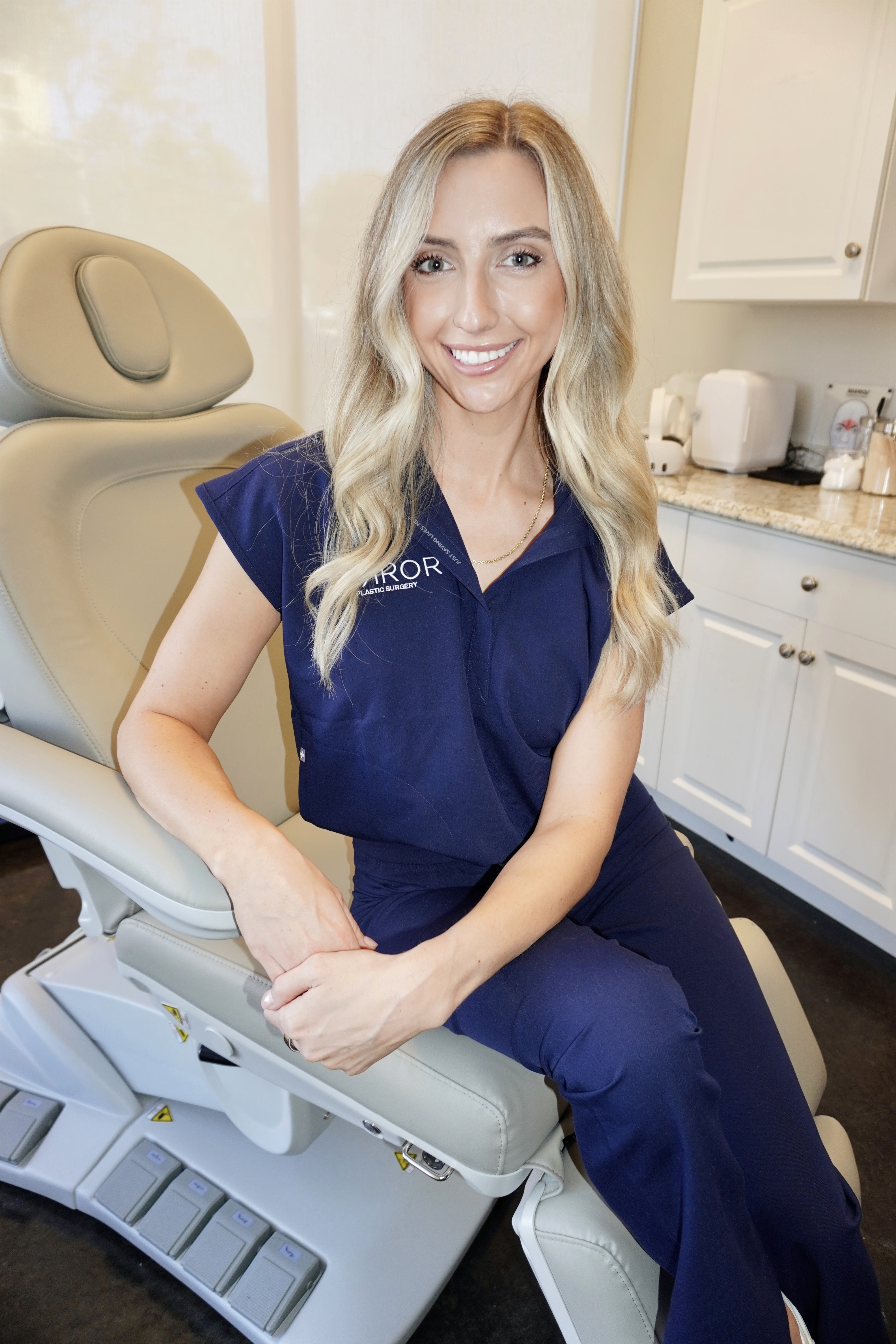
Schedule your personalized assessment to receive a collagen peptide protocol backed by lab analysis, batch-tested sourcing, and ongoing concierge support.
Addressing Common Collagen Concerns
Why do results vary between individuals? Individual variation in collagen peptide response is influenced by baseline collagen status, digestive enzyme activity, age, sex, and dietary protein intake, none of which have been systematically studied across doses. People with compromised gut health may experience reduced absorption and could require higher doses or benefit less until underlying digestive issues are addressed. Lab-guided personalization identifies these limiting factors before they result in months of ineffective supplementation.
What happens when dosing stops? The benefits of collagen peptide supplementation do not last indefinitely. Proksch et al. (2014) found that skin elasticity improvements persisted four weeks after cessation.1 but longer-term maintenance requires continued use. For tendon applications, connective tissue remodels slowly and tendons and ligaments remodel far more slowly than muscle, requiring at least three months before evaluating results. Stopping prematurely forfeits structural gains. A maintenance protocol, typically at the lower end of the therapeutic range, is generally recommended after an initial loading phase.
Do training load and body size require dose adjustments? Larger, very active people and those training hard are commonly directed toward the higher end of the 10–15 g/day range, while skin-focused use is typically 2.5–5 g/day. A per-kilogram calculation is not required, but training intensity and tissue-specific goals are meaningful inputs for protocol design. Ellie incorporates these variables into every personalized assessment.
Discuss your training load and goals with Ellie to receive a protocol calibrated to your specific physiology.
Frequently Asked Questions
Are collagen peptides FDA-approved?
Collagen peptides are classified as dietary supplements and are not subject to FDA pre-market approval for safety or efficacy. Companies bear premarket responsibility, with FDA oversight occurring primarily through post-market inspections and adverse-event monitoring. This regulatory gap makes sourcing quality critical. Products from suppliers without batch-specific Certificates of Analysis confirming heavy metal levels, microbial safety, and amino-acid identity carry meaningful contamination risk. At Mirror Plastic Surgery, all peptides, including collagen-based protocols, are sourced from reputable providers with rigorous batch testing, and every protocol is initiated under Ellie Pranckevicius’s medical supervision.
How long does it take to see results from collagen peptide supplementation?
Timeline depends on the target tissue and dose. For skin hydration, benefits can appear as early as four weeks of daily supplementation. Meaningful improvements in skin elasticity and barrier function typically require at least 12 weeks. As noted earlier, these timeline differences, with hydration at 4 weeks and elasticity at 12+ weeks, explain why consistency matters more than rapid dose escalation. For tendon and ligament recovery, measurable structural changes in collagen architecture require a minimum of 8–12 weeks, with peak clinical results, including pain reduction and functional gains, typically emerging at 3–6 months. Stopping supplementation before these timelines are reached is the most common reason individuals report no benefit.
What are the main safety considerations and contraindications?
Hydrolyzed collagen peptides at 2.5–15 g/day are well-tolerated by most healthy adults for up to six months, with the most common side effects being mild and transient gastrointestinal symptoms. Key groups requiring caution or physician clearance before use include:
- Individuals with confirmed allergies to the collagen source (fish, shellfish, bovine, or porcine)
- Those with chronic kidney disease or a history of calcium oxalate kidney stones, due to hydroxyproline’s conversion to oxalate
- Pregnant or breastfeeding women, due to insufficient clinical safety data
- Individuals on warfarin or other anticoagulants, or on thyroid medications (particularly with marine collagen)
- Patients with autoimmune conditions targeting collagen (detailed in the lab panel section above)
- Adults aged 65+ using collagen long-term, who should have periodic kidney function and calcium monitoring
Long-term safety data beyond six months remains limited, so periodic medical check-ins are advisable for extended use.
What is the difference between taking collagen peptides for skin versus for tendons?
The two applications require different doses, timing strategies, and durations. Skin anti-aging protocols use 2.5–5 g/day taken at any time, with benefits driven by consistency over 12+ weeks rather than timing relative to activity. Tendon and connective-tissue recovery protocols require 10–30 g/day taken 30–60 minutes before mechanical loading, with vitamin C as a required co-factor. Without the pre-exercise timing and subsequent mechanical load, the higher collagen dose does not produce meaningful tendon remodeling. Individuals with both skin and recovery goals may benefit from a split protocol, such as a lower morning dose for skin and a pre-exercise dose for connective tissue, which is best designed under medical supervision to avoid unnecessary supplementation.
How does GHK-CU complement a collagen peptide protocol?
GHK-CU (copper peptide) and hydrolyzed collagen peptides address collagen production through different mechanisms. Hydrolyzed collagen peptides provide the amino acid substrate, including glycine, proline, and hydroxyproline, that fibroblasts use to synthesize new collagen. GHK-CU is a signaling peptide that upregulates collagen and elastin gene expression, supports wound healing, and has demonstrated activity in reducing melanin production relevant to melasma and pigmentation concerns. Stacking GHK-CU with a hydrolyzed collagen protocol addresses both the upstream signaling and the downstream substrate availability for collagen synthesis. At Mirror Plastic Surgery, GHK-CU is offered as part of the Glow Stack, and Ellie determines whether stacking is appropriate based on each patient’s goals, lab results, and current health status.
Conclusion
Collagen peptide dosing works best when matched to a specific goal rather than applied as a one-size-fits-all protocol. Skin anti-aging outcomes are supported by 2.5–5 g/day taken consistently for a minimum of 12 weeks, with efficacy driven by time on protocol rather than aggressive dose escalation. Tendon and connective-tissue recovery requires 10–30 g/day timed 30–60 minutes before mechanical loading with vitamin C, sustained for 3–6 months for peak structural results. Variables including age, menopausal status, gut health, training load, medication use, and inflammatory markers all influence which protocol is appropriate and whether lab-guided personalization is warranted before starting.
Mirror Plastic Surgery’s approach, led by Ellie Pranckevicius, FNP-BC, combines in-depth consultation, lab analysis where indicated, batch-tested sourcing, and ongoing concierge support to deliver protocols calibrated to individual physiology rather than generic ranges. Whether the goal is skin anti-aging, connective-tissue recovery, or a combined approach with GHK-CU stacking, the safest and most effective path begins with a personalized plan.
1 Results may vary from person to person. Editorial content, before and after images, and patient testimonials do not constitute a guarantee of specific results.
Peptide therapy is intended for wellness and optimization purposes and is not prescribed to diagnose, treat, cure, or prevent disease unless specifically stated. Many peptides are not FDA-approved and may be used off-label. Some have limited long-term safety data, with a potential for unknown risks, complications, or desensitization with prolonged use.