
Written by: Dr. Akash Chandawarkar, Board Certified Plastic Surgeon, Mirror Plastic Surgery | Last updated: July 21, 2026
Key Points About Ultrasonic Liposuction (VASER)
- Ultrasonic liposuction (VASER) uses focused ultrasound energy to emulsify fat before removal. This approach offers advantages in fibrous areas and can improve skin retraction compared with traditional liposuction.
- Clinical studies show reduced blood loss, fewer contour irregularities, and stronger skin tightening with VASER.1 Surgeon expertise remains the most important factor for results.
- Ideal candidates are within 30% of their ideal body weight and have good skin elasticity. The technique performs especially well in fibrous regions such as the back, male chest, neck, and abdomen.
- Recovery is generally faster than with traditional liposuction. Most patients return to work in 7–14 days, and final results appear by 3–6 months.1 Tampa’s climate can prolong swelling for some patients.
- Patients considering ultrasonic liposuction should consult a board-certified plastic surgeon experienced in the technique. Schedule your personalized assessment at Mirror Plastic Surgery to see whether this approach aligns with your goals.
How Ultrasonic Liposuction Shapes and Tightens Tissue
Ultrasonic liposuction delivers more precise fat removal with less trauma to surrounding tissue than traditional methods. A titanium probe passes through small access incisions and emits ultrasonic energy, typically around 36 kHz in third-generation VASER systems, into tumescent-infiltrated subcutaneous fat. The probe generates rapid pressure waves that create and collapse microscopic vapor bubbles, a process called acoustic cavitation.
Fat cells are especially vulnerable to this process because their lipid-rich contents and relatively fragile membranes respond strongly to the applied frequency. Collagen fibers, blood vessels, and nerves have greater tensile strength and resist this disruption, so more of that supporting framework stays intact. The fat becomes emulsified and is then removed through a standard suction cannula.
Controlled heat produced during treatment may stimulate fibroblasts and collagen remodeling. This response can support postoperative skin tightening in the treated area. These biological effects help explain the clinical differences seen when surgeons compare ultrasonic liposuction with traditional suction-assisted liposuction.
Ultrasonic vs. Traditional Liposuction Outcomes
The clinical differences between ultrasonic-assisted liposuction (UAL) and traditional suction-assisted liposuction (SAL) are meaningful, yet they require careful interpretation. Traditional SAL relies on mechanical force to break up fat, which often requires larger cannulas. These larger instruments can cause more collateral damage to surrounding tissue.
This extra trauma triggers a stronger inflammatory response and can lengthen recovery time. UAL’s tissue selectivity reduces much of this collateral damage and can translate into measurable advantages across several outcome categories.
On blood loss, VASER is associated with less blood loss than traditional liposuction. A 2008 comparative analysis by Garcia documented significantly less blood loss with third-generation internal ultrasound-assisted (VASER) lipoplasty than with suction-assisted lipoplasty.
On contour precision, some studies report fewer contour irregularities with VASER than with traditional liposuction. Skin retraction also appears stronger. VASER achieves about 53% greater skin retraction per liter of aspirate compared with traditional SAL.1
On overall safety, the largest available VASER-specific series reviewed 1,486 cases. Broader liposuction safety data comes from a meta-analysis of 29,368 liposuction patients that reported a 2.62% overall complication rate across techniques. A 2025 nationwide analysis of 69,424 patients in Aesthetic Surgery Journal found that complication rates vary by technique and body area. No single modality is universally safest for every patient or every region.
Studies show high patient satisfaction with VASER when patients maintain a stable weight after surgery.1 Surgeon skill remains the dominant variable in all published comparisons. Because expertise matters more than the device alone, choosing a surgeon with extensive experience in both UAL and traditional techniques becomes crucial.
Ideal Candidates and High-Value Treatment Areas
UAL works as a body-contouring procedure rather than a weight-loss method. Ideal candidates are adults within 30% of their ideal body weight, because starting close to goal weight allows more precise shaping. Firm, elastic skin is essential, since the skin must retract smoothly over the new contour after fat removal.
Good muscle tone and the absence of life-threatening illness support safer anesthesia and recovery. Realistic expectations about contouring, not dramatic weight reduction, help patients feel satisfied with their results. Weight should remain stable for at least three months before surgery so the outcome reflects a steady baseline.
UAL’s most distinct advantage appears in fibrous anatomy. Ultrasonic energy performs especially well in fibrous areas of the back, male chest, neck, and chin, which are harder to treat smoothly with traditional techniques. Body areas that respond particularly well include:
- Abdomen and flanks: UAL can target stubborn deep fat pockets in the abdomen and dense fat in the flanks. Ultrasound energy helps liquefy this fat for smoother removal and can lower the risk of contour irregularities.
- Back and bra rolls: Fibrous back fat and bra rolls often respond well to UAL’s precision and skin-retraction effects. This combination supports more refined sculpting in these dense areas.
- Male chest (gynecomastia): UAL combined with infra-areolar excision achieves high patient satisfaction for gynecomastia correction, as measured by the validated BODY-Q instrument in a 2026 retrospective study.
- Submental and neck region: UAL effectively treats fibrous fat in the posterior neck with minimal invasiveness. Very dense fibrous bands or deep fascial tethering may still require additional techniques for full correction.
- High-definition abdominal sculpting: VASER allows selective fat emulsification along the linea alba, tendinous intersections, and semilunar lines while preserving key perforating vessels and the subdermal plexus.
Contraindications include uncontrolled medical conditions such as diabetes, cardiovascular disease, or clotting disorders, as well as active smoking. Significant skin laxity without planned skin excision, a BMI above 30, and unrealistic expectations also reduce candidacy. Patients with marked skin laxity often need combined skin-tightening or formal lift procedures rather than UAL alone.
Risks and Safety Considerations for UAL
UAL carries a risk profile that differs slightly from traditional SAL. Thermal and friction burns at the probe or port site represent the main device-specific injury. Most reported burns relate to a port that slipped, inadequate tumescence, or a probe that contacted unprotected skin. Surgeons reduce these risks by using skin-protecting plastic ports, adequate tumescent infiltration, and careful probe control.
A 2026 analysis of the FDA MAUDE database covering reports from 2020–2025 found that many reported UAL issues involved machine malfunctions rather than direct patient injuries. This pattern highlights the need for well-maintained equipment and clear protocols for handling device errors. It also shows that many device reports do not translate into patient harm when teams respond appropriately.
Risk-reduction strategies for UAL include:
- Surgery performed in an accredited facility with a board-certified physician anesthesiologist
- Thorough preoperative evaluation, including cardiovascular assessment, clotting studies, and smoking history
- Tumescent infiltration calibrated to the planned treatment volume
- Limits on aspirate volume per session to reduce fluid-balance risks
- Consistent postoperative compression garment use for 4–6 weeks
Tampa’s subtropical humidity and heat can prolong visible swelling after any body-contouring procedure. Patients should plan for indoor, climate-controlled recovery and review sun and heat restrictions with their surgeon.
Recovery Timeline After Ultrasonic Liposuction
Most patients experience a shorter recovery after VASER liposuction than after traditional SAL. Bruising typically clears by 10–14 days, compared with 21–28 days for many traditional cases.1 A general recovery sequence for UAL patients includes:
- Days 1–7: Peak swelling and bruising, with rest and continuous compression garment use.
- Days 7–14: Light activity and return to sedentary work for most patients, with bruising fading.
- Weeks 3–6: Ongoing compression garment use, gradual reduction in residual swelling, and early contour definition.
- Months 3–6: Final contours appear as residual fluid clears and skin adapts to reduced volume, compared with 6–12 months for traditional SAL.1 As mentioned in the safety section, Tampa’s climate may extend the visible swelling phase, so patients should plan their recovery timeline accordingly.
Patients should follow surgeon-specific guidance on compression, activity, and sun exposure to support smooth healing.
Cost Factors for Ultrasonic Liposuction in Tampa
The total investment for ultrasonic liposuction in the Tampa and St. Petersburg area reflects several variables. Facility accreditation level, anesthesia type, and anesthesiologist qualifications all influence cost. The number of body areas treated, the complexity of the anatomy, and the operating surgeon’s training and experience also play key roles.
Board certification, fellowship training, and a practice model that limits daily surgical volume support personalized care and can reduce revision rates. These factors appear in surgeon fees. Each patient receives a personalized quote during consultation based on their anatomy and treatment plan. This individualized estimate helps align expectations with the actual scope of surgery.
Choosing a Surgeon for Ultrasonic Liposuction
The published literature consistently identifies surgeon expertise as the dominant variable in UAL outcomes. Both VASER and traditional liposuction can be safe when a qualified surgeon follows appropriate protocols. As noted earlier, surgeon expertise outweighs technology choice in determining results, and that insight should guide your selection process.
Criteria patients should apply when evaluating a surgeon for ultrasonic liposuction include:
- Board certification by the American Board of Plastic Surgery
- Completion of an accredited plastic surgery residency at a major academic medical center
- Advanced aesthetic surgery fellowship training with focused body-contouring experience
- Surgical volume limited to allow individualized perioperative attention
- Accredited operating facility and a board-certified physician anesthesiologist
- Transparent communication about realistic outcomes, risks, and contraindications
- Hospital privileges for management of rare complications
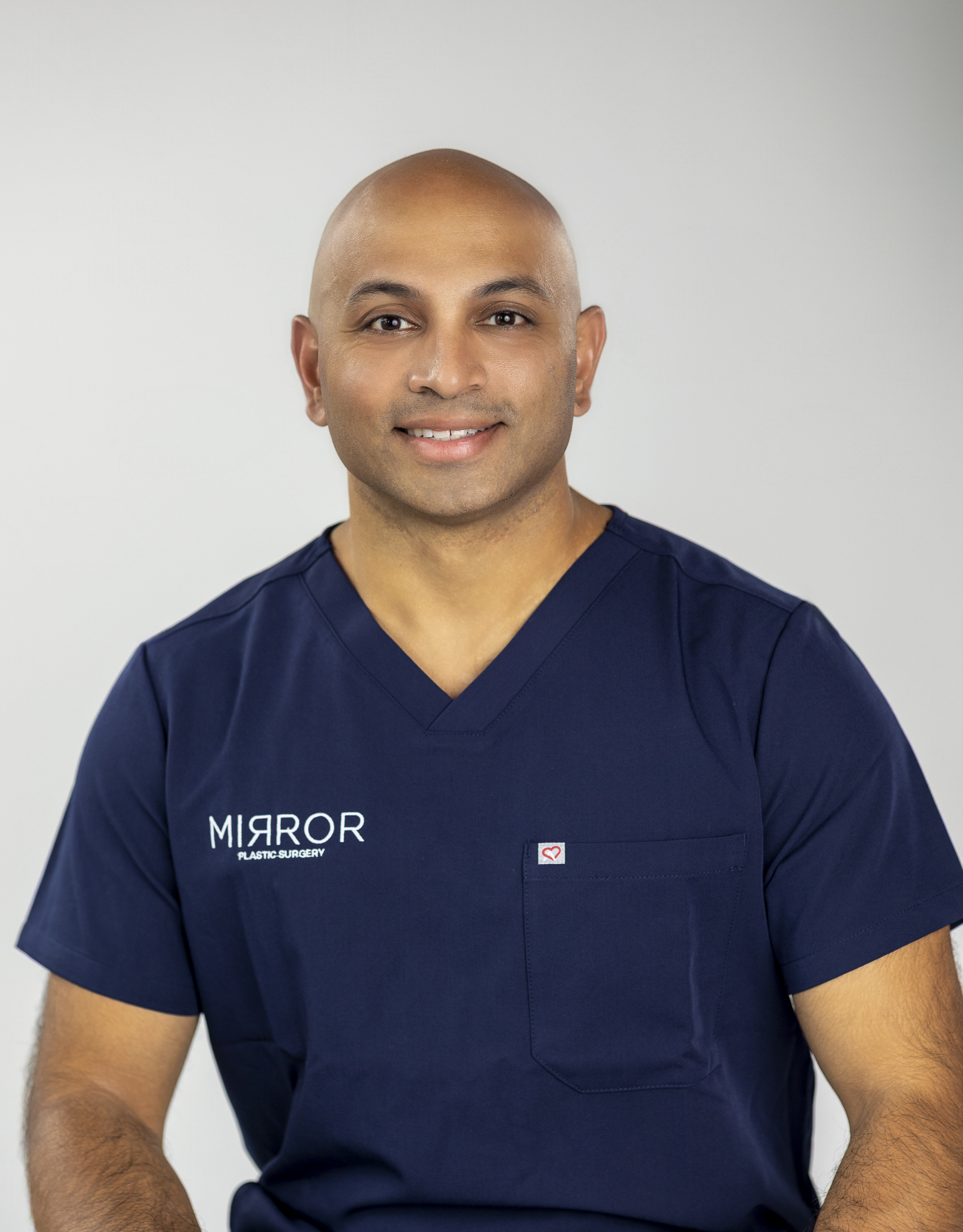
Dr. Akash exemplifies this standard. A Harvard Medical School graduate (cum laude, with Honors) trained through the Harvard-MIT Division of Health Sciences and Technology, he completed a seven-year integrated plastic and reconstructive surgery residency at Johns Hopkins University and an aesthetic surgery fellowship at the Manhattan Eye, Ear and Throat Hospital (MEETH), one of the most competitive aesthetic training programs in the country. He also completed the Stanford University Biodesign Innovation Fellowship and serves as a Next Generation Editor for Aesthetic Surgery Journal.
Dr. Akash has been named to Newsweek’s America’s Best Plastic Surgeons list for two consecutive years. At Mirror Plastic Surgery, the practice performs one to two surgeries per day. This deliberate limit helps ensure the entire clinical team focuses on each individual patient before, during, and after surgery.
Frequently Asked Questions
Does ultrasonic liposuction really work?
Yes, for appropriately selected patients, ultrasonic liposuction can be highly effective. The technique uses acoustic cavitation to emulsify fat cells before aspiration, which improves tissue selectivity compared with mechanical suction alone. Multiple peer-reviewed studies document measurable reductions in subcutaneous fat thickness, improved contour precision, and high patient satisfaction at six and twelve months.1
Results remain durable when patients maintain a stable weight after surgery. UAL does not treat visceral fat or correct significant skin laxity in patients with poor skin elasticity, so it should not be viewed as a weight-loss solution.
What are the risks of ultrasonic liposuction?
Risks of ultrasonic liposuction include those common to all liposuction techniques, such as seroma, hematoma, infection, contour irregularity, and anesthetic complications. UAL also carries a technique-specific risk of thermal injury at the probe or port site. Surgeons manage this burn risk through proper tumescent infiltration, skin-protecting port devices, and precise probe technique.
Overall complication rates in large case series range from approximately 1.9% to 4.6% when trained surgeons operate in accredited facilities. Patients with uncontrolled medical conditions, active smoking, significant skin laxity, or a BMI above 30 face elevated risk and may not be suitable candidates.
How long does recovery take after ultrasound-assisted liposuction?
Most patients return to sedentary work within 7–14 days and resume light exercise within 1–2 weeks. Bruising usually resolves by 10–14 days. Compression garments are worn for 4–6 weeks to support contour and reduce swelling.
Residual swelling continues to decline through weeks 3–6, and final contours stabilize at 3–6 months as the skin adapts to the reduced fat volume. As mentioned in the safety section, Tampa’s humidity can extend the visible swelling phase, so local patients should plan their recovery timeline with this in mind and follow their surgeon’s instructions closely.
Which body areas respond best to ultrasonic energy?
As detailed in the candidacy section, fibrous regions such as the abdomen, flanks, back, male chest, and neck often benefit most from UAL’s tissue selectivity. High-definition abdominal sculpting, which requires precise fat removal along muscular landmarks while preserving the subdermal vascular plexus, is another area where UAL can be particularly valuable. Areas with minimal subcutaneous fat, prominent bone, or significant skin laxity tend to be less suitable.
How do I evaluate a surgeon for ultrasonic liposuction?
Start with board certification by the American Board of Plastic Surgery, which requires completion of an accredited residency and passage of written and oral examinations. Beyond that baseline, look for an aesthetic surgery fellowship at a recognized academic program and clear experience with ultrasonic techniques across multiple body areas.
A practice model that limits surgical volume can support individualized attention. Ask whether the procedure will take place in an accredited facility with a board-certified physician anesthesiologist and whether the surgeon holds hospital privileges. A surgeon who spends meaningful consultation time reviewing your anatomy, explaining realistic outcomes, and discussing contraindications honestly is more likely to deliver safe, natural results than one who offers a rapid assessment and immediate scheduling.
1 Results may vary from person to person. Editorial content, before and after images, and patient testimonials do not constitute a guarantee of specific results.