
Written by: Ellie Pranckevicius, FNP-BC, Aesthetic Nurse Practitioner & Aesthetic Injector | Facial Restoration & Regenerative Injectable Specialist, Mirror Plastic Surgery | Last updated: July 24, 2026
Key Takeaways
- Normal post-injection swelling peaks within 24–72 hours and resolves in 7–14 days.1 Vascular occlusion instead presents with severe pain, skin discoloration, and delayed capillary refill and requires urgent hyaluronidase treatment.
- Most lip filler side effects are mild and short-lived, including swelling, bruising, tenderness, and small lumps that settle within two weeks when a qualified practitioner performs the injections.1
- Long-term risks such as filler migration, tissue stretch, and facial overfilled syndrome are largely preventable with conservative volume, correct anatomical placement, and careful provider selection.
- Choosing an injector with advanced anatomical training, on-site hyaluronidase, and a thorough consultation process significantly reduces the risk of serious complications such as vascular occlusion.
- Patients in the St. Petersburg and Tampa Bay area can schedule a personalized consultation at Mirror Plastic Surgery for expert guidance and safe, natural-looking lip filler results.
Normal Side Effects vs Emergency Symptoms
Most people experience only mild, temporary side effects after hyaluronic acid lip filler. Systematic reviews show that swelling, bruising, tenderness, and small nodules are the most common issues in the first 14 days. Serious complications remain rare when a skilled, anatomy-focused injector performs the treatment.
The following are normal, expected side effects in the days after lip filler treatment:
- Swelling and puffiness, most pronounced in the first 24–48 hours1
- Bruising that shifts from blue or purple to greenish-yellow as it heals
- Mild tenderness or throbbing at injection sites
- Slight asymmetry caused by uneven swelling
- Small palpable lumps or irregularities that settle as swelling subsides
The following are red-flag symptoms that require immediate contact with your provider or emergency services:
- Severe pain that worsens rather than fades after 48 hours
- Skin blanching with white patches, dusky purple, or mottled discoloration
- Cold skin on or around the lips with delayed capillary refill exceeding 5 seconds
- Vision disturbances, double vision, or sudden blurred vision
- Fever, spreading warmth, pus, or expanding redness suggesting possible infection
- Severe facial swelling, throat tightness, hives, or shortness of breath suggesting possible anaphylaxis
Vascular occlusion after dermal filler is a medical emergency that presents with severe disproportionate pain, skin blanching, dusky or blue-purple discoloration, and capillary refill time greater than 5 seconds, and it requires immediate hyaluronidase injection to restore blood flow. Analyses of primary studies on hyaluronic acid lip augmentation have reported no cases of vascular occlusion, tissue necrosis, or vision-threatening ischemic events, which highlights how rare these outcomes are when precise, anatomically informed technique is used. The FDA classifies dermal fillers as medical devices and maintains guidance on their risks, including rare but serious complications such as vascular occlusion and vision loss.
Schedule your safety-focused consultation to receive a thorough, anatomy-first assessment before any treatment decision is made.
Day-by-Day Lip Filler Healing Timeline
Lip filler swelling typically peaks in the first 24 to 48 hours after injection, with lips often appearing most dramatic on day 1 because of immediate redness, puffiness, and the hydrophilic properties of hyaluronic acid attracting moisture. Here is what a standard recovery progression usually looks like:
- Days 1–2: Maximum swelling, redness at injection sites, possible bruising beginning to appear, and mild throbbing. Lips may look larger than the intended final result.
- Days 3–5: Overall swelling decreases, but small nodules or unevenness may persist as the filler integrates and absorbs water. Bruising shifts from blue-purple toward greenish-yellow.
- Days 4–7: Most patients experience a 50–70% reduction in swelling and lips begin to soften and feel more natural.1 Asymmetry from uneven swelling should improve rather than worsen.
- Days 7–14: By day 7, most patients see their final visual results, with remaining minor lumps expected to soften over the next 1–2 weeks as filler fully integrates and micro-bruising resolves.1
- Week 4: Final stable results are generally reached by week 4, with the product fully integrated with tissue for a softer, more natural shape.1
Can Lip Fillers Cause Problems Years Later?
Short-term side effects usually resolve within weeks, but long-term tissue behavior follows a different pattern. Long-term tissue changes from repeated filler use are an area of growing clinical interest. MRI scans of 33 mid-face hyaluronic acid filler patients showed visible filler in all cases, including 12 patients last injected more than 5 years earlier and one patient with detectable filler more than 15 years after the final treatment.
Repeated filler treatments can cause chronic puffiness or malar edema by obstructing lymphatic drainage, and as little as 0.5 mL in the tear-trough or malar region can compress low-pressure lymphatic vessels. A 2024 paper in the Journal of Cosmetic Dermatology described “facial overfilled syndrome” with bulging foreheads, hooded upper eyelids, chipmunk-like cheeks, overprojected chins, and a taut “pillow face” appearance resulting from cumulative filler volume.
An FDA review has identified cases of bone resorption in patients who received filler placed directly against bone in the chin, jaw, mid-face, or forehead. These findings reinforce why volume discipline and anatomically guided placement matter for both immediate results and long-term facial health.
Do Lips Return to Normal After Fillers?
Most lip fillers last 6 to 18 months depending on the specific product, patient metabolism, and enhancement style.1 For most patients using hyaluronic acid-based products, the filler gradually degrades and lips return to their baseline appearance.1 Hyaluronidase can speed this process when reversal is desired.
High-dose hyaluronidase used to dissolve filler also breaks down native hyaluronic acid in the skin’s extracellular matrix, temporarily leaving some patients with deflated or more aged-appearing skin until native HA regenerates. Patients who have received repeated high-volume treatments over many years may also notice some degree of tissue stretch that does not fully recoil. These realities make conservative, volume-appropriate injection the most reversibility-friendly approach from the outset.
Lip Filler Migration and Shelf Lips
Concerns about migration focus on whether filler stays where it was placed rather than whether it eventually dissolves. Migration, meaning filler spreading beyond the intended injection zone, is a concern frequently raised by patients researching lip augmentation online. Phrases like “shelf lip,” “duck lips,” and “filler mustache” describe outcomes that occur when product is placed in incorrect anatomical planes or when cumulative volume exceeds what the tissue can support.
Hyaluronic acid filler can migrate to adjacent tissues through gravity, muscle movement, and pressure, with case reports documenting eyelid swelling and firm masses in areas never directly injected. Prevention relies on plane-specific technique, volume discipline, and product selection matched to the tissue characteristics of the perioral region. Depth control is the primary modifiable safety variable for minimizing complications during dermal filler injections, because risk rises sharply once the needle tip crosses from dermis into subcutis.
Studies on hyaluronic acid lip augmentation have typically used volumes of 1–2 mL per treatment session. This range reflects volumes associated with natural outcomes and a low migration risk.
Cold Sore Reactivation After Lip Filler
Patients with a history of oral herpes simplex virus (HSV-1) face a documented risk of cold sore reactivation after lip filler injections. The mechanical trauma of needling can trigger viral reactivation even in patients who have not had an outbreak in years.
Antiviral prophylaxis, typically valacyclovir or acyclovir started one to two days before the procedure and continued for several days after, is the standard preventive measure for at-risk patients. Any patient with a known HSV history should share this during consultation so that prophylaxis can be prescribed in advance. Active cold sores at the time of a scheduled appointment are a contraindication to proceeding with injection until the outbreak has fully resolved.
How to Choose a Qualified Injector in Tampa Bay
No single federal standard defines who can inject dermal fillers in the United States, and each state sets its own rules, which creates a patchwork of licensing laws, supervision requirements, and scope-of-practice boundaries. In Florida, nurse practitioners with autonomous practice authority may independently evaluate patients and develop treatment plans only within primary care and cannot independently administer dermal fillers.
The criteria that meaningfully differentiate a safe, skilled injector from a high-volume generalist include:
- Fellowship-level or advanced anatomical training: Anatomically guided technique, including plane-specific tool selection, remains the strongest modifiable risk factor in dermal filler safety.
- On-site hyaluronidase with a documented protocol: Clinics performing filler injections must stock hyaluronidase on site with a clear protocol for managing vascular occlusion.
- Supplier-neutral product selection: The injector selects the most appropriate product for the patient’s anatomy and goals, not the product tied to a sales quota or commission arrangement.
- Hour-long consultations with a top-to-bottom assessment: A proper consultation includes assessment of facial anatomy, review of medical history, discussion of risks and benefits, and development of a treatment plan without immediate pressure to proceed.
- Willingness to decline inappropriate treatments: A strong injector declines inappropriate treatments and explains what they would not do based on anatomy and safety, rather than agreeing with every patient request.
At Mirror Plastic Surgery in St. Petersburg, Ellie Pranckevicius, FNP-BC, leads all non-surgical injectable treatments. Ellie’s background includes four years in the Neuroscience ICU at Tampa General Hospital, 600 hours of hands-on aesthetics licensure training, and dual degrees in nursing from the University of South Florida. This combination grounds her injection technique in clinical physiology and surface-to-subdermal anatomical precision. Her work is supported by Dr. Akash Chandawarkar, a Harvard-educated, Johns Hopkins-trained plastic surgeon with fellowship training at Manhattan Eye Ear & Throat Hospital, whose anatomical expertise shapes the practice’s safety standards across every treatment.
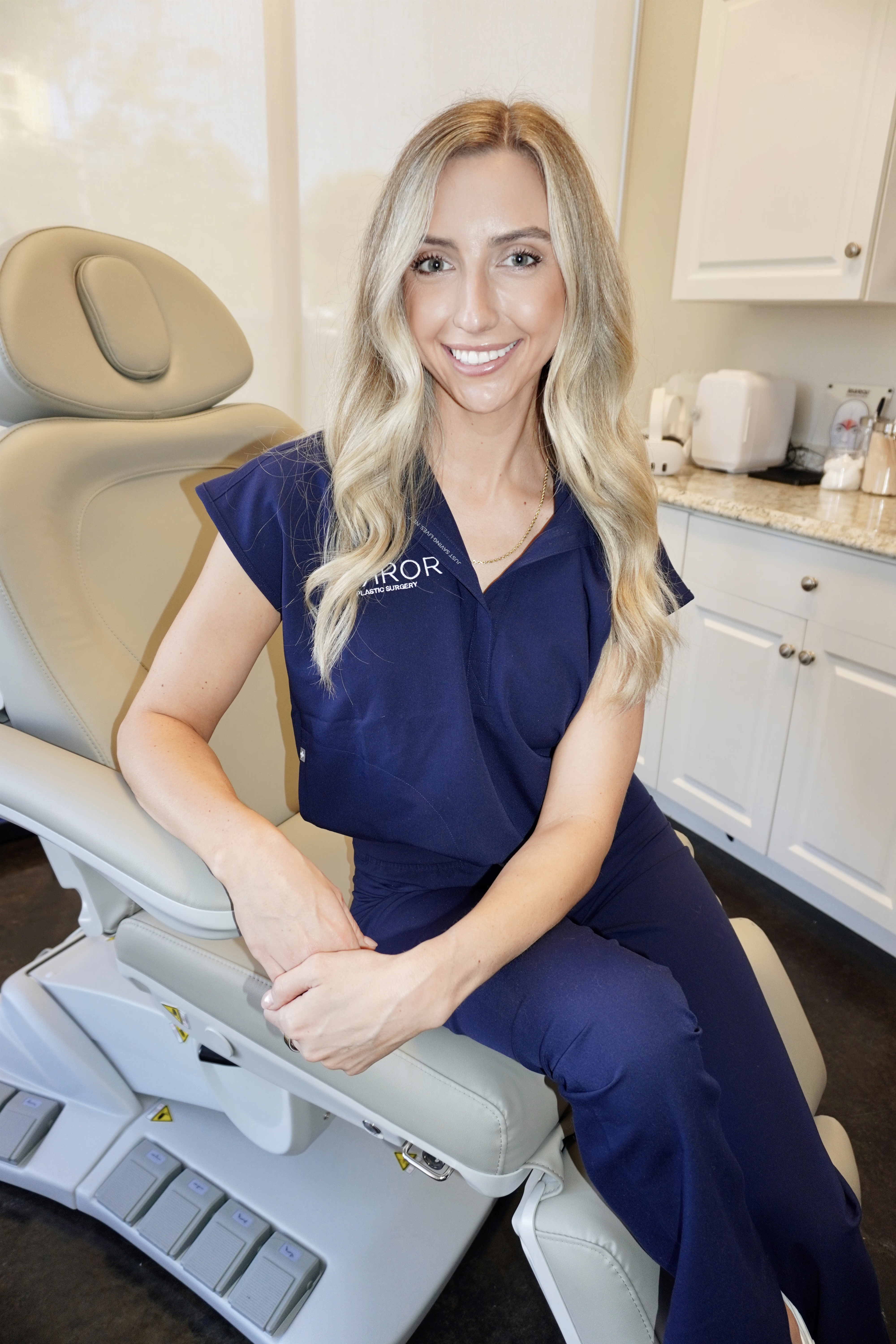
Experience Ellie’s comprehensive assessment approach, including a full top-to-bottom evaluation before any product touches your lips.
Mirror Lip Filler Aftercare Protocol
Thoughtful aftercare supports smooth healing and helps prevent avoidable complications.
The first 24 hours focus on controlling inflammation and fluid buildup:
- Apply a clean cold compress wrapped in cloth for 5–10 minutes at a time, several times on the first day to reduce swelling.
- Sleep with the head slightly elevated on the first night to limit fluid pooling around the lips.
For the first 48 hours, protect the area from excess heat and strain:
- Avoid strenuous exercise, saunas, steam rooms, and alcohol for 48 hours after treatment.
- Do not massage or apply pressure to the treated area unless your injector gives specific instructions.
Support circulation and watch for warning signs as you heal:
- Stay well hydrated and avoid blood-thinning supplements such as fish oil, vitamin E, and aspirin (unless medically required) for 24–48 hours.
- Contact your provider immediately if you experience worsening pain, skin color changes, cold skin, vision symptoms, fever, or spreading redness.
Real Patient Concerns About Lip Filler
Many patients researching lip fillers online worry about results that look “too done,” lips that extend beyond the natural border, or a stiff upper lip that does not move naturally. These outcomes are not inevitable. They usually stem from specific technical errors such as excess volume, incorrect anatomical plane, or product selection that does not match the tissue.
The perioral region is among the areas of highest vascular risk for occlusion during lip filler injections because it contains critical arterial anastomoses connecting to the ophthalmic arterial system. This anatomical complexity makes the injector’s training especially important in the lips compared with many other facial zones. Patients who have experienced migration or an overfilled appearance after treatment at high-volume practices often describe feeling rushed through a consultation that never addressed their anatomy or long-term goals. Mirror Plastic Surgery’s concierge model is designed specifically to avoid that experience.
Summary: Safe, Natural Lip Filler in Tampa Bay
Lip filler side effects range from expected and self-resolving to rare issues that require immediate intervention. Systematic reviews confirm that adverse events from hyaluronic acid lip augmentation are predominantly mild and transient when performed with anatomically informed technique. Vascular occlusion is a rare complication of dermal filler treatments overall and becomes even less likely with plane-specific technique, cannula preference in high-risk zones, volume discipline, and on-site hyaluronidase availability.
Long-term tissue changes, migration, and an overfilled appearance are preventable outcomes tied directly to provider selection. Patients in the St. Petersburg and Tampa Bay area who prioritize safety, natural results, and honest anatomical guidance have a clear path forward.
Start with an informed consultation at Mirror Plastic Surgery to discuss your goals, understand your anatomy, and make a confident decision about lip augmentation.
Frequently Asked Questions
How long does lip filler swelling last, and when should I be concerned?
Normal swelling follows the timeline detailed above, peaking in the first two days, improving significantly by the end of the first week, and resolving completely by week 2. Final results stabilize around week 4 as the product fully integrates with surrounding tissue. Swelling that worsens rather than improves after day 7, becomes one-sided, changes color, feels hot, or is accompanied by fever, discharge, or intensifying pain is not a normal part of healing. These signs warrant same-day contact with your injector. Symptoms such as white or mottled skin, cold lips, or any vision changes require immediate emergency evaluation instead of a wait-and-see approach.
What is vascular occlusion and how would I know if it is happening?
Vascular occlusion occurs when filler blocks or compresses a blood vessel and circulation to the surrounding tissue stops. It is rare but constitutes a medical emergency. The hallmark signs, which are detailed in the section above on normal versus dangerous symptoms, typically appear within hours and require immediate hyaluronidase treatment to restore blood flow before tissue damage becomes permanent. This urgency is why choosing a provider who stocks hyaluronidase on site and follows a documented emergency protocol is non-negotiable.
Can lip fillers cause permanent changes to my lips or surrounding tissue?
Most patients receiving conservative, appropriately volumized treatments with hyaluronic acid-based fillers see their lips return to a natural baseline as the product degrades over 6 to 18 months. Repeated high-volume treatments over many years can create lasting tissue changes, including persistent puffiness from lymphatic obstruction and tissue stretch that does not fully recoil. MRI studies have detected filler more than 5 years after the last injection in some patients. The risk of permanent change stays much lower when volume remains within anatomically appropriate limits, products are selected based on individual tissue characteristics, and treatments are spaced to allow proper integration. Ellie’s approach at Mirror Plastic Surgery prioritizes foundational restoration before volume augmentation to avoid the cumulative tissue burden that drives these long-term concerns.
What qualifications should I look for in a lip filler injector in the Tampa Bay area?
In Florida, nurse practitioners with autonomous practice authority cannot independently administer dermal fillers, but licensure alone does not define competence. The qualifications that matter most for safety and natural outcomes mirror the criteria described in the injector selection section above, especially advanced anatomical training, demonstrated familiarity with perioral vascular anatomy, a practice model that allows sufficient consultation time, supplier-neutral product selection, and on-site hyaluronidase with a clear emergency protocol. A qualified injector also takes a complete treatment history, explains what they would not recommend based on your anatomy, and never pressures you to proceed on the day of your first consultation. At Mirror Plastic Surgery, Ellie Pranckevicius brings ICU-level clinical judgment, 600 hours of hands-on aesthetics training, and the anatomical oversight of a fellowship-trained plastic surgeon to every patient interaction.
Is lip filler migration preventable, and what causes it?
Lip filler migration, where product spreads beyond the intended treatment zone, is largely preventable with correct technique. The main causes include injection into the wrong anatomical plane, use of a product that is too fluid for the perioral region, and cumulative volume that exceeds what the tissue can contain without displacement. Gravity, muscle movement, and pressure over time can also shift product that was not placed precisely. Prevention depends on plane-specific tool selection, conservative volume per session, and product choice matched to tissue depth and the desired outcome. Patients who have experienced migration from prior treatments can often have the displaced filler dissolved with hyaluronidase before starting a corrective plan. During a consultation at Mirror Plastic Surgery, Ellie evaluates the full perioral region as part of a top-to-bottom facial assessment so that any prior treatment history is factored into the plan before a single unit of product is placed.
Disclaimer: Results may vary from person to person. Editorial content, before and after images, and patient testimonials do not constitute a guarantee of specific results.
1 Results may vary from person to person. Editorial content, before and after images, and patient testimonials do not constitute a guarantee of specific results.