

Last updated: March 13, 2026
Key Takeaways
- Dermal fillers do not affect facial muscle movement long-term when anatomy experts use precise placement and conservative volumes.
- Common risks like migration, overfilling, and fibrosis stay rare with proper technique, full-face assessments, and thoughtful filler selection.
- Biostimulatory fillers like Radiesse and Sculptra stimulate natural collagen production, which supports long-term tissue health and dynamic expressions.
- Expert injectors prioritize safety and function, using layered techniques and anatomical mapping to preserve natural smiles and movements.
- Experience natural, movement-preserving dermal filler results with Mirror Plastic Surgery’s concierge approach, and book your consultation today.
Why Mirror Plastic Surgery’s Concierge Approach Feels Different
Mirror Plastic Surgery’s concierge model offers a slower, more thoughtful experience than traditional aesthetic practices. Our team often dedicates up to an hour for initial consultations and performs thorough top-to-bottom assessments. These visits explore both your emotional motivations and your anatomical needs.
This comprehensive style contrasts sharply with rushed consultations that can compromise personalized attention. We remain supplier neutral and use a full spectrum of FDA-approved products, including Juvederm, RHA, Restylane, and Radiesse. We select products based on your unique anatomy, not on quotas or brand pressure.
Our safety-first philosophy guides every decision. Each treatment plan prioritizes your well-being and natural function before any aesthetic enhancement.
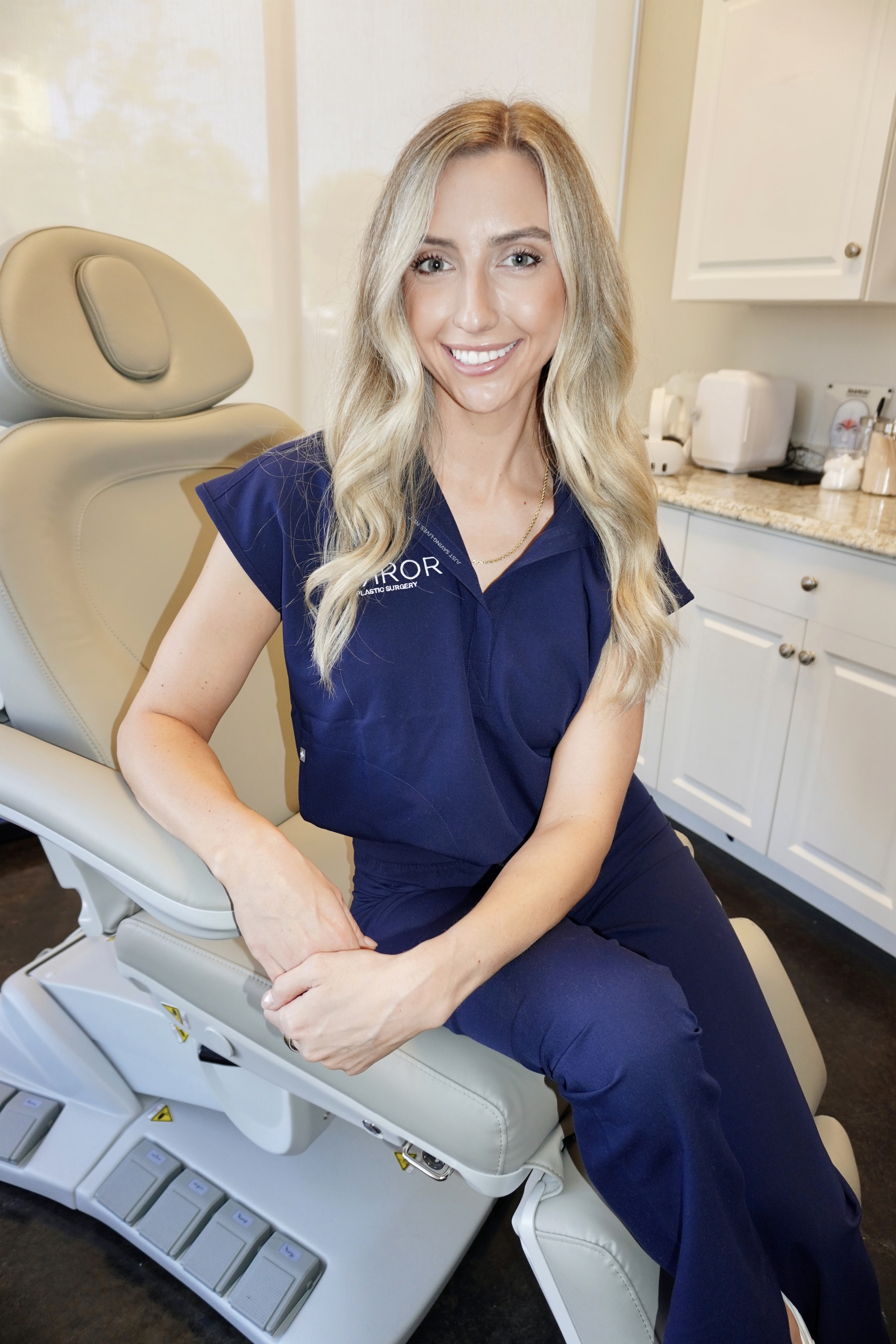
Meet Your Injector: Ellie Pranckevicius
Ellie Pranckevicius, FNP-BC, blends advanced nursing knowledge with refined aesthetic skill at Mirror Plastic Surgery. She holds a Bachelor’s in Health Science from Boston University and completed 600 hours of hands-on aesthetics training. She then earned both her Bachelor’s and Master’s in Nursing from the University of South Florida.
Ellie spent four years in the Neuroscience ICU at Tampa General Hospital, which deepened her understanding of human physiology and sharpened her clinical judgment. She now applies that expertise to a holistic, full-face approach. She focuses on revitalizing your inherent facial characteristics before adding volume, which helps create seamless transitions between facial regions.
Ellie values transparency and often advises against procedures that do not serve your goals or anatomy. This honesty builds deep trust with clients. For complex cases that need surgical expertise, Ellie collaborates closely with Dr. Akash Chandawarkar, a Harvard-educated, Johns Hopkins-trained plastic surgeon.
How Dermal Fillers Work With Your Facial Muscles
Facial anatomy knowledge guides safe and natural-looking filler placement. The face contains multiple muscle layers, including the superficial musculoaponeurotic system (SMAS) and many smaller expression muscles. Dermal fillers add volume to tissues and support structure, yet they do not directly affect muscle function.
Neuromodulators such as Botox temporarily relax muscles, while fillers act on the surrounding tissues instead. Biostimulatory fillers like Radiesse stimulate collagen production, which helps maintain natural tissue scaffolding and support.
Complications can still occur when technique or planning falls short:
| Risk | Description | Prevention |
|---|---|---|
| Migration | Filler movement from the injection site can cause stiffness | Precise anatomical placement and appropriate viscosity selection |
| Overfilling | Excessive volume leads to tissue distortion and “pillow face” | Conservative dosing with a gradual building approach |
| Fibrosis | Scar tissue formation can restrict natural movement | Low inflammatory potential fillers and expert injection technique |
At Mirror Plastic Surgery, our subdermal precision techniques support natural facial dynamics while avoiding muscle impingement.
Fillers and Muscle Movement: What Long-Term Results Really Show
The long-term relationship between fillers and muscle movement depends on injection technique, product choice, and practitioner expertise. When these elements align, fillers can enhance facial structure without limiting expression. Evidence-based practice helps separate myths from reality.
| Myth/Concern | Reality | Mirror’s Approach |
|---|---|---|
| Cheek fillers restrict smile | Proper placement preserves zygomaticus muscle function | Layered technique with anatomical mapping |
| HA causes permanent stiffness | Reversible fillers can be dissolved if needed | Conservative volumes with safety protocols |
| Long-term muscle atrophy | No evidence when properly administered | Full-face harmonization prevents overcompensation |
Late-onset complications occur in less than 1.5% of cases, and most relate to poor technique or excessive volumes. The rise of biostimulatory fillers marks a meaningful shift in treatment options. Products like Sculptra and Radiesse stimulate natural collagen production, which provides gradual improvements that support natural tissue function.
These treatments work with your body’s regenerative processes and can offer strong long-term support for natural movement patterns.
Ellie’s Blueprint for Safe, Natural Movement Over Time
Ellie follows a clear, stepwise approach to movement-preserving aesthetics. She begins with comprehensive facial mapping that identifies muscle attachment points and movement patterns. This map guides every injection decision.
Treatment plans focus on restoration before augmentation. Ellie addresses volume loss and structural support first, then considers subtle enhancement. Regular maintenance appointments allow for gradual adjustments that age naturally with your face.
Key strategies include matching filler viscosity to each facial region, maintaining conservative volumes, and setting realistic timelines for peak results. You can book a consultation to create a personalized, movement-preserving treatment plan.
Current Filler Trends and Misconceptions About Movement
The aesthetic field continues to move toward natural, biology-based treatments. Biostimulatory fillers like PLLA and calcium hydroxylapatite are gaining prominence for their ability to improve skin health long-term rather than simply adding temporary volume.
Recent advances in Sculptra demonstrate fibroblast activation for comprehensive tissue regeneration, which supports natural facial dynamics and expression.
Misconceptions still circulate about fillers causing sagging or permanent changes. However, systematic reviews report overall complication rates below 1% for dermal fillers when qualified practitioners perform the injections. The most important factor remains the injector’s experience and commitment to natural outcomes rather than dramatic transformations.
Frequently Asked Questions
Can cheek fillers affect muscles?
Cheek fillers do not affect muscle function when placed correctly in the proper tissue planes. Expert injectors like Ellie use layered techniques that enhance cheek volume while preserving the muscles responsible for smiling and facial expressions.
The key lies in detailed knowledge of facial anatomy and avoiding injections directly into or immediately adjacent to muscle fibers.
Do fillers cause facial stiffness?
Facial stiffness occurs rarely and usually stems from overfilling, poor product selection, or injections into the wrong tissue planes. Experienced practitioners who use conservative volumes and precise techniques see far fewer of these issues.
Modern dermal fillers integrate smoothly with natural tissues in most cases. Any stiffness that does appear typically improves as the product settles and the tissues adapt.
What are hyaluronic acid fillers’ long-term risks?
Long-term risks with hyaluronic acid fillers stay low when experts administer them. One major advantage is reversibility, since hyaluronidase can dissolve HA fillers if needed.
Migration occurs in less than 1.5% of cases and usually relates to technique or product choice. HA fillers also break down naturally over 6 to 18 months, which makes them a flexible and safe option for facial enhancement.
Do fillers ruin natural movement?
Quality fillers placed by skilled practitioners support natural movement instead of ruining it. The goal is to restore youthful volume and contours while keeping your dynamic expressions intact.
Biostimulatory fillers can even improve tissue quality over time, which further supports natural movement patterns. Most problems arise from poor technique, excessive volumes, or mismatched product selection.
Where can I find safe dermal fillers in Florida?
Mirror Plastic Surgery offers a high standard for safe dermal filler treatments in the Tampa Bay area. Our concierge approach, deep anatomical expertise, and commitment to natural results set us apart from high-volume clinics.
We prioritize safety, function, and long-term satisfaction over quick, high-turnover procedures.
How Mirror Plastic Surgery Protects Your Natural Expressions
Dermal fillers do not compromise facial muscle movement long-term when anatomy experts use evidence-based techniques. The practitioner you choose plays the central role in your outcome.
Mirror Plastic Surgery’s concierge approach provides personalized care that protects your natural expressions while still helping you reach your aesthetic goals.
Book Your Consultation
Safe, natural dermal filler options start with a thoughtful consultation. Mirror Plastic Surgery offers comprehensive visits that include:
- Detailed facial anatomy assessment
- Personalized treatment planning
- Safety evaluation and risk discussion
- Long-term maintenance strategies
Contact us today to schedule your consultation:
- Phone: 727-361-6515
- Email: hello@mirrorplasticsurgery.com
- Address: 780 4th Ave S, St. Petersburg, FL 33701
- Instagram: @mirrorplasticsurgery, @dr.akashplasticsurgery, @perfectlyplastics
Book a consultation today to explore how our movement-preserving approach can help you achieve natural, beautiful results that enhance your facial expressions.
Disclaimer: Results may vary from person to person. Editorial content, before and after images, and patient testimonials do not constitute a guarantee of specific results.
