Written by: Ellie Pranckevicius, FNP-BC, Aesthetic Nurse Practitioner & Aesthetic Injector | Facial Restoration & Regenerative Injectable Specialist, Mirror Plastic Surgery
Key Takeaways
- Dermal fillers are FDA-regulated injectable devices. Safety depends more on your provider’s anatomical knowledge, injection technique, and screening than on the product brand.
- Most side effects are mild and short-lived, with over 90% resolving within 14 days. Serious complications such as vascular occlusion occur in less than 1% of treatments performed by qualified practitioners.1
- High-risk facial zones include the glabella, nose, nasolabial folds, and tear troughs. These areas call for advanced anatomical training and conservative micro-aliquot technique to reduce vascular complications.
- Long-term risks such as filler migration and granuloma formation relate closely to technique. Conservative volume selection, slow injection, and thorough pre-treatment assessment lower these risks.
- At Mirror Plastic Surgery, Ellie Pranckevicius, FNP-BC, combines neuroscience ICU experience with advanced anatomical training to deliver concierge-level, safety-first consultations. Book your consultation today to begin with a detailed anatomy-first evaluation.
Side-Effect Tiers at a Glance
The table below organizes filler side effects into three tiers based on frequency and severity, using FDA adverse-event data and published clinical reviews. The “When to Call” column reflects standard clinical guidance.
| Mild (Common) | Less Common | Rare but Serious |
|---|---|---|
| Redness, swelling, tenderness, which typically resolve within 14 days. When to call: Swelling that worsens after 72 hours. | Bruising, which usually resolves in 7–14 days. Nodules or lumps, with 1,038 FDA dermal filler PMA approvals (with 22,247 total adverse events) analyzed from MAUDE data. When to call: Any firm lump persisting beyond 4 weeks. | Vascular occlusion, vision loss, and skin necrosis, which are rare but serious. When to call: Skin blanching, sudden severe pain, or any visual change. Call your provider immediately. |
Over 90% of adverse events from dermal fillers are mild and transient. Serious complications including vascular occlusion, infection, and granuloma occur in less than 1% of treatments performed by qualified practitioners.1 While most side effects resolve quickly, understanding potential long-term risks helps you make fully informed decisions.
Long-Term Dermal Filler Risks: Migration, Granulomas, Reversal
Long-term side effects fall into three primary categories: migration, granuloma formation, and complications related to reversal.
Migration. A 2023 narrative review documented filler migration as a recognized phenomenon. It appears most often after injections into the nose, lips, nasolabial folds, and forehead, and tear trough filler carries a specific risk of migration into the orbit. Migration often relates to technique and becomes more likely with repeated overfilling. MRI and ultrasound imaging studies have repeatedly documented filler remaining in facial tissue years after injection. Slow micro-aliquot injection and conservative volume selection reduce this risk.
Granuloma formation. Foreign-body granulomas are chronic inflammatory reactions that can appear months or years after injection. Onset can vary by material. Reported incidence ranges from 0.02% to 1% of cases after dermal filler injections.1 Common triggers include facial trauma, illness, herpes outbreaks, and dental procedures. Intralesional corticosteroids can suppress inflammation, and ultrasound-guided physical removal can help by addressing the underlying material.
Reversal outcomes. Dermal fillers can be dissolved with hyaluronidase, yet reversal does not always occur without consequences. A 2024 study found that some patients developed hollowing and tissue laxity after hyaluronidase dissolving. The safety of dermal fillers used repeatedly over many years has not been evaluated in a controlled clinical study.
Highest-Risk Facial Areas for Fillers
Anatomical location strongly predicts the risk of serious complications. The highest-risk zones share a key feature: vessels with direct or meaningful connections to the ophthalmic circulation.
- Glabella and forehead: The supratrochlear and supraorbital arteries run through this region, and arterial compromise is reported more commonly in the glabella than in many other facial sites.
- Nose: Off-midline nasal areas carry sharply elevated occlusion risk due to unseen vessel proximity.
- Nasolabial fold: Injection here can compromise the angular artery and part of the facial artery.
- Tear trough: The thin orbital septum, proximity of the globe, and extensive vascular networks make periocular procedures susceptible to both vascular embolization and direct mechanical complications.
Deliberate technique helps mitigate these risks. Procedural factors that elevate risk include bolus deposits instead of micro-aliquot technique, high-pressure or rapid injection, lack of aspiration in high-risk zones, and use of sharp needles in anatomically complex areas. Providers with deep anatomical training recognize danger zones before injecting and adjust technique accordingly.
Medical Situations Where Fillers Are Not Appropriate
Certain medical conditions and circumstances represent absolute contraindications to filler treatment. Others are relative contraindications that call for individualized risk discussion.
Absolute contraindications include:
- Pregnancy or breastfeeding
- Known allergy to product components, including true dermal filler hypersensitivity
- Active infection at the treatment site
- Active autoimmune disease affecting the treatment area, such as scleroderma or dermatomyositis in flare
Relative contraindications do not automatically rule out treatment. They require individualized risk assessment and may change timing, technique, or product selection:
- Anticoagulant therapy, where treatment may proceed with informed consent regarding elevated bruising risk and possible timing adjustments around dosing schedules
- Prior permanent fillers such as silicone or PMMA, which increase complication risk with subsequent injections because they alter tissue architecture and affect new product placement
- Active cold sores, uncontrolled diabetes, and recent isotretinoin use, each of which affects healing or infection risk in distinct ways that must be evaluated individually
- Uncontrolled hypertension, where blood pressure should generally be below 140/90 mmHg before treatment because elevated pressure increases bleeding risk during injection
- Prior surgery to the injection area, which may increase vascular compromise risk due to altered blood supply and scarring that makes anatomical landmarks less predictable
A thorough medical history review, not a brief intake form, separates safe practice from rushed practice. At Mirror Plastic Surgery, Ellie’s extended consultations are designed to surface every relevant factor before a treatment plan is proposed.
How to Evaluate Whether Your Injector Is Safe
Provider selection is the most modifiable risk factor available to you. The following checklist highlights red flags and markers of qualified practice.
Red flags to avoid:
- Consultation lasting fewer than 15 minutes with no full-face assessment
- No discussion of contraindications, medical history, or prior filler treatments
- No hyaluronidase on-site for emergency reversal
- Pressure to purchase multiple syringes or upsell to additional areas in the same visit
- Inability to explain which anatomical structures are near the injection site
- No clear protocol for managing vascular occlusion or other emergencies
- Injections by non-medical practitioners or use of uncertified products, which increases complication risk and makes credential verification essential
Markers of qualified, safe practice:
- Top-to-bottom facial assessment that evaluates the whole face before recommending any single area
- Transparent discussion of risks, including vascular occlusion and long-term outcomes
- Product selection based on individual anatomy, not supplier quotas
- Documented emergency protocol and hyaluronidase availability
- Advanced nursing or medical training with documented anatomical education
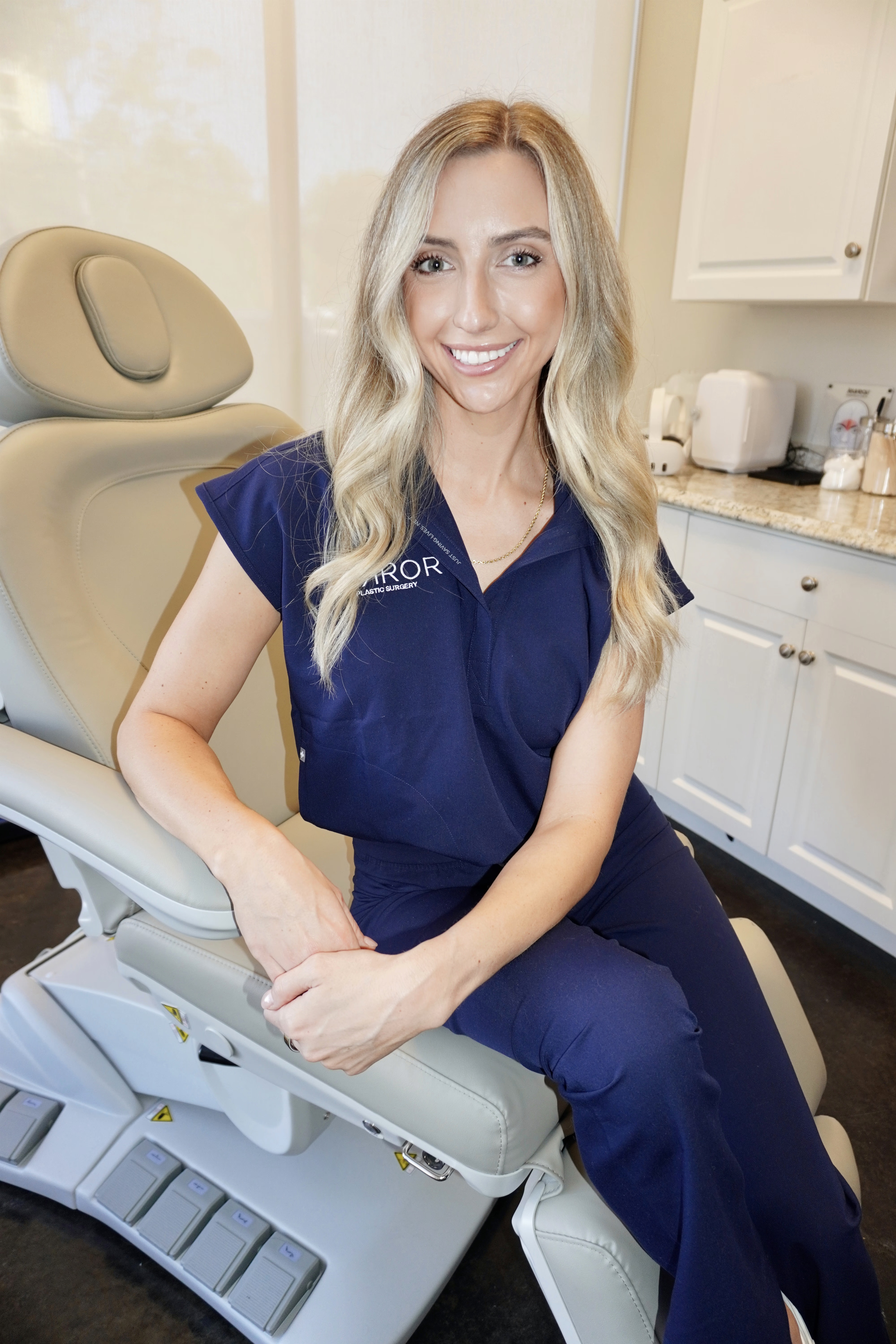
Ellie Pranckevicius, FNP-BC, brings four years of Neuroscience ICU experience at Tampa General Hospital along with her dual background in esthetics and advanced nursing. This combination directly informs her clinical judgment during every injection. Book a consultation with Ellie to experience a thorough, anatomy-first provider assessment.
Florida-Specific Aftercare for Dermal Fillers
St. Petersburg and Tampa Bay’s climate introduces aftercare variables that patients in cooler, drier regions do not face. Heat and humidity accelerate swelling, and UV exposure can worsen bruising and prolong redness.
Florida’s heat and humidity create a recovery environment that differs meaningfully from cooler climates. Each of the following precautions addresses how local conditions can amplify common post-treatment reactions:
- Heat: Avoid saunas, hot yoga, and prolonged sun exposure for at least 48–72 hours post-treatment. Florida’s ambient heat alone can extend swelling beyond what patients in northern climates experience, which makes active heat avoidance essential rather than optional.
- Sun protection: Apply broad-spectrum SPF 30+ immediately after any redness resolves. Because UV exposure to recently injected tissue can trigger hyperpigmentation, particularly in patients with darker skin tones, sun protection functions as a medical recommendation, not just cosmetic advice.
- Physical activity: Avoid vigorous exercise for 24 hours post-treatment. This minimizes swelling, which is already elevated by ambient heat, and reduces the theoretical risk of product displacement in fresh injection sites.
- Alcohol: Avoid alcohol for at least 24 hours before and after treatment. Alcohol dilates blood vessels and increases bruising risk, which becomes more relevant in warm-weather social settings.
- Blood-thinning supplements: High-dose fish oil, vitamin E, ginkgo biloba, garlic, and evening primrose oil increase bruising risk and must be disclosed at consultation.
- Infection vigilance: Bacterial infection occurs in less than 1% of treatments when strict aseptic technique is followed, with signs appearing 2–7 days post-treatment. Contact your provider immediately for fever, increasing redness, or pus.
Questions to Ask Your Injector
A qualified injector welcomes detailed questions. Use this framework at any consultation:
- Will you assess my full face before recommending any single area? Isolated treatments without whole-face context frequently produce asymmetry or an overdone appearance.
- Do you have hyaluronidase on-site, and what is your vascular occlusion protocol? This question tests whether the provider has planned emergency response before a crisis occurs.
- Why are you recommending this specific product for my anatomy? Product selection should be driven by your tissue characteristics, not by supplier relationships.
- What is your long-term maintenance plan, and when should I return? Fillers require ongoing maintenance, so a provider without a framework is not planning for your long-term outcome.
- What are the realistic risks for my specific anatomy and medical history? Any provider who minimizes risk during a consultation is not communicating in your best interest.
Dermal Fillers Versus Biostimulatory Fillers on the Face
For facial treatments, the choice between dermal fillers and biostimulatory fillers involves meaningful differences in reversibility, nodule risk, and anatomical suitability.
Dermal fillers (Juvederm, Restylane, RHA, Versa, Evolysse) are reversible with hyaluronidase, which provides a critical safety advantage. When vascular compromise occurs, prompt hyaluronidase administration can restore blood flow, an option unavailable with non-HA fillers. Dermal fillers typically last 6–18 months depending on product, area, and individual metabolism.1
Biostimulatory fillers (Radiesse/CaHA, Sculptra/PLLA) stimulate collagen production and last longer but carry distinct risk profiles. Delayed nodules are the dominant complication of collagen biostimulators, with 89.1% of a 2024 Brazilian complication series presenting as nodules. Granuloma onset for CaHA occurs at a median of approximately 7 months and for PLLA at approximately 19 months after injection. These products cannot be dissolved enzymatically, so misplacement or complications rely on supportive measures alone.
Neither category works as a universal solution. The right choice depends on individual anatomy, treatment goals, skin quality, and the provider’s assessment of long-term risk tolerance.
Making an Informed Decision About Fillers
Dermal fillers carry a well-characterized safety profile when anatomically trained providers use evidence-based technique and thorough patient screening. Data consistently show that serious complications remain rare in qualified hands and become more common when providers lack anatomical training, use uncertified products, or skip comprehensive screening.
Patients who invest time in provider selection, verify credentials, ask detailed questions, and insist on a full-face assessment achieve the lowest complication rates and the most durable, natural-looking outcomes. The consultation itself functions as a diagnostic tool. A provider who rushes it is demonstrating, in real time, how they approach the procedure.
Mirror Plastic Surgery’s concierge model centers on extended consultations, supplier-neutral product selection, and a philosophy that places safety and function before aesthetics. Ellie Pranckevicius’s dual background in esthetics and advanced nursing, combined with Dr. Akash Chandawarkar’s Harvard and Johns Hopkins training, means every non-surgical treatment plan is reviewed within a full surgical and anatomical context.
Book a consultation with Ellie at Mirror Plastic Surgery’s St. Petersburg location to begin with a thorough, honest assessment of your anatomy and goals.
Frequently Asked Questions
How long do dermal filler side effects typically last?
Most mild side effects such as redness, swelling, tenderness, and bruising resolve within 7 to 14 days.1 Bruising may last slightly longer in patients who take blood-thinning medications or supplements. Less common side effects such as nodules or prolonged swelling can persist for weeks and warrant follow-up with your provider. Rare complications like granulomas may not appear until months or years after treatment and require clinical evaluation for proper diagnosis and management. Florida’s heat and humidity can extend the duration of swelling compared to cooler climates, which makes post-treatment sun avoidance and activity restriction especially important for local patients.
Can dermal fillers be reversed if I experience a complication or dislike my results?
Dermal fillers, including brands like Juvederm, Restylane, RHA, Versa, and Evolysse, can be dissolved with an enzyme called hyaluronidase. This reversibility provides a primary safety advantage and explains why dermal fillers are often preferred in high-risk anatomical zones. Reversal is generally effective but not always consequence-free. Some patients experience temporary hollowing or tissue laxity after dissolving, particularly when large volumes have been present for extended periods. Biostimulatory fillers such as Radiesse and Sculptra cannot be enzymatically reversed, which makes product selection and precise placement especially critical with these agents. At Mirror Plastic Surgery, Ellie discusses reversibility as part of every treatment plan so patients understand their options before committing to any product.
What makes some injectors safer than others?
Provider safety depends primarily on anatomical knowledge, clinical training, injection technique, and the quality of pre-treatment screening, not on the brand of product used. Injectors with advanced medical training understand the location and variability of facial blood vessels, recognize early warning signs of vascular occlusion, and maintain emergency protocols including on-site hyaluronidase. High-volume practices that prioritize speed over individualized assessment show higher complication rates in published data. A safe injector conducts a full-face assessment, reviews your complete medical history, explains the risks specific to your anatomy, and welcomes detailed questions. Ellie Pranckevicius’s background in the Neuroscience ICU at Tampa General Hospital, combined with her esthetics training and advanced nursing credentials, gives her the clinical judgment to recognize and respond to complications that less experienced injectors may miss.
Who should not get dermal fillers?
Dermal fillers are not appropriate for everyone. Absolute contraindications include pregnancy, breastfeeding, known allergy to filler components, active infection at the planned injection site, and active autoimmune disease affecting the treatment area. Relative contraindications, which require careful individual risk assessment, include anticoagulant therapy, a history of permanent fillers such as silicone or PMMA, uncontrolled hypertension, recent isotretinoin use, active cold sores (particularly for perioral treatments), and prior surgery to the injection area that may have altered vascular anatomy. A thorough consultation that covers your full medical history, current medications, and supplement use provides the only reliable way to determine whether fillers are appropriate for you at a given time. Mirror Plastic Surgery’s extended consultations are specifically designed to surface these factors before any treatment is recommended.
What should I do if I think I am experiencing a serious complication after filler?
Contact your provider immediately if you experience any of the following after a filler treatment: skin that turns white, pale, or mottled, sudden or disproportionate pain at or near the injection site, any change in vision including blurring or loss of vision in one eye, skin that develops a dusky or darkening appearance over hours, fever, increasing redness, or pus at the injection site. Vascular occlusion, where filler blocks blood flow to tissue, is a time-sensitive emergency. Outcomes improve significantly with early intervention, and delays of even 24–48 hours can result in tissue damage that is difficult or impossible to reverse. At Mirror Plastic Surgery, patients have direct access to Ellie and the clinical team via call or text, consistent with the practice’s concierge medicine model.
Disclaimer: Results may vary from person to person. Editorial content, before and after images, and patient testimonials do not constitute a guarantee of specific results.
1 Results may vary from person to person. Editorial content, before and after images, and patient testimonials do not constitute a guarantee of specific results.