

Last updated: March 13, 2026
Key Takeaways on Filler Safety at Mirror Plastic Surgery
- Peer-reviewed studies show serious long-term complications from facial dermal fillers in less than 1–2% of cases, with most reactions mild and short-lived.
- Hyaluronic acid (HA) fillers have strong safety data, 50–86% persistence at 24 months, and can be dissolved with hyaluronidase to reduce permanent risk.
- Non-HA biostimulatory fillers like Radiesse and Sculptra are biocompatible, with late nodules under 2% and emerging options for reversal.
- Vascular occlusion, the most serious risk, affects about 0.35% of cases, and 84% of patients recover when treated quickly, with no evidence of permanent facial damage in the literature.
- Expert technique is crucial for safety, so book a consultation at Mirror Plastic Surgery for a personalized, evidence-based assessment by Ellie Pranckevicius, FNP-BC.
What Peer-Reviewed Research Shows About Long-Term Filler Safety
Peer-reviewed studies from 2010–2026 consistently report less than 1% serious long-term complications across both HA and non-HA fillers. Most adverse events are mild, short-term, and manageable when treated promptly. A meta-analysis of 24 studies with 1,410 patients found long-term adverse effects in only 4.8% of cases, and most of these were immediate, expected reactions.
| Filler Type | Study/Year | Sample Size | Key Finding |
|---|---|---|---|
| HA Fillers | PMC 2024 | 1,410 patients | 4.8% adverse effects, 50–86% persistence at 24 months |
| Radiesse (CaHA) | PMC 2025 | Multiple studies | Late nodules <2%, mean detection 20 months |
| Non-HA Fillers | 2024 Review | Review data | Late-onset reactions <1.5% of complications |
| Vascular Events | PMC 2024 | Clinical review | 0.35% incidence, 84% recovery with treatment |
Hyaluronic Acid Fillers: Reversible and Well-Studied
Hyaluronic acid fillers have excellent long-term safety and can be dissolved with hyaluronidase if needed. Clinical data show HA filler persistence of 50–86% at 24 months with rare long-term adverse effects. Most issues are short-term swelling, bruising, or mild discomfort that resolve within days or weeks.
A study of 101 women aged 40–65 reported 90% effective volume retention in the lower and midface, with visible improvements in appearance and psychological well-being at 12 weeks. Patient satisfaction tracked closely with volume maintenance, which highlights the value of correct product choice and precise technique.
Prospective research on 122 participants showed peak facial volumization at 12 months due to tissue integration and remodeling. These studies reported no migration or permanent damage. The ability to reverse HA fillers with hyaluronidase adds a safety layer that permanent fillers cannot match.
Meet Your Injector: Ellie Pranckevicius, FNP-BC
Ellie Pranckevicius, FNP-BC, combines advanced aesthetics training with critical care experience to support filler safety. She holds a Bachelor’s in Health Science from Boston University, 600 hours of specialized aesthetics training, and advanced nursing degrees from the University of South Florida. She also spent four years in the Neuroscience ICU at Tampa General Hospital.
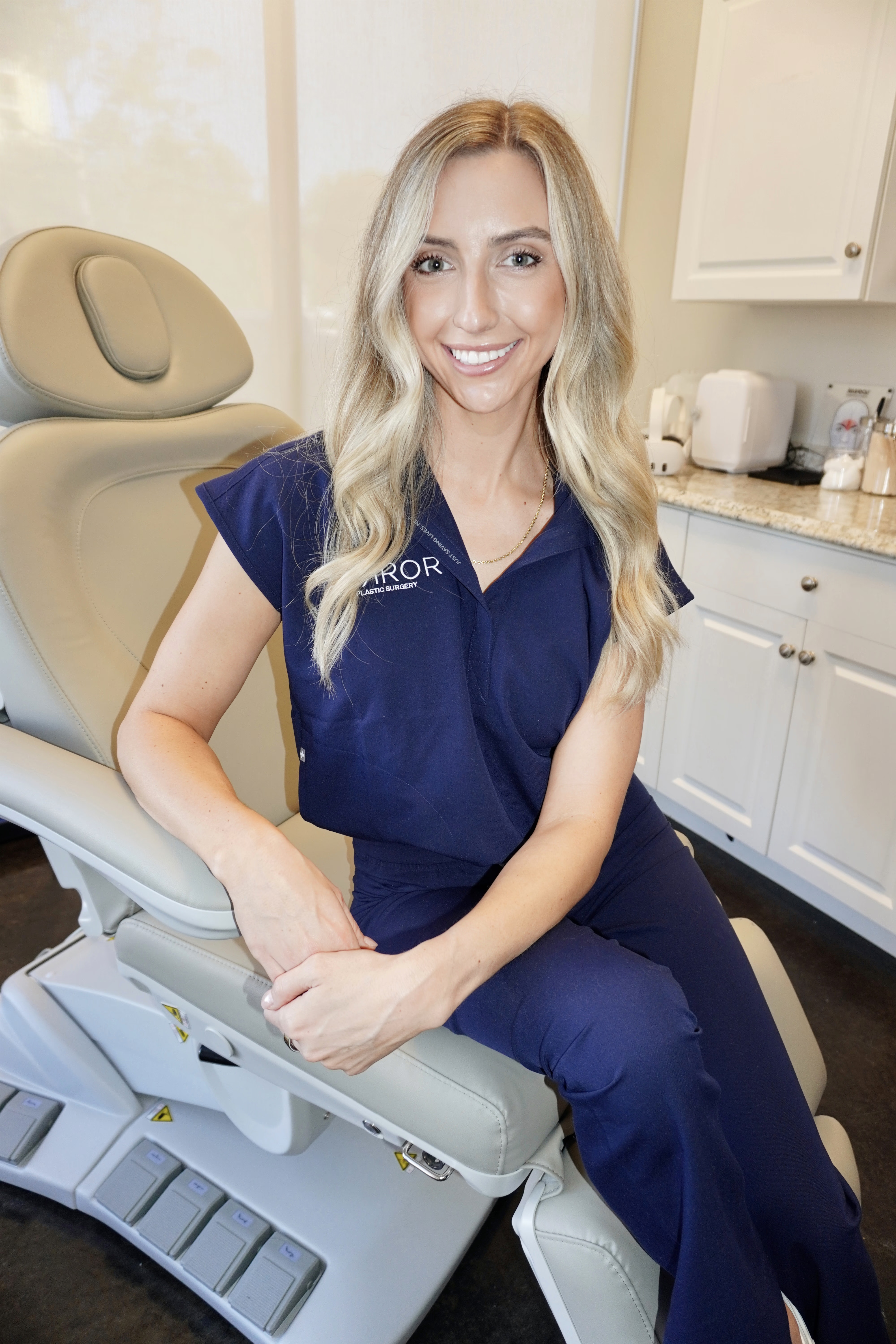
This blend of esthetic expertise and high-acuity clinical experience gives Ellie a deep understanding of facial anatomy and how the body responds to treatment. Evidence supports HA filler safety when qualified practitioners perform injections. Book a consultation for a comprehensive Mirror assessment with Ellie’s guidance.
Non-HA Fillers like Radiesse and Sculptra: Biostimulatory and Biocompatible
Non-HA fillers such as calcium hydroxylapatite (Radiesse) and poly-L-lactic acid (Sculptra) show strong biocompatibility with low rates of late complications. Foreign body granulomas, the main chronic reaction, appear from 1 week to 15 years after treatment, with a mean of 20.18 months, and usually present as treatable nodules.
Late-onset reactions with these semi-permanent fillers account for less than 1.5% of complications and include granulomas and chronic inflammation. Persistent Radiesse nodules remain rare and can often be managed with massage, corticosteroid injections, or surgical removal when needed.
Sodium thiosulfate shows promise for breaking down calcium hydroxylapatite, which may offer a reversal option for Radiesse-related issues. Mirror Plastic Surgery uses detailed anatomical planning and thorough patient screening with Radiesse and Evolysse to keep complication risks low.
Long-Term Concerns: Late Complications and Up to 20 Years of Data
Common fears that fillers “ruin” faces or cause permanent damage are not supported by peer-reviewed research. Vascular occlusion, the most serious complication, occurs in about 0.35% of cases, with roughly 84% recovery when treated quickly with hyaluronidase. Published studies do not report permanent facial damage or migration when fillers are placed correctly.
Current filler formulations are relatively new, so full 20-year datasets remain limited. However, evidence through 36 months shows no pattern of late, permanent complications. Studies demonstrate good biocompatibility with tissue integration and no reports of migration or lasting structural harm.
Ellie’s neuroscience critical care background and detailed anatomical training help reduce technique-related risks. She focuses on facial harmony and long-term balance, which avoids the overfilled or distorted look that can occur with isolated, high-volume treatments.
How Mirror Plastic Surgery Prioritizes Filler Safety
Research links vascular occlusion and overfilling directly to poor injection technique, so provider skill plays a central role in safety. Most HA filler side effects are mild and temporary, and expert technique further reduces procedure-related complications.
Mirror Plastic Surgery follows a concierge model with hour-long assessments by Dr. Akash Chandawarkar (Harvard-educated, Johns Hopkins-trained) and Ellie’s specialized expertise. The team uses evidence-based protocols and selects from Juvederm, RHA, Versa, Restylane, Radiesse, and Evolysse based on your anatomy and goals, not on quotas or commissions.
You can lower your risk profile by choosing Mirror’s structured, evidence-driven safety approach. Book a consultation or call 727-361-6515. The practice is located at 780 4th Ave S, St. Petersburg, FL.
Frequently Asked Questions About Long-Term Filler Safety
Long-Term Safety of Dermal Fillers in Studies
Extensive peer-reviewed research supports strong long-term safety for both HA and non-HA fillers. Serious adverse events remain under 1–2% of cases, and most complications are mild and short-lived. HA fillers add another safety layer because hyaluronidase can dissolve them, while non-HA options like Radiesse and Sculptra show high biocompatibility with rare late issues. Mirror Plastic Surgery builds on these safety profiles with detailed assessments and expert injection techniques.
What Happens to Fillers Years After Treatment
Current data up to 36 months show no evidence of permanent damage, migration, or worrisome late complications. Long-term 20-year data remain limited because modern fillers have evolved over time, but available research indicates gradual, natural breakdown without structural harm. HA fillers are fully biodegradable, and biostimulatory fillers integrate with your tissue and stimulate collagen. Rare late complications that appear can usually be managed with established treatment protocols.
Risk of Permanent Facial Damage from Fillers
Peer-reviewed evidence does not support the idea that properly administered fillers permanently ruin the face. Studies do not document permanent facial damage when trained injectors follow safe techniques. Even vascular occlusion, the most serious known complication, occurs in only 0.35% of cases and has an 84% recovery rate when treated quickly. Proper technique, strong anatomical knowledge, and thoughtful product selection remain the main safeguards. Ellie’s holistic planning and advanced training, combined with Mirror’s safety-first philosophy, keep the risk of unnatural or harmful outcomes extremely low.
How to Choose Safe Dermal Fillers and Providers
Choose providers with deep anatomical training, clear safety protocols, and thorough consultation processes. Look for practices that prioritize safety and education over volume, offer enough time for questions, and use products from reputable manufacturers. Mirror Plastic Surgery follows these standards through Ellie’s combined aesthetics and critical care background and a concierge model that allows time to understand your anatomy and goals.
What Sets Mirror Plastic Surgery’s Filler Safety Apart
Mirror’s safety-first approach centers on hour-long assessments, evidence-based planning, and unbiased product selection. Ellie’s 600 hours of aesthetic training and neuroscience ICU experience give her a rare level of insight into facial anatomy and physiology. The practice avoids rushed, high-volume models and instead provides personalized attention and meticulous technique that supports natural, harmonious results with minimized risk.
Peer-reviewed data consistently show that facial dermal fillers are safe long-term when qualified practitioners use proper techniques. Serious complications occur in less than 1–2% of cases, and most side effects are mild and temporary. The most important factor in your outcome is the provider you choose and the care they take with assessment and planning. Mirror Plastic Surgery’s evidence-based protocols, Ellie Pranckevicius’s advanced credentials, and a concierge philosophy work together to deliver safe, effective treatments tailored to your unique features.
For safe, natural-looking results, consider Mirror’s evidence-driven protocols. Book a consultation to start your personalized assessment.
Disclaimer: Results may vary from person to person. Editorial content, before and after images, and patient testimonials do not constitute a guarantee of specific results.
