

Last updated: March 13, 2026
Key Takeaways on Filler Safety
- HA fillers (Juvederm, Restylane, RHA) have the safest long-term record, with less than 1% delayed complications and full reversibility with hyaluronidase.
- CaHA (Radiesse) and PLLA (Sculptra) have 1–3% nodule or granuloma risks and are only partially or not reversible, so they demand precise technique.
- PMMA (Bellafill) creates permanent results but carries up to 5% long-term nodule formation and the highest risk of migration.
- Expert technique, careful patient selection, and evidence-based product choice prevent about 90% of filler complications.
- For personalized, safety-first filler planning, book a consultation with Ellie at Mirror Plastic Surgery to match the right filler to your anatomy and goals.
Comparing Long-Term Safety Across Filler Types
The long-term safety of facial dermal fillers depends on what they are made of, how long they last, and whether they can be reversed. Recent clinical data now gives clear guidance on which fillers offer the most reliable safety over time.
| Filler Type | Longevity/Reversibility | Complication Rates | Key Safety Features |
|---|---|---|---|
| HA (Juvederm, RHA, Restylane) | 6–24 months, fully reversible | <1% delayed complications | Hyaluronidase reversal available |
| CaHA (Radiesse) | 12–18 months, partially reversible | 1–3% late-onset nodules | Biostimulatory, technique-dependent |
| PLLA (Sculptra) | 18–24 months, non-reversible | 0.5–2% granulomas | Requires surgical removal if complications |
| PMMA (Bellafill) | Permanent, non-reversible | Up to 5% nodules at 5 years | Highest migration risk |
HA fillers show the most favorable long-term safety profile. Full reversibility with hyaluronidase enzyme treatment makes them the preferred option for managing vascular occlusion emergencies and correcting unwanted results.
Why Patients Choose Mirror Plastic Surgery for Fillers
Mirror Plastic Surgery provides extended, in-depth consultations instead of rushed, high-volume visits. Each new filler patient receives up to an hour for a detailed assessment of facial anatomy, skin quality, and long-term goals before any product is recommended.
The practice follows a supplier-neutral philosophy and selects from a broad range of products, including Juvederm, RHA, Versa, Restylane, and Radiesse. Recommendations focus on your anatomy and goals rather than manufacturer quotas. This evidence-based product choice, paired with strong anatomical knowledge, helps avoid complications linked to poor technique or mismatched filler selection.
The team performs only one to two procedures per day, which keeps the entire staff focused on personalized, safety-first care. This slower, concierge-style pace contrasts sharply with the rushed feel of many high-volume clinics.
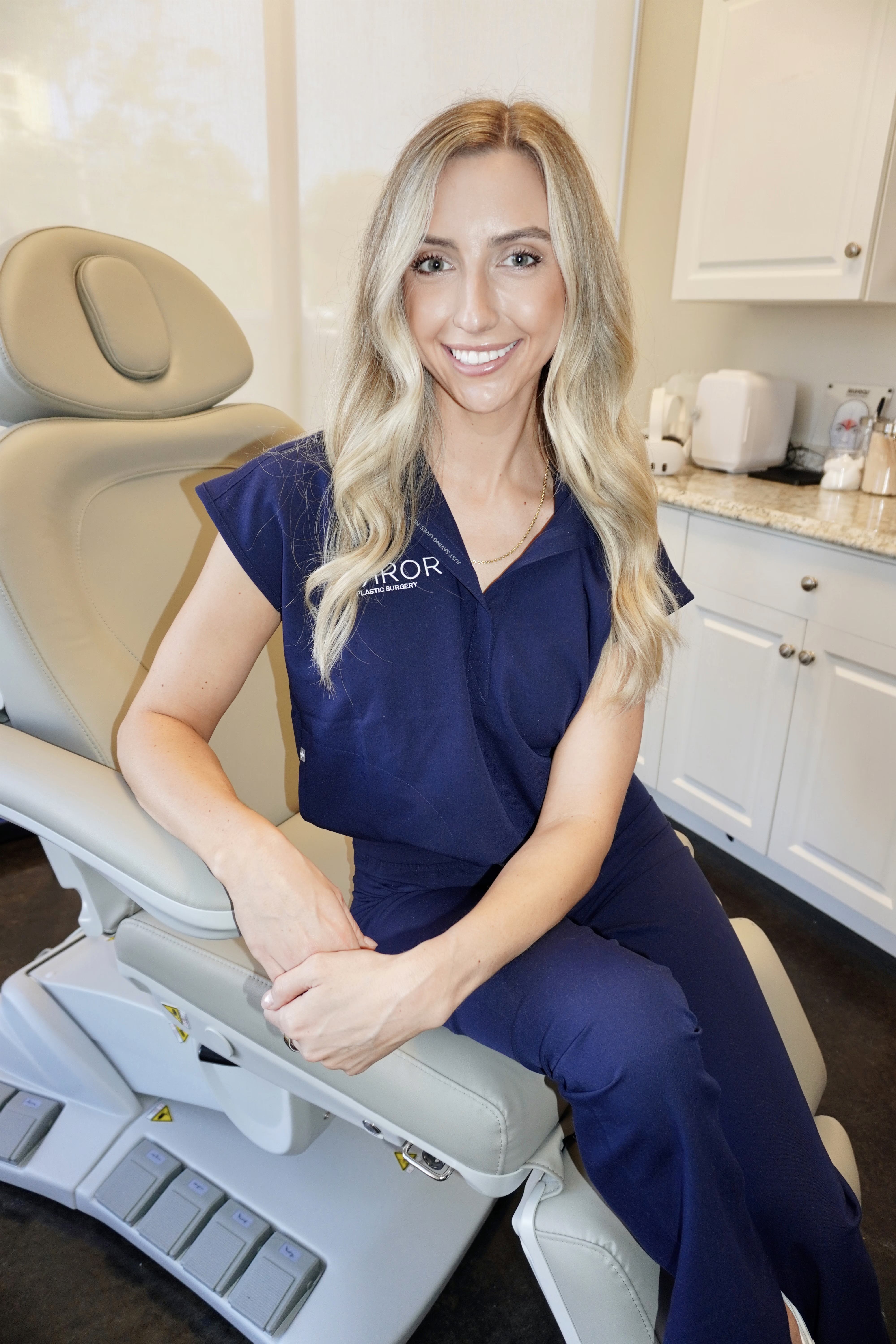
Your Injector’s Background: Ellie Pranckevicius, FNP-BC
Ellie Pranckevicius, FNP-BC, combines advanced esthetics training with critical care nursing experience. She holds a Bachelor’s in Health Science from Boston University, over 600 hours of hands-on aesthetics training, and nursing degrees from the University of South Florida. Her clinical background includes four years in the Neuroscience ICU at Tampa General Hospital.
This blend of surface and deep anatomical expertise supports a precise and safety-focused approach to facial rejuvenation. Ellie emphasizes full-face harmonization instead of isolated spot treatments. She frequently advises patients when high-cost procedures are unnecessary, which builds the trust needed for long-term care relationships.
Hyaluronic Acid Fillers: Safest Long-Term Profile
Hyaluronic acid fillers currently represent the safest option for most facial enhancement needs. Recent prospective studies show delayed complications in less than 1% of patients, and most side effects remain mild and temporary.
The main safety advantage of HA fillers lies in complete reversibility. 2024 Aesthetic Surgery Journal guidelines recommend prompt hyaluronidase injection for vascular occlusion emergencies. This guidance makes HA fillers the safest choice for areas with complex blood vessel networks.
HA fillers usually last 12–24 months, depending on the product and injection site. They provide predictable results without a permanent commitment. Their temporary nature allows adjustments as your face changes with age, which suits patients who want ongoing, natural-looking maintenance.
CaHA (Radiesse) and PLLA (Sculptra) Safety Considerations
Calcium hydroxylapatite (Radiesse) and poly-L-lactic acid (Sculptra) act as biostimulatory fillers that trigger collagen production. They can restore volume effectively but carry higher complication rates than HA fillers.
Multi-center studies report late-onset nodules with CaHA in 1–3% of cases, often linked to overfilling or incorrect placement. CaHA is only partially reversible with hyaluronidase, so precise technique and conservative dosing matter greatly.
PLLA (Sculptra) presents additional challenges because it cannot be reversed. FDA adverse event data notes rare late-onset granulomas in 0.5–2% of patients. These typically appear 6–24 months after treatment and may require surgical excision.
Book a consultation with Ellie to review whether biostimulatory fillers match your risk tolerance, lifestyle, and aesthetic goals.
PMMA (Bellafill): Permanent Results and Long-Term Risks
Polymethylmethacrylate (PMMA) fillers such as Bellafill provide permanent volume but carry the highest long-term complication risk. Expert consensus data shows up to 5% of patients develop nodules at five years, and migration risk becomes a particular concern in highly mobile facial areas.
The permanent nature of PMMA means complications cannot be dissolved and often require surgery for correction. Florida’s intense sun exposure can heighten inflammatory responses, so careful patient selection becomes especially important in the Tampa Bay region.
At Mirror Plastic Surgery, Ellie uses detailed anatomical assessment and a conservative treatment style to identify patients who may safely benefit from permanent fillers. She guides higher-risk patients toward safer, reversible alternatives when appropriate.
How Technique and Screening Reduce Filler Complications
Skilled injection technique and thoughtful patient selection prevent most filler-related problems. 2024 clinical data highlights that correct layering and accurate volume assessment significantly lower adverse event rates across all filler categories.
Ellie’s process starts with a comprehensive facial analysis that considers skin type, age, anatomy, and expectations before any treatment is planned. When needed, she collaborates with Dr. Akash to incorporate surgical options, creating a tailored and safe treatment roadmap.
The practice follows evidence-based medicine, so recommendations rely on published data instead of sales targets. This approach supports better long-term outcomes and higher patient satisfaction.
Filler Safety: Quick Answers to Common Concerns
Which facial filler has the least side effects?
Hyaluronic acid fillers show the lowest complication rates, with delayed adverse events in less than 1% of patients. Their full reversibility with hyaluronidase makes them the safest option for most facial enhancement treatments.
What are the long-term side effects of facial fillers?
Long-term issues can include nodules, filler migration, granulomas, and, rarely, vascular complications. Rates vary by filler type. HA fillers sit at the low end of risk, while permanent fillers such as PMMA carry the highest long-term complication rates.
Do fillers ruin your face over time?
Fillers do not ruin your face when an experienced practitioner uses appropriate products and sound technique. Safe results depend on matching the filler to your anatomy and goals, placing it correctly, and maintaining realistic expectations about outcomes and maintenance.
What is the best longest-lasting facial filler?
PMMA fillers such as Bellafill last the longest because they are permanent, but they also bring the highest risk profile. For many patients, longer-lasting HA fillers offer a better balance of durability, usually 18–24 months, and safety. These products allow adjustments as your face changes over time.
How do I choose the safest filler option for my needs?
The safest path involves a thorough consultation with an experienced injector who can study your anatomy, clarify your goals, and recommend products based on clinical evidence instead of sales pressure. Starting with reversible HA fillers often provides the safest way to begin facial enhancement.
Next Steps for Safe, Natural-Looking Facial Fillers
Choosing a facial dermal filler works best when you balance your aesthetic goals with clear long-term safety information. Mirror Plastic Surgery uses an evidence-based, patient-first approach to guide you toward filler types that match your risk tolerance and desired results.
The practice is located at 780 4th Ave S, St. Petersburg, FL 33701, and serves the greater Tampa Bay area with concierge-level care that prioritizes safety and satisfaction. Contact the team at 727-361-6515 or hello@mirrorplasticsurgery.com to start planning safe, natural-looking facial rejuvenation.
Book a consultation with Ellie to review your goals and learn which filler options offer the strongest safety profile for your unique facial anatomy.
Disclaimer: Results may vary from person to person. Editorial content, before and after images, and patient testimonials do not constitute a guarantee of specific results.
