
Written by: Ellie Pranckevicius, FNP-BC, Aesthetic Nurse Practitioner & Aesthetic Injector | Facial Restoration & Regenerative Injectable Specialist, Mirror Plastic Surgery | Last updated: July 31, 2026
Key Takeaways
- Concierge medicine wellness plans use a membership model with smaller patient panels, longer visits, and 24/7 direct practitioner access.
- Plans typically include comprehensive lab panels, personalized wellness protocols, and ongoing adjustments based on follow-up biomarkers instead of one-time evaluations.
- Insurance usually covers clinical services such as labs and procedures, while the membership fee is an out-of-pocket expense that rarely qualifies for HSA/FSA reimbursement.
- At Mirror Plastic Surgery, Ellie Pranckevicius, FNP-BC, supervises lab-guided, batch-tested peptide protocols with remote delivery available in all 50 states.
- Patients ready to explore a concierge peptide wellness plan can schedule a consultation with Mirror Plastic Surgery to review labs and create a personalized protocol.
How a Concierge Medicine Wellness Plan Works Step by Step
- Membership enrollment. The patient signs a membership agreement and pays a recurring fee. The fee covers the enhanced access layer, including longer visits, direct communication, and care coordination, not the underlying clinical services.
- Comprehensive intake assessment. The practitioner reviews the patient’s full medical history, current medications, lifestyle factors, and health goals during a 30–60 minute appointment. Advanced lab panels are ordered or reviewed at this stage to establish objective baselines.
- Personalized care plan development. The practitioner uses intake data and lab results to build an individualized protocol. In wellness-focused concierge practices, this may include preventive screenings, nutrition guidance, hormone panels, and, when clinically appropriate, peptide protocols.
- Ongoing direct access and monitoring. Members communicate with their practitioner via phone, text, or telemedicine between scheduled visits. This access supports timely adjustments and answers to emerging questions.
- Iterative protocol adjustment. Labs are repeated at defined intervals, commonly at 12 weeks, to quantify biomarker changes and guide dose or protocol adjustments. Health management becomes a continuous, data-driven process rather than a one-time event.
What a Concierge Wellness Plan Typically Includes
Most concierge wellness memberships center on extended access, proactive monitoring, and lab-guided planning.
- Extended appointments of 30–60 minutes
- Same-day or next-day scheduling
- 24/7 direct access to the practitioner via phone or text
- Comprehensive annual wellness and preventive evaluation
- Advanced lab panels (hormone, metabolic, thyroid, inflammatory markers)
- Personalized health and wellness planning
- Care coordination and specialist referral management
- Telemedicine visits
- Proactive chronic-condition monitoring
How concierge medicine differs from traditional primary care. Traditional primary care physicians often see 20 to 30 patients per day and spend about 15 to 30 minutes per visit. A conventional primary care physician managing upwards of 2,500 patients would require 26.7 hours per day to deliver all recommended preventive care, chronic disease management, and administrative tasks. Concierge medicine addresses this structural constraint by reducing panel size and funding the difference through the membership fee.
Typical patient panel size in concierge care. Conventional U.S. primary care physicians typically manage panels of 2,000–3,000 patients, while concierge models typically restrict panels to under 600 patients (often 300-600), while direct primary care models average around 400 patients but commonly range from 400-1,000 to enable longer appointments and greater continuity. Some ultra-premium programs maintain significantly smaller panels.
How Insurance and Billing Actually Work
Concierge medicine practices usually follow a hybrid model that separates membership access from billable medical services. Most practices bill insurance for covered services such as lab work, procedures, imaging, and specialist visits, while the annual membership fee applies only to the enhanced access layer, including unlimited messaging, same-day appointments, and 30–60 minute visits.
Key billing realities for prospective members:
- The membership fee is never reimbursed by standard health insurance, Medicare, or Medicaid and remains a separate out-of-pocket expense.
- Lab work, imaging, specialist referrals, hospitalizations, and prescriptions continue to be billed through the patient’s existing insurance plan.
- Under IRS Section 213(d), concierge membership fees are generally ineligible for HSA or FSA reimbursement because they represent payment for access to care rather than diagnosis, cure, mitigation, treatment, or prevention of disease, though narrow exceptions exist where a membership is structured as prepayment for specifically enumerated services.
- Under IRS Publication 502, only the portion of concierge membership fees that pays for actual medical services may be deducted as medical expenses once total qualified expenses exceed 7.5% of adjusted gross income.
- Annual physicals, lab work, EKGs, vaccinations, and in-office procedures ordered through a concierge practice remain eligible for HSA/FSA reimbursement under the same rules as traditional practices.
Clarifying the billing structure highlights what the membership fee actually purchases. Members pay for time, access, and coordination that create the clinical capacity for true personalization. That personalization begins with a comprehensive assessment process that would be structurally impossible in a high-volume traditional practice.
The Personalized Assessment Process at Mirror Plastic Surgery
Lab-guided personalization forms the clinical core of concierge wellness at Mirror Plastic Surgery. Ellie Pranckevicius, FNP-BC, uses the extended consultation model described earlier to conduct a comprehensive intake covering full medical history, current medications, lifestyle factors, and specific health goals. For weight management, inflammatory conditions, or hormonal concerns, she reviews or orders comprehensive lab panels that include thyroid function, liver and kidney markers, diabetes indicators, and hormone levels.
Peptide therapy protocols then customize dosage, delivery method, and peptide combinations based on an individual’s health goals, medical history, bloodwork, hormone panels, and symptom patterns rather than generic templates. This diagnostic-first approach ensures that any protocol recommended reflects the patient’s actual physiology rather than a population average.
Many U.S. consumers, particularly younger and higher-income ones, have completed voluntary wellness lab tests in recent years. That trend reflects growing demand for the kind of data-driven personalization that concierge wellness plans are structured to deliver.
Integrating Advanced Peptide Protocols Safely
Peptides are short chains of amino acids that act as biological signaling molecules. Many peptides used in wellness protocols are not FDA-regulated, are accessed through compounding pharmacies, and carry an evidence base that ranges from robust to preliminary depending on the specific compound. Medical supervision, quality sourcing, and individualized dosing therefore serve as essential safeguards.
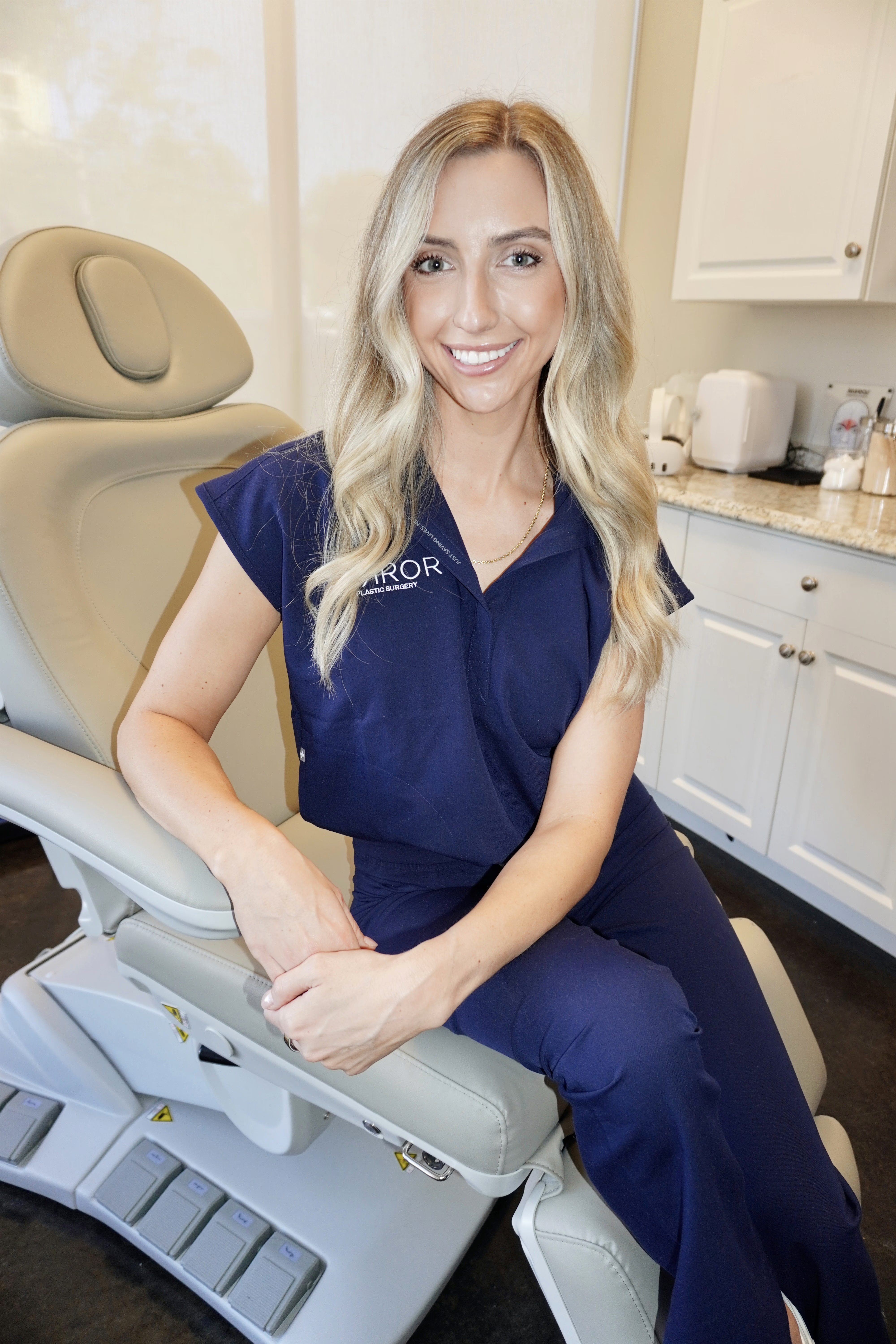
At Mirror Plastic Surgery, Ellie Pranckevicius, FNP-BC, leads peptide therapy. She is a board-certified Family Nurse Practitioner with four years in the Neuroscience ICU at Tampa General Hospital, a Master’s in Nursing from the University of South Florida, and extensive esthetician training. This dual clinical-aesthetic perspective informs her approach to protocols targeting inflammation, weight management, anti-aging, energy, anxiety, and post-surgical recovery.
Structural features of Mirror Plastic Surgery’s peptide program include:
- Batch-tested sourcing. Peptides come from reputable compounding suppliers who conduct rigorous batch testing for purity, potency, and accurate dosage, which clearly separates them from unverified online retailers.
- 24/7 direct text access. Ellie is reachable by text at any time for questions, dosing guidance, and refill requests.
- One-to-two procedures daily. Mirror Plastic Surgery limits its daily procedure volume to one or two so the entire clinical team can remain focused on each patient before, during, and after care.
- 30–60 minute consultations. Every peptide consultation follows the extended-visit standard of concierge medicine, allowing thorough assessment rather than a rushed protocol handoff.
- Nationwide remote delivery. The full process, including consultation, protocol design, prescription, and shipping, is available remotely across all 50 states, including Hawaii and Alaska.
Real-World Concierge Peptide Patient Journey
A 44-year-old woman with persistent fatigue, mild systemic inflammation, and early signs of skin aging schedules a remote consultation with Ellie. During the 45-minute intake, Ellie reviews her medical history, current supplements, and goals. Lab panels reveal suboptimal thyroid markers, elevated hsCRP, and declining hormone levels consistent with perimenopause.
Based on these results, Ellie designs a custom stack combining GHK-Cu for collagen support and skin health, BPC-157 for systemic inflammation, and NAD for mitochondrial energy production. Ellie provides video-guided reconstitution instructions and detailed self-administration protocols. The patient has direct text access to Ellie throughout.
At week 12, repeat labs show measurable reductions in inflammatory markers.1 The protocol is adjusted accordingly, and a maintenance schedule is established.
Potential Downsides and Trade-Offs of Concierge Peptide Care
Key limitations of concierge medicine. Concierge wellness plans carry real limitations that prospective members should evaluate honestly.
- Cost layering. Concierge medicine serves patients who can afford both an insurance plan and a substantial retainer fee layered on top, typically benefiting wealthier individuals in major metropolitan markets.
- No insurance coverage for the membership. The retainer is an out-of-pocket expense in virtually all cases, and HSA/FSA eligibility is limited.
- Evidence gaps for peptides. BPC-157, for example, lacks large-scale human trials, is banned by WADA, and carries an incompletely characterized human risk profile. Patients should discuss the evidence base for each compound with their practitioner before starting.
- Reduced primary care access for non-members. Growth of concierge medicine may reduce primary care capacity for lower-income and Medicaid patients because physicians transitioning to concierge models shrink the pool of physicians available to non-members.
- Outcome evidence is mixed.1 Smaller panels are associated with higher patient satisfaction and improved continuity of care, but robust randomized evidence demonstrating superior long-term health outcomes compared with high-quality conventional primary care is lacking due to selection bias and methodological constraints.1
- Maintenance dependency. Peptide benefits diminish when protocols are discontinued, which requires ongoing commitment to sustain results.1
How to Choose a Concierge Peptide Provider
Choosing a concierge wellness provider, especially one offering peptide protocols, requires careful evaluation across several dimensions.
- Practitioner credentials. Confirm board certification and relevant clinical training. Ellie Pranckevicius holds FNP-BC certification, a Master’s in Nursing from USF, and four years of critical-care ICU experience.
- Lab-guided personalization. Providers who prescribe protocols without reviewing labs are not practicing individualized medicine. Insist on baseline and follow-up testing.
- Sourcing transparency. Ask whether peptides come from compounding pharmacies that conduct batch testing for purity and potency. Unverified online sources carry significant quality-control risks.
- Medical supervision structure. Ongoing access to a licensed practitioner, not just an initial consult, is essential for safe dose adjustment and adverse-event monitoring.
- Remote capability. For patients outside the Tampa Bay area, confirm that the provider can legally prescribe and ship to your state.
- Volume and attention model. High-volume practices that see dozens of patients daily cannot match the individualized attention of a practice that limits itself to one or two procedures per day.
Traditional Primary Care vs. Concierge Medicine Wellness Plan
The following comparison shows how concierge wellness plans trade large patient panels for deeper access and personalization. That trade-off creates the time and attention required for lab-guided peptide protocols like those offered at Mirror Plastic Surgery.
| Feature | Traditional Primary Care | Concierge Medicine Wellness Plan | Mirror Plastic Surgery (Peptide Concierge) |
|---|---|---|---|
| Patient panel size | 2,000–3,000 patients | Typically under 600 for concierge; ~400 average for DPC | One to two procedures per day; individualized focus |
| Typical appointment length | 15–30 minutes | 30–60 minutes | 30–60 minute consultations |
| Direct practitioner access | Office hours, callback queues | 24/7 phone, text, or email | 24/7 direct text access to Ellie Pranckevicius |
| Lab-guided personalization | Reactive, ordered when symptomatic | Proactive advanced screenings included | Comprehensive panels (thyroid, hormone, metabolic, inflammatory markers) at intake and follow-up |
Frequently Asked Questions
Are the peptides used at Mirror Plastic Surgery FDA-approved?
Most peptides used in wellness protocols, including those offered at Mirror Plastic Surgery, are not FDA-regulated. They are accessed through compounding pharmacies and have been studied in clinical and research settings for over a decade. The primary risk associated with peptides often comes from obtaining them from unregulated sources without medical oversight.
Mirror Plastic Surgery sources peptides exclusively from reputable compounding suppliers who conduct rigorous batch testing for purity, potency, and accurate dosage. Every protocol is prescribed and monitored by Ellie Pranckevicius, FNP-BC, following a comprehensive intake assessment that includes medical history review and, where indicated, lab panels.
What conditions can peptide therapy address?
Peptide therapy at Mirror Plastic Surgery supports a broad range of health and wellness goals. Current protocols address systemic and gut inflammation, autoimmune conditions, weight management and metabolic health, post-surgical recovery, collagen and elastin production, skin and hair health, mitochondrial energy production, anxiety and mood, sexual wellness, and fertility support. Ellie designs each protocol based on the individual’s specific lab results, medical history, and goals, not a one-size-fits-all template.
What happens if I stop taking peptides?
Benefits from peptide therapy diminish when protocols are discontinued, similar to stopping any structured health regimen.1 For example, inflammatory conditions that were being managed through peptide support are likely to return to their prior state once the protocol ends.1 For most patients, a maintenance protocol is necessary to sustain the outcomes achieved during the initial treatment phase.
Ellie discusses maintenance planning as part of the ongoing concierge care relationship and adjusts protocols over time based on repeat lab results and symptom response.
Will everyone see the same results?
Results from peptide therapy vary significantly from person to person. Genetics, diet, lifestyle, baseline lab values, the specific peptides used, and protocol adherence all influence outcomes. Some patients report initial improvements within the first week, while others require longer timelines depending on the condition being addressed.1
This variability explains why Mirror Plastic Surgery emphasizes a thorough, individualized assessment before any protocol is initiated. A personalized approach grounded in objective lab data produces more predictable and meaningful outcomes than generic protocols.1
Can I access Mirror Plastic Surgery’s peptide services if I live outside Florida?
Yes. The entire Mirror Plastic Surgery peptide process, including initial consultation, lab review, protocol design, prescription, and product shipping, is available remotely across all 50 states, including Hawaii and Alaska. Consultations take place via telemedicine, and Ellie remains accessible by text throughout the patient’s journey for questions, dosing guidance, and refill requests.
Patients in the Tampa Bay area may also visit the St. Petersburg clinic in person at 780 4th Ave S, St. Petersburg, FL 33701.
How does Mirror Plastic Surgery’s concierge model differ from a standard telemedicine peptide clinic?
Most telemedicine platforms offering peptides operate at high volume with limited one-on-one time and minimal lab integration. Mirror Plastic Surgery maintains the low daily volume mentioned earlier, which supports individualized focus on every patient. Ellie conducts 30–60 minute consultations, reviews comprehensive lab panels, and remains available 24/7 via direct text, not a general support queue.
Peptides are sourced from batch-tested compounding suppliers, and every protocol is adjusted iteratively based on follow-up labs and patient response. This structure reflects the same concierge philosophy that governs Mirror Plastic Surgery’s surgical practice under Dr. Akash Chandawarkar, MD.
1 Results may vary from person to person. Editorial content, before and after images, and patient testimonials do not constitute a guarantee of specific results.
Peptide therapy is intended for wellness and optimization purposes and is not prescribed to diagnose, treat, cure, or prevent disease unless specifically stated. Many peptides are not FDA-approved and may be used off-label. Some have limited long-term safety data, with a potential for unknown risks, complications, or desensitization with prolonged use.