
Written by: Ellie Pranckevicius, FNP-BC, Aesthetic Nurse Practitioner & Aesthetic Injector | Facial Restoration & Regenerative Injectable Specialist, Mirror Plastic Surgery | Last updated: August 6, 2026
Key Takeaways
- Concierge medicine uses smaller patient panels and longer appointments to support chronic inflammation, metabolic issues, and peptide therapies more deeply than traditional primary care.
- Brief, time-constrained visits limit thorough lab review, individualized protocol adjustments, and ongoing support for complex health goals.
- Concierge models remove insurance-driven billing incentives, so physicians can prioritize clinical need over visit volume.
- Peptide therapies require concierge-level oversight because dosing is individualized, labs must guide decisions, and patients need ongoing access to their provider.
- Patients seeking personalized peptide protocols and extended care can schedule a consultation at Mirror Plastic Surgery to explore custom treatment options.
How Concierge Medicine Works
Concierge medicine is a membership-based primary care model in which patients pay a direct retainer fee, monthly or annually, in exchange for smaller patient panels, longer appointments, and enhanced access to their provider. Unlike traditional primary care, where a physician typically manages a panel of roughly 1,200 to 2,500 patients, concierge panels typically range from 150 to 600, with many practices maintaining 400-600 patients. This structure allows substantially more time per visit and direct communication between appointments.
Concierge Medicine vs Traditional Primary Care at a Glance
These differences in panel size and access create measurably different care experiences across appointment length, availability, and clinical focus. The structural differences between the two models affect nearly every dimension of care delivery. The table below compares key operational features using 2026 national benchmarks and Florida-specific context where applicable. Because retainer costs and insurance structures are not directly comparable on a shared scale, those distinctions are addressed in prose below the table.
| Feature | Traditional Primary Care | Concierge Medicine |
|---|---|---|
| Typical patient panel size | 1,200–2,500 patients per physician | 150–600 patients per physician, commonly 400–600 |
| Average appointment length | 15–20 minutes | 30–60+ minutes |
| After-hours / direct access | Limited, often routed through on-call staff | Direct phone, text, or email to provider |
| Preventive and wellness focus | More reactive, shaped by insurance billing codes | Proactive, lab-guided, and goal-oriented |
| Lab review depth | Standard panels with brief review during visit | Comprehensive panels with extended interpretation |
Traditional primary care is typically billed through insurance, so the physician’s revenue depends on visit volume. Concierge practices charge a direct membership retainer that is separate from, and often in addition to, insurance. This structure removes the per-visit billing incentive and allows the provider to allocate time based on clinical need rather than reimbursement codes.
In the Tampa Bay and St. Petersburg area, concierge and concierge-adjacent practices structure fees individually based on the scope of services, lab work, and ongoing support included. Pricing is discussed during consultation rather than published as a flat rate, because each patient’s protocol differs.
Trade-Offs and Limitations of Concierge Medicine
Concierge medicine carries real trade-offs that prospective patients should evaluate honestly before committing to a retainer.
- Out-of-pocket retainer cost: The membership fee is a direct expense that insurance does not reimburse. For patients who rarely need primary care, the cost-per-visit math may not favor the model.
- Specialist and hospital coverage gaps: Concierge retainers cover primary care access, not specialist visits, imaging, or hospitalizations. Patients still need insurance for those services.
- Geographic availability: Concierge practices are concentrated in urban and affluent markets. Rural patients may have limited options.
- Variability in what the retainer includes: Some practices include labs, same-day visits, and 24/7 text access, while others offer a narrower scope. Patients must read agreements carefully.
- Not a substitute for emergency care: Concierge access does not replace emergency departments or urgent care for acute events.
These limitations are real, but they are structural rather than clinical. They stem from how the model is organized, not from deficiencies in the care itself. Given that the trade-offs are inherent to the model, the question becomes whether the additional access and time justify the cost for a given patient’s health complexity and goals.
Why Many Doctors Move to Concierge Care
Physician migration toward concierge models often comes from panel-size burnout and the clinical frustration of managing complex patients in 15-minute windows. In a traditional high-volume practice, a physician seeing 25–30 patients per day has limited capacity to review comprehensive lab panels, adjust multi-variable protocols, or maintain continuity on chronic inflammatory or metabolic cases.
Concierge medicine addresses this structurally. With a panel of 300–600 patients instead of 2,500, a physician can spend 45–60 minutes per visit, follow up proactively between appointments, and engage meaningfully with the root causes of a patient’s condition rather than managing symptoms within a billing cycle. For practitioners focused on metabolic health, anti-aging, or peptide-based wellness, which require iterative lab review and dosing adjustment, the concierge model functions as a clinical prerequisite for doing the work responsibly.
Managing Chronic Conditions in Each Care Model
Chronic inflammatory conditions, autoimmune diseases, and metabolic disorders share a common clinical challenge: they require longitudinal management, not episodic intervention. A short, tightly scheduled visit may be sufficient to renew a prescription. It is not sufficient to interpret a full thyroid, hormone, and inflammatory marker panel, adjust a protocol, and educate a patient on lifestyle interactions in a single appointment.
Extended concierge visits create the time necessary for that level of care. Patients managing conditions such as systemic inflammation, insulin resistance, or post-surgical recovery benefit specifically from:
- Comprehensive baseline labs reviewed in full during the appointment
- Protocol adjustments based on trending markers rather than single-point readings
- Direct provider access between visits for symptom changes or dosing questions
- Continuity with a single provider who knows the full clinical picture
Because peptide therapies require all four of these elements, including baseline assessment, iterative adjustment, responsive support, and longitudinal continuity, the concierge model becomes the minimum viable structure for responsible delivery. This is the structural reason concierge-level care is the appropriate delivery model for medically supervised peptide therapies, not a marketing positioning, but a clinical reality tied to the complexity of the work.
Concierge Care for Wellness and Peptide Therapies
Peptide therapies sit in a category that demands concierge-level oversight by definition. Peptides are not FDA-regulated, sourcing quality varies widely across the market, dosing is individualized, and the interaction between a patient’s existing labs, medications, and health history determines both safety and efficacy. A brief, conventional primary care visit cannot accommodate that level of assessment.
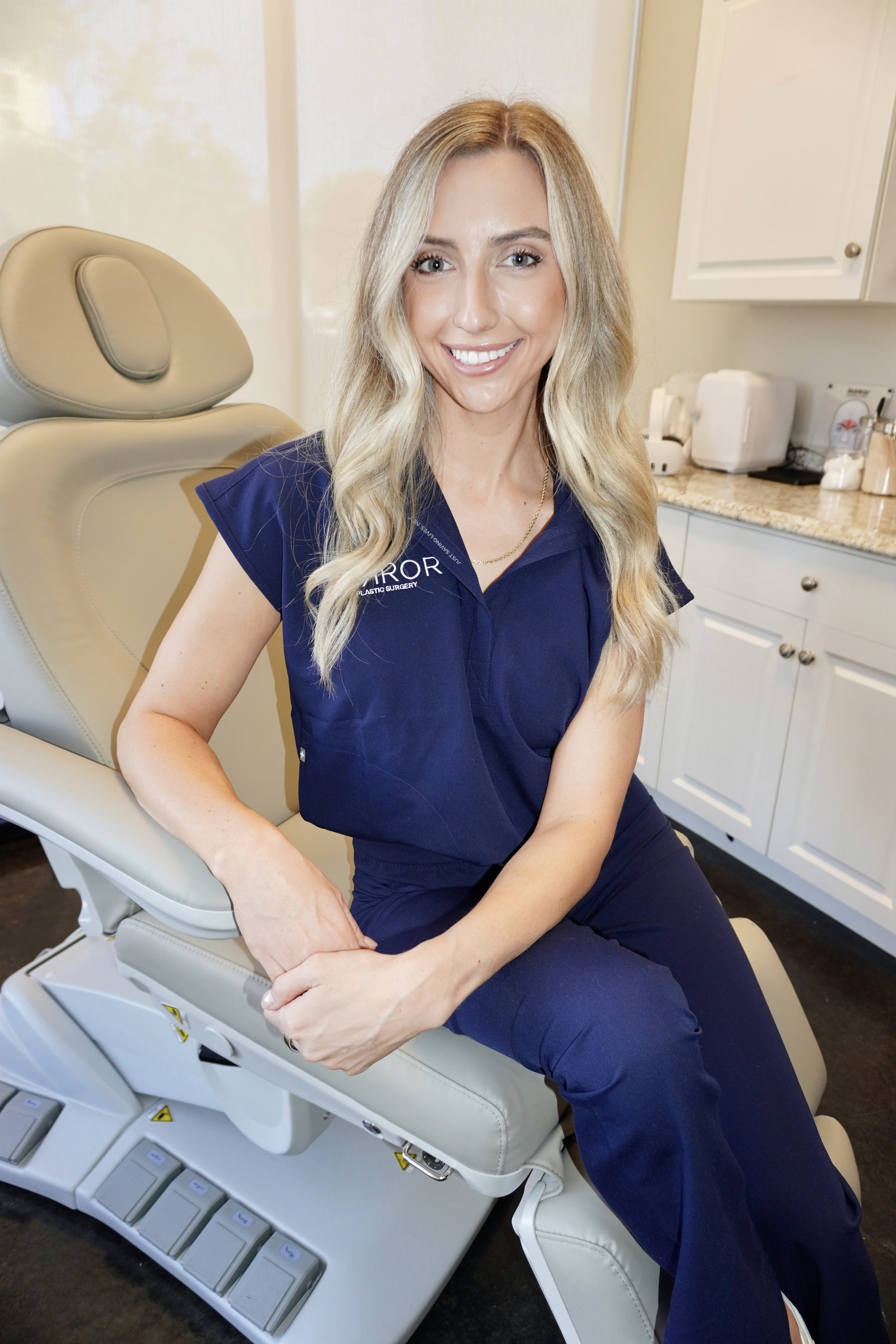
At Mirror Plastic Surgery in St. Petersburg, Florida, peptide therapies are led by Ellie Pranckevicius, FNP-BC, a board-certified Family Nurse Practitioner with a background in neuroscience ICU care at Tampa General Hospital, esthetician training, and a Master’s in Nursing from the University of South Florida. This combination is not incidental. ICU experience provides the critical-care physiology foundation needed to interpret complex lab panels and manage multi-system interactions, while aesthetic training informs the cosmetic and anti-aging applications many patients seek. Her clinical foundation spans critical-care physiology, metabolic health, and aesthetic science, and this combination directly informs how she builds and monitors peptide protocols.
The concierge structure at Mirror Plastic Surgery includes:
- 30–60 minute initial consultations with full medical history review
- Comprehensive lab panels, including thyroid, liver, kidney, hormone, and diabetes markers, reviewed before protocol design
- Custom peptide stacks built to individual physiology and goals, not templated protocols
- Peptides sourced from batch-tested, reputable suppliers with verified purity and dosage
- 24/7 direct text access to Ellie for questions, dosing support, and refill requests
- Remote service delivery available across the United States
The practice is led by Dr. Akash Chandawarkar, a Harvard-educated, Johns Hopkins-trained plastic surgeon with fellowship training at Manhattan Eye Ear & Throat Hospital and medical innovation training at Stanford. He provides the surgical and clinical infrastructure that supports Ellie’s non-surgical and peptide work when cases require it.
Concierge Medicine Controversies and Complaints
Concierge medicine carries legitimate criticism alongside its benefits. The most significant legal controversy in the space involves one of the largest concierge medicine networks in the United States. That network has faced lawsuits and patient complaints related to allegations that its membership model creates access inequities, that retainer fees are not always clearly disclosed, and that the quality of care varies significantly across affiliated physicians despite the network branding. These cases highlight a structural risk: the concierge label does not guarantee quality, time, or access, because outcomes depend entirely on the specific practice and provider.
Additional common patient complaints across the concierge category include:
- Retainer fees that increase at renewal without proportional service improvements
- Practices that accept retainer payments but still operate high patient volumes
- Limited transparency about what the membership fee does and does not cover
- Difficulty transitioning back to traditional insurance-based care if the practice closes or relocates
For patients evaluating concierge-model wellness practices specifically for peptide therapies, relevant due diligence questions focus on the supervising practitioner, their credentials, peptide sourcing, and the exact scope of ongoing support.
Choosing Between Traditional and Concierge Models
The table below functions as a self-identification tool. It maps common health goals to the care model better suited to address them, based on the structural features of each model described above.
| Health Goal | Traditional Primary Care | Concierge / Mirror Plastic Surgery Model |
|---|---|---|
| Chronic inflammation or autoimmune management | Adequate for referrals, limited for protocol management | Lab-guided, iterative protocol with direct access |
| Weight-loss plateau despite diet and exercise | Standard GLP-1 prescribing with limited follow-up | Comprehensive metabolic labs, GLP-3R and custom stacks |
| Post-surgical recovery optimization | Standard post-op follow-up | BPC-157 and TB500 protocols coordinated with the surgical team |
| Anxiety, energy, or mood concerns | Pharmaceutical management with limited alternatives | Selank and NAD protocols with transition support from pharmaceuticals |
| Anti-aging and collagen support | Topical referrals with limited systemic options | GHK-CU, NAD, and Glow Stack targeting skin, hair, and cellular health |
Frequently Asked Questions
Are peptides FDA-approved, and is it safe to use them under concierge supervision?
Most peptides used in wellness protocols are not FDA-regulated. However, they have been studied in clinical settings for over a decade and are used extensively internationally. The primary safety risk is not the peptides themselves, but obtaining them from unverified sources without medical oversight. At Mirror Plastic Surgery, Ellie Pranckevicius conducts a full medical history review and, where indicated, orders comprehensive lab panels before designing any protocol. Peptides are sourced exclusively from suppliers with documented batch testing for purity and accurate dosage. This process addresses the core risks associated with the unregulated category.
What happens if I stop taking peptides after a protocol?
Benefits from peptide therapy are generally sustained only with continued use or a structured maintenance protocol.1 Stopping peptides is comparable to stopping any consistent health intervention, because the underlying condition the peptide was managing will tend to return toward its baseline state. For example, inflammatory markers managed through BPC-157 or KPV will likely trend back upward without continued support.1 Ellie designs maintenance protocols specifically to address this, tapering or adjusting dosing over time rather than abrupt discontinuation, and monitors labs to track how the body responds.
Will my results be the same as someone else on the same peptide stack?
Results from peptide therapy vary significantly from person to person. Genetics, baseline lab values, diet, lifestyle, existing medications, and the specific combination of peptides all influence outcomes. This variability is the clinical reason Mirror Plastic Surgery does not use templated protocols. Each stack is built from a patient’s actual lab data and health history. Some patients see initial changes within the first week, while others require protocol adjustments over several months.1 Ellie communicates this variability transparently at the outset so patients have accurate expectations.
Can I access Mirror Plastic Surgery’s peptide services if I am not in Tampa or St. Petersburg?
Patients outside Tampa and St. Petersburg can still access Mirror Plastic Surgery’s peptide services. The practice offers remote service delivery across the United States, including Hawaii and Alaska. The full process, including consultation, lab review, protocol design, prescription, and ongoing support, can be completed remotely. Ellie is available via direct text for ongoing questions, dosing guidance, and refill requests regardless of a patient’s location.
How is Mirror Plastic Surgery’s concierge peptide model different from online peptide retailers or general telemedicine platforms?
Online peptide retailers sell products without medical supervision, lab review, or quality verification. General telemedicine platforms may offer some peptide prescribing but typically lack the depth of one-on-one concierge care, comprehensive lab integration, and specialized clinical focus. Mirror Plastic Surgery’s model includes a 30–60 minute consultation, full lab panel review, custom protocol design, batch-tested sourcing, and 24/7 direct access to Ellie, a board-certified Family Nurse Practitioner with ICU and aesthetic clinical backgrounds. The difference is not a small upgrade; it represents a structurally different standard of care.
Conclusion: When Concierge Peptide Care Makes Sense
The concierge medicine model is not the right fit for every patient or every health goal. For routine acute care managed through insurance, traditional primary care remains efficient and cost-effective. For patients managing chronic inflammation, metabolic dysfunction, post-surgical recovery, or anti-aging goals that require individualized lab-guided protocols, particularly in the unregulated peptide category, the structural limits of brief, volume-driven visits create a genuine clinical barrier rather than a simple preference issue.
Mirror Plastic Surgery’s concierge approach in St. Petersburg, Florida provides the time, lab depth, sourcing standards, and direct provider access that medically supervised peptide therapy requires. Ellie Pranckevicius brings a rare combination of critical-care nursing, aesthetic training, and advanced practice credentials to every protocol she builds. Dr. Akash Chandawarkar’s Harvard and Johns Hopkins background anchors the practice’s clinical standards across all services.
Patients whose health goals have outpaced what a traditional short visit can deliver often benefit from a direct conversation about their labs, history, and realistic outcomes from a custom protocol.
Book an appointment with Ellie at Mirror Plastic Surgery to get started.
1 Results may vary from person to person. Editorial content, before and after images, and patient testimonials do not constitute a guarantee of specific results.
Peptide therapy is intended for wellness and optimization purposes and is not prescribed to diagnose, treat, cure, or prevent disease unless specifically stated. Many peptides are not FDA-approved and may be used off-label. Some have limited long-term safety data, with a potential for unknown risks, complications, or desensitization with prolonged use.