
Written by: Ellie Pranckevicius, FNP-BC, Aesthetic Nurse Practitioner & Aesthetic Injector | Facial Restoration & Regenerative Injectable Specialist, Mirror Plastic Surgery | Last updated: July 29, 2026
Key Takeaways
- Collagen peptide therapy uses targeted peptides like GHK-Cu to stimulate collagen and elastin synthesis, addressing the 60%+ decline in natural GHK levels that occurs between ages 20 and 60.
- GHK-Cu and the Glow Stack (GHK-Cu + BPC-157 + TB-500) are clinically distinct from general peptide therapies, focusing specifically on dermal fibroblast activation and extracellular matrix remodeling.
- Supervised protocols at Mirror Plastic Surgery include baseline lab panels, ongoing monitoring, and sourcing from accredited compounding pharmacies to minimize risks associated with unregulated peptide products.
- Visible improvements in skin hydration and texture typically begin within 2–4 weeks, with peak collagen density and elasticity benefits developing over 3–6 months of consistent use.1
- Adults in Tampa Bay seeking personalized collagen peptide therapy can schedule a consultation with Ellie Pranckevicius at Mirror Plastic Surgery to determine eligibility and begin a supervised protocol.
Meet Ellie Pranckevicius, FNP-BC: Your Collagen Peptide Specialist in Tampa Bay
Ellie Pranckevicius, FNP-BC, leads peptide therapy and non-surgical aesthetics at Mirror Plastic Surgery in St. Petersburg, Florida. She is a board-certified Family Nurse Practitioner with a Bachelor’s in Health Science from Boston University and both a Bachelor’s and Master’s in Nursing from the University of South Florida. Four years in the Neuroscience ICU at Tampa General Hospital gave her a clinical foundation in complex physiology, metabolic health, and recovery that directly informs her peptide practice.
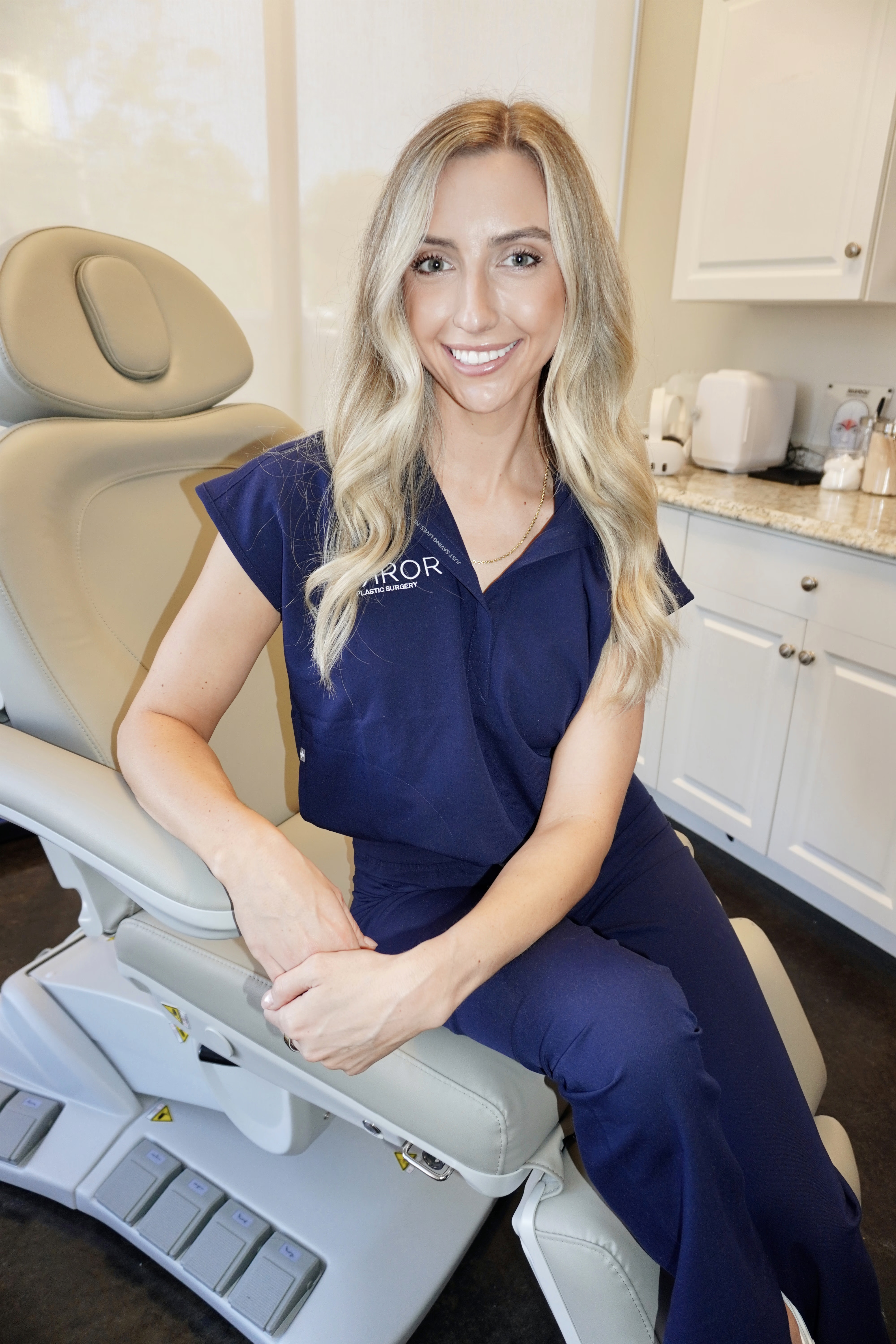
Ellie’s approach centers on education and transparency. She explains the physiology behind each protocol in clear language so patients understand what they are taking and why. She often advises patients when a service is not yet necessary for them, which prioritizes long-term outcomes over short-term revenue. When surgical needs arise, her work is complemented by Dr. Akash Chandawarkar, MD, Mirror’s Harvard-educated, Johns Hopkins-trained, fellowship-trained plastic surgeon.
Book an appointment with Ellie to begin a personalized collagen peptide assessment.
GHK-Cu and the Glow Stack: How Collagen-Focused Peptides Stand Apart
GHK-Cu (glycyl-L-histidyl-L-lysine copper complex) is a naturally occurring copper-binding tripeptide that functions as both a carrier peptide and a gene-expression modulator. As a carrier peptide, it delivers copper as a cofactor for lysyl oxidase, which cross-links collagen and elastin. GHK-Cu stimulates collagen and elastin synthesis while modulating approximately 31% of human genes to upregulate antioxidant defense, DNA repair, and tissue remodeling pathways. Published studies show that GHK-Cu modulates gene expression in fibroblasts, affecting pathways involved in tissue remodeling, antioxidant defense, and DNA repair.
At Mirror Plastic Surgery, GHK-Cu is available individually or as part of the Glow Stack, a multi-peptide protocol combining GHK-Cu, BPC-157, and TB-500:
- GHK-Cu (Copper Peptide): Primarily targets collagen and elastin production, skin health, hair and nail rejuvenation, and melasma.
- BPC-157 (Body Protective Compound 157): Addresses systemic inflammation and supports muscle, tendon, ligament, and joint repair. BPC-157 promotes angiogenesis and tissue repair via VEGFR2 and NO pathways, with animal studies showing accelerated healing of tendons, ligaments, muscles, and gastrointestinal tissues.
- TB-500 (Thymosin Beta-4 fragment): Supports soft tissue inflammation and wound repair. TB-500 enhances cell migration, angiogenesis, and anti-inflammatory mediator release to support muscle and tendon recovery and wound healing in aged tissues.
General peptide therapy, which includes GLP-1 variants, NAD, Sermorelin, KPV, and others, targets metabolic, neurological, and systemic goals. Collagen-focused protocols form a distinct subset with a specific mechanistic target: dermal fibroblast activation and extracellular matrix remodeling.
How Mirror Plastic Surgery Builds a Collagen Peptide Protocol
Every collagen peptide protocol at Mirror Plastic Surgery begins with a 30–60 minute consultation with Ellie. This visit includes a full medical history review, discussion of aesthetic and wellness goals, and, when indicated, a comprehensive lab panel. A practical collagen-peptide lab approach for GHK-Cu includes a baseline panel run 1–2 weeks before starting, a mid-protocol check at weeks 4–6, and a repeat panel 2–4 weeks after completion, with minimum tracking of hs-CRP, ESR, serum copper, ceruloplasmin, P1NP, CBC, CMP, and lipid panel.
Protocols are individualized based on lab results, health history, and goals. Because each protocol is customized, patients receive detailed reconstitution and self-administration instructions tailored to their specific regimen, often with video demonstrations. To support safe execution of these personalized protocols, patients have direct access to Ellie via text for ongoing support throughout the protocol cycle.
Why Supervised Peptide Care Matters in Today’s Market
The peptide therapy landscape is shifting toward stronger clinical accountability. The British College of Aesthetic Medicine issued a warning on 1 June 2026 regarding the growing promotion of injectable peptide treatments in aesthetic medicine, noting that unregulated injectable peptides can cause immune or inflammatory reactions, infection, abscess formation, contamination or sterility failures, incorrect dosing, hormonal or metabolic disruption, and delayed diagnosis of underlying conditions.
Three people in the United States were fined thousands of dollars in 2026 for providing peptide injections at an anti-aging festival in Las Vegas that left two women critically ill, with regulators unable to determine the exact contents or cause. These incidents highlight why sourcing, practitioner credentials, and lab monitoring are non-negotiable elements of a responsible protocol.
Mirror Plastic Surgery sources peptides exclusively from reputable compounding providers with batch-specific certificates of analysis, and Ellie’s concierge model ensures patients are monitored before, during, and after each protocol cycle. Given these safety standards, understanding whether you qualify for supervised peptide therapy becomes the next step.
How to Qualify for Collagen Peptide Therapy at Mirror Plastic Surgery
Qualification for a supervised collagen peptide protocol at Mirror Plastic Surgery is determined through consultation and, when appropriate, lab review. The following checklist reflects standard clinical eligibility considerations:
- Age and skin aging profile: Adults typically 35+ with documented collagen loss, photoaging, or post-procedure recovery needs. A randomized, double-blind clinical trial enrolled healthy female volunteers aged 35–65 years with noticeable facial wrinkles to evaluate collagen peptide protocols.
- Baseline lab panel completed: Baseline laboratory evaluation must include serum copper, ceruloplasmin, CMP, CBC with differential, and ferritin, plus Wilson disease screening before the first dose.
- No contraindicated conditions: Wilson’s disease is a key contraindication because additional copper exposure can trigger toxicity in patients unable to properly excrete copper. Pregnancy and lactation are also contraindicated.
- Normal hepatic and renal function: The NCT07302789 collagen peptide study excluded participants with abnormal liver or kidney function, indicating baseline laboratory assessment of organ function as part of qualification screening.
- No active heavy alcohol use or recent smoking history: Both impair collagen synthesis and were exclusion criteria in clinical collagen peptide trials.
- Medication and supplement review: Zinc supplementation above 50 mg daily can induce copper deficiency during GHK-Cu therapy; zinc levels must be monitored at every visit if co-prescribed.
- Realistic expectations and commitment to maintenance: Collagen remodeling is a cumulative process that requires protocol adherence and planned maintenance cycles.
Schedule a qualification consult with Ellie to complete your assessment and lab review.
Timelines, Maintenance Cycles, and Why Results Vary
Outcomes vary significantly between individuals. Genetics, baseline skin damage, nutrition, sun protection, and dosing consistency all influence results. A personalized protocol, rather than a standardized one, offers the most reliable path to meaningful, sustained improvement.1
Safety Standards, Pharmacy Sourcing, and Risk Management
For cosmetic systemic GHK-Cu, there are no established safe dosing ranges in healthy adults and no long-term human safety trials, with exogenous systemic copper delivery carrying risks of hepatotoxicity and pro-oxidant radical generation. This is precisely why the comprehensive lab monitoring described in the qualification section is a non-negotiable component of Mirror’s protocols.
Potential Downsides of Collagen Peptide Therapy
The primary downsides of peptide therapy fall into two categories: inherent biological considerations and risks introduced by unregulated sourcing or unsupervised use.
Inherent considerations include:
- Results are not permanent, and maintenance protocols are required to sustain collagen production benefits.
- Outcomes vary significantly between individuals based on genetics, lifestyle, and baseline health.
- Collagen remodeling is gradual, and structural changes require weeks to months, not days.
- Copper peptides may cause skin irritation, redness, tingling, or breakouts in acne-prone individuals, particularly at higher concentrations or when combined with strong acids or high-strength vitamin C.
Risks introduced by unregulated sourcing include:
- Potential risks of unregulated injectable peptides include abnormal immune responses, allergic reactions including anaphylaxis, autoimmune issues, contamination with impurities, gastrointestinal symptoms, headache, fatigue, injection-site irritation, and possible pancreatitis.
- Analyses of peptide products have found cases where they contained undisclosed compounds not matching the label.
Medical supervision, quality-verified sourcing, and structured lab monitoring directly mitigate the second category of risks.
How Collagen Peptide Protocols Are Structured at Mirror Plastic Surgery
Each patient at Mirror Plastic Surgery receives a personalized quote during their consultation, because protocol complexity, lab requirements, and cycle duration vary by individual. The table below provides a general framework for understanding how supervised collagen peptide protocols are structured, not a price list.
| Protocol Type | Typical Duration | Monitoring Frequency | Notes |
|---|---|---|---|
| GHK-Cu (single peptide) | 8–12 weeks | Baseline, week 4, week 12 | Collagen and elastin focus, copper metabolism monitoring required |
| Glow Stack (GHK-Cu + BPC-157 + TB-500) | 12 weeks with 4–8 week break | Baseline, weeks 4–6, post-cycle | Systemic inflammation plus collagen, full panel including hs-CRP, P1NP, copper markers |
| Post-surgical collagen support | Protocol-dependent, typically 4–12 weeks | Coordinated with surgical recovery milestones | Complements Dr. Chandawarkar’s surgical protocols, individualized timing |
| Maintenance cycle | 2–3 cycles per year | Quarterly once stable | Personalized quote during consultation, sustains collagen production gains |
Collagen-Focused Benefits Compared With General Peptide Therapy
Many people assume all peptide therapies are interchangeable or that peptides are exclusively for weight loss. Collagen-focused peptides operate through distinct mechanisms targeting dermal fibroblasts, extracellular matrix proteins, and copper-dependent enzymatic processes.
Leyden et al. (2005) found 70% of women showed measurable collagen response with GHK-Cu at 12 weeks.1 In vitro studies show GHK-Cu increases Type I collagen expression 10.2-fold and Type III collagen 8.7-fold in human fibroblasts.1
General peptide therapy at Mirror Plastic Surgery addresses metabolic health (GLP-3R), energy and mitochondrial function (NAD), gut inflammation (KPV), growth hormone stimulation (Sermorelin/Ipamorelin), and neurological wellness (Selank). These therapies are valuable but mechanistically separate from collagen-focused protocols. A thorough consultation with Ellie determines which peptides or combinations are appropriate for each patient’s specific profile.
Book an appointment with Ellie to discuss whether a collagen-focused protocol, a broader peptide stack, or a combination approach fits your goals.
Frequently Asked Questions
Is GHK-Cu FDA-approved for injectable use?
GHK-Cu is not FDA-approved as a drug for any injectable or systemic indication. It appears as a cosmetic ingredient under separate regulatory frameworks for topical use. Injectable or systemic GHK-Cu is investigational, which is why medical supervision, quality-verified sourcing from accredited compounding pharmacies, and structured lab monitoring are essential components of any responsible protocol. Mirror Plastic Surgery sources exclusively from reputable providers with batch-specific certificates of analysis.
Who is a good candidate for collagen peptide therapy?
Adults typically between 35 and 65 experiencing collagen loss, photoaging, post-procedure recovery needs, or progressive skin aging are the primary candidates. Qualification requires a baseline lab panel, including serum copper, ceruloplasmin, liver and kidney function markers, and inflammatory markers, and a full medical history review. Patients with Wilson’s disease, active pregnancy or lactation, significant hepatic impairment, or certain autoimmune conditions may not be eligible.
How long does it take to see results from GHK-Cu or the Glow Stack?
Results follow the timeline detailed earlier in this article, with structural collagen changes requiring time because they depend on fibroblast activation, new collagen synthesis, and matrix remodeling. These biological processes cannot be accelerated beyond physiological limits.
What happens when a collagen peptide protocol ends?
Collagen and elastin produced during an active protocol persist after the cycle ends, but new collagen production returns to baseline without continued stimulation. Most patients run two to three cycles per year with planned breaks between cycles. Ellie designs maintenance protocols tailored to each patient’s goals and response to the initial cycle.
What are the risks of buying peptides online without medical supervision?
Unregulated online peptides carry documented risks including contamination with toxic elements, variable purity, mislabeled concentrations, and the absence of any clinical oversight to screen for contraindications or adjust dosing. As discussed in the safety section, unregulated products have been found to contain undisclosed compounds and toxic contaminants with variable purity. Without a baseline lab panel, patients with undiagnosed copper metabolism disorders, hepatic impairment, or drug interactions have no safeguard against serious adverse events. Mirror Plastic Surgery’s supervised model directly addresses each of these risks.
Can collagen peptide therapy be combined with surgical procedures?
Collagen peptide therapy can be combined with surgery when protocols are coordinated. Post-surgical collagen peptide protocols at Mirror Plastic Surgery are designed to complement Dr. Chandawarkar’s surgical procedures by reducing inflammation and supporting tissue repair during recovery. Timing and peptide selection are coordinated with surgical milestones and individualized to each patient’s recovery profile.
Making an Informed Choice About Collagen Peptide Therapy
Collagen peptide therapy, when delivered under qualified medical supervision with proper sourcing, baseline labs, and structured monitoring, represents a clinically grounded approach to addressing collagen loss, skin aging, and post-procedure recovery. The evidence base for GHK-Cu and the Glow Stack is strongest for topical and supervised injectable applications with appropriate patient selection, and it does not support unmonitored self-administration from unverified sources.
Adults in Tampa Bay who want a local specialist with board-certified clinical credentials, ICU-level physiological expertise, and a concierge approach to peptide protocols can work with Ellie Pranckevicius at Mirror Plastic Surgery. Every protocol begins with an honest assessment of what is appropriate and what is not for each individual patient.
Mirror Plastic Surgery is located at 780 4th Ave S, St. Petersburg, FL 33701. Consultations are available in person or via telemedicine across the United States. Call or text 727-361-6515, or email hello@mirrorplasticsurgery.com.
Book an appointment with Ellie to begin your supervised collagen peptide assessment today.
Disclaimer: The information in this article is for educational purposes only and does not constitute medical advice, diagnosis, or treatment. Peptide therapies discussed herein are not FDA-approved for the indications described. Individual results vary. Consult a qualified healthcare provider before beginning any peptide protocol. Mirror Plastic Surgery’s peptide services are provided under the supervision of licensed practitioners following individualized clinical assessment.
1 Results may vary from person to person. Editorial content, before and after images, and patient testimonials do not constitute a guarantee of specific results.
Peptide therapy is intended for wellness and optimization purposes and is not prescribed to diagnose, treat, cure, or prevent disease unless specifically stated. Many peptides are not FDA-approved and may be used off-label. Some have limited long-term safety data, with a potential for unknown risks, complications, or desensitization with prolonged use.