
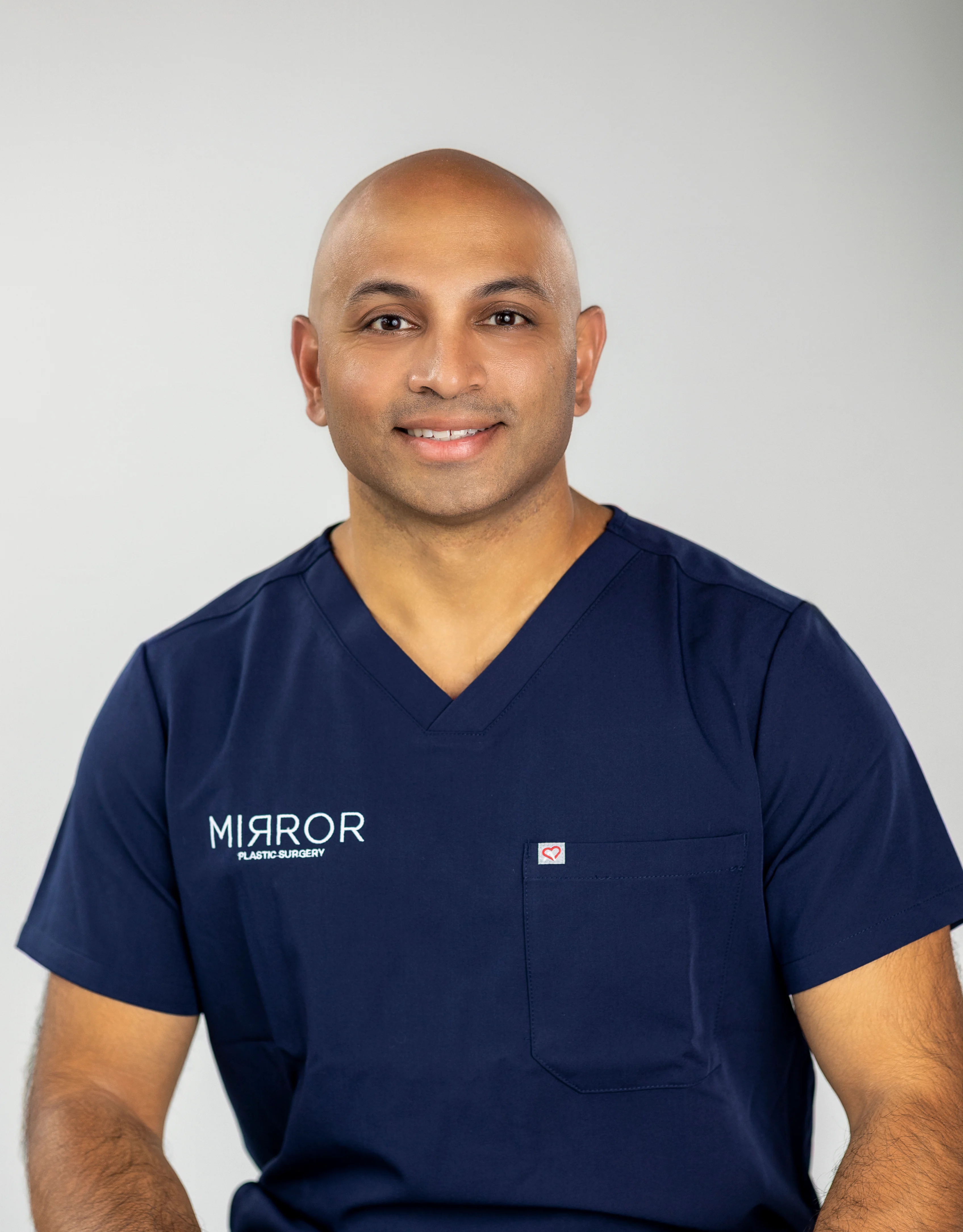
Written by: Dr. Akash Chandawarkar, Board Certified Plastic Surgeon, Mirror Plastic Surgery | Last updated: September 9, 2026
Quick Answer: When a board-certified plastic surgeon or dermatologist administers Botox, long-term cosmetic use is generally safe.1 FDA data and 15–20 years of research show no evidence of permanent damage or systemic harm at approved cosmetic doses.1 Potential risks include temporary side effects, reversible muscle atrophy, and rare antibody resistance, which are manageable with proper technique and conservative treatment intervals.
Key Takeaways
- Botox Cosmetic has maintained a strong long-term safety record since its 2002 FDA approval, with 15–20 years of data showing no evidence of permanent damage or systemic harm at approved cosmetic doses.1
- Common side effects such as bruising, headache, and eyelid ptosis are typically temporary and occur within the first week, with rates significantly reduced when experienced, board-certified physicians perform injections.
- Conservative dosing, appropriate treatment intervals, and injector expertise minimize long-term risks like reversible muscle atrophy and rare antibody resistance.
- Studies following patients for up to 15 years demonstrate sustained efficacy, high patient satisfaction, and stable results across dozens of treatment cycles when physicians perform treatment correctly.1
- Personalized consultation with a board-certified surgeon is recommended for anyone considering long-term Botox treatment.
The Evidence Base: What 15–20 Years Of Data Actually Shows
A retrospective study published in Dermatologic Surgery followed 50 patients over an average of 15 years, up to 67 treatment cycles, and found no signs of reduced efficacy or shortened duration of results. This finding indicates that treatment resistance did not develop in that group. In the same study, 94% of patients felt they looked at least 2 years younger than their actual age, and 76% believed they appeared 5–12 years younger.1 These results support sustained satisfaction over long-term treatment.
A 19-year case report by Binder, cited in a 2017 Journal of Drugs in Dermatology review, compared identical twins. One twin received regular Botox injections every 4–6 months for 19 years, while the other had only four sessions total. The regularly treated twin showed no forehead or glabellar lines at rest and improved skin texture.1 The sporadically treated twin developed visible static lines and more obvious signs of aging. Together, these findings show that decades of cosmetic Botox use can maintain efficacy and patient satisfaction when performed correctly.
Short-Term Side Effects: Common, Temporary, And Manageable
The FDA label confirms that adverse reactions to Botox Cosmetic generally occur within the first week following injection and are often transient. The most frequently reported effects are temporary and typically resolve within days, as the FDA label details:
- Injection-site pain, swelling, and bruising, which are the most common reactions and usually resolve within days. Bruising risk can be reduced by avoiding aspirin, NSAIDs, vitamin E, and other anticoagulants for 10 days before treatment.
- Headache, reported in 9% of subjects treated for forehead lines versus 5% in the placebo group.
- Eyelid ptosis (drooping), reported in 3% of subjects treated for glabellar lines versus 0% in placebo. Anecdotal observations indicate ptosis rates drop from approximately 4% with inexperienced injectors to 0.5% with experienced physicians, which highlights the importance of injector expertise.
- Brow ptosis, reported in 2% of subjects treated for forehead lines.
- Eyelid edema, reported in 1% of subjects treated for lateral canthal lines.
Long-Term Risks: What The Evidence Reveals
Muscle Atrophy: Real But Typically Reversible
Prolonged muscle paralysis from repeated Botox cycles can thin treated muscles over time. A 2026 perspective paper published in Toxins introduced the concept of “structural tolerance,” noting that repeated chemodenervation may be associated with muscle atrophy, altered muscle architecture, or incomplete functional recovery in some settings, and that localized post-treatment muscle changes have been reported in facial muscles. The paper proposes three mechanistic hypotheses: selective fiber-type atrophy with fibro-adipose substitution; reduced mechanical conditioning of the overlying soft-tissue envelope, which may contribute to progressive thinning; and altered myokine output with paracrine effects on dermal fibroblasts and adipocytes. None of these mechanisms have yet been demonstrated specifically in adult upper-face aesthetic contexts.
Clinically, a 2016 review in Aesthetic Surgery Journal confirms that Botox-induced muscle atrophy is generally temporary and reversible after treatment stops.1 From a pharmacovigilance standpoint, a 2026 analysis of 155,449 FDA adverse event reports identified 146 cases of muscle atrophy with a reporting odds ratio of 4.74, a statistically significant but clinically rare signal. Strategic, conservative dosing and avoiding overtreatment of any single muscle group help preserve natural facial architecture over time.
A separate but equally important long-term consideration is the rare possibility of developing resistance to the treatment.
Resistance And Antibody Formation: Rare But Possible
In short-term FDA registration trials for cosmetic indications, the rate of neutralizing antibody induction is approximately 0.5%. Cohort studies of patients on long-term therapy report neutralizing antibody prevalence of 11.9–14.6% across multiple indications, although aesthetic doses are far lower than therapeutic doses used for dystonia or spasticity. Higher dose per session is the strongest predictor of antibody formation, and shorter injection intervals under 12 weeks and booster injections also increase risk.
Management options include switching to a complexing-protein-free product like incobotulinumtoxinA (Xeomin), which is a suitable option for patients in whom immunoresistance is suspected. Prevention is straightforward and relies on using the lowest effective dose at the longest feasible intervals between injections. At Mirror Plastic Surgery, Dr. Akash offers multiple neuromodulator formulations, including Botox, Dysport, Xeomin, Daxxify, and Jeuveau, and selects the most appropriate product for each patient’s anatomy and treatment history.
Toxin Spread And Systemic Effects: FDA Boxed Warning In Context
The FDA’s boxed warning states that postmarketing reports indicate effects may spread from the injection site, causing symptoms including asthenia, generalized muscle weakness, diplopia, ptosis, dysphagia, dysphonia, dysarthria, urinary incontinence, and breathing difficulties. These effects have been reported hours to weeks after injection, with some reports of death. This warning applies across all botulinum toxin products.
The key clinical context is that no definitive serious adverse event reports of distant spread have been associated with dermatologic use of Botox Cosmetic at the labeled doses of 20–64 Units. The UK MHRA’s July 2026 Drug Safety Update confirmed that iatrogenic botulism from cosmetic use is rare but can be life-threatening, with risk increased by underlying neurological disorders, high doses, off-label use, or counterfeit products. Choosing an experienced, board-certified injector who uses authentic products at appropriate doses keeps this risk extremely low in cosmetic practice.
Rare But Serious Risks: What Patients Should Know
Given the rarity of serious events, it remains vital to recognize the warning signs that require immediate medical attention:
- Difficulty swallowing or breathing
- Slurred speech or dysphonia
- Severe or generalized muscle weakness
- Significant drooping of the upper eyelids
- Vision changes or diplopia
What Happens After 10+ Years Of Botox? Expert Analysis
Long-term patients who receive treatment at appropriate intervals typically maintain natural, satisfying results. The 15-year study mentioned earlier showed sustained efficacy and high patient satisfaction across up to 67 treatment cycles. The 2026 Toxins perspective notes that existing adult aesthetic studies establish long-term efficacy and acceptability of repeated Botox treatment but do not define a clear threshold at which treatment becomes less compatible morphologically or expressively. Current evidence therefore does not support a fixed “expiration date” for safe cosmetic use.
Dr. Akash Chandawarkar explains: “In my practice, I have seen patients who have used Botox for over a decade with excellent safety profiles. The key is individualized dosing and honest communication about expectations. We are preserving facial harmony over time, not just treating wrinkles.”
Book a consultation with Ellie to review your long-term Botox history and receive a comprehensive, top-to-bottom facial assessment from Dr. Akash.
How To Minimize Risks: The Surgeon’s Checklist For Safe Long-Term Use
Injector qualification is the single most important factor in long-term Botox safety. A board-certified plastic surgeon or dermatologist with deep anatomical knowledge reduces complication rates, refines dosing, and identifies patients who may not be appropriate candidates. Patients should feel comfortable asking their injector the following questions:
- What is your board certification and specific training in facial anatomy?
- How do you determine dosing for my individual anatomy?
- What is your approach to maintaining natural expression over time?
- How do you handle complications if they arise?
- Do you perform the injections yourself, or does a non-physician staff member?
At Mirror Plastic Surgery, Dr. Akash personally performs every injection, bringing surgeon-level anatomical expertise to each treatment. This expertise is applied through a comprehensive, hour-long top-to-bottom assessment that ensures individualized treatment planning and prioritizes safety and function over aesthetics. Because the practice is supplier-neutral, product selection is driven entirely by patient anatomy and goals, rather than quotas or commissions.
Debunking Myths: Botox, Autoimmune Disease, And Brain Health
Current evidence does not link cosmetic Botox to autoimmune diseases, brain damage, or cognitive decline.1 Botox holds FDA approval for numerous therapeutic indications, including chronic migraine and overactive bladder, with decades of safety data across millions of patients. One case report documented the unmasking of myasthenia gravis after Botox in a patient with pre-existing undiagnosed disease, which underscores the importance of thorough patient screening. Botox does not trigger lupus or other autoimmune conditions in patients without pre-existing autoimmune disease, although caution is advised for those with such conditions due to potential immune stimulation and rare reported reactions.
Real Patient Concerns: Addressing What You’ve Read Online
The fear that “Botox made me look older after 10 years” reflects a real but nuanced phenomenon. Repeated chemodenervation may contribute to progressive soft-tissue thinning and morphologic changes like periocular hollowing or brow flattening. These effects differ from accelerated aging and respond best to a holistic approach to facial rejuvenation. Stopping Botox does not accelerate aging, and wrinkles return to their natural trajectory.
The concern that “Botox stops working” usually reflects dose drift, untreated synergist muscles, anatomic compensation, or unrealistic expectations rather than true immunologic resistance. A single suboptimal result does not indicate resistance, and evaluation requires at least two consecutive treatment cycles before immunogenicity becomes a serious hypothesis.
Key Facts
- Botox Cosmetic is FDA-approved for glabellar lines, lateral canthal lines, forehead lines, and platysma bands in adults.
- Effects last approximately 3–4 months, and retreatment before 3 months is not recommended.
- Eyelid ptosis occurs in 3% of glabellar line treatments in clinical trials.
- Neutralizing antibody rate is approximately 0.5% in cosmetic FDA registration trials.
- No definitive serious adverse events from toxin spread have been associated with approved cosmetic doses of 20–64 Units.
- Fifteen-year retrospective studies show no loss of efficacy across up to 67 treatment cycles.
- Botox-induced muscle atrophy is generally reversible upon discontinuation of treatment.
- Eighty-six point four percent of all Botox adverse event reports in the FAERS database are classified as nonserious.
Frequently Asked Questions
Does Botox Cause Problems Later In Life?
Current evidence does not link cosmetic Botox to long-term health problems when physicians use it properly in appropriately selected patients.1 FDA labeling and postmarketing data show no confirmed serious cases of distant spread of toxin effect when BOTOX Cosmetic is used at approved cosmetic doses, such as 20 Units for glabellar lines and 40 Units for forehead lines, although such effects have been reported with unapproved uses and higher doses. The primary considerations for long-term users are reversible muscle thinning and rare antibody resistance, which are manageable through proper technique, conservative dosing, and treatment intervals of at least three months. Patients with pre-existing neuromuscular conditions should avoid Botox because they face elevated risk of serious effects.
What Happens After 10 Years Of Botox?
Studies following patients for 15 or more years show sustained efficacy and high satisfaction.1 Muscle atrophy from prolonged treatment is generally reversible when treatment stops. Some long-term patients may notice subtle changes in facial volume or expression range, which reflect cumulative muscle changes rather than accelerated aging and respond best to a holistic, full-face approach to rejuvenation. The 15-year study mentioned earlier found no evidence of permanent damage or accelerated aging when a qualified physician performed treatment correctly.
Can Botox Cause Muscle Atrophy?
Yes. Prolonged muscle paralysis from repeated Botox cycles can thin treated muscles, a documented effect in imaging and histological studies. The 2016 Aesthetic Surgery Journal review confirms this effect is generally reversible when treatment stops. The 2026 Toxins perspective introduced the concept of “structural tolerance” to describe whether a repeatedly treated region maintains an acceptable balance between wrinkle benefit and broader regional compatibility over time. Strategic, conservative dosing and avoiding overtreatment of any single muscle group remain the primary safeguards against clinically meaningful atrophy.
Can You Develop Resistance To Botox?
Resistance develops rarely. Antibody formation occurs at the 0.5% rate mentioned earlier in cosmetic FDA registration trials, although long-term cohort studies report higher prevalence across multiple indications. Risk increases with higher doses per session and shorter injection intervals. Using the lowest effective dose and spacing treatments at least three months apart minimizes this risk. Apparent loss of effect more commonly reflects dose drift, untreated synergist muscles, or anatomic compensation than true immunologic resistance. Switching to a complexing-protein-free formulation like Xeomin is an effective management option when resistance is confirmed.
What Are The Rare But Serious Risks Of Botox?
The FDA boxed warning describes distant toxin spread that can cause muscle weakness, swallowing difficulties, or breathing problems, reported hours to weeks after injection. No definitive cases of this serious adverse event have been associated with approved cosmetic doses of 20–64 Units. Patients with neuromuscular disorders such as myasthenia gravis, Lambert-Eaton syndrome, or ALS should not receive Botox. Warning signs requiring immediate medical attention include difficulty swallowing or breathing, slurred speech, severe muscle weakness, significant eyelid drooping, and vision changes. Serious risks such as spread of toxin effect remain extremely rare when BOTOX Cosmetic is used at the recommended dose for approved cosmetic indications by qualified physicians using authentic products.
Conclusion: Evidence Supports Safe Long-Term Use With The Right Injector
Botox carries one of the strongest long-term safety profiles in aesthetic medicine when a qualified physician administers it at appropriate doses and intervals. FDA data, 15–20-year retrospective studies, and pharmacovigilance analysis of more than 155,000 adverse event reports consistently show that serious risks are extremely rare at cosmetic doses. Injector expertise, conservative dosing, thoughtful patient selection, and ongoing monitoring of overall facial architecture and dynamics over time determine long-term safety.
If you are considering Botox or have questions about your current treatment plan, book a consultation with Ellie. Dr. Akash Chandawarkar personally performs all injections, bringing surgeon-level anatomical expertise and a comprehensive, safety-first approach to every patient. The practice is located at 780 4th Ave S, St. Petersburg, FL 33701. Reach the team by phone at 727-361-6515 or by email at [email protected].
Disclaimer: Results may vary from person to person. Editorial content, before and after images, and patient testimonials do not constitute a guarantee of specific results.
1 Results may vary from person to person. Editorial content, before and after images, and patient testimonials do not constitute a guarantee of specific results.