
Written by: Ellie Pranckevicius, FNP-BC, Aesthetic Nurse Practitioner & Aesthetic Injector | Facial Restoration & Regenerative Injectable Specialist, Mirror Plastic Surgery | Last updated: July 29, 2026
Key Takeaways on Collagen Peptides at Mirror Plastic Surgery
- Collagen loss accelerates after age 25 and creates measurable drops in skin elasticity and firmness that many creams and supplements cannot fully correct.1
- GHK-Cu (copper tripeptide-1) stimulates collagen synthesis and influences thousands of genes, but real-world results depend on delivery route and medical oversight.1
- Oral hydrolyzed collagen currently has the strongest human randomized controlled trial (RCT) support, while injectable GHK-Cu offers deep systemic potential with minimal published human data as of 2026.
- Mirror Plastic Surgery uses medically supervised protocols that combine lab screening, vetted sourcing, and personalized dosing to improve safety and outcomes.1
- Schedule a consultation with Ellie at Mirror Plastic Surgery to see whether a collagen peptide protocol fits your skin health goals.
How GHK-Cu Works to Support Collagen in Skin
GHK-Cu (copper tripeptide-1) is a naturally occurring tripeptide made of glycine, histidine, and lysine bound to a copper ion. It stimulates collagen synthesis and inhibits collagen degradation in dermal fibroblasts while acting as a copper-delivery vehicle for lysyl oxidase, an enzyme required for collagen cross-linking. It also serves as a copper chaperone that neutralizes free copper ions to reduce Fenton reaction oxidative damage and delivers bioavailable copper to cuproenzymes such as superoxide dismutase.
GHK-Cu plasma levels decline by approximately 60% between age 20 and age 60, falling from about 200 ng/mL to 80 ng/mL. This decline parallels measurable losses in skin elasticity, wound repair capacity, and hair follicle function. At the transcriptome level, GHK-Cu appears to influence over 4,000 human genes, increasing signals for collagen synthesis, antioxidant defense, and DNA repair while reducing expression of inflammation and tissue breakdown genes. These findings come from bioinformatic pattern-matching and generate hypotheses rather than proving transcriptomic changes in living human tissue.
Comparing Peptides and Collagen Routes for Anti-Aging
No single peptide or delivery route works best for every person. The comparison below outlines how the three main delivery routes differ in depth of effect, evidence strength, and systemic reach as of 2026.
| Delivery Method | Depth of Effect | Collagen / Systemic Impact | 2026 Evidence Level |
|---|---|---|---|
| Topical peptides (e.g., GHK-Cu serum, Matrixyl) | Limited by ~500 Da skin penetration threshold, so effects remain at the surface and upper dermis. | Moderate impact. Controlled trials show wrinkle-depth reduction and collagen stimulation in vitro, with the strongest human RCT base for GHK-Cu among topicals.1 | Moderate evidence from multiple small RCTs. A double-blind study of 67 women over 12 weeks showed measurable dermal density gains. |
| Oral hydrolyzed collagen (2.5–10 g/day) | Systemic effects through gut absorption that bypass the skin penetration barrier. | Moderate impact. The Proksch et al. 2014 double-blind RCT (n=69) showed statistically significant elasticity gains at 8 weeks.1 A 2021 meta-analysis of 19 RCTs (1,100+ participants) confirmed skin hydration, elasticity, and wrinkle improvements at 90 days.1 | Moderate-to-strong evidence and the largest human RCT base among collagen delivery methods. |
| Injectable peptides (e.g., subcutaneous GHK-Cu) | Systemic effects with 10–20× higher tissue concentrations than equivalent topical amounts. | Mechanistic support only. In vitro fibroblast studies show upregulation of collagen I/III and MMP-2/MMP-9, but no published human RCT exists. | Low evidence level. No randomized controlled trial has evaluated subcutaneous GHK-Cu in humans for any indication as of early 2025. |
The table above shows that each delivery method has value but differs in evidence strength and systemic reach. Intact topical collagen molecules (~300,000 Da) cannot cross the skin barrier to reach the dermis, so topical collagen creams remain the weakest option for measurable dermal change. Among the three routes, oral hydrolyzed collagen has the most robust human RCT support, while injectable GHK-Cu offers the deepest mechanistic rationale with the least clinical validation.
Is GHK-Cu Worth the Hype for Collagen Support?
Delivery route determines how well GHK-Cu lives up to its reputation. For topical use, the evidence is meaningful. As summarized in the comparison table, controlled human trials of topical GHK-Cu at 0.1–1% concentrations show statistically significant improvements in skin density, collagen content, and fine lines. A 2026 review in the Journal of Cosmetic Dermatology reports that copper peptides such as GHK-Cu stimulate TGF-β signaling in dermal fibroblasts, increase procollagen expression, and reduce MMP activity.
Injectable use requires more caution. As of July 2026, no human subcutaneous efficacy trial for injectable GHK-Cu appears in PubMed or on ClinicalTrials.gov. A 2026 systematic review and meta-analysis in Frontiers in Medicine that pooled 19 RCTs and 1,341 participants found modest but statistically significant wrinkle reduction from peptide-based topicals, with most benefit driven by oral polypeptides rather than injectables. A 2026 UNSW analysis concluded that claims for injectable GHK-Cu to enhance collagen and reduce wrinkles rest mainly on cell and animal data rather than human trials.
Regulatory status also shapes risk. In April 2026 the FDA removed injectable GHK-Cu from Category 2, which dropped the “significant safety risks” label but did not grant clearance or add it to the 503A bulk drug substances list. Patients and providers should confirm current compounding pharmacy status before starting any injectable protocol.
GHK-Cu offers a compelling mechanistic profile with real potential. The gap between that biological plausibility and the current human evidence base remains significant, and patients benefit from understanding that gap before moving forward.
Schedule a consultation to review the evidence for your specific situation and decide whether a peptide protocol aligns with your goals.
Personalized Injectable and Topical Peptide Stacks in 2026
Aesthetic medicine in 2026 favors lab-guided combination protocols instead of single-peptide plans. Clinicians now integrate peptides with injectables, laser treatments, microneedling, and post-procedural care to support recovery and improve outcomes. Topical biomimetic peptide formulas often pair with antioxidants, polyphenols, and DNA repair enzymes to target collagen synthesis, oxidative stress, and inflammation together.
Mirror Plastic Surgery offers the “Glow Stack,” which combines GHK-Cu, BPC-157, and TB-500 to address systemic inflammation, melasma, and collagen and elastin production in a single coordinated plan. Delivery advances such as liposomal encapsulation and nanocarriers improve peptide penetration into deeper skin layers. At the same time, artificial intelligence tools now accelerate peptide discovery and help identify promising bioactive sequences more quickly.
Reliable sourcing underpins every safe protocol in 2026. Reasonable safety standards for injectable GHK-Cu include USP 797-compliant compounding pharmacies, HPLC purity of at least 98%, endotoxin below 1 EU/mg, and confirmed molecular weight of about 403.9 g/mol. Mirror Plastic Surgery partners with reputable suppliers that meet these criteria and perform rigorous batch testing, which contrasts sharply with unregulated online sellers.
How the Mirror Plastic Surgery Peptide Pathway Works
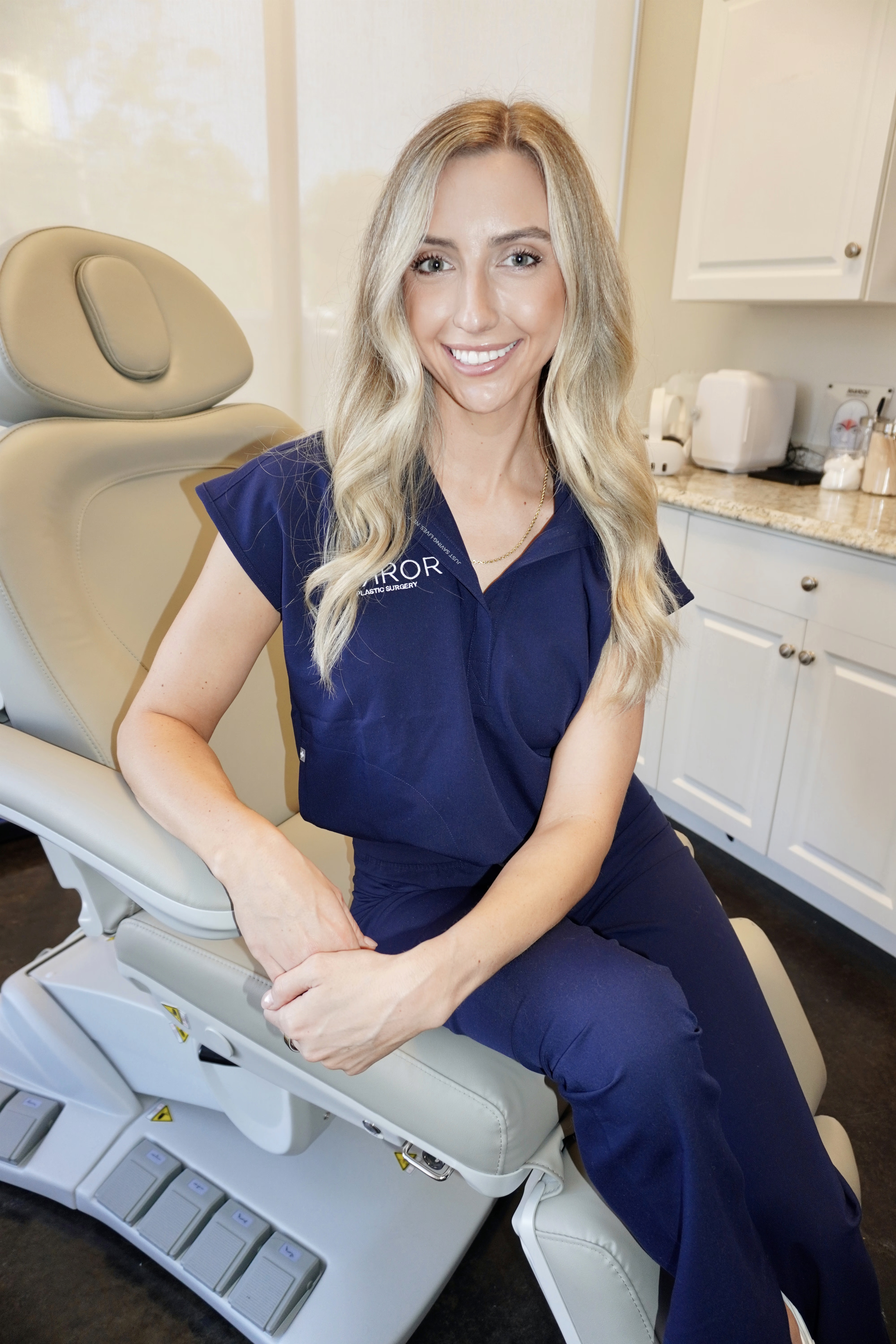
Peptide therapies at Mirror Plastic Surgery are led by Ellie Pranckevicius, FNP-BC, a board-certified Family Nurse Practitioner with Neuroscience ICU experience, esthetician training, and a Master’s in Nursing from the University of South Florida. Her clinical pathway follows a connected sequence that moves from assessment to long-term support.
- 30–60 minute consultation: Ellie reviews your medical history, medications, skin concerns, and wellness goals in depth. This comprehensive intake identifies which biomarkers require testing to ensure safety and to tailor your protocol.
- Lab panel review or ordering: Based on the consultation, she orders or reviews panels such as serum copper, ceruloplasmin, high-sensitivity CRP, and hormone markers. Baseline biomarker monitoring including serum copper and ceruloplasmin is recommended to assess safety with injectable GHK-Cu protocols, and these results guide dosing decisions.
- Custom protocol creation: Ellie then designs a personalized peptide stack and administration schedule that reflects your lab findings, health history, and aesthetic goals. This step links your data to a concrete treatment plan.
- Administration training: You receive detailed instructions for reconstitution and self-injection technique, often supported by video demonstrations. This training promotes sterile, consistent delivery and builds confidence with at-home dosing.
- Concierge follow-up: Ellie remains available by text or telemedicine throughout your protocol cycle and adjusts dosing or timing based on your response. This ongoing support connects each treatment cycle to your evolving results. The entire pathway can occur in person in St. Petersburg or remotely across the United States.
Start your personalized evaluation to begin your collagen peptide protocol with Ellie.
Realistic Timelines and Maintenance for Collagen Protocols
Collagen matrix remodeling follows a biological pace that cannot be rushed. No published data support dramatic visible changes in under four weeks. For injectable GHK-Cu, visible skin improvements usually begin subtly at weeks 2–4, with more noticeable changes at 6–8 weeks and full benefits over 8–12 weeks.1 An 8–12 week on-cycle followed by a 4–6 week break represents the standard injectable GHK-Cu structure.
Oral hydrolyzed collagen follows a similar window. Skin hydration and wrinkle reduction can show statistically significant improvement within 4–8 weeks of daily oral hydrolyzed collagen intake as new collagen fibers replace damaged ones.1 Adults over 35, who often start with a larger collagen deficit, may need the full 12-week period or longer.
Benefits taper gradually after a plateau or after stopping a protocol. Some people notice subtle declines in skin hydration and plumpness within weeks of discontinuing collagen supplements, with visible gains fading over time. Maintenance plans that use lower-frequency dosing cycles help sustain improvements.
Several factors influence how quickly and how strongly you respond:
- Age and baseline collagen levels at the start of treatment
- Total dietary protein intake, with reduced efficacy when intake falls below 0.8 g/kg body weight per day
- UV and sun exposure history, which plays a major role for Florida patients
- Smoking status, chronic stress levels, and high sugar intake
- Gut health and absorption capacity for oral peptides
- Adherence to sterile injection technique and consistency with the protocol
Safety, Contraindications, and Why Supervision Matters
Sourcing and administration context create most of the risk in peptide use, not the molecules alone. Injecting unregulated peptides can cause infection, abscesses, and tissue damage, especially when self-administered without sterile technique, and contamination or incorrect dosing has already been documented in related illicit markets.
Absolute contraindications to injectable GHK-Cu include:
- Wilson’s disease, active malignancy, and pregnancy
- Known copper metabolism disorders or copper sensitivity
- Breastfeeding, because safety data remain insufficient
- Inability or unwillingness to maintain sterile injection technique
Comparing supervised and unsupervised use clarifies why medical guidance matters at this stage of the article, especially after reviewing contraindications.
- Unsupervised (online purchase): No third-party batch testing, unknown purity and dosing accuracy, no screening for contraindications, no monitoring of copper or inflammatory markers, and no clinical support if adverse events occur.
- Medically supervised (Mirror Plastic Surgery): Peptides come from suppliers with HPLC-verified purity and batch testing. Ellie screens for contraindications through medical history and labs and arranges baseline and 8–12 week follow-up testing of serum copper and ceruloplasmin. Ongoing concierge support from a board-certified nurse practitioner provides guidance if side effects or questions arise.
Systemic copper dysregulation is implicated in Alzheimer’s disease and other neurodegenerative conditions, so copper-containing peptide protocols warrant professional oversight rather than self-directed experimentation.
Pairing Injectable GHK-Cu with Retinoids, Vitamin C, and Sunscreen
Environmental context, especially UV exposure, shapes collagen outcomes for Florida patients. UV radiation accelerates collagen breakdown, so any peptide protocol competes with ongoing photodamage when sun protection is inconsistent. Decades of topical GHK-Cu research show reduced UV damage along with wrinkle reduction and improved skin firmness, which makes it a logical partner for a daily broad-spectrum SPF 30 or higher.
Tretinoin (a topical retinoid) still holds the strongest human RCT evidence for anti-aging skin results. Tretinoin has decades of RCT data, including long-term histologic studies that show measurable dermal collagen increases, giving it a larger and more rigorous evidence base than GHK-Cu for skin remodeling. Used with a GHK-Cu protocol, tretinoin supports surface-level collagen turnover while GHK-Cu targets deeper fibroblast signaling, so the two approaches complement each other. Vitamin C acts as an essential cofactor for collagen synthesis and should remain adequate through diet or supplementation during any collagen-focused plan.
Frequently Asked Questions About Collagen and GHK-Cu
Which collagen types matter most for aging skin?
Type I and Type III collagen play the largest roles in aging skin. Type I provides tensile strength and firmness in the dermis, while Type III supports elasticity and sits alongside Type I in the extracellular matrix. Oral hydrolyzed collagen from bovine or marine sources usually supplies a mix of these types in peptide form. GHK-Cu encourages fibroblasts to produce collagen I, III, and V, along with elastin and glycosaminoglycans. The more useful question focuses on which delivery method best supports your own collagen production, which depends on your age, baseline collagen status, and health profile that Ellie reviews during consultation.
Do collagen peptides actually help aging skin?
Oral hydrolyzed collagen peptides currently have the strongest human clinical support among collagen-related options for aging skin. Multiple randomized controlled trials and meta-analyses show statistically significant gains in skin elasticity, hydration, and wrinkle depth at doses of 2.5–10 g per day over 8–12 weeks. Topical GHK-Cu peptide serums carry moderate evidence from small controlled trials that report improvements in skin density and fine lines. Injectable peptide protocols that target collagen synthesis offer the most mechanistic promise for systemic depth but still lack published human RCT data proving superiority over topical or oral routes. Collagen peptides can help aging skin, but the strength of evidence varies by delivery method, dose, and individual factors such as age, diet, sun exposure, and baseline collagen levels.
What are the downsides of collagen peptide use?
Oral hydrolyzed collagen most often causes mild gastrointestinal discomfort, a temporary sense of fullness, and the need for consistent daily use over months to maintain benefits that gradually fade after stopping. Quality variation remains a concern with unverified online products, so a credible certificate of analysis should confirm amino acid profile, molecular weight distribution, heavy metal limits, and BSE/TSE documentation for bovine sources. Topical GHK-Cu trials report mainly mild, short-lived contact dermatitis in a small number of participants. Injectable peptide protocols can cause injection-site redness and swelling and carry uncertainty around human pharmacokinetics, regulatory status, and safe dosing ranges. Unsupervised use adds risks of contamination, incorrect dosing, and missed contraindications. Medical supervision reduces most of these downsides through lab screening, vetted sourcing, and ongoing clinical support.
Conclusion: Choosing a Collagen Peptide Pathway with Clear Evidence
The 2026 evidence landscape for collagen peptide treatments shows clear differences between delivery routes. Oral hydrolyzed collagen holds the most robust human RCT data for measurable skin improvements. Topical GHK-Cu has meaningful controlled trial support for surface-level collagen stimulation. Injectable GHK-Cu offers strong mechanistic rationale and appears safe when properly sourced and supervised, yet it still runs ahead of its clinical evidence base, and patients benefit from recognizing that distinction before starting a protocol.
Medical oversight, lab screening, quality-controlled sourcing, and individualized dosing separate a responsible injectable peptide protocol from an unregulated online purchase. Adults over 35 in the Tampa Bay area who have already tried topical options and want a systemic approach can find that structure at Mirror Plastic Surgery. Ellie Pranckevicius provides a thorough evaluation, designs a custom protocol based on your labs and health history, and offers concierge support throughout your treatment cycle.
Get your evidence-informed assessment to determine whether a collagen peptide protocol is the right next step for your skin health goals.
1 Results may vary from person to person. Editorial content, before and after images, and patient testimonials do not constitute a guarantee of specific results.
Peptide therapy is intended for wellness and optimization purposes and is not prescribed to diagnose, treat, cure, or prevent disease unless specifically stated. Many peptides are not FDA-approved and may be used off-label. Some have limited long-term safety data, with a potential for unknown risks, complications, or desensitization with prolonged use.