
Written by: Dr. Akash Chandawarkar, Board Certified Plastic Surgeon, Mirror Plastic Surgery | Last updated: September 9, 2026
Key Takeaways
- Collagen peptide therapy uses oral supplements or injectable formulations to support skin elasticity, joint function, and tissue health by stimulating new collagen production and reducing inflammation.
- Oral hydrolyzed collagen supplements show modest benefits for skin hydration and joint pain when taken consistently for 8–12 weeks (skin) or 3–6 months (joints), though many studies are industry-funded.
- Injectable peptide therapies such as GHK-Cu, BPC-157, and TB-500 offer targeted signaling effects that may deliver faster results but require medical supervision due to limited human safety data and regulatory concerns.
- Choosing the right approach depends on goals: Type I and III collagen for skin, UC-II for joints, and medically supervised injectables for more potent, systemic outcomes.
What Are Collagen Peptides And How They Work
Collagen is the most abundant protein in the human body, comprising approximately 30% of total protein mass, and serves as the structural backbone of skin, joints, tendons, and bone. Production declines by approximately 1–1.5% annually starting around age 25, which contributes to wrinkles, joint stiffness, and reduced tissue resilience.
Collagen peptides, also called hydrolyzed collagen, are short chains of amino acids derived from bovine, marine, or chicken sources. Enzymatic hydrolysis breaks native collagen (molecular weight about 285–300 kDa) into bioactive fragments of 2,000–10,000 Daltons that survive digestion and enter systemic circulation. These fragments act in two main ways. Collagen-derived dipeptides like prolyl-hydroxyproline (Pro-Hyp) signal fibroblasts to produce new collagen. They also supply glycine, proline, and hydroxyproline, amino acids that become rate-limiting for collagen synthesis with age.
Collagen Types And Sources For Specific Goals
Type I And III Collagen For Skin And Structural Support
Type I collagen makes up approximately 90% of skin collagen, while Type III provides elasticity and is abundant in youthful dermis. Bovine collagen supplies Types I and III, and marine collagen primarily supplies Type I. Multiple meta-analyses show improvements in skin hydration, elasticity, and wrinkle depth after 8–12 weeks of daily use at 2.5–10 g per day.1
Type II Collagen For Joint And Cartilage Health
Type II collagen constitutes more than 50% of cartilage dry weight and forms the fibrillar network that gives joints compressive resistance. The primary source is chicken sternum cartilage, typically as undenatured Type II collagen (UC-II). A landmark study found that UC-II at 40 mg per day outperformed both placebo and glucosamine-plus-chondroitin on multiple joint pain and function scales.1
For combined skin and joint support, a high-quality hydrolyzed collagen containing Types I and III (bovine or marine) at 10 g per day can address skin. Adding UC-II at 40 mg per day specifically targets joint cartilage. Patients who want more potent, systemic effects can consider injectable peptide therapies under medical supervision.
Oral Collagen Supplements: What The Evidence Shows
Skin Benefits: Real But Nuanced
A 2026 umbrella review by researchers at Anglia Ruskin University, analyzing 16 systematic reviews, 113 randomized controlled trials, and 7,983 participants, found consistent significant benefits for skin elasticity and hydration when collagen supplements are taken for at least 8–12 weeks.1 Benefits appeared strongest for hydration and elasticity, while wrinkle reduction showed less consistent evidence.
A critical caveat comes from a 2025 meta-analysis in the American Journal of Medicine. When researchers restricted the analysis to non-industry-funded, high-quality studies, skin benefits disappeared entirely. This finding highlights the influence of funding bias and the need to weigh funding source alongside study design.
Joint Benefits: The Stronger Evidence Base
The joint evidence is more robust. A 2024 trial-sequential meta-analysis of 35 randomized controlled trials involving 3,165 people with osteoarthritis found small-to-moderate improvements in pain and physical function with collagen derivatives versus control, with no significant increase in adverse events.1 Effective protocols use 10 g per day of hydrolyzed collagen for 12–24 weeks or 40 mg per day of UC-II.
Practical Guidance For Choosing A Supplement
When selecting an oral collagen supplement, use criteria that mirror those in clinical trials.
- Start by checking the label for “hydrolyzed collagen” or “collagen peptides” rather than intact collagen protein.
- Next, verify third-party testing certification from organizations such as NSF, Informed Choice, or USP.
- For dosing, use 10–20 g daily of hydrolyzed peptides or 40 mg daily of UC-II.
- Include 100–200 mg of vitamin C, which acts as an essential cofactor for collagen synthesis.
- Give the protocol time by committing to at least 8–12 weeks for skin and 3–6 months for joints before judging results.
Oral supplements can provide modest, meaningful benefits, but quality varies widely and results depend on consistent, long-term use.
Injectable Peptide Therapies: The Medical-Grade Alternative
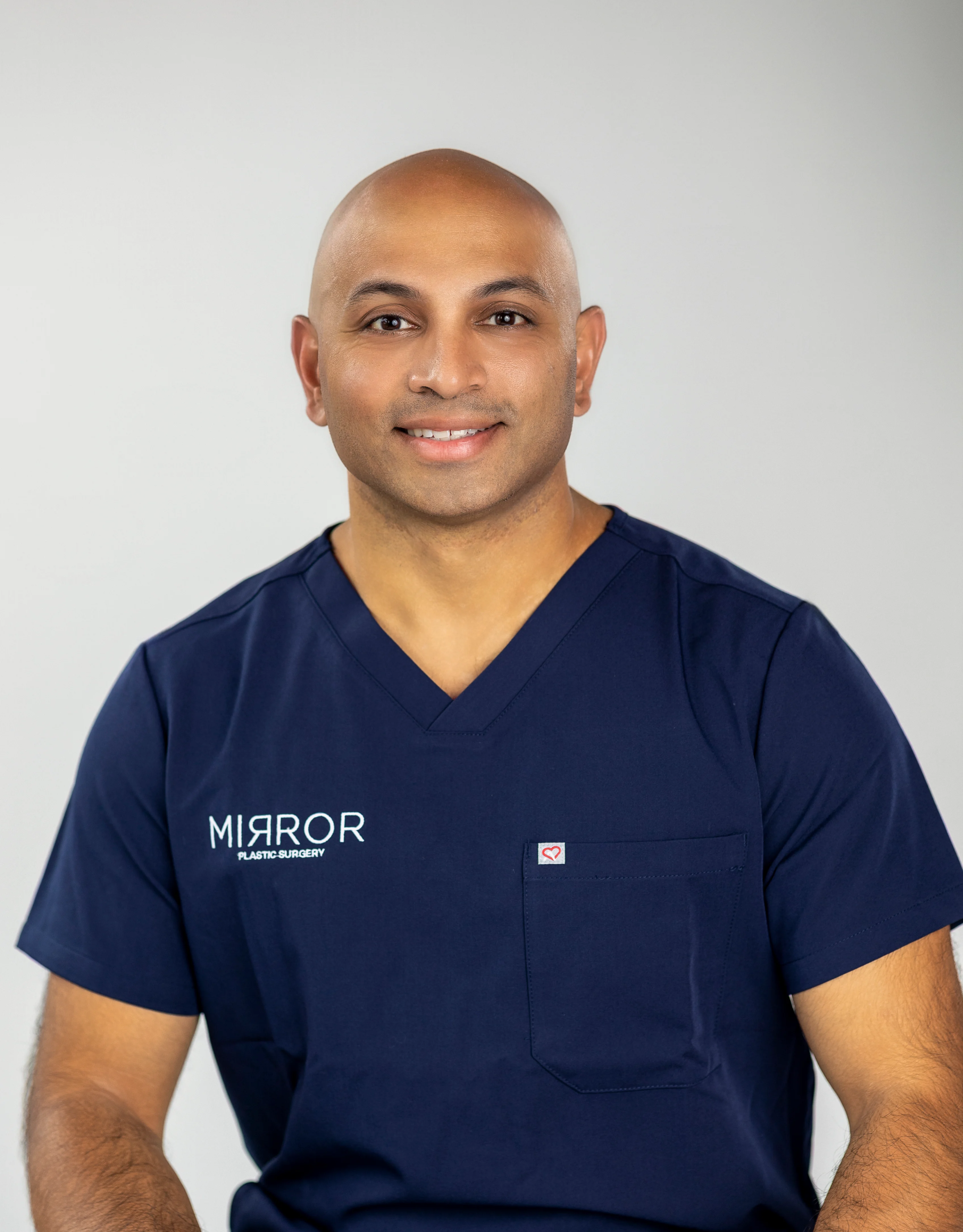
Injectable peptide therapies sit in a clinically supervised category that goes beyond the nutritional support of oral supplements. These treatments provide targeted signaling effects on inflammation, collagen production, and tissue repair. At Mirror Plastic Surgery, Dr. Akash Chandawarkar, a Harvard-educated, Johns Hopkins-trained, board-certified plastic surgeon, designs and oversees every protocol based on individual labs and physiology.
Schedule A Consultation With Ellie to explore whether a medically supervised peptide protocol fits your goals.
GHK-Cu (Copper Peptide): Collagen And Elastin Support
GHK-Cu is a naturally occurring tripeptide first isolated in the early 1970s, with levels that decline with age. Preclinical and topical human studies show it stimulates collagen and elastin production, supports skin firmness, and reduces inflammation. Controlled human studies on injectable GHK-Cu remain limited, so the benefit-risk profile is still uncertain. Medical supervision helps monitor copper levels and prevent overload.
BPC-157 (Body Protective Compound-157): Tissue Repair Support
BPC-157 supports healing of tendons, ligaments, and joints by reducing inflammation and enhancing tissue repair. Researchers have studied it in more than one hundred preclinical studies over three decades, with no established lethal dose in animal models. Human data is promising but still evolving. The FDA has flagged BPC-157 as a substance that may present safety risks in compounding contexts, which underscores the need for physician oversight.
TB-500 (Thymosin Beta-4): Soft Tissue Recovery
TB-500 supports soft tissue repair and reduces inflammation, which makes it relevant for joint and muscle recovery. It is often combined with GHK-Cu and BPC-157 in what Mirror Plastic Surgery calls the “Glow Stack,” a protocol that targets systemic inflammation, collagen and elastin production, and overall tissue health.
Why Medical Supervision Matters For Injectables
Injectable peptides are not FDA-regulated. No controlled safety data exist for the BPC-157, GHK-Cu, and TB-500 injectable blend as used in humans. Risks include infection, incorrect dosing, product contamination, immunogenic reactions, and unknown long-term effects. A board-certified physician mitigates these risks by ordering appropriate lab work, designing a personalized protocol, sourcing quality-tested peptides, and monitoring your response throughout. This oversight improves safety and outcomes with injectable peptide therapy.
Oral Supplements Vs. Injectable Peptides: A Comparison Guide
Oral collagen supplements and injectable peptide therapies differ across mechanism, potency, timeline, evidence, and supervision.
Mechanism: oral supplements provide nutritional substrate and some signaling peptides that reach circulation after digestion. Injectable therapies deliver targeted signaling molecules such as GHK-Cu, BPC-157, and TB-500 directly into systemic circulation. This approach bypasses the digestive process entirely.
Potency: injectable peptides are designed for specific biological effects such as collagen stimulation, tissue repair, and inflammation reduction at much lower doses than oral supplements require. Their signaling is more direct and more targeted.
Timeline: oral supplements generally require 8–12 weeks for measurable skin changes and 3–6 months for joint benefits. Injectable protocols may show initial improvements within the first weeks of use, depending on the condition and individual response.1
Evidence: oral supplements currently have the stronger human trial data, with hundreds of randomized controlled trials across thousands of participants. Injectable peptides like GHK-Cu and BPC-157 have robust preclinical evidence and emerging human data, but injectable peptide approaches remain far less established in clinical research than oral options.
Supervision: oral supplements are available over the counter and have a well-established safety profile. Injectable therapies require medical oversight, which becomes even more important when considering their evolving evidence base and higher risk profile.
Safety, Side Effects, And Who Should Avoid These Therapies
Oral Collagen Supplements: Generally Safe For Most Adults
Hydrolyzed collagen is classified as Generally Recognized as Safe (GRAS) by the FDA. The 2026 Nutrients narrative review found that adverse events associated with oral collagen supplementation were generally rare, mild, and not serious. Individuals with fish or beef allergies should avoid the corresponding collagen source. Those with phenylketonuria or chronic kidney disease should speak with a physician before supplementing.
Injectable Peptides: Higher Stakes And Stricter Criteria
The following individuals should avoid injectable peptide therapies without explicit physician clearance:
- Pregnant or breastfeeding women, because no human safety data exists for BPC-157 use during pregnancy or lactation.
- Individuals with active cancer, due to pro-angiogenic activity that could theoretically support tumor blood supply.
- Those with Wilson’s disease or copper metabolism disorders, since Wilson’s disease is an absolute contraindication for GHK-Cu.
- Individuals on blood thinners, because injection-related bruising may be more pronounced.
Buying peptides online without medical supervision creates significant risk. Clinicians have documented patients with elevated liver enzymes and copper toxicity from unsupervised injectable peptide use. Proper lab monitoring and physician oversight could have prevented these cases.
Celebrity Endorsements Vs. Clinical Evidence: Focus On Data
Jennifer Aniston, Halle Berry, and Victoria Beckham have all been associated with collagen supplement brands. These relationships are paid marketing arrangements rather than scientific endorsements. The 2025 meta-analysis mentioned earlier in the American Journal of Medicine serves as a reminder that star power and clinical evidence differ. Evaluating a collagen product means examining who funded the research, the study design, and the dosage used, instead of focusing on who appears in the advertising.
Why Choose Mirror Plastic Surgery For Peptide Therapy
Mirror Plastic Surgery offers medically supervised peptide therapy at a standard that over-the-counter supplements cannot match. Dr. Akash Chandawarkar, a Harvard-educated, Johns Hopkins-trained, board-certified plastic surgeon with fellowship training in aesthetic surgery at Manhattan Eye Ear & Throat Hospital and medical innovation training at Stanford University, leads every peptide protocol personally.
Each patient receives a comprehensive consultation of up to one hour, a review of lab panels or an order for new ones, and a custom peptide stack built around their physiology and goals. Peptides come from reputable providers with rigorous batch testing. Ongoing support is available 24/7 through direct access to Dr. Akash. Consultations and follow-up care are available in person in St. Petersburg and Tampa, Florida, or remotely across the United States.
Patients seeking skin rejuvenation through the Glow Stack (GHK-Cu, BPC-157, TB-500), joint and tendon repair, or post-surgical recovery receive concierge-level oversight that improves both safety and results compared with unsupervised options.
Plan Your Visit With Ellie to schedule your consultation and explore a personalized peptide protocol guided by evidence.
Frequently Asked Questions
What Is The Best Collagen Peptide For Joint Health
Undenatured Type II collagen (UC-II) at 40 mg daily has the strongest evidence for joint cartilage support and works through oral immune tolerance to reduce the inflammatory response against cartilage tissue. If you need broader joint and tendon support, hydrolyzed collagen peptides at 10 g daily for 12–24 weeks have shown consistent pain reduction in clinical trials. For targeted tissue repair of tendons, ligaments, and joints, medically supervised BPC-157 injections offer a more potent option, though human data is still emerging and physician oversight remains essential.
What Are The Best Collagen Peptides For Skin Health
Hydrolyzed Type I and III collagen peptides from bovine or marine sources at 2.5–10 g daily for 8–12 weeks have the strongest clinical evidence for improving skin hydration and elasticity. The 2025 meta-analysis mentioned earlier found that these benefits disappeared when only non-industry-funded studies were analyzed, which is an important caveat when reviewing marketing claims. For more intensive skin rejuvenation, GHK-Cu can stimulate collagen and elastin production under medical supervision, although injectable human data remains limited and physicians must manage copper levels and product quality.
How Long Does It Take To See Results From Collagen Peptides
For oral supplements, skin improvements typically appear after 8–12 weeks of consistent daily use, while joint benefits generally require 3–6 months.1 The Anglia Ruskin University umbrella review found greater outcomes at 12 or more weeks than at 8 weeks, which supports a longer trial period.1 Injectable peptide therapies may show initial improvements within the first weeks, depending on the condition treated and the individual response. Collagen therapies work gradually, and any promise of overnight results overstates the evidence.
Are Collagen Peptides Safe
Oral hydrolyzed collagen is Generally Recognized as Safe (GRAS) and usually causes only rare, mild side effects such as minor gastrointestinal discomfort at higher doses. Individuals with fish or beef allergies, phenylketonuria, or chronic kidney disease should consult a physician before supplementing. Injectable peptides like GHK-Cu and BPC-157 are not FDA-regulated and carry higher risks, including infection, dosing errors, copper overload, immunogenic reactions, and unknown long-term effects. Medical supervision is essential for injectable therapies, and buying injectable peptides online without physician oversight removes key safety safeguards.
Do I Need A Prescription For Peptide Therapy
Injectable peptide therapies require a prescription and medical supervision. At Mirror Plastic Surgery, Dr. Akash Chandawarkar conducts an in-depth consultation, reviews or orders comprehensive lab panels, and designs a personalized protocol based on your physiology, health history, and goals. This process reflects concierge medicine applied to peptide therapy, with 24/7 direct access to Dr. Akash throughout your protocol. Oral collagen supplements do not require a prescription and are available over the counter, but third-party testing and appropriate dosing guidance remain important for meaningful results.
Conclusion: Your Path To Evidence-Based Collagen Therapy
Oral collagen supplements can provide modest, real benefits for skin and joints with consistent use, although evidence quality varies and funding bias has inflated some claims. Injectable peptide therapies offer a more targeted, potent approach for people seeking advanced results, with the important caveat that human data is still maturing and medical supervision is crucial for safety and effectiveness.
Mirror Plastic Surgery delivers concierge-level peptide therapy that combines Dr. Akash Chandawarkar’s credentials with quality-assured peptides, comprehensive lab analysis, and personalized protocols built around each patient’s physiology. This approach improves safety and outcomes compared with unsupervised options.
Book Your Collagen And Peptide Consultation With Ellie at Mirror Plastic Surgery and take the first step toward healthier skin and joints guided by evidence.
This article is for educational purposes only and does not replace professional medical advice. Peptide therapies are not FDA-regulated. Consult a qualified physician to determine whether they are appropriate for you.
1 Results may vary from person to person. Editorial content, before and after images, and patient testimonials do not constitute a guarantee of specific results.
Peptide therapy is intended for wellness and optimization purposes and is not prescribed to diagnose, treat, cure, or prevent disease unless specifically stated. Many peptides are not FDA-approved and may be used off-label. Some have limited long-term safety data, with a potential for unknown risks, complications, or desensitization with prolonged use.