
Written by: Ellie Pranckevicius, FNP-BC, Aesthetic Nurse Practitioner & Aesthetic Injector | Facial Restoration & Regenerative Injectable Specialist, Mirror Plastic Surgery | Last updated: July 3, 2026
Key Takeaways for Anti-Wrinkle Peptides
- Anti-wrinkle peptides act as biological messengers that can stimulate collagen, influence muscle activity, or support tissue repair, depending on type and delivery.
- Topical peptides face skin-barrier limits that reduce how much reaches deeper layers, while injectable peptides like GHK-Cu bypass this barrier for more consistent delivery and broader tissue effects.
- Visible wrinkle reduction from topical peptides usually appears after 4–12 weeks of steady use. Injectable protocols may show earlier skin-quality changes but still need months for deeper collagen remodeling.
- Neurotransmitter-inhibiting peptides such as Argireline offer partial, surface-level muscle relaxation compared with the targeted paralysis achieved by injectable botulinum toxin.
- Schedule a personalized consultation at Mirror Plastic Surgery to review your skin history, lab markers, and decide whether a topical or injectable peptide protocol fits your goals.
Do Peptides Actually Work for Wrinkles?
Peptides can improve wrinkles for some people when the right peptide, dose, and delivery method match the person’s biology.1 Signal peptides such as Matrixyl have stimulated fibroblasts in laboratory and small clinical studies, yet real-world wrinkle reduction varies widely.1 Skin barrier integrity, peptide concentration, formulation vehicle, and application frequency all affect how much active peptide reaches the dermis.
Injectable delivery removes the skin-barrier variable entirely. When GHK-Cu is administered subcutaneously, it enters systemic circulation and reaches dermal fibroblasts without the attenuation imposed by the stratum corneum. This improves bioavailability at levels that topical application rarely reaches, although it still does not guarantee dramatic results.1 Individual response still varies based on genetics, hormonal status, nutritional adequacy, and baseline collagen density. Because these factors directly influence how efficiently your body can synthesize and crosslink new collagen, a lab-guided consultation identifies which variables may limit your response before a protocol begins.
Realistic timelines for visible texture changes from topical peptides range from 4 to 12 weeks of consistent use. Injectable protocols may produce earlier systemic signals, and some patients report skin-quality changes within the first few weeks.1 Structural collagen remodeling still unfolds slowly over months, regardless of delivery route.
Which Peptide Behaves Most Like Botox?
Neurotransmitter-inhibiting peptides, most commonly Argireline (Acetyl Hexapeptide-3), are often marketed as topical alternatives to botulinum toxin. Argireline competes with the SNARE protein complex that supports acetylcholine release at the neuromuscular junction. This competition can reduce the intensity of repetitive facial muscle contractions that deepen expression lines over time.1
The comparison to Botox remains limited. Botulinum toxin is injected directly into the target muscle, which produces reliable and measurable relaxation. Topical Argireline must penetrate the epidermis and dermis to reach the neuromuscular junction, and this barrier restricts both concentration and consistency of effect. The result is a partial, surface-level modulation instead of the targeted muscle paralysis achieved by injection.
GHK-Cu works through a different pathway and does not relax muscles. Its primary roles involve copper transport and support for collagen and elastin crosslinking, which makes it complementary to neurotransmitter peptides rather than interchangeable with them. At Mirror Plastic Surgery, Ellie Pranckevicius evaluates which peptide types match each patient’s specific aging pattern instead of relying on a single-peptide strategy. This individualized assessment begins with understanding the fundamental difference between topical and injectable delivery methods.
Topical vs Injectable Peptides for Facial Aging
Bioavailability creates the main difference between topical and injectable peptide delivery. Topical peptides must cross the skin barrier, which is designed to block large molecules. Most peptides with molecular weights above roughly 500 daltons penetrate poorly without chemical enhancers or advanced delivery systems such as liposomes or nanoparticles. Even with strong formulations, only a small fraction reaches the deep dermis.
Injectable peptides, administered subcutaneously, bypass this barrier. The peptide enters interstitial fluid and systemic circulation, reaching target tissues at more predictable concentrations. This route allows steadier dosing and systemic effects, including potential improvements in hair, nail, and inflammatory status that topical application cannot match.
Timelines and maintenance: Topical peptide regimens require daily use over months to maintain a collagen-stimulating signal. Injectable protocols usually follow loading phases and then maintenance cycles, with frequency adjusted based on individual response and lab monitoring. Neither route creates permanent structural change. Both require ongoing use to preserve results.
Clinical workflow at Mirror Plastic Surgery:
- Consultation: A 30–60 minute session with Ellie that covers full medical history, current skincare regimen, and aesthetic goals.
- Lab review: Relevant panels, including inflammatory markers and hormonal status when indicated, are reviewed or ordered to identify factors that influence collagen metabolism.
- Custom stack creation: A personalized peptide protocol is designed based on consultation findings. This may include GHK-Cu alone or as part of the Glow Stack (GHK-Cu, BPC-157, TB500) for patients with concurrent inflammatory concerns.
- Administration guidance: Detailed reconstitution and self-injection instructions are provided, often supported by video demonstrations.
- Ongoing monitoring: Patients receive direct access to Ellie via text for questions, dosing adjustments, and refill support throughout the protocol.
Key Terminology: Signal, Carrier, and GHK-Cu Pathways
Signal peptides communicate directly with fibroblasts, the cells that produce collagen, elastin, and hyaluronic acid. They mimic fragments of extracellular matrix proteins and prompt fibroblasts to increase production. The effect depends on dose and skin penetration.
Carrier peptides support mineral transport rather than direct stimulation. They stabilize and move trace elements, most often copper, to sites where enzymes need them. Copper acts as a cofactor for lysyl oxidase, the enzyme that crosslinks new collagen and elastin fibers into structurally sound tissue. When copper delivery falls short, collagen can still form, but the fibers may lack strength.
GHK-Cu (Glycyl-L-Histidyl-L-Lysine Copper) is the most studied copper-binding peptide in aesthetic medicine. It combines carrier function with direct fibroblast signaling, anti-inflammatory activity, and antioxidant support. In injectable form, its systemic reach extends beyond the face to support skin quality across the body, as well as hair follicle health and nail matrix function.
Ellie Pranckevicius, FNP-BC: Dual Training in Aesthetics and Medicine
Ellie Pranckevicius is a board-certified Family Nurse Practitioner and the lead practitioner for peptide therapies and non-surgical aesthetics at Mirror Plastic Surgery. She holds a Bachelor’s in Health Science from Boston University, completed an aesthetics licensure program, and earned both her Bachelor’s and Master’s in Nursing from the University of South Florida. Her clinical foundation includes four years in the Neuroscience ICU at Tampa General Hospital, where she developed advanced skills in physiology, metabolic health, and complex patient management.
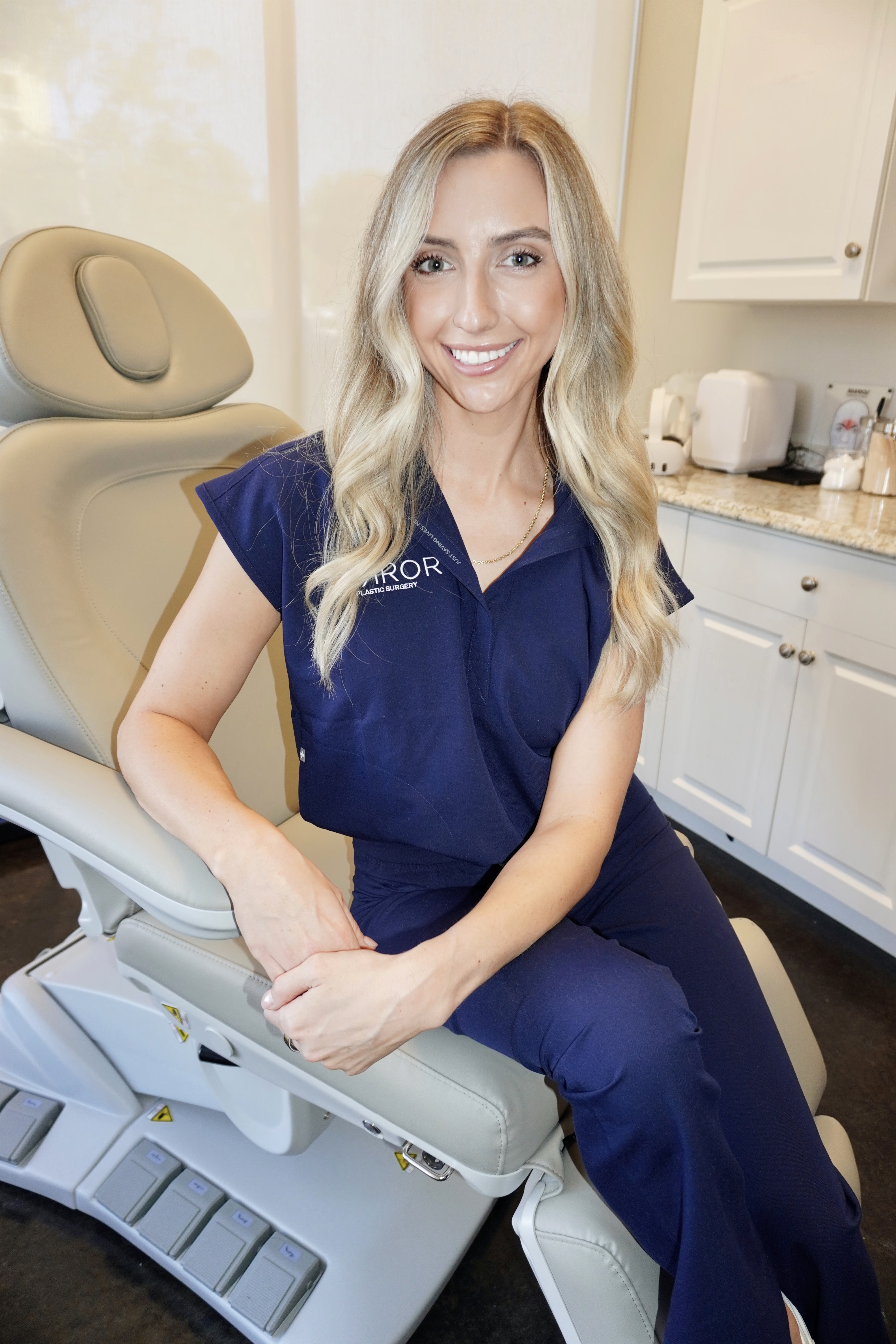
Ellie began her career at a medical spa in Boston and built expertise in skin physiology and aesthetic assessment before pursuing nurse practitioner credentials. This dual background, which combines esthetician training with advanced clinical nursing, shapes her approach to peptide protocols. She evaluates both the aesthetic outcome a patient wants and the physiological pathway required to achieve it safely. Her protocols are individualized, guided by lab data, and supported with clear education on mechanism, dosing rationale, and maintenance needs.
2026 Landscape for Peptide-Based Facial Aging Care
Interest in systemic and injectable peptide approaches for facial aging has grown substantially through 2025 and into 2026. Many patients arrive after trying topical options and now want mechanisms with greater bioavailability. The category sits at the intersection of aesthetic medicine and functional wellness, so practitioners with experience in both areas can evaluate candidates more holistically.
Regulatory status still requires careful attention. Most peptides used in anti-aging protocols, including GHK-Cu, are not FDA-approved drugs. They are available through compounding pharmacies and research-grade suppliers, and quality, purity, and concentration can vary significantly by source. Batch testing by reputable suppliers remains the main quality-assurance tool for practitioners and patients. Mirror Plastic Surgery sources peptides only from providers with documented batch testing, and Ellie reviews sourcing standards during every new patient consultation.
Decision-Making Factors for Peptide Protocols
- Sourcing quality: Peptide purity and concentration vary widely. Unsupervised online purchasing carries real risk of mislabeled or contaminated product.
- Medical supervision: Pre-existing conditions, current medications, and hormonal status can influence peptide response and safety. A thorough intake process lowers this risk.
- Expected timelines: Structural collagen remodeling takes months. Patients who expect rapid visible change within days are likely to feel disappointed regardless of delivery method.
- Maintenance requirements: Neither topical nor injectable peptide protocols create permanent results. Ongoing use, at a frequency tailored to individual response, is necessary to sustain improvements.
- Individual variability: Genetics, diet, sleep, UV exposure history, and hormonal status all shape outcomes. Protocols calibrated to individual lab findings usually perform better than standardized stacks.
Risks and Limitations of Peptide Use
Topical peptides usually carry a low direct risk profile but may produce minimal results when formulation quality or application consistency falls short. Injectable peptides carry the standard risks of subcutaneous injection, including site reactions, bruising, and infection if sterile technique is not followed. Systemic peptides can interact with existing conditions, and GHK-Cu’s pro-angiogenic properties require special consideration in some medical histories.
Unsupervised use of unverified products creates the largest current risk. Without third-party batch testing, patients cannot confirm that a purchased peptide contains the stated compound at the stated concentration. This gap can lead to no therapeutic effect at best or adverse reactions at worst. Medical supervision cannot remove all risk, yet it significantly lowers the chance of preventable harm.
Common Misconceptions About Peptides
“Peptides are only for weight loss.” GLP-1 receptor agonist peptides have received extensive media coverage for weight management, which has shaped a narrow public view of peptides. In practice, peptides span many mechanisms and uses, including collagen support, inflammation modulation, neurological function, energy metabolism, and tissue repair. GHK-Cu has no weight-loss mechanism and functions entirely within collagen and tissue-remodeling pathways.
“Results are permanent once achieved.” Peptide-driven collagen synthesis reflects an ongoing biological process rather than a one-time structural change. When a peptide protocol stops, the signaling stimulus disappears and the skin returns to its baseline rate of collagen turnover, which declines with age. Maintenance protocols form a standard part of any evidence-aware peptide program, not an optional add-on.
Frequently Asked Questions
Are injectable peptides like GHK-Cu safe for long-term use?
GHK-Cu has been studied for several decades and has a well-characterized safety profile at therapeutic doses. Long-term safety in anti-aging protocols depends on appropriate dosing, quality sourcing, and monitoring for individual response. Patients with conditions that may be affected by copper metabolism or pro-angiogenic signaling should share full medical histories before starting. Medical supervision with periodic check-ins represents the standard of care for ongoing injectable peptide use.
Who is a good candidate for injectable peptide protocols for facial aging?
Adults who have used topical peptide and retinoid regimens consistently without reaching desired results, and who are in generally good health with no contraindicated conditions, often qualify as reasonable candidates. A thorough intake, including medical history and relevant lab panels, helps determine whether injectable peptides are appropriate and which specific peptides align with the patient’s physiology and goals.
How long before injectable GHK-Cu produces visible skin changes?
Some patients report early improvements in skin hydration and texture within the first two to four weeks of a loading protocol.1 Meaningful structural changes, such as visible reduction in fine lines and improved skin density, usually require at least eight to twelve weeks of consistent use.1 Full assessment of collagen remodeling outcomes typically occurs at the three-month mark.
Can peptides replace retinoids or sunscreen in an anti-aging routine?
No. Peptides and retinoids work through different mechanisms and usually complement each other. Retinoids accelerate epidermal cell turnover and have a strong evidence base for wrinkle reduction. Sunscreen remains the single most supported intervention for preventing photoaging. Injectable peptides add a systemic collagen-support layer that neither retinoids nor sunscreen provides, but they do not replace either.
What happens if I stop a peptide protocol mid-course?
Stopping a peptide protocol removes the biological signal that drives collagen synthesis or other targeted processes. Results achieved during the protocol gradually fade as the skin returns to its baseline turnover rate. The regression timeline varies by individual and by protocol duration. Maintenance phases, usually at lower frequency than loading phases, help preserve gains.
How does Mirror Plastic Surgery ensure peptide quality?
Mirror Plastic Surgery sources peptides only from suppliers with documented batch testing for purity, concentration, and sterility. Ellie Pranckevicius reviews sourcing standards during the consultation process and does not prescribe from suppliers that lack batch documentation. This approach differs meaningfully from unregulated online retail, where product quality remains unverifiable.
Summary: Making an Informed Choice About Peptides
Anti-wrinkle peptides form a legitimate, mechanism-based category for facial aging care. Topical signal and neurotransmitter peptides offer a low-risk entry point with modest, gradual effects that remain limited by skin-barrier penetration. Injectable GHK-Cu and related carrier peptides provide systemic bioavailability and broader tissue-remodeling potential, yet they require medical oversight, quality sourcing, and realistic expectations about timelines and maintenance.
The choice between topical and injectable delivery, or a combination of both, depends on individual factors that no generalized guide can fully resolve. Baseline skin condition, lab markers, health history, lifestyle, and personal goals all matter. The consultation model described earlier ensures that your protocol is built on lab findings and medical history, not generic assumptions about what works for “most people.”
1 Results may vary from person to person. Editorial content, before and after images, and patient testimonials do not constitute a guarantee of specific results.
Peptide therapy is intended for wellness and optimization purposes and is not prescribed to diagnose, treat, cure, or prevent disease unless specifically stated. Many peptides are not FDA-approved and may be used off-label. Some have limited long-term safety data, with a potential for unknown risks, complications, or desensitization with prolonged use.