
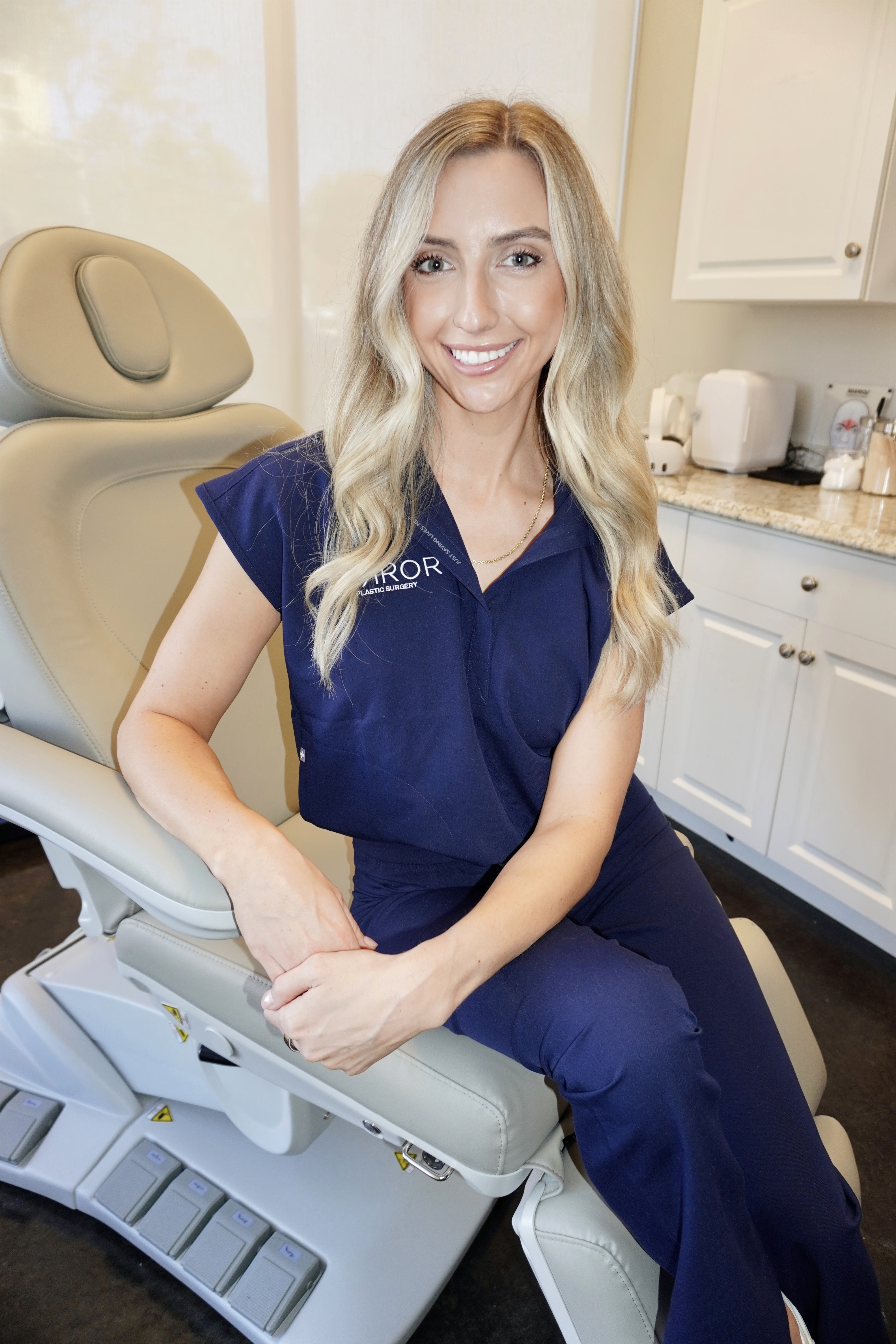
Written by: Ellie Pranckevicius, FNP-BC, Aesthetic Nurse Practitioner & Aesthetic Injector | Facial Restoration & Regenerative Injectable Specialist, Mirror Plastic Surgery | Last updated: September 5, 2026
Key Takeaways
- Age management uses evidence-based lifestyle habits, preventive screenings, and medically supervised therapies to extend healthspan rather than chase “anti-aging.”
- Aging involves 14 biological hallmarks such as mitochondrial dysfunction, chronic inflammation, and cellular senescence, and lifestyle choices influence these far more than genetics alone.
- Exercise, nutrition, sleep, stress management, and regular screenings form five core pillars that repeatedly improve biological aging markers in human studies.
- Peptides and hormone therapies can support these pillars under medical supervision, while systematic reviews show over-the-counter supplements do not measurably change epigenetic aging clocks.
- Schedule a personalized age management consultation with Mirror Plastic Surgery to align your plan with your health history and goals.
The Science of Aging: What Changes Inside Your Body
Aging unfolds as a cascade of biological changes across molecular, cellular, and whole-body systems. The hallmarks-of-aging framework, first proposed in 2013 with nine hallmarks, expanded to 12 in 2023 and to 14 in 2025 in work by López-Otín and colleagues, summarized in a 2026 Aging Cell review. These hallmarks include genomic instability, telomere attrition, mitochondrial dysfunction, loss of proteostasis, cellular senescence, chronic low-grade inflammation (“inflammaging”), and stem cell exhaustion.
In daily life, these processes show up as lower energy production from mitochondria, reduced collagen and elastin in skin and connective tissue, shifts in growth and sex hormones, and a more dysregulated immune system. A 2022 review in Current Genetic Medicine Reports found that lifestyle, stress, sleep, movement, nutrition, and environmental exposures drive aging outcomes more than genetics alone. Your choices therefore shape the trajectory of your biological age.
Five Proven Pillars of Healthy Aging
Exercise and Physical Activity
The NIDDK advises that healthy older adults include five types of activity across at least three days per week: aerobic, muscle-strengthening, balance, flexibility, and multicomponent training. These recommendations align with federal guidelines that call for 150–300 minutes of moderate-intensity aerobic activity weekly, or 75–150 minutes of vigorous activity. A 2024 National Health Interview Survey analysis from the CDC reported that only 47.2% of U.S. adults met aerobic guidelines during leisure time, and only 38.4% of adults aged 65 and older met them.
A 2018 review by Rebelo-Marques et al. in the Journal of Clinical Medicine describes how regular physical exercise modulates nearly all recognized hallmarks of aging. Benefits span skeletal muscle, cardiovascular and respiratory health, and nervous system function, which makes consistent movement a central pillar of age management.
Nutrition and Diet
The PREDIMED trial randomized 7,447 adults to a Mediterranean diet or a low-fat control diet. Major cardiovascular events fell by about 30% in the Mediterranean diet groups over 4.8 years.1 The phase II CALERIE trial showed that a 25% reduction in caloric intake over two years in healthy, non-obese, middle-aged adults significantly improved several cardiometabolic risk factors. A follow-up analysis found that this caloric restriction reduced the DunedinPACE pace-of-aging clock by 2–3% at 12 and 24 months.1
Sleep and Recovery
Seven to nine hours of quality sleep per night supports cellular repair, hormonal balance, and brain function. Most daily growth hormone release occurs during slow-wave sleep, which accounts for roughly 70% of total growth hormone output. Chronic sleep deprivation disrupts this pattern, heightens inflammatory signaling, and interferes with the metabolic processes that support healthy aging.
Stress Management
With aging, DHEA-S levels fall and cortisol often rises, and a higher cortisol/DHEA ratio has been linked to cognitive and immune deficits, reduced daily functioning, and higher infection risk in chronically stressed older adults. Mindfulness practices, structured relaxation, and regular social connection help moderate this stress response and its impact on biological aging.
Preventive Care and Regular Screenings
Comprehensive blood panels reveal early shifts in health that may signal accelerated aging before disease appears. These panels typically include thyroid, liver, kidney, diabetes markers, lipids, and hormone levels. A 2026 Age and Ageing study showed that combining 18 routine blood biomarkers into multisystem signatures predicted 12-year mortality and 8-year risk of cardiovascular disease, diabetes, multimorbidity, frailty, and disability in adults aged 50 and older. The CDC also recommends annual influenza vaccination for everyone aged 6 months and older, with adults 65 and older preferentially receiving higher-dose or adjuvanted vaccines.
Schedule a lab-focused visit with Ellie to review your panels and establish a personalized age management baseline at Mirror Plastic Surgery in St. Petersburg, FL.
What Actually Slows Aging? Interventions with Human Data
A Nature Medicine systematic review from Yale School of Medicine pooled 51 anti-aging intervention studies and assessed more than 110 DNA methylation biomarkers, including 16 major epigenetic clocks. Lifestyle interventions, especially a healthy diet combined with exercise, consistently lowered epigenetic age.1 Pharmacologic therapies such as metformin, semaglutide, and anti-TNF agents produced the largest epigenetic age reductions among the categories studied.1 Over-the-counter supplements in that dataset did not measurably decrease epigenetic age.
A 2026 systematic review in Frontiers in Genetics, co-authored by David A. Sinclair, examined 41 human intervention studies using next-generation epigenetic clocks. Endurance exercise and plant-rich diets repeatedly showed favorable effects. A six-month cycling-based endurance program in 33 healthy adults reduced PC GrimAge by 0.62 years, and a 24-month plant-rich diet in 219 healthy adults reduced GrimAge by 0.66 years.1 The authors emphasize that epigenetic clocks remain investigational and that effect sizes do not directly translate into exact changes in whole-body aging or lifespan.
Common Myths and Mistakes That Speed Up Aging
Many popular anti-aging claims do not hold up in controlled human studies. The myths below highlight where expectations often drift away from evidence.
- “Anti-aging creams can reverse wrinkles.” Topical products improve surface concerns but do not reverse cellular aging. Skin aging involves mitochondrial decline, senescent cell buildup, and extracellular matrix breakdown that creams cannot fully reach.
- “Supplements can replace a healthy lifestyle.” The Yale Nature Medicine review reported that over-the-counter supplements did not reduce epigenetic age in the analyzed studies.
- “Growth hormone reverses aging.” A 2007 Annals of Internal Medicine systematic review by Liu et al., pooling 18 randomized trials in healthy older adults, found that growth hormone increased lean mass by 2.1 kg and decreased fat by 2.1 kg but did not improve strength or function and caused more adverse events, leading the authors to conclude that GH “cannot be recommended as an antiaging therapy.” The Growth Hormone Research Society and the American Association of Clinical Endocrinologists likewise advise against GH use as an anti-aging intervention in adults without diagnosed GH deficiency because potential harms outweigh modest body-composition changes.
- “More treatment always produces better results.” Cosmetic literature documents frequent over-treatment with hyaluronic acid fillers. A conservative, stepwise approach tends to create more natural, longer-lasting outcomes.
- “Chronic sleep deprivation has minimal impact.” Ongoing sleep loss strongly accelerates biological aging by suppressing growth hormone, raising cortisol, and impairing cellular repair.
Advanced Therapies: Peptides, Hormone Therapy, and NAD+
Advanced therapies work best when they support, rather than replace, strong lifestyle habits. Peptides are short amino acid chains that signal specific cellular actions, and each peptide has its own evidence profile.
GHK-Cu is often described as an “anti-aging peptide” that supports collagen and elastin production, skin and hair quality, nail health, melasma, and graying hair. Controlled human studies have not yet tested whether topical benefits translate into systemic anti-aging effects when used by injection.
BPC-157 has more than 100 preclinical studies over three decades, yet published human clinical data remain very limited. As of 2026, no completed randomized, placebo-controlled efficacy trial exists for any indication. Long-term safety, standard dosing, drug interactions, and rare harms are still unclear, so routine clinical use should stay confined to carefully controlled medical or research settings.
NAD+ levels fall with age. Precursors such as nicotinamide riboside and NMN are under active clinical investigation. Studies report increases in NAD+ levels and reductions in inflammatory cytokines, yet nicotinamide riboside did not improve cognition in older adults with mild cognitive impairment in controlled trials. Many peptides are not FDA-approved and are prescribed off-label, which makes thorough medical evaluation and ongoing monitoring essential.
Hormone therapy also requires careful selection. The TRAVERSE trial, published in the New England Journal of Medicine in 2023, followed 5,246 men aged 45–80 with hypogonadism and cardiovascular risk factors. Testosterone treatment did not raise major adverse cardiovascular events compared with placebo. Testosterone therapy suits men with documented hypogonadism; it is not intended as a general anti-aging tool for men whose testosterone levels are normal.
At Mirror Plastic Surgery, Ellie Pranckevicius, FNP-BC, leads peptide therapy using a concierge model that includes comprehensive lab work, tailored protocol design, and close follow-up. Peptides come from vetted sources with third-party batch testing, which clearly separates this approach from unregulated online sellers. A 2019 review of online peptide vendors found that 26% of tested products contained less than 90% of the labeled peptide and some contained bacterial endotoxins.
Ask Ellie whether peptide therapy fits your health profile and explore evidence-based options for your goals.
How to Choose a Provider for Age Management and Peptides
The provider you choose shapes both your safety and your results. Watch for these red flags when you evaluate any age management or peptide clinic:
- Online retailers that sell peptides without medical oversight or a prescription
- Clinics that promise dramatic or guaranteed results without acknowledging evidence limits
- Providers who skip comprehensive baseline lab testing before starting therapy
- Products that lack documented third-party batch testing for purity and potency
- High-volume practices that offer little individualized consultation time
High-quality care usually includes:
- Comprehensive consultations that review your full medical history
- Thorough lab analysis before therapy and at regular follow-up points
- Personalized protocols based on your physiology and goals
- Clear communication about what current evidence supports and where uncertainty remains
- Ongoing concierge-level support throughout your treatment journey
Ellie Pranckevicius combines esthetician training, four years of Neuroscience ICU nursing at Tampa General Hospital, and board certification as a Family Nurse Practitioner. She emphasizes education and honest assessment, including advising clients when a therapy is not yet appropriate. Mirror Plastic Surgery follows a concierge philosophy with ample consultation time, safety-first decisions, and direct access to your provider by text or telemedicine. The practice serves patients in St. Petersburg and the greater Tampa Bay area in person and supports clients across the United States remotely.
Contact Mirror Plastic Surgery at 780 4th Ave S, St. Petersburg, FL 33701, by phone at 727-361-6515, or by email at [email protected].
Start your evidence-based age management plan with Ellie and take the first step toward medically supervised, research-informed care.
Frequently Asked Questions
What is the best pill for anti-aging?
No pill reverses aging. The most rigorous systematic reviews show that, as noted earlier, over-the-counter supplements have not produced measurable changes in biological age on epigenetic clocks. Lifestyle interventions, especially a nutrient-dense diet combined with regular exercise, consistently improve biological aging markers. Certain prescription medications, including metformin and semaglutide, have influenced epigenetic age in specific clinical groups, yet physicians prescribe them for defined medical indications rather than as general anti-aging pills. A nutrient-dense diet, structured exercise, adequate sleep, and stress management remain the most accessible and well-supported strategies.
Are peptides safe?
Peptide therapy can be appropriate for specific goals when a qualified clinician supervises treatment and uses quality-controlled products. Many peptides, however, lack FDA approval and long-term human safety data. The greatest risks come from unregulated sources, where independent testing has shown that many online products contain less active ingredient than labeled and some contain bacterial endotoxins. Professional oversight that includes a detailed medical history, baseline labs, and ongoing monitoring helps confirm product quality, appropriate dosing, and clinical fit. At Mirror Plastic Surgery, Ellie Pranckevicius uses peptides from reputable suppliers with third-party batch testing and offers direct concierge support throughout treatment.
How long does it take to see results from peptide therapy?
Response timelines vary by individual, health status, and peptide protocol. Some clients notice early changes within a week, while others need several weeks or months to see meaningful shifts.1 Genetics, diet, sleep, lifestyle habits, and adherence all influence outcomes. A personalized plan that starts with comprehensive labs and a detailed consultation usually produces more reliable results than a generic protocol.
Will I lose benefits if I stop peptides?
Benefits usually fade after peptide therapy stops, similar to what happens when you stop most health regimens.1 If a peptide protocol helped manage inflammation or another process, that underlying issue often returns to its prior state without continued support. Maintenance plans can help sustain gains from active therapy. Ellie Pranckevicius discusses long-term planning during consultation so that expectations and maintenance strategies are clear from the beginning.
Can peptides replace exercise and diet?
Peptides complement foundational lifestyle habits but do not replace them. Exercise and nutrition have decades of large randomized controlled trials supporting their effects on biological aging, cardiovascular health, metabolism, and longevity. Most peptides have far less human data. The strongest age management results come from combining lifestyle pillars such as exercise, nutrition, sleep, stress management, and preventive care with medically supervised advanced therapies when clinically appropriate. Peptides work best when layered onto a solid lifestyle foundation.
Disclaimer: Results may vary from person to person. Editorial content and patient testimonials do not constitute a guarantee of specific results.
Disclaimer: Peptide therapy is intended for wellness and optimization purposes and is not prescribed to diagnose, treat, cure, or prevent disease unless specifically stated. Many peptides are not FDA-approved and may be used off-label. Some have limited long-term safety data, with a potential for unknown risks, complications, or desensitization with prolonged use.
1 Results may vary from person to person. Editorial content, before and after images, and patient testimonials do not constitute a guarantee of specific results.
Peptide therapy is intended for wellness and optimization purposes and is not prescribed to diagnose, treat, cure, or prevent disease unless specifically stated. Many peptides are not FDA-approved and may be used off-label. Some have limited long-term safety data, with a potential for unknown risks, complications, or desensitization with prolonged use.