

Last updated: January 26, 2026
Key Takeaways
- High-volume surgery centers increase risks like capsular contracture (10-20%) due to surgeon fatigue. Elite practices limit cases to 1-2 procedures daily for safer outcomes.
- Pre-op ultrasound and the 45:55 volume rule guide precise implant selection and natural proportions, which lowers complication rates.
- Keller Funnel no-touch insertion and evidence-based antibiotic protocols sharply reduce infection and capsular contracture risks.
- Premium Motiva implants and AlloClae fat transfer provide lower reoperation rates and safer long-term results than many traditional options.
- Mirror Plastic Surgery offers Dr. Akash’s Harvard-trained expertise and a concierge safety model. Book your consultation today.
Why Mirror Plastic Surgery Focuses on Safety First
Mirror Plastic Surgery follows a clear priority order: Safety first, Function second, and Aesthetics third. This philosophy guides every decision during breast augmentation. Each step of your plan aims to protect your health while still delivering beautiful, natural results.
The team uses advanced in-office ultrasound for detailed pre-operative assessment and avoids stacking multiple major procedures in one session. Combining too many operations at once can sharply increase complication rates, so the practice keeps each surgery focused and controlled.
Mirror Plastic Surgery also uses the newest implant technologies with high-quality gel and advanced fat transfer techniques such as AlloClae. These tools represent the current leading edge of breast augmentation safety. By limiting daily surgical volume and maintaining board certification privileges at local hospitals, the practice builds a strong safety net around every patient. Book a consultation with Dr. Akash to experience this elevated standard of care.
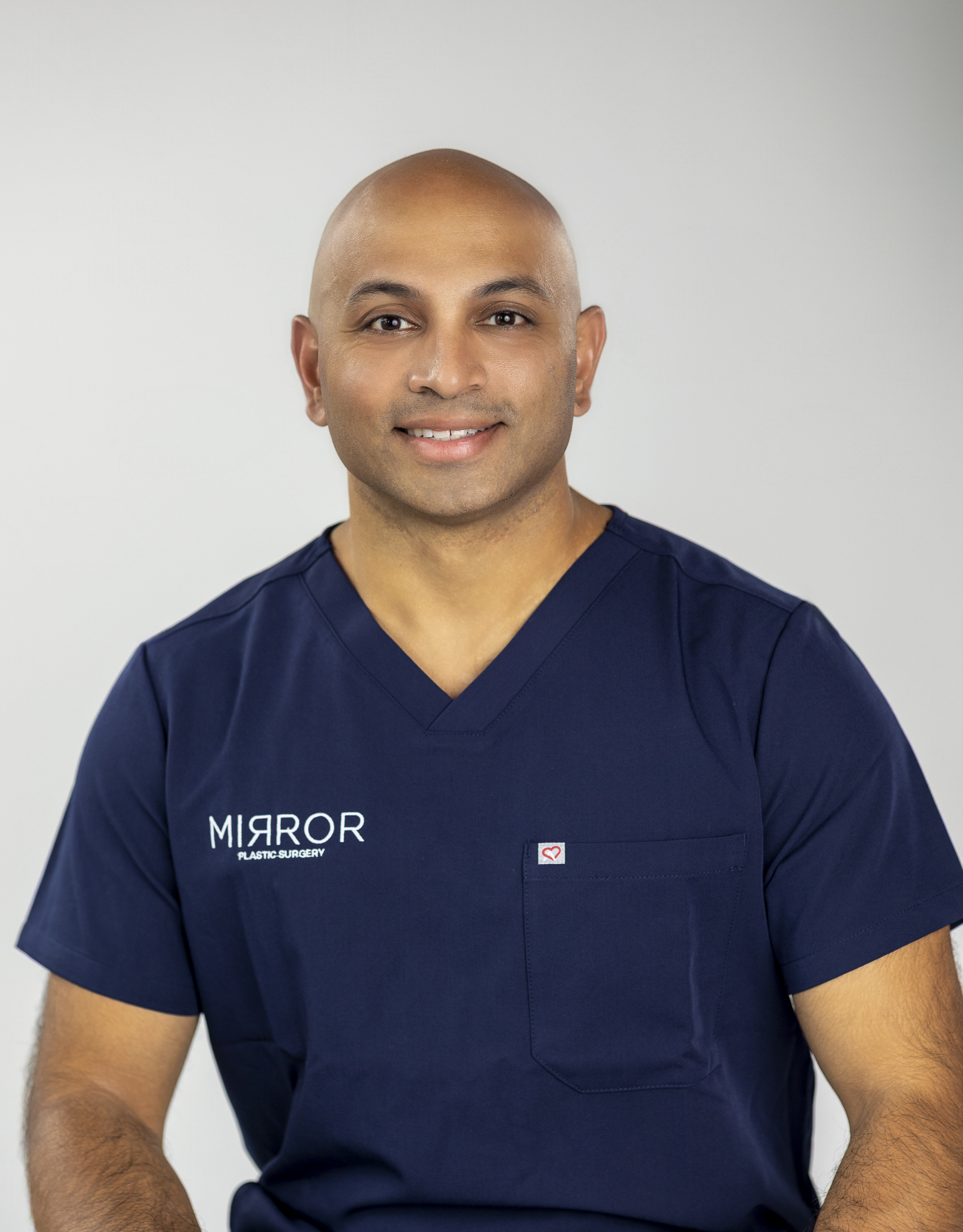
Meet Dr. Akash Chandawarkar: A Safety-Driven Breast Augmentation Specialist
Dr. Akash Chandawarkar offers rare training and experience in breast augmentation safety. He completed medical training through the Harvard-MIT Division of Health Sciences and Technology and a surgical residency at Johns Hopkins University. He then pursued specialized fellowship training at Manhattan Eye, Ear, and Throat Hospital.
His testimony before the U.S. Food and Drug Administration on breast implant safety further establishes him as a trusted authority. He focuses on meticulous technique, strict contamination control, and strategies that reduce capsular contracture. This attention to detail supports natural, long-lasting results for each patient.
Breast Augmentation Risks and Why Your Surgeon’s Choice Matters
Breast augmentation remains generally safe when performed correctly, yet it still carries real risks. These include infection, capsular contracture, implant rupture, and asymmetry. Death rates remain below 1% in properly managed practices, but regret rates can reach up to 47.1% when outcomes do not meet expectations.
Surgeon selection plays the biggest role in lowering these risks. Board-certified plastic surgeons who follow evidence-based protocols and limit daily surgical volume consistently achieve safer, more predictable outcomes than high-volume centers. The American Board of Plastic Surgery stresses that proper training, accredited facilities, and careful technique form the foundation of safe breast augmentation.
8 Proven Strategies Top Surgeons Use to Reduce Breast Augmentation Risks
#1: Detailed Ultrasound and 45:55 Proportion Planning
Top surgeons rely on in-office ultrasound to map your anatomy before surgery. This imaging allows precise measurement of breast base width and tissue thickness. Those measurements guide implant size and shape selection.
The 45:55 rule describes about 45% of breast volume above the nipple and 55% below for natural proportions. At Mirror Plastic Surgery, Dr. Akash uses ultrasound and this ratio to tailor each plan to your body. This approach supports natural results and lowers the risk of issues like implant malposition or rippling.
#2: Low Daily Case Volume to Avoid Fatigue
Limiting daily surgeries protects you from errors linked to fatigue. Centers that cap daily volume report complication rates dropping by more than 60% compared with high-volume practices.
Mirror Plastic Surgery’s concierge model restricts the schedule to 1-2 surgeries per day. This structure allows Dr. Akash to stay fully focused on your procedure from start to finish. Many mill-style practices perform 5-10 surgeries daily, which can push surgeons to rush and accept higher risk.
#3: Keller Funnel No-Touch Implant Insertion
The Keller Funnel gives surgeons a sterile, no-touch way to insert implants. This device reduces bacterial contamination, which lowers capsular contracture risk. A prospective 3-year study of 100 patients reported a 0% capsular contracture rate with minimally invasive techniques, and the Keller Funnel formed a key part of that protocol.
This touchless method sharply cuts the chance of capsular contracture during implant placement. Surgeons like Dr. Akash pair the funnel with strict sterile technique to protect against infection and support long-term implant health.
#4: Dual-Plane Pocket Creation and Subpectoral Placement
Careful pocket dissection and implant placement help prevent complications and create smooth contours. Submuscular positioning softens transitions and hides implant edges, while dual-plane placement supports the ideal 45/55 ratio.
Dr. Akash uses dual-plane techniques that position implants partly under the pectoralis muscle. This placement improves coverage, reduces capsular contracture risk compared with subglandular placement, and supports long-term stability. The result looks more natural and feels more integrated with your body.
#5: Premium Motiva Implants and Advanced Gel Technology
Implant quality strongly influences long-term safety and satisfaction. Motiva implants show a low 6.1% overall reoperation rate at three years, which means fewer revision surgeries for patients.
Modern highly cohesive silicone gels have reduced gel bleed by more than 90%. This improvement enhances safety and durability. Mirror Plastic Surgery uses premium implant technologies, including Motiva, to give patients safer, longer-lasting options.
#6: Strict, Evidence-Based Antibiotic Protocols
Structured antibiotic plans help prevent infection and related complications. Leading surgeons follow American Society of Plastic Surgeons guidelines for perioperative antibiotics. These guidelines focus on correct timing and dosing to protect tissues during and after surgery.
Dr. Akash uses a layered infection prevention strategy. It includes pre-operative skin preparation, antibiotic irrigation during surgery, and carefully timed post-operative antibiotics. This system lowers infection risk and reduces the chance of capsular contracture linked to bacterial contamination.
#7: AlloClae Fat Transfer for Safer Volume Enhancement
Traditional fat transfer can cause seromas, fat necrosis, and uneven volume retention. AlloClae introduces a more structured way to integrate fat into the breast. This method aims to reduce many of the classic fat grafting risks.
Newer fat grafting approaches focus on lowering complications like seroma or malposition. Mirror Plastic Surgery offers AlloClae as a safer alternative to standard fat transfer. Patients gain natural volume with improved fat survival and fewer complications compared with older techniques.
#8: Accredited Facilities and Ongoing Post-Op Monitoring
Accredited facilities and qualified teams form a core safety requirement. Mirror Plastic Surgery operates only in accredited surgical centers and works with board-certified anesthesiologists. These standards help manage both routine and unexpected events safely.
Dr. Akash maintains hospital privileges, which ensure rapid access to advanced care if needed. The practice also uses in-office ultrasound for post-operative implant checks, not just visual exams. This extra layer of monitoring supports early detection of issues and faster intervention.
Safety Checklist for Choosing Your Breast Augmentation Surgeon
Use this checklist when you evaluate potential surgeons:
- Certification by the American Board of Plastic Surgery
- Active hospital privileges and accredited surgical facilities
- Clear limits on daily surgical volume
- In-office ultrasound for assessment and follow-up
- Experience with FDA testimony or advisory roles
- A stated philosophy of Safety > Function > Aesthetics
- Use of premium, modern implant technologies
- Thorough pre-operative anatomical and proportion analysis
Many myths still circulate, including the idea that “all implants are the same.” High-quality surgical care requires investment in training, facilities, and technology that directly affect your safety and your final result.
What Comes Next in Breast Augmentation Safety
Breast augmentation continues to evolve with new safety-focused technology. Companies are developing 3D-printed resorbable breast scaffolds that support natural tissue growth and may reduce implant-related risks. Artificial intelligence planning tools and advanced imaging also promise more precise surgical planning.
AlloClae and similar fat transfer innovations sit at the forefront of natural breast enhancement. At the same time, implant technology keeps improving safety profiles. AI models with up to 94% accuracy in predicting surgical outcomes will likely refine safety protocols even further.
Long-term breast health depends on regular monitoring and a strong relationship with an experienced, board-certified surgeon. You can choose techniques that minimize risk and still achieve your goals. Book a consultation with Dr. Akash to create a personalized safety plan for your procedure.
Frequently Asked Questions
What is capsular contracture, and how can surgeons help prevent it?
Capsular contracture occurs when scar tissue around an implant tightens and hardens. This process can distort the breast and cause discomfort. High-volume practices report rates of 10-20%, yet careful technique can bring that number close to zero.
Prevention strategies include Keller Funnel no-touch insertion, strict sterile technique, structured antibiotic use, and precise pocket creation. Recent studies show 0% capsular contracture rates when minimally invasive protocols are followed correctly. Surgeon selection, therefore, plays a major role in prevention.
What are the main benefits of the Keller Funnel?
The Keller Funnel allows surgeons to insert implants without direct hand contact. This no-touch method reduces bacterial contamination and lowers capsular contracture risk. The device also supports smaller incisions while preserving sterility.
Smaller incisions can mean less scarring and a smoother recovery. Studies repeatedly show lower complication rates when surgeons use the Keller Funnel instead of traditional insertion methods. Many safety-focused surgeons now consider it a standard tool.
Is subpectoral placement safer than subglandular placement?
Subpectoral, or under-the-muscle, placement generally offers better safety than subglandular placement. The muscle layer provides extra coverage, which softens implant edges and reduces capsular contracture rates. It also offers more protection against bacterial contamination.
Dual-plane techniques combine the benefits of both positions. The upper portion of the implant sits under the muscle, while the lower portion sits over it. This approach can create a natural slope and shape while still supporting safety.
What is the current breast augmentation regret rate in 2026?
Recent data places breast augmentation regret rates between 5.1% and 9.1% overall. Some studies report rates as high as 47.1% when results do not match expectations. Common reasons include complications, unnatural appearance, size concerns, or functional problems.
Choosing an experienced, board-certified surgeon reduces this risk. Thorough consultation, clear communication, and realistic planning all support higher satisfaction. Practices that focus on natural results and patient education tend to see fewer regrets.
How do AlloClae fat transfer risks compare with implant risks?
Traditional fat transfer can cause seromas, fat necrosis, uneven volume, and challenges with imaging for breast cancer screening. AlloClae improves on this by supporting more structured fat integration. This design reduces many of the classic fat grafting complications.
AlloClae offers more predictable volume retention and a lower risk of seroma or malposition than older fat transfer methods. Breast implants still carry risks such as capsular contracture and rupture. AlloClae provides a natural alternative with a stronger safety profile than traditional fat grafting, although researchers continue to collect long-term data.
Choose a Low-Risk Breast Augmentation Plan with Confidence
The eight strategies described here form a modern safety roadmap for breast augmentation. They include detailed pre-operative assessment, limited daily surgical volume, Keller Funnel insertion, careful pocket creation, premium implants, evidence-based protocols, advanced fat transfer options, and accredited facilities with strong follow-up care.
When experienced surgeons apply these methods, complication rates can drop by more than 60% compared with high-volume centers. Mirror Plastic Surgery and Dr. Akash Chandawarkar follow this safety-focused model through a concierge approach, FDA advisory experience, and use of advanced technology. Their Safety > Function > Aesthetics philosophy keeps your health at the center of every decision.
Your breast augmentation journey deserves focused attention and thoughtful planning. Book a consultation with Dr. Akash today to see how meticulous care and modern techniques can shape your results.
Book a Consultation
You can take the next step toward safer breast augmentation with a single call or message. Mirror Plastic Surgery welcomes patients from the Tampa Bay area and beyond. The team will guide you through a detailed, personalized consultation.
Phone: 727-361-6515
Email: hello@mirrorplasticsurgery.com
Address: 780 4th Ave S, St. Petersburg, FL 33701
Instagram: @mirrorplasticsurgery, @dr.akashplasticsurgery
Dr. Akash and his team remain committed to the safest, most advanced breast augmentation techniques available. Book a consultation with Dr. Akash to begin your path toward natural, beautiful results with minimized risk.
Disclaimer: Results may vary from person to person. Editorial content, before and after images, and patient testimonials do not constitute a guarantee of specific results.
