

Last updated: February 8, 2026
Key Takeaways
- Hospital privileges confirm peer-reviewed credentials for direct patient care at accredited facilities, while transfer agreements do not verify competency.
- Verify surgeons through the Florida DOH MQA portal, ABMS board certification, and direct hospital contact to confirm true admitting privileges.
- Major red flags include no ABPS certification, high-volume schedules of 5 to 10 surgeries daily, rushed consultations, and unaccredited facilities.
- 2026 safety trends include Motiva implants with less than 1% contracture rates and AlloClae fat grafting for natural, long-lasting results.
- Choose safety with Dr. Akash at Mirror Plastic Surgery, who holds full hospital privileges. Book your consultation today.
Why Mirror Plastic Surgery Uses a Concierge Approach
Mirror Plastic Surgery follows a concierge medicine model that limits surgery volume to 1 or 2 procedures per day. This focused schedule allows the team to prioritize each patient’s safety, function, and aesthetic goals without rushing. High-volume practices may perform 5 to 10 procedures daily, which can dilute attention and increase risk. Dr. Akash maintains full hospital privileges, so he can admit and treat his own patients directly if complications occur. This direct care model avoids delays that often happen when practices rely only on transfer agreements.
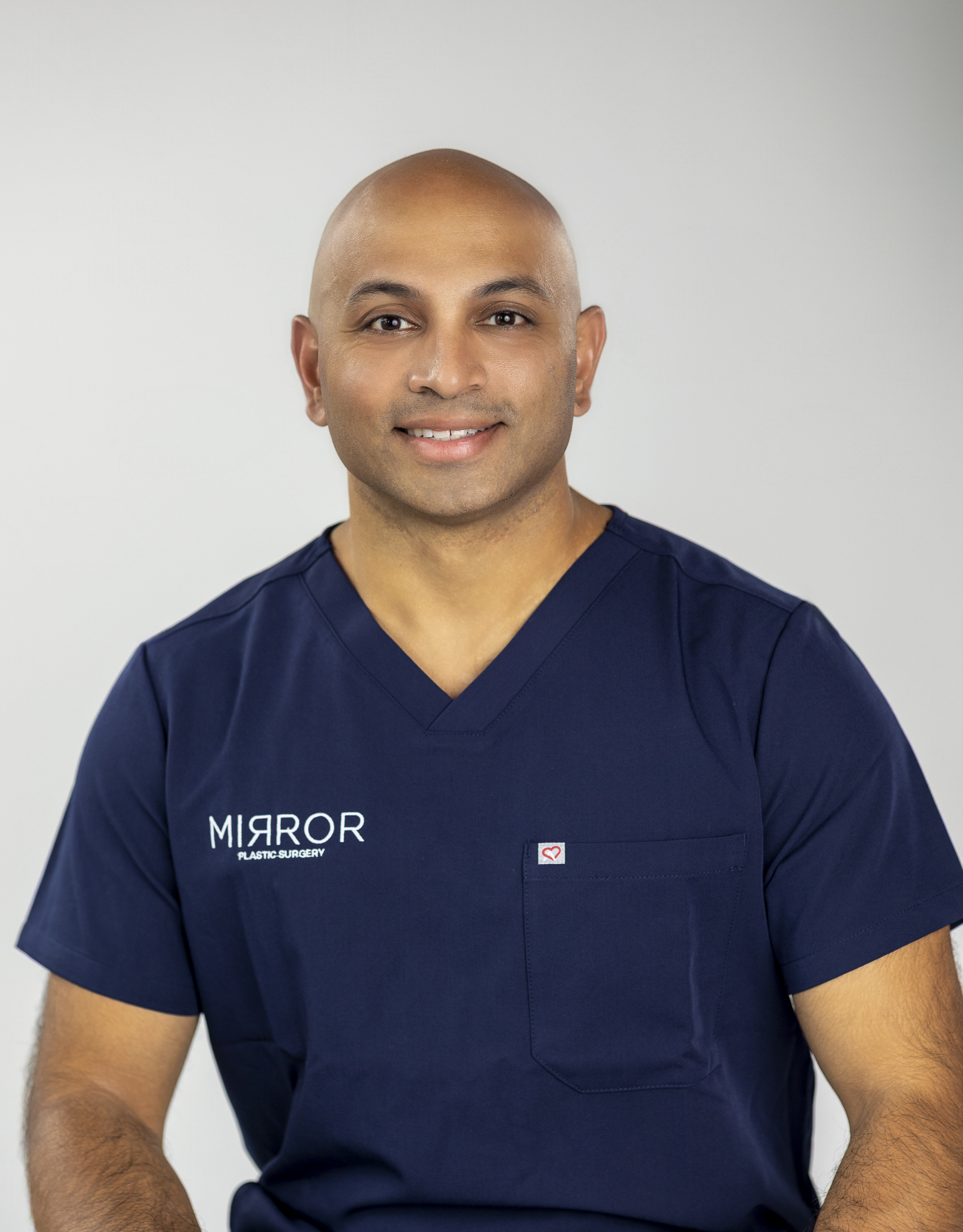
Meet Dr. Akash Chandawarkar
Dr. Akash Chandawarkar offers a rare combination of elite training and real-world experience in breast augmentation. He trained at Harvard Medical School and completed residency at Johns Hopkins, followed by a specialized fellowship at Manhattan Eye, Ear & Throat Hospital. His background also includes medical innovation training at Stanford University, which supports his work with advanced surgical technologies.
Dr. Akash serves on advisory boards for modern devices such as Motiva breast implants and has provided FDA testimony on breast implant safety. His full hospital privileges allow him to manage patient care directly in accredited hospitals when needed. His expertise with Motiva implants and AlloClae fat grafting supports natural-looking results with low complication rates.
Hospital Privileges and Transfer Agreements in Plain Language
Hospital privileges give surgeons peer-reviewed authority to admit, treat, and operate on patients in accredited hospitals. Medical staff committees review training, case experience, and ongoing competency before granting these privileges. This process continues over time, which helps maintain safety standards.
Transfer agreements function as administrative arrangements that allow emergency referrals to hospitals. These agreements do not require peer review, skills assessment, or proof of surgical competency. They simply outline where a patient may be sent if a complication occurs.
Patients can follow a clear process to verify surgeon credentials. First, use the Florida DOH MQA portal to confirm an active license and review any disciplinary actions. Second, confirm board certification through the ABMS certification database and look specifically for American Board of Plastic Surgery credentials. Third, call hospitals directly and ask whether the surgeon has admitting privileges and can personally treat patients there. Finally, confirm that the surgical facility holds proper accreditation for the planned procedures.
This step-by-step verification process highlights major safety differences between surgeons. Physicians with hospital privileges undergo continuous peer review and must meet ongoing standards. Surgeons who rely only on transfer agreements do not face the same level of oversight.
Book a consultation with Dr. Akash to work with a surgeon who maintains full hospital privileges and prioritizes safety at every step.
2026 Breast Augmentation Safety Trends at Mirror Plastic Surgery
The FDA’s 2025 approval of Motiva breast implants marks a major improvement in implant safety. Clinical data show capsular contracture rates below 1%, rupture rates of 0.6%, and 97% patient satisfaction. These numbers represent a clear safety and satisfaction advantage over many traditional implants.
AlloClae fat grafting technology has also changed how surgeons approach breast enhancement. This method supports better fat integration and more stable volume retention than older fat transfer techniques. At the same time, patient preferences continue to shift toward smaller, more natural implant sizes. Average implant volumes have moved from 350 to 450 cc into the low 200 cc range.
Florida’s participation in the CMS prior authorization demonstration for ambulatory surgical center procedures reflects growing oversight of cosmetic surgery safety. Low-volume practices such as Mirror Plastic Surgery can integrate these new technologies while maintaining strict safety protocols. Patients benefit from modern options without sacrificing careful monitoring and individualized care.
Red Flags When Choosing a Florida Breast Augmentation Surgeon
Several clear warning signs can point to unsafe or profit-driven practices. Lack of American Board of Plastic Surgery certification is one of the most serious red flags, because this credential confirms specialized plastic surgery training. Heavy reliance on transfer agreements instead of hospital privileges may signal limited peer review and uncertain competency.
High-volume practices that perform 5 to 10 surgeries per day often reduce the time available for planning and follow-up. Research shows that combining multiple procedures in one session can sharply increase complication rates. Some centers still schedule large combination surgeries mainly for financial reasons, which can place patients at higher risk.
Very short consultations, especially those under 30 minutes, rarely allow for a full review of anatomy, goals, and medical history. Unaccredited surgical facilities may lack proper oversight, emergency equipment, and standardized protocols. Surgeons who ignore the “45 to 55 rule” for additional screening in older breast augmentation patients may not be assessing risk carefully.
Other red flags include pressure to schedule immediately, reluctance to share credentials, and promises of flawless or guaranteed results. High-volume surgery mills often report higher capsular contracture rates and more revision surgeries than low-volume practices that focus on precision and safety.
Patients can avoid these risks by choosing a surgeon with strong credentials and true hospital privileges. Book a consultation with Dr. Akash at Mirror Plastic Surgery for a detailed evaluation and a safety-first treatment plan.
Breast Augmentation Patient Safety Checklist
Patients should start by confirming that their surgeon holds an active Florida license and has a clean or explained disciplinary record through the MQA portal. Next, they should verify American Board of Plastic Surgery certification through ABMS resources. A direct call to local hospitals can then confirm whether the surgeon has admitting privileges instead of only transfer agreements.
Daily case volume also matters. Practices that perform more than 2 or 3 surgeries per day may struggle to provide fully individualized attention. Patients should confirm that the surgical facility holds accreditation from organizations such as AAAASF or AAAHC. They should also review the surgeon’s specific experience with their chosen procedure and implant type.
During consultation, patients can assess whether the surgeon allows enough time for questions and explains anatomy, options, and realistic outcomes. They should verify that a board-certified anesthesiologist will manage anesthesia. Clear emergency protocols and defined hospital relationships for complication management are essential.
Mirror Plastic Surgery meets and exceeds these safety benchmarks. Dr. Akash’s credentials, hospital privileges, and commitment to only 1 or 2 surgeries per day support focused, attentive care for every patient.
Frequently Asked Questions
How does admitting privileges differ from transfer agreements?
Admitting privileges are peer-reviewed credentials that allow a surgeon to admit, treat, and operate on patients directly in a hospital. Medical staff committees review training, experience, and ongoing performance before granting these privileges. Transfer agreements function as administrative documents that allow emergency transfers but do not confirm skills or competency. Surgeons with hospital privileges can care for their own patients in the hospital, while surgeons with only transfer agreements must rely on other physicians for hospital-based treatment.
How to check a surgeon’s hospital privileges in Florida?
Patients can begin by using the Florida DOH MQA portal to confirm active licensure and review any disciplinary history. They should then verify board certification through ABMS databases. The most direct step involves calling hospitals and asking whether the surgeon can admit and treat patients personally. Many hospitals also list privileged physicians in online directories. Patients should confirm that the planned surgical facility holds appropriate accreditation for the procedures offered.
Why are transfer agreements not equal to hospital privileges?
Transfer agreements and hospital privileges serve different purposes and do not offer the same safety assurances. Transfer agreements outline where a patient may be sent during an emergency, but do not involve peer review or skills assessment. Hospital privileges require extensive credentialing, ongoing evaluation, and proof of competency. Surgeons with privileges can deliver immediate, direct hospital care, while surgeons with only transfer agreements may face delays as other physicians assume responsibility.
What are the Top red flags for Florida plastic surgeons?
Major red flags include a lack of American Board of Plastic Surgery certification and dependence on transfer agreements instead of hospital privileges. Very high daily surgery volumes, often 5 to 10 or more procedures, also raise concern. Short consultations under 30 minutes, unaccredited facilities, and pressure to schedule quickly can signal unsafe practices. Additional concerns include reluctance to verify credentials, unrealistic promises, and failure to consider age-related risks, such as the 45 to 55 screening rule.
How to verify an American Board of Plastic Surgery certification?
Patients can use the American Board of Medical Specialties online verification tool to confirm board certification. The ABMS includes 24 medical specialty boards, including the American Board of Plastic Surgery. Entering the physician’s name will show the current certification status. Patients should confirm that the certification is specifically in plastic surgery rather than another field. Board certification indicates accredited residency training, successful completion of examinations, and ongoing education.
Safety of in-office breast augmentation
In-office breast augmentation can be safe when performed in an accredited facility by a surgeon with hospital privileges. Key safety factors include accreditation by organizations such as AAAASF or AAAHC, use of board-certified anesthesiologists, and clear emergency protocols. The surgeon should also have the ability to admit and treat patients in a hospital if complications occur. Surgeons who hold only transfer agreements may not provide the same level of immediate hospital-based care during emergencies.
What to expect during breast augmentation recovery?
Most patients experience 1 to 2 weeks of limited activity after surgery, followed by a gradual return to normal routines over 4 to 6 weeks. Surgeons often recommend starting breast massage around day 5 to help reduce capsular contracture risk, when appropriate. Final results usually develop over 3 to 6 months as swelling decreases and tissues settle. Patients can expect some discomfort, swelling, and temporary changes in nipple sensation during early recovery. Following detailed post-operative instructions supports smoother healing and more predictable results.
Patients who want a personalized recovery plan can schedule a comprehensive consultation. Book a consultation with Dr. Akash today to review goals, safety considerations, and recovery expectations.
Book a Consultation
Contact Mirror Plastic Surgery:
Phone: 727-361-6515
Email: hello@mirrorplasticsurgery.com
Instagram: @mirrorplasticsurgery, @dr.akashplasticsurgery
Address: 780 4th Ave S, St. Petersburg, FL 33701
Mandatory Disclaimer
Disclaimer: Results may vary from person to person. Editorial content, before and after images, and patient testimonials do not constitute a guarantee of specific results.
