

Last updated: January 24, 2026
Key Takeaways for Safe Breast Augmentation
- Choose ABPS board-certified surgeons with 6+ years of residency, active hospital privileges, and a daily limit of 1-2 surgeries for focused, safe care.
- Prioritize FDA-approved implants such as Motiva, Mentor, or Allergan, and review the FDA Patient Decision Checklist during every consultation.
- Use the 45/55 aesthetic rule for natural proportions, while also planning for posture, comfort, and long-term function.
- Plan with 20-30% reoperation rates in mind and select surgeons skilled in preventing complications like BIA-ALCL and capsular contracture.
- Experience concierge-level, safety-first care at Mirror Plastic Surgery with Dr. Akash, a Harvard-trained FDA expert in breast augmentation.
Concierge Breast Augmentation at Mirror Plastic Surgery
Mirror Plastic Surgery follows a concierge medicine model that focuses on safety, time, and attention for every patient. The practice performs only 1-2 surgeries per day, which allows the team to stay fully focused on each individual case from pre-op through recovery. Safety comes first, supported by accredited surgical facilities, board-certified anesthesiologists, and in-office ultrasound for precise pre-operative assessment.
Function ranks second, with careful planning to relieve issues such as back pain from oversized implants or animation deformities. Aesthetics build on this foundation, creating results that enhance natural proportions while respecting anatomy. Mirror Plastic Surgery remains supplier-neutral and offers advanced options like Motiva implants when appropriate. Book a consultation with Dr. Akash to experience this personalized approach to breast augmentation.
Why Patients Trust Dr. Akash Chandawarkar
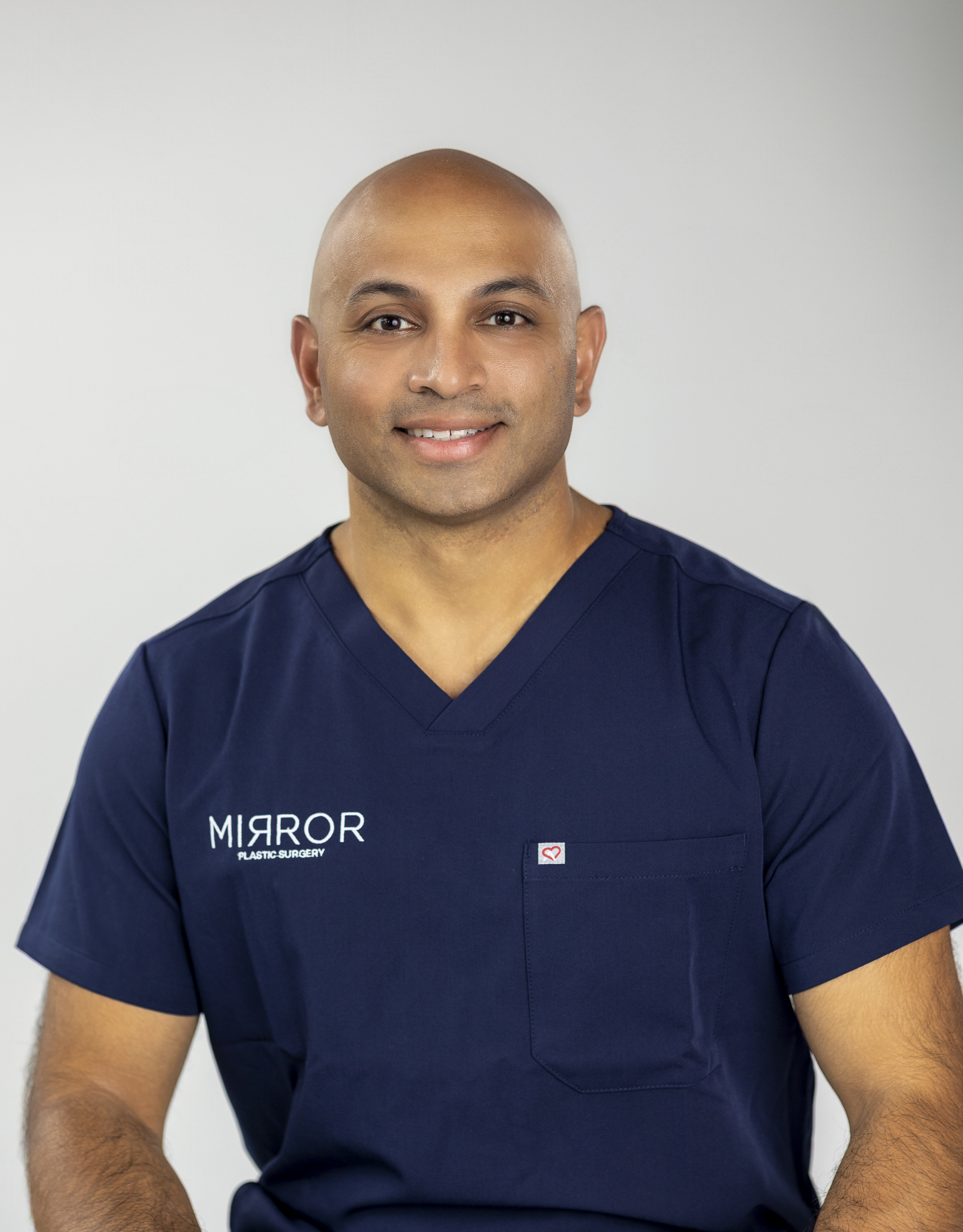
Dr. Akash Chandawarkar brings elite training and deep experience to breast augmentation surgery. He graduated with honors from Harvard Medical School and completed plastic surgery residency at Johns Hopkins University. He then pursued specialized fellowship training at Manhattan Eye, Ear & Throat Hospital.
His background also includes medical innovation training at Stanford University, which keeps him at the leading edge of surgical technology. Dr. Akash is board-certified by the American Board of Plastic Surgery and has testified before the FDA on breast implant safety. He serves on Motiva’s advisory board and uses precise techniques that aim to reduce capsular contracture, limit bacterial contamination, and support natural, functional outcomes.
Breast Implant Basics and Safety Terms Explained
Clear understanding of breast augmentation terminology helps you make confident decisions. FDA-approved silicone implants are available for women 22 and older, while saline implants are approved from age 18. Modern fifth-generation cohesive gel implants provide improved safety with lower rupture and leakage risks. However, FDA guidelines still recommend periodic MRI screenings for silicone implants to detect silent ruptures.
The 45/55 rule describes an aesthetic planning guideline where 45% of breast volume sits above the nipple and 55% below. This ratio often produces a natural, balanced look in clothing and swimwear. Board certification plays a major role in achieving these results. ABPS certification requires medical school, at least 6 years of accredited surgical residency with 3 years focused on plastic surgery, plus rigorous written and oral exams.
Average reoperation rates across implant types range from 20-30%, so surgeon selection strongly affects long-term outcomes. The FDA Patient Decision Checklist helps ensure that patients understand risks, benefits, and alternatives before surgery.
|
Implant Brand |
Rupture Rate |
Texture Risks |
Longevity |
|
Mentor |
Comparable to industry averages |
Minimal |
15-20 years |
|
Allergan/Sientra |
Comparable to industry averages |
Moderate |
10-15 years |
|
Motiva |
Very Low (<1%) |
Minimal |
20+ years |
Contact Mirror Plastic Surgery for a detailed review of the FDA Patient Decision Checklist tailored to your anatomy and goals.
Current Breast Implant Safety Trends in 2026
Breast augmentation in 2026 reflects tighter FDA oversight and stronger emphasis on safety. Textured implant recalls and increased awareness of BIA-ALCL have pushed regulators to focus more on functional anatomy, not just cosmetic appearance. Guidelines now place greater weight on implant selection, pocket placement, and long-term monitoring.
Concierge plastic surgery practices have grown as patients seek low-volume, high-attention care models. Studies show that high-volume practices performing many surgeries per day have higher complication rates. These include more capsular contracture, less favorable cosmetic results, and more wound problems. This evidence supports choosing surgeons who limit daily surgical volume. Book your consultation now to benefit from this focused, safety-first approach.
Step-by-Step Checklist for Choosing a Safe Surgeon
Choosing a breast augmentation surgeon starts with verifying ABPS board certification and hospital privileges. ABPS requires 5-9 years of plastic surgery residency or fellowship plus written and oral exams, while many cosmetic boards rely on shorter apprenticeships. Next, confirm that the surgeon uses only FDA-approved implants with documented safety data and clear rupture statistics.
Consultation quality offers another key signal. Reputable surgeons typically spend 60 minutes or more reviewing the FDA Patient Decision Checklist, explaining anatomy, and answering questions. Surgical volume also matters. Practices that perform 1-2 surgeries per day can usually provide more individualized care than high-volume centers.
Advanced diagnostic tools such as ultrasound support accurate pre-operative planning and careful post-operative monitoring. Surgeons who prioritize function along with aesthetics consider how implant size and placement affect posture, bra fit, and long-term comfort. This approach often improves satisfaction years after surgery.
|
Practice Type |
Surgeries/Day |
Patient Attention |
Complication Risk |
|
Concierge (Mirror) |
1-2 |
High |
Low |
|
High-Volume |
5-10 |
Limited |
Elevated |
Mirror Plastic Surgery follows these safety principles through Dr. Akash’s FDA expertise, detailed education, and strict protocols. His testimony before the FDA on implant safety reflects the level of knowledge patients should seek in a breast surgeon.
Common Breast Augmentation Mistakes to Avoid
Many patients struggle to distinguish between plastic surgeons and cosmetic surgeons. ABPS-certified plastic surgeons complete medical school plus 6+ years of residency in general and plastic surgery, while cosmetic surgeons may not have this depth of training. Patients also often underestimate reoperation risks and long-term maintenance needs.
Misuse of the 45/55 rule creates another challenge. The guideline supports natural results, but surgeons must still respect each patient’s unique anatomy. Inexperienced or rushed surgeons may ignore chest width, tissue thickness, and nipple position, which can lead to disproportionate outcomes. High-volume centers may also rush through the FDA Patient Decision Checklist and leave patients underinformed.
Dr. Akash’s reputation as a “surgeon’s surgeon” comes from his careful education process, detailed anatomical analysis, and precise technique. Schedule your consultation with Dr. Akash to see how this level of expertise can shape your breast augmentation plan.
Frequently Asked Questions About Breast Implants
How can I tell if a plastic surgeon is qualified for breast implant surgery?
ABPS board certification offers a strong indicator of qualification. This path includes medical school, at least 6 years of surgical residency with 3 years in plastic surgery, and demanding exams. Hospital privileges provide another layer of peer review and quality oversight. You can also review the surgeon’s breast surgery volume, revision experience, and approach to complications. Surgeons who perform 1-2 procedures per day often deliver more personalized care than those in high-volume settings.
What is the FDA Patient Decision Checklist and why does it matter?
The FDA Patient Decision Checklist is a structured document that guides informed consent for breast implant surgery. It explains implant types, surgical risks, long-term monitoring, and non-surgical alternatives. The checklist also covers BIA-ALCL, rupture risks, and the likelihood of future surgeries. A thorough surgeon walks through each section, answers questions, and confirms understanding before scheduling surgery.
What is the difference between ABPS and ABCS certification for breast surgery?
ABPS, the American Board of Plastic Surgery, requires more than 6 years of surgical residency with extensive cosmetic and reconstructive training. It also mandates written and oral exams plus ongoing education. ABCS, the American Board of Cosmetic Surgery, focuses on cosmetic procedures through fellowship training. ABPS is the only plastic surgery board recognized by the American Board of Medical Specialties and offers broader, more rigorous preparation.
How does the 45/55 breast rule support natural-looking results?
The 45/55 rule describes an ideal volume distribution, with about 45% of breast tissue above the nipple and 55% below. This pattern often creates a youthful slope and balanced fullness in clothing and swimwear. Achieving this ratio requires careful measurements of breast base width, tissue quality, and nipple-to-fold distance. Dual-plane implant placement frequently helps reach this aesthetic while preserving soft, natural movement.
What are typical breast implant reoperation rates?
Lifetime reoperation rates for breast implants usually fall between 20-30%. Actual rates depend on surgeon skill, implant type, surgical technique, and patient factors. Common reasons for additional surgery include capsular contracture, rupture, size changes, and aesthetic refinements. Modern fifth-generation silicone implants tend to show lower complication rates than older devices. Choosing an experienced surgeon who follows strict sterile technique can reduce the need for future revisions.
How do Mentor and Allergan implants compare for safety?
Mentor and Allergan both manufacture FDA-approved implants with strong safety records. Their rupture rates are similar to overall industry averages. Both companies have recalled certain textured implants because of BIA-ALCL concerns, which has shifted many surgeons toward smooth devices. The right choice usually depends on your anatomy, desired look, and your surgeon’s recommendations rather than brand loyalty.
Conclusion: Why Tampa Bay Patients Choose Mirror Plastic Surgery
Choosing a breast augmentation surgeon who prioritizes FDA-approved implants and safety requires close review of training, philosophy, and patient care systems. Increased FDA scrutiny in 2026 favors surgeons who stay current with evolving guidelines and maintain rigorous standards. Mirror Plastic Surgery and Dr. Akash Chandawarkar offer this level of care for patients in the Tampa Bay area.
The practice combines advanced training, FDA-level expertise, and a concierge model that limits daily volume for safer, more attentive care. Safety-first protocols, detailed education, and personalized planning distinguish Mirror Plastic Surgery from high-volume centers that may sacrifice time and attention.
Book a Consultation with Mirror Plastic Surgery
Patients ready to explore breast augmentation in Tampa Bay can schedule a comprehensive consultation at Mirror Plastic Surgery. During your visit, Dr. Akash reviews your goals, anatomy, and options using current FDA guidance and proven safety protocols. Call 727-361-6515 or email hello@mirrorplasticsurgery.com to request an appointment.
Follow @mirrorplasticsurgery and @dr.akashplasticsurgery on Instagram to see educational content and real patient results. The practice is located at 780 4th Ave S, St. Petersburg, FL 33701, and serves patients across the Tampa Bay region. Text or call today for a personalized assessment. Book a consultation with Dr. Akash and take a safe, informed first step toward your aesthetic goals.
Disclaimer: Results may vary from person to person. Editorial content, before and after images, and patient testimonials do not constitute a guarantee of specific results.
