

Last updated: January 26, 2026
Key Takeaways
- Cheek augmentation fat grafting uses your own fat for natural, long-lasting midface volume, with 50-70% graft survival.
- Ultrasound guidance, SVF processing, and micro-droplet injection improve fat survival and support safer, more precise treatment.
- Fat grafting outperforms fillers and implants by offering permanent, natural-feeling results that age with your face.
- Recovery usually involves 7-10 days of downtime, with most swelling resolving in about 2 weeks; ideal for patients 30+ with volume loss.
- Experience concierge-level care with Dr. Akash at Mirror Plastic Surgery, and book your personalized consultation today.
Concierge-Level Cheek Fat Grafting at Mirror Plastic Surgery
Mirror Plastic Surgery follows a concierge medicine model that prioritizes time, safety, and detail for every patient. Many clinics perform 5-10 surgeries each day, while Mirror limits the schedule to 1-2 procedures. This slower pace allows complete focus on your safety, function, and aesthetic goals.
Each patient receives a comprehensive, hour-long consultation that includes ultrasound assessment of the facial anatomy. This imaging helps plan precise fat placement for natural, balanced cheek contours. Book a consultation with Dr. Akash to experience this personalized approach to cheek augmentation fat grafting.
Why Patients Trust Dr. Akash for Facial Fat Grafting
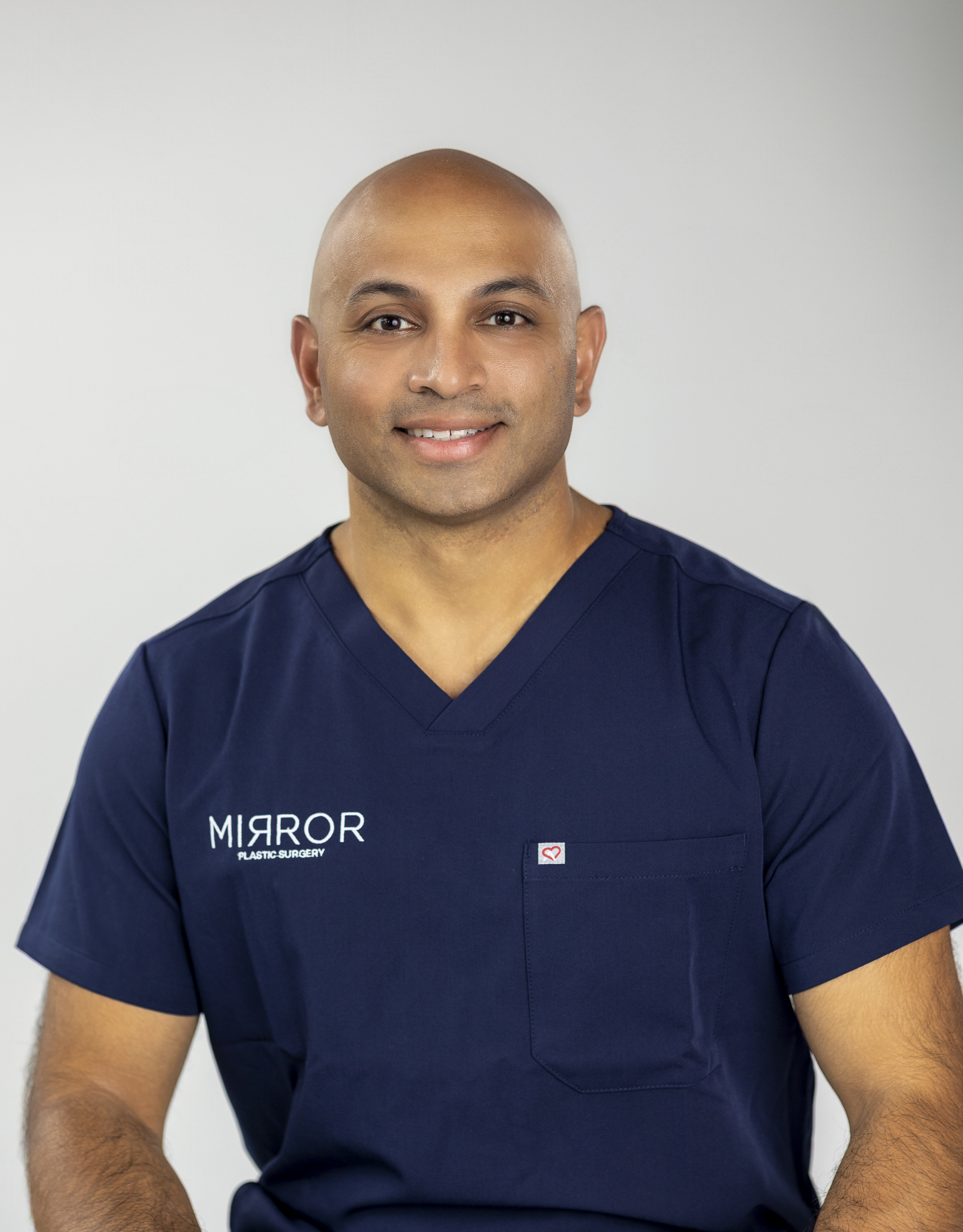
Dr. Akash Chandawarkar offers deep expertise in facial fat grafting backed by top-tier training and innovation experience. His background includes Harvard-MIT medical education, a Johns Hopkins plastic surgery residency, and an aesthetic surgery fellowship at Manhattan Eye, Ear & Throat Hospital.
He also completed the Stanford Biodesign Innovation Fellowship, which keeps him at the forefront of advanced techniques and device development. Dr. Akash serves on advisory boards for emerging aesthetic technologies, including Tiger Aesthetics (AlloClae for adipose fillers). Book a consultation with Dr. Akash to benefit from this level of specialized training and innovation.
How Cheek Augmentation with Fat Transfer Works
Autologous cheek augmentation with fat transfer uses your own fat to restore midface volume through a three-stage process. This approach creates natural, soft fullness that blends with your existing facial structure.
Stage 1: Fat Harvesting from Donor Areas
The procedure starts with gentle liposuction from donor sites such as the abdomen or thighs. These areas typically contain abundant, accessible fat cells. Careful harvesting protects fat cell viability, which supports higher survival rates once the fat is transferred to the cheeks.
Stage 2: Purifying and Enriching the Fat
The harvested fat then undergoes careful processing to remove impurities, blood, and damaged cells. Advanced SVF-enriched fat grafts can reach survival rates up to 65% compared with standard methods. This process isolates regenerative cells and combines them with the fat grafts.
This purification step improves graft survival and reduces the risk of complications. Cleaner, healthier fat creates more predictable and durable cheek volume.
Stage 3: Precise Fat Injection into the Cheeks
The final stage uses precise micro-injection of processed fat into specific cheek compartments with specialized cannulas. Surgeons use a micro-droplet technique, placing tiny amounts of fat in multiple passes and layers. This pattern keeps each fat cell close to a blood supply, which improves survival.
The layered approach builds natural contours and smooth transitions between facial regions. It also helps the new fat integrate with existing tissues for a soft, natural feel. Schedule your personalized assessment: Book a consultation with Dr. Akash to see how these techniques can be tailored to your anatomy.
New Advances in Facial Fat Grafting for 2025–2026
Facial fat grafting continues to advance with new tools and techniques that improve safety and outcomes. Ultrasound-guided injection now allows surgeons to see key structures in real time during the procedure. This visualization reduces complication risk and supports more accurate fat placement.
Specialized facial cannulas create less trauma and help preserve fat cell health. According to the American Academy of Facial Plastic and Reconstructive Surgery, facial fat grafting procedures increased by about 50% in 2024. This growth reflects a shift toward permanent solutions instead of temporary fillers.
Regenerative medicine concepts, including stem cell enhancement, further support long-term results and skin quality. These innovations make cheek augmentation fat grafting an appealing choice for patients who want natural, lasting improvement. Discover cutting-edge techniques: Book a consultation with Dr. Akash to explore how these developments can shape your treatment plan.
How Fat Grafting Compares to Fillers, Implants, and Lifts
|
Method |
Longevity |
Risks |
Natural Feel |
|
Fat Grafting |
50-70% permanent survival |
Low with ultrasound guidance |
Superior integration |
|
Dermal Fillers |
12-18 months |
Allergic reactions, migration |
Good initially |
|
Cheek Implants |
Permanent but may shift |
Infection, malposition |
Firm, less natural |
|
Midface Lifts |
5-10 years |
Surgical complications |
Excellent when combined |
Fat grafting offers clear advantages over many other cheek augmentation options. Studies show higher patient satisfaction with autologous fat grafting compared with alloplastic implants, with more patients reporting that they feel very satisfied and fewer reporting complications.
Unlike dermal fillers that fade and require repeat visits, successful fat grafts integrate with facial tissues and remain in place long term. Modern techniques often achieve 60-80% fat survival, which supports predictable volume that can last more than 10 years. The biological integration can also improve skin texture and quality through stem cell activity.
Compare options in consultation: Book a consultation with Dr. Akash to choose the approach that best matches your goals and lifestyle.
Safety, Recovery, and Ideal Candidates for Cheek Fat Grafting
Current safety protocols for cheek fat grafting rely on blunt cannulas and ultrasound guidance to protect vital structures. These tools help the surgeon place fat in the correct tissue planes and avoid high-risk areas. Midface aging involves bone remodeling, fat compartment thinning, and ligament laxity, which all influence where and how fat should be placed.
Careful planning around these anatomical changes supports better integration and longer-lasting results. Swelling usually peaks between 48 and 72 hours after surgery. Most visible swelling improves within about 2 weeks.
Many patients feel ready to return to work or social activities within 7-10 days, depending on their comfort level. Over time, successful grafts behave like native facial fat and age naturally with you. Ideal candidates are typically 30 or older, notice volume loss, and have realistic expectations about gradual improvement.
Prioritize your safety: Book a consultation with Dr. Akash to review your anatomy, medical history, and candidacy.
Addressing Common Concerns About Cheek Fat Transfer
Many patients worry about fat resorption, asymmetry, or an overfilled look after cheek fat grafting. Fat survival depends heavily on technique, including how the fat is harvested, processed, and injected. Experienced surgeons who follow meticulous protocols tend to achieve more consistent, stable results.
High-volume practices may rush steps or skip detailed anatomical assessment, which can affect outcomes. Mirror Plastic Surgery uses an anatomy-driven approach supported by ultrasound guidance. This method helps place fat precisely within the correct layers and reduces the risk of asymmetry.
An overcorrected appearance right after surgery is normal and temporary. Swelling and early fullness settle over several weeks, revealing a softer, natural-looking enhancement. Avoid pitfalls: Book a consultation with Dr. Akash to learn how careful planning and technique support reliable results.
Frequently Asked Questions About Cheek Fat Grafting
How long does fat grafting to cheeks last?
Cheek fat grafting can provide long-lasting improvement, with about 50-70% of transferred fat surviving permanently. The surviving fat integrates with your natural tissues and ages with your face. This permanence makes fat grafting a stronger long-term investment than fillers, which usually require repeat treatments every 12-18 months.
Is facial fat grafting worth it compared to fillers?
Facial fat grafting often delivers greater value for patients who want permanent results and natural softness. Fat grafting can also enhance skin quality through stem cell activity in the transferred tissue. The result usually looks and feels more like your own facial structure.
Each patient receives a customized plan during consultation that considers anatomy, goals, and budget.
Can fat grafting cause blindness?
Blindness from facial fat grafting is extremely rare when surgeons follow modern safety standards. Ultrasound guidance, blunt cannulas, and low-pressure injection techniques greatly reduce this risk. Choosing a surgeon who understands detailed facial anatomy and uses evidence-based safety measures is essential.
What is the difference between fat grafting and filler recovery?
Fat grafting recovery includes swelling that peaks around 48-72 hours and improves over 2-3 weeks. Some patients notice temporary overcorrection during this period. Filler recovery is usually shorter with minimal downtime, but fillers require repeat sessions because they are temporary.
Fat grafting demands more patience, with final results often visible at 3-6 months. In return, it offers permanent enhancement in the areas where the fat survives.
What is the best age for cheek fat transfer?
Most cheek fat grafting patients are 30 or older, when natural volume loss becomes more noticeable. Age alone does not determine candidacy, however. Younger patients with naturally flat or hollow cheeks may benefit, while older patients can see strong rejuvenation when fat grafting is combined with other procedures.
Next Steps: Explore Cheek Fat Grafting with Dr. Akash
Cheek augmentation fat grafting offers natural, permanent facial enhancement with a strong safety profile and refined aesthetic outcomes. Advanced techniques and careful execution help support high fat survival and smooth integration with your existing features.
Start your journey: Book a consultation with Dr. Akash to learn how cheek fat grafting can enhance your midface and refresh your overall appearance.
Book a Consultation at Mirror Plastic Surgery
Patients across Tampa Bay can explore cheek augmentation fat grafting with a concierge plastic surgery experience at Mirror Plastic Surgery. Contact the practice at 727-361-6515, email hello@mirrorplasticsurgery.com, or visit 780 4th Ave S, St. Petersburg, FL 33701.
Follow the practice on Instagram at @mirrorplasticsurgery and @dr.akashplasticsurgery for real patient stories and educational content. Call or text today to secure your consultation slot in Tampa Bay.
