

Last updated: January 26, 2026
Key Takeaways
- Modern breast augmentation at Mirror Plastic Surgery focuses on anatomical customization using the 45-55 volume rule for natural proportions that match your body.
- Mirror Plastic Surgery’s concierge model limits procedures to 1-2 per day, which supports safety, function, and deeply personalized care with advanced imaging.
- Dr. Akash’s Harvard-MIT training and expertise in Motiva implants and AlloClae fat transfer support precise, natural-looking, athletic results.
- Key techniques include chest width-matched implants, submuscular placement, 3D simulation, and hybrid fat transfer to reduce complications and refine contouring.
- Avoid common pitfalls like cup size obsession by booking a consultation with Mirror Plastic Surgery for evidence-based customization tailored to your anatomy.
Why Mirror Plastic Surgery’s Concierge Approach Matters
Mirror Plastic Surgery follows a concierge medicine model that prioritizes time, safety, and detail. The practice limits surgeries to 1-2 procedures per day, which allows for hour-long consultations and focused attention at every step. High-volume centers may perform 5-10 surgeries daily, and this pace can limit personalized planning and discussion. The team follows a clear philosophy:
Safety first, Function second, Aesthetics third. Advanced pre-operative ultrasound imaging supports precise anatomical assessment and safer surgical planning. Mirror Plastic Surgery also uses premium technologies such as Motiva implants for breast augmentation and AlloClae for fat transfer to create soft, natural contouring.
This meticulous approach helps lower the risk of complications like capsular contracture and supports long-term comfort and function. Book a consultation with Dr. Akash to experience this personalized, evidence-based approach to breast enhancement.
Dr. Akash’s Training and Aesthetic Philosophy
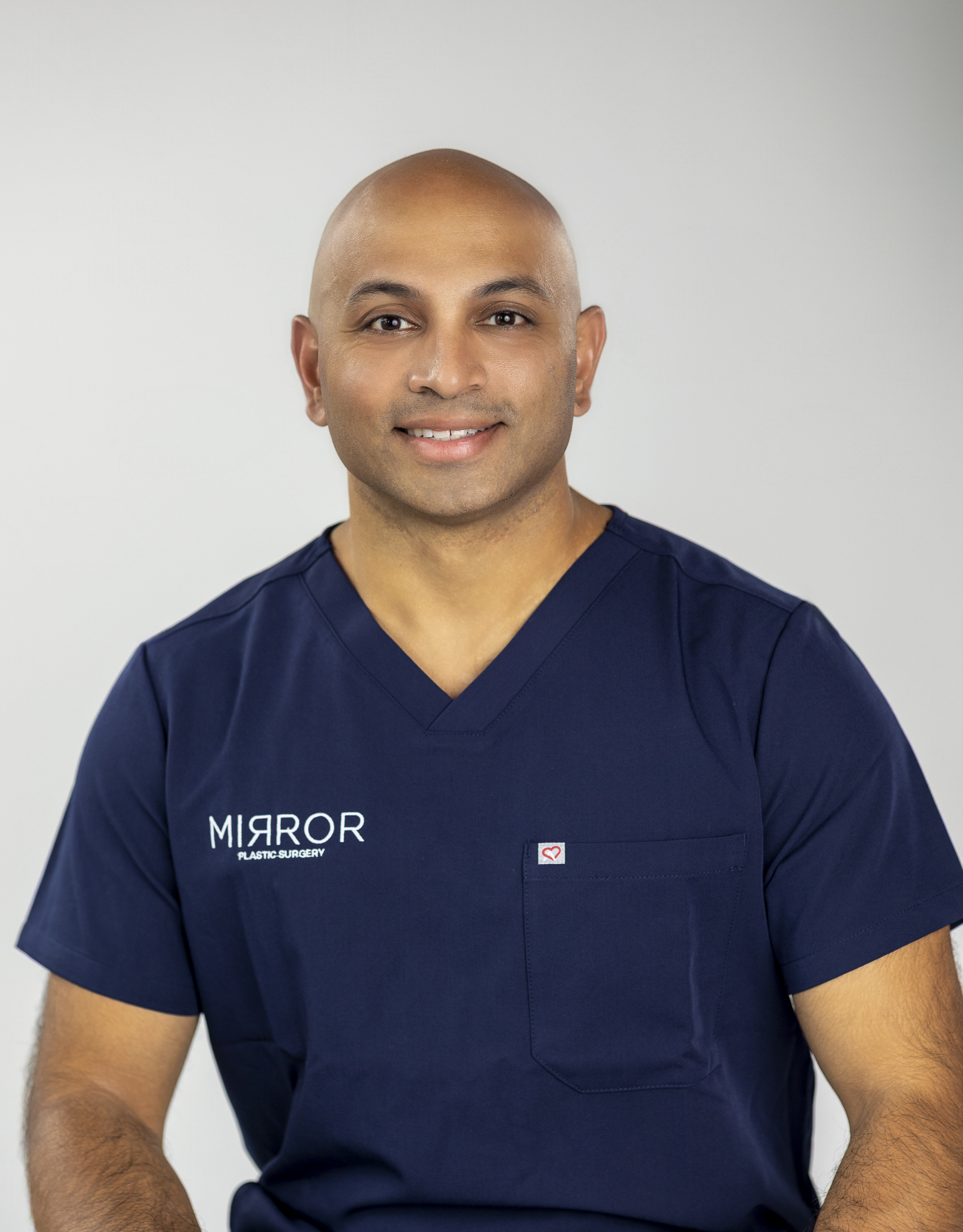
Dr. Akash Chandawarkar combines elite training with a modern, natural aesthetic style. He completed his medical education at Harvard-MIT, plastic surgery residency at Johns Hopkins, and an aesthetic fellowship at Manhattan Eye, Ear & Throat Hospital. His background also includes biodesign innovation training at Stanford University, which keeps him at the forefront of surgical technology and device development.
He is board-certified by the American Board of Plastic Surgery and serves on advisory boards for Motiva (breast augmentation) and Tiger Aesthetics (AlloClae adipose fillers). His practice focuses on precision techniques and anatomical customization that create natural, athletic results while respecting function, posture, and long-term breast health.
Core Breast Augmentation Concepts Explained Simply
Key breast augmentation principles help you make confident, informed decisions. The 45-55 rule describes an ideal volume distribution, with about 45% of breast volume above the nipple and 55% below. This ratio often creates a natural, youthful slope instead of a round, “stuck-on” look.
Chest width measurement guides implant base width, so the implant fits your frame rather than spilling too far to the side or center. Implant profile, such as low, moderate, or high, controls how far the breast projects from the chest while staying within your measured width.
Round implants tend to create more upper pole fullness and cleavage, while anatomical teardrop implants create a gentler, sloped shape. Submuscular placement reduces visible rippling and capsular contracture risk compared to subglandular positioning, especially for patients with thinner breast tissue.
Silicone gel implants usually move and feel more like natural breast tissue than saline implants. Hybrid techniques combine an implant for structure with fat transfer for softening edges and fine-tuning contour. You can schedule a consultation at Mirror Plastic Surgery to see which combination of these options best matches your anatomy and goals.
2026 Advances in Breast Augmentation at Mirror Plastic Surgery
Breast augmentation in 2026 relies heavily on advanced planning tools and refined materials. 3D simulation technology now plays a central role in consultations and allows you to preview likely outcomes from different implant sizes and shapes.
High-resolution ultrasound imaging supports accurate assessment of tissue thickness, implant pocket planning, and safer surgery. Motiva implants represent a newer generation of silicone gel, with designs that reduce rippling and improve biocompatibility.
AlloClae hybrid fat transfer provides superior fat survival rates and natural contouring compared to traditional fat grafting. This technology supports smaller implants while still achieving customized volume and shape. The field now places greater emphasis on function, including relief of back or neck strain and restoration of breast position after pregnancy or weight changes.
Many patients request results that look natural in and out of clothing and that age gracefully rather than appearing obviously augmented. You can book a consultation with Dr. Akash to access these current techniques and technologies.
Seven Factors That Shape Your Surgical Plan
Successful breast augmentation planning starts with detailed anatomical measurements. Chest width, breast base width, and tissue thickness guide safe implant size and profile selection. Proportional sizing then focuses on harmony with your shoulders, waist, and hips instead of chasing a specific bra cup size. Implant placement decisions between submuscular and subglandular positions depend on tissue coverage, athletic activity, and personal preferences.
3D simulation tools help align expectations by showing realistic projections of different implant choices. Rigorous safety protocols, including pre-operative ultrasound and accredited surgical facilities, support lower complication rates. Long-term function also matters, including comfort during exercise, posture, and future pregnancy or breastfeeding plans.
A clear discussion of revision risks and strategies to reduce them completes the planning process. Each of these seven factors receives individualized attention during a comprehensive consultation so your surgical plan reflects your body and your lifestyle.
Common Mistakes and How Mirror Plastic Surgery Avoids Them
Several frequent missteps can compromise breast augmentation results when anatomy is not respected. Cup size obsession often leads to implants that are too wide or too large for the chest, which can look unnatural and increase complication risk. Width mismatching occurs when the implant base is wider than the measured breast base, which can cause lateral displacement and distorted contours. Short, rushed consultations may skip careful measurements and detailed discussion, which increases the chance of poor implant selection.
Subglandular placement in thin patients increases visible rippling and capsular contracture risk compared to submuscular placement. Traditional fat transfer without advanced processing, such as AlloClae, can produce inconsistent volume retention and more frequent touch-up procedures.
Social media filters and edited photos can also create unrealistic expectations that do not match real anatomy. Evidence-based planning at Mirror Plastic Surgery addresses these issues through thorough evaluation, careful technique selection, and honest, clear expectation setting. You can book a consultation with Dr. Akash to navigate these challenges with expert guidance.
Frequently Asked Questions About Breast Augmentation
What is the 45-55 rule for breast proportions?
The 45-55 rule describes an aesthetic target where about 45% of breast volume sits above the nipple and 55% below. This distribution often mimics youthful, natural breast anatomy and creates balanced proportions in and out of clothing.
Surgeons approach this ratio through thoughtful implant selection, precise pocket creation, and, when appropriate, dual-plane techniques that allow natural tissue to drape over the implant. Personal preference still matters, but this guideline offers a scientific starting point for natural-looking enhancement that ages well.
How do I choose the right implant size and shape?
Implant selection starts with measuring your chest width to determine a safe and natural implant base width. Your tissue thickness, breast base dimensions, and activity level then guide profile choice between low, moderate, and high projection.
Round implants usually create more upper fullness and cleavage, while anatomical implants create a softer slope. The main goal is proportional enhancement that fits your frame instead of overpowering it. 3D simulation technology at Mirror Plastic Surgery helps you compare different sizes and shapes before making a final decision.
What are the benefits of submuscular versus subglandular placement?
Submuscular placement positions the implant under the pectoralis major muscle and often reduces visible rippling and capsular contracture rates. This approach can create smoother transitions and more natural slopes, especially in patients with thinner tissue.
The tradeoff includes a longer recovery and the possibility of animation changes when flexing the chest muscles. Subglandular placement above the muscle usually offers faster recovery and more natural implant movement, but can carry higher risks of rippling and capsular contracture in lean patients.
Why do silicone implants usually feel more natural than saline?
Silicone gel implants typically feel closer to natural breast tissue because the cohesive gel moves and compresses more like real tissue. The gel also helps the implant maintain shape and reduces visible rippling, which is especially helpful when tissue coverage is limited. Modern silicone implants come in different firmness levels, from very soft to more form-stable, which allows customization of feel and longevity. Saline implants may feel firmer and show more rippling, but use smaller incisions and make rupture easier to detect.
What makes hybrid fat transfer different from traditional fat grafting?
Hybrid fat transfer with systems like AlloClae focuses on higher fat survival and smoother integration into the surrounding tissue. These systems process harvested fat to concentrate healthy cells and remove damaged cells and impurities.
This preparation can support long-term fat retention rates of about 60-80%, which is often higher than traditional methods. Hybrid augmentation pairs an implant for structure with fat transfer for softening edges, blending contours, and creating a result that changes naturally with your body over time.
Planning Your Next Step With Mirror Plastic Surgery
Natural-looking breast augmentation at Mirror Plastic Surgery centers on your anatomy, not a generic cup size. Techniques such as the 45-55 rule, 3D simulation, hybrid fat transfer, and precise implant selection work together to support attractive, functional, and long-lasting results. You can book a consultation with Dr. Akash to start a personalized plan that reflects your proportions, lifestyle, and goals.
Book a Consultation in St. Petersburg
Mirror Plastic Surgery serves the Tampa Bay area from its St. Petersburg location. Contact the practice at 727-361-6515, email hello@mirrorplasticsurgery.com, or follow @mirrorplasticsurgery and @dr.akashplasticsurgery on Instagram. Visit 780 4th Ave S, St. Petersburg, FL 33701 to schedule your comprehensive consultation.
Disclaimer: Results may vary from person to person. Editorial content, before and after images, and patient testimonials do not constitute a guarantee of specific results.
