

Last updated: January 26, 2026
Key Takeaways
- BBL implants give predictable volume for skinny patients who lack donor fat, unlike fat transfer with 60-70% survival rates.
- Implants remove fat embolism risk entirely, which provides a major safety advantage over traditional BBL procedures.
- Modern cohesive silicone implants often last 10-20+ years with low complication rates when placed by experienced surgeons.
- BBL implants work well for low-BMI individuals who want natural, athletic buttock enhancement without donor site concerns.
- Patients receive personalized, safety-first BBL implant care at Mirror Plastic Surgery with Dr. Akash’s concierge approach.
Why Mirror Plastic Surgery’s Concierge Model Matters
Mirror Plastic Surgery follows a concierge medicine model that focuses on quality over volume. Many practices schedule several surgeries each day, but Mirror limits procedures to one or two daily. This schedule allows complete attention to each patient’s safety, function, and aesthetic goals. The team uses safety-first protocols and advanced diagnostic tools such as ultrasound for precise pre-operative assessment. These choices create a clear contrast with high-volume centers that prioritize speed over individualized care. Book a consultation with Dr. Akash to experience this focused approach to buttock augmentation.
Dr. Akash’s Training and Approach to Buttock Implants
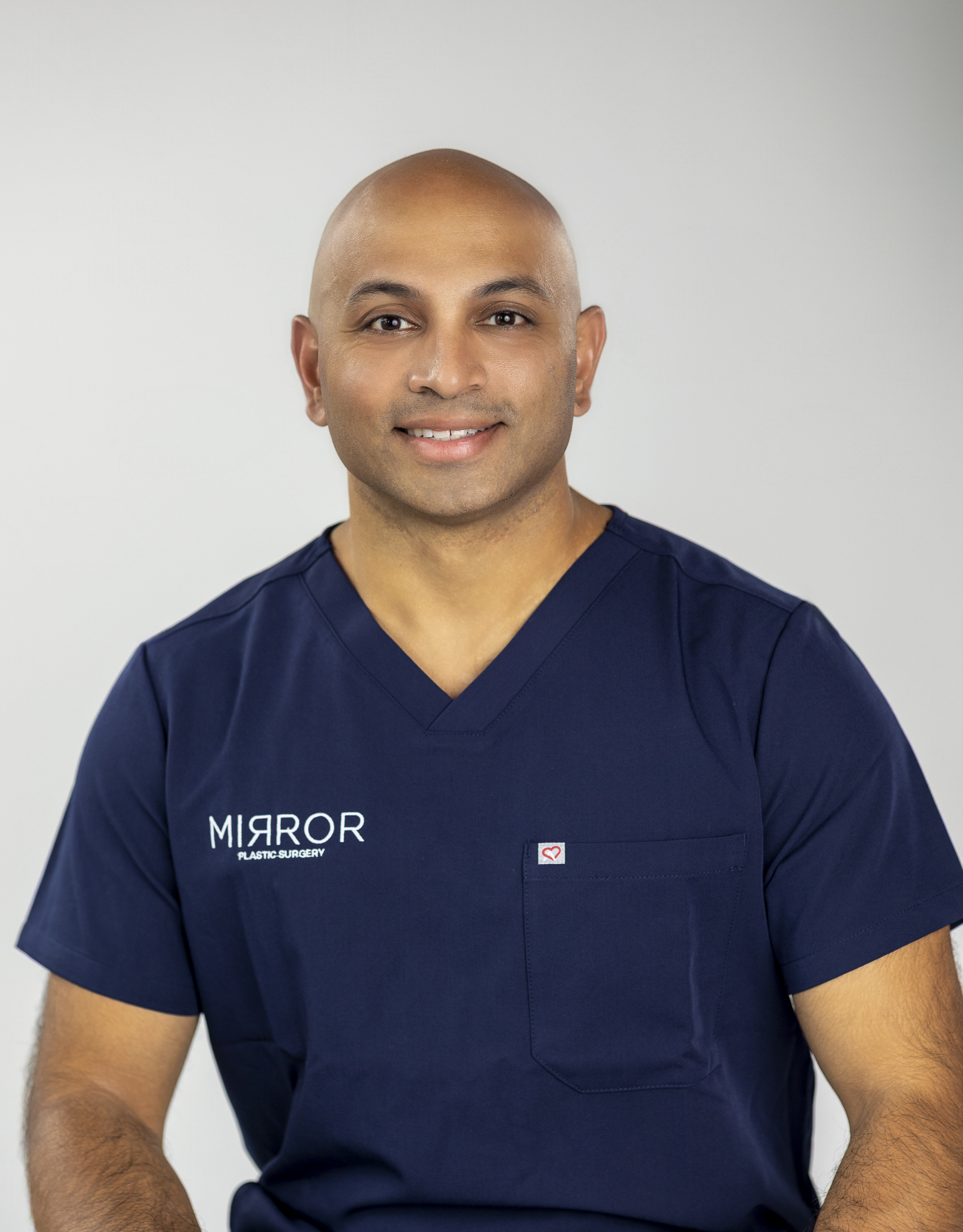
Dr. Akash Chandawarkar brings extensive training to every buttock augmentation procedure. His background includes Harvard-MIT medical education and a Johns Hopkins plastic surgery residency. A specialized fellowship at Manhattan Eye, Ear & Throat Hospital and innovation training at Stanford University further refine his technique. He is a board-certified plastic surgeon and an advisor to companies such as Motiva and Tiger Aesthetics (AlloClae for adipose fillers). His focus on athletic, functional outcomes helps patients achieve natural-looking, high-performance results.
Comparing BBL Implants and Fat Transfer at Mirror Plastic Surgery
Silicone buttock implants use solid, cohesive gel technology placed either submuscularly or supramuscularly to create reliable volume enhancement. Modern cohesive gluteal implants demonstrate a 10.8% total complication rate, which is a major improvement over older solid implant designs. Key benefits include immediate, predictable results, no donor site issues, and no risk of fat embolism. Potential complications include seroma formation, capsular contracture, and implant displacement, which skilled technique helps reduce.
Traditional fat transfer BBL depends on adequate donor fat from areas such as the abdomen, thighs, or flanks. Clinical studies show only 60-70% of transferred fat survives long-term, so some patients need more than one procedure to reach their goals. Fat transfer avoids foreign body implants but carries a risk of fat embolism and requires enough donor tissue. Patients with very low body fat often do not qualify for this option.
Mirror Plastic Surgery offers buttock augmentation with implants, fat transfer, and composite techniques enhanced with AlloClae. These options allow Dr. Akash to match the method to each patient’s anatomy and goals.
|
Aspect |
Implants |
Fat Transfer |
Composite BBL |
|
Volume Predictability |
100% predictable |
60-70% survival |
Enhanced predictability |
|
Primary Risks |
Seroma, contracture |
Fat embolism |
Combined but mitigated |
|
Longevity |
10-20+ years |
10+ years (reduced volume) |
Optimal long-term results |
|
Skinny Patient Suitability |
Excellent |
Poor |
Excellent |
Ideal Candidates for Buttock Implants
Ideal candidates for buttock implants have a low BMI or minimal body fat yet want noticeable buttock enhancement. Patients who lack enough donor fat for a traditional BBL often qualify for implants instead. Active individuals who burn fat quickly also benefit from the stable volume that implants provide. Contraindications include active infections, unrealistic expectations, and medical conditions that raise surgical risk. Mirror Plastic Surgery uses a detailed evaluation process to review anatomy, health history, and goals before confirming candidacy.
How Buttock Implant Surgery Works
Buttock implant surgery starts with careful incision placement in the natural gluteal crease to keep scars discreet. Dr. Akash then creates the implant pocket using advanced techniques, choosing submuscular or supramuscular placement based on anatomy and desired shape. He positions cohesive silicone implants to build natural contours while preserving muscle function. Meticulous closure and drainage protocols support smooth healing and lower the chance of complications. Most procedures take 2-3 hours under general anesthesia in an accredited surgical facility.
What to Expect During BBL Implant Recovery
Recovery after buttock implant surgery requires strict sitting restrictions for 3-6 weeks, with specialized BBL pillows protecting implant position. Patients often notice temporary drainage and mild odor during the first week. BBL smell results from fluid drainage, sweat, and bacterial accumulation, which proper hygiene with antibacterial soap helps prevent. Bowel movements call for careful positioning and gentle technique to avoid pressure on the implants.
Swelling usually peaks around week two, and final results appear between 6 and 12 months. Compression garments support healing and help shape the area while patients slowly return to normal activities. Book a consultation with Dr. Akash to receive a personalized recovery plan and close follow-up.
Safety Profile, Risks, and Long-Term Outcomes
Buttock implants eliminate fat embolism risk entirely, which creates a major safety benefit compared with fat transfer BBL. Main risks include seroma formation, capsular contracture, and implant malposition. Proper surgical planning, careful technique, and attentive post-operative care help reduce these issues. Modern cohesive implants show strong longevity, and many patients enjoy results for 10-20+ years.
Some patients also notice functional benefits such as improved posture and better athletic performance when implants are positioned correctly. Ongoing clinical trials continue evaluating long-term safety and performance outcomes for newer implant technologies.
Current Trends in Buttock Augmentation
The 2026 buttock augmentation landscape features more advanced biocompatible implant materials and refined composite techniques. AlloClae-enhanced procedures improve fat integration for low-BMI patients by pairing implant reliability with natural tissue enhancement. Cohesive gel technology continues to evolve toward better safety and a more natural feel. These developments make buttock implants an increasingly appealing alternative to traditional fat transfer alone.
Addressing Common Concerns About Buttock Implants
Many patients worry that buttock implants will look fake or require frequent revision surgery. Experienced surgeons such as Dr. Akash achieve natural, athletic results through precise anatomical placement and thoughtful implant selection. The belief that implants always need early replacement usually comes from outdated devices and inexperienced providers. Choosing a board-certified plastic surgeon with focused training in buttock augmentation greatly improves safety and outcomes.
Frequently Asked Questions (FAQ)
How long do BBL implants last?
Modern cohesive silicone buttock implants often last 10-20+ years with proper placement and care. Buttock implants experience less mechanical stress than breast implants, so many patients enjoy lifelong enhancement without replacement. Regular follow-up visits help monitor implant position and long-term results.
Can skinny people get BBL implants?
Skinny patients often make excellent candidates for buttock implants because they lack enough donor fat for a standard BBL. Implants provide predictable volume regardless of body fat percentage. This feature makes them especially useful for low-BMI individuals who want noticeable buttock augmentation.
What causes BBL smell during recovery?
BBL smell comes from normal healing factors such as fluid drainage, bacterial growth in warm, moist areas, and temporary tissue changes. Consistent hygiene with antibacterial soap and regular dressing changes help control odor. Following post-operative instructions also lowers infection risk and supports clean healing.
BBL implants vs fat: which is safer?
Buttock implants remove the risk of fat embolism, which is the most serious complication linked to traditional BBL procedures. Implants still carry risks such as seroma and capsular contracture, but these issues are usually less life-threatening and more manageable than fat embolism. A thorough consultation helps match the safest option to each patient.
What does a BBL look like after 10 years?
Buttock implants tend to maintain their shape and volume consistently over 10 or more years. Fat transfer results may lose 30-40% of volume over time, which can change the final contour. Patients with implants usually see stable, long-lasting results that age naturally with their body.
Choosing BBL Implants at Mirror Plastic Surgery
Brazilian butt lift implants offer a strong option for skinny patients who want predictable, long-lasting buttock enhancement. Advanced implant technology, expert surgical technique, and attentive follow-up care work together to support excellent outcomes for qualified candidates. Mirror Plastic Surgery’s concierge model keeps safety, function, and natural aesthetics at the center of every plan through Dr. Akash’s specialized expertise. Book a consultation with Dr. Akash to review your buttock augmentation options and choose the approach that fits your anatomy and goals.
Ready to enhance your confidence with expert buttock augmentation? Contact Mirror Plastic Surgery at 727-361-6515, email hello@mirrorplasticsurgery.com, or follow @mirrorplasticsurgery and @dr.akashplasticsurgery on Instagram. Visit 780 4th Ave S, St. Petersburg, FL 33701 to schedule your personalized consultation.
Disclaimer: Results may vary from person to person. Editorial content, before and after images, and patient testimonials do not constitute a guarantee of specific results.
