

Last updated: January 26, 2026
Key Takeaways
- Temporary asymmetry affects 70-80% of lower blepharoplasty patients due to swelling and usually resolves within 3-6 months.
- Overall complication rates are low, with 85-90% success. Serious issues like ectropion remain rare at 3-5% with experienced surgeons.
- Transconjunctival approaches reduce risks like malposition compared with transcutaneous techniques and support fat preservation for natural results.
- Surgeon expertise, low-volume practices, and thorough pre-op assessment help minimize permanent asymmetry and revision rates of 10-15%.
- Choose Mirror Plastic Surgery for concierge care with Dr. Akash’s specialized training focused on safer, more predictable eyelid rejuvenation.
Concierge Eyelid Surgery Experience at Mirror Plastic Surgery
Mirror Plastic Surgery follows a concierge medicine model that differs from high-volume practices. Many facilities perform five to ten surgeries daily. Mirror limits the schedule to one to two procedures per day so each patient receives focused attention. This slower pace reduces the risk of measurement errors and technical complications that can cause asymmetry. The practice follows a Safety First, Function Second, Aesthetics Third philosophy. Every lower blepharoplasty is planned with detailed anatomy, eyelid support, and long-term results in mind. Book a consultation with Dr. Akash to experience this personalized approach to eyelid rejuvenation.
Why Tampa Bay Patients Trust Dr. Akash
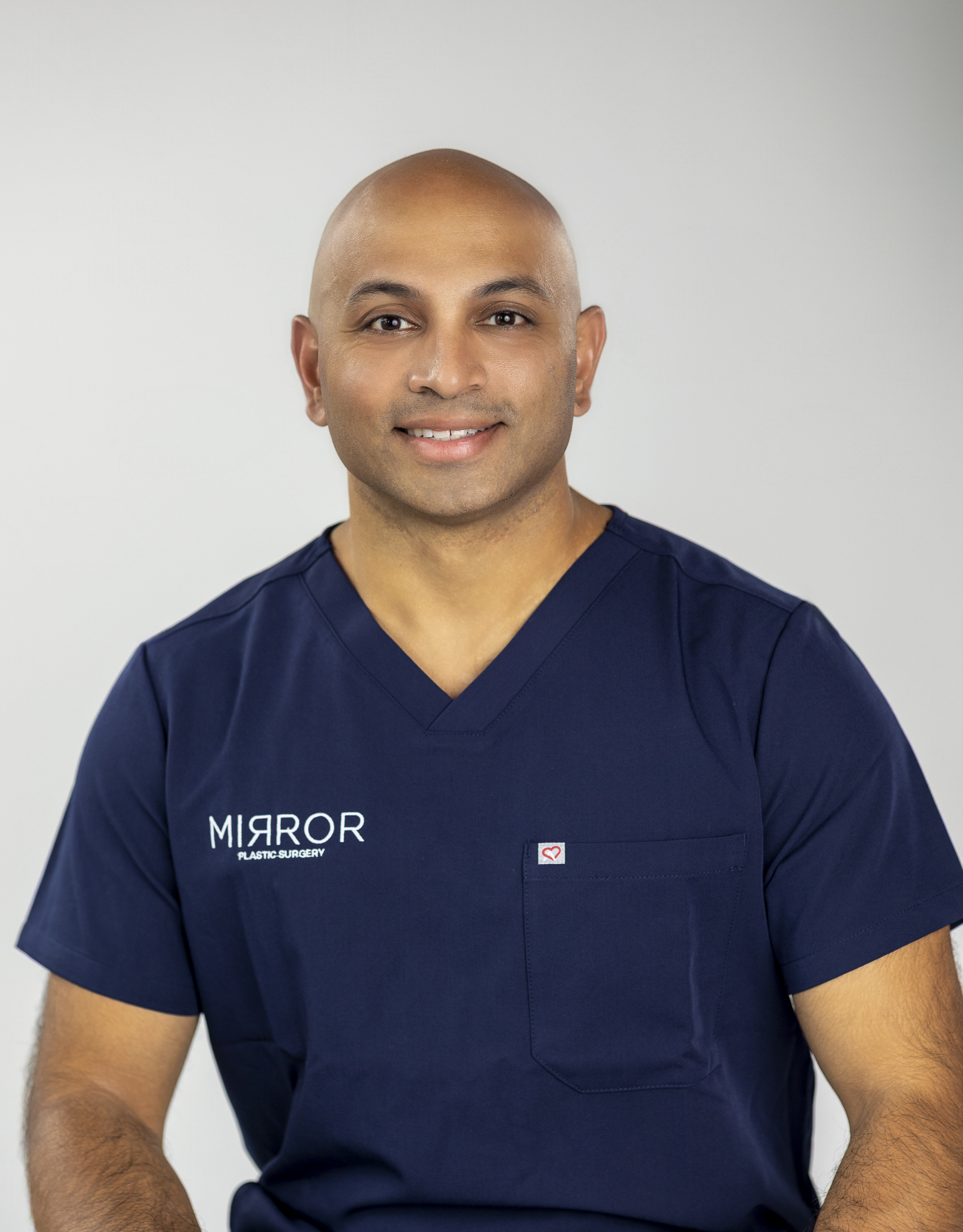
Dr. Akash Chandawarkar brings extensive training to lower blepharoplasty. He graduated from Harvard Medical School and completed plastic surgery residency at Johns Hopkins. He then completed a dedicated aesthetic surgery fellowship at the Manhattan Eye, Ear & Throat Hospital (MEETH) with focused training in facial surgery, including blepharoplasty. He is board-certified by the American Board of Plastic Surgery. Dr. Akash uses precise, modern techniques that aim to reduce asymmetry risk while preserving eyelid function and achieving natural cosmetic results.
Core Lower Eyelid Terms Explained
Key Words You Will Hear Before Surgery
Clear terminology helps you understand your options. Ectropion means the lower eyelid pulls away from the eye. Entropion means the lower lid turns inward toward the eye. Chemosis describes jelly-like swelling of the conjunctiva that usually settles within weeks. Lower lid malposition is a broad term for abnormal eyelid position that affects comfort and appearance. Fat repositioning moves orbital fat to fill the tear trough and smooth hollows. Fat removal takes out excess fat when puffiness is the main concern.
How Eyelid Anatomy Shapes Your Results
Successful lower blepharoplasty depends on detailed knowledge of eyelid anatomy. The orbicularis muscle, tarsal plate, and canthal tendons work together to keep the eyelid in the correct position. The Lockwood ligament supports the eyeball and helps maintain lower lid height. Genetic differences in facial structure influence orbital fat volume and midface fullness. These variations can increase the risk of overcorrection and asymmetry if large fat pads are moved without adjustment. Pre-existing asymmetry strongly affects final results, so a careful pre-operative exam is essential. Transconjunctival approaches reach fat through the inner eyelid. Transcutaneous techniques use an external skin incision. Each method carries a different risk profile for issues such as ectropion and scarring.
New Blepharoplasty Trends for 2025–2026
Recent lower blepharoplasty trends focus on refined fat preservation and less invasive techniques. Dr. Akash participates in innovation through advisory roles with companies that develop new surgical technologies. These tools support more accurate pre-operative planning and lower asymmetry risk. Transconjunctival approaches show lower malposition rates compared to transcutaneous techniques, so surgeons increasingly favor these methods when appropriate. Many surgeons now preserve and reposition fat instead of removing it. This shift creates smoother transitions, more natural results, and lower complication rates over time.
How Often Asymmetry and Complications Occur
Temporary asymmetry affects 70-80% of lower blepharoplasty patients and usually improves within 3-6 months as swelling fades. Objective aesthetic assessments show high symmetry scores, with overall success rates of 85-90%. Chemosis occurs in about 26.3% of patients and typically resolves within 180 days, with an average duration of 26 days. Serious complications remain uncommon. Ectropion occurs in about 3-5% of cases, and major complications such as blindness are extremely rare.
Short-term issues often include swelling, bruising, dry eyes, and uneven healing. Less common but more serious problems include ectropion, lower lid malposition, persistent chemosis, and visible scarring. Patient factors such as eyelid laxity, dry eye symptoms, smoking, and conditions like diabetes influence risk. Surgeon factors include technique choice, anatomical expertise, and surgical volume. You can distinguish temporary from permanent asymmetry by following expected healing milestones and keeping realistic expectations about the recovery timeline.
|
Milestone |
Common Symptoms |
Expected Resolution |
|
Day 7 |
Peak swelling and bruising |
20-50% reduction in swelling, stitches removed |
|
Day 30 |
Moderate asymmetry or chemosis |
About 70-90% of swelling gone |
|
Day 90 |
Residual puffiness |
Final contour begins to appear |
|
Day 180 |
Full healing |
Permanent results, consider intervention if malposition persists |
How to Evaluate Your Candidacy and Surgeon
Choosing the right surgeon plays the biggest role in lowering blepharoplasty risk. Look for board certification in plastic surgery, focused eyelid training, and a low-volume practice that values safety over speed. Assessment of eyelid support and tear film quality identifies higher-risk patients. Avoid rushing into surgery or stacking multiple procedures without a clear reason, because each added procedure raises complication risk. Placing eyelid function ahead of aggressive cosmetic changes supports long-term comfort and reduces the chance of revision surgery. Book a consultation with Dr. Akash to review your anatomy, medical history, and risk profile.
Common Patient Concerns About Lower Eyelid Surgery
Many patients assume that any asymmetry after surgery reflects a mistake. In reality, most asymmetry comes from natural anatomical differences or normal healing patterns. High-volume practices may not allow enough time for detailed pre-operative analysis and careful execution, which can increase complication rates. Another misconception is that more aggressive surgery always gives better results. Overcorrection often creates an unnatural look and raises the chance of revision. Recent research shows revision rates of 10-15%, and asymmetry drives about 40% of these cases. Patients who understand that subtle, natural results take time and expertise usually feel more satisfied throughout recovery.
Frequently Asked Questions
Is asymmetry common after blepharoplasty?
Temporary asymmetry is very common and affects 70-80% of patients during early healing. Uneven swelling and tissue response usually cause this effect. Most cases improve over 3-6 months as the eyelids settle. Permanent asymmetry is less common and occurs in fewer than 10-15% of cases when an experienced surgeon uses appropriate techniques.
When should I worry about asymmetry?
Ongoing concern makes sense if noticeable asymmetry persists beyond 3-6 months, especially with symptoms such as dry eyes, difficulty closing the eyes, or visible scleral show. During the first three months, some asymmetry almost always appears and usually reflects normal healing.
What causes lower lid malposition?
Lower lid malposition often results from weak canthal support, pre-existing eyelid laxity, or removal of too much tissue. Transconjunctival approaches usually carry lower risk than transcutaneous techniques because they preserve more of the eyelid’s supporting structures.
Is asymmetry permanent?
Most asymmetry fades as healing progresses. Permanent asymmetry remains relatively rare and appears in about 10-15% of cases. Pre-existing anatomical differences often play a larger role than surgical error. With experienced surgeons, success rates of 85-90% are typical.
What is chemosis and how does it differ from normal swelling?
Chemosis appears as jelly-like swelling of the conjunctiva, the clear membrane over the white of the eye. It affects about 26% of lower blepharoplasty patients. Regular swelling looks more diffuse and puffy. Chemosis has a translucent, bubble-like look and usually resolves in about 26 days on average, though some cases last up to 6 months.
What are typical revision rates for blepharoplasty?
Revision rates range from about 3-15%, depending on surgeon experience and technique. Common reasons for revision include persistent asymmetry, under-correction, and functional problems. Selecting a surgeon with focused eyelid training and a careful, low-volume practice can significantly lower your chance of needing revision.
What are the main risk factors for ectropion?
Key ectropion risk factors include eyelid laxity, previous eyelid surgery, dry eye symptoms, and transcutaneous approaches. Age, skin quality, and individual anatomy also affect risk. Thorough pre-operative evaluation and thoughtful technique selection help reduce these complications.
Planning Your Next Step With Mirror Plastic Surgery
Lower blepharoplasty asymmetry and complications usually remain manageable when an experienced surgeon prioritizes safety and eyelid function. Most patients experience some temporary asymmetry, while permanent problems stay rare with proper technique and careful patient selection. Strong outcomes depend on choosing a surgeon who combines advanced training, low surgical volume, and a commitment to natural, functional results. Book a consultation with Dr. Akash today to review your goals and learn how Mirror Plastic Surgery’s concierge model can reduce risk and support a smoother recovery.
Book a Consultation
Patients across Tampa Bay can explore lower blepharoplasty with Mirror Plastic Surgery’s concierge plastic surgery practice. Contact the office to schedule your visit.
Phone: 727-361-6515
Email: hello@mirrorplasticsurgery.com
Instagram: @mirrorplasticsurgery, @dr.akashplasticsurgery
Address: 780 4th Ave S, St. Petersburg, FL 33701
Disclaimer: Results may vary. Editorial content, images, and testimonials do not guarantee results.
