

Last updated: February 8, 2026
Key Takeaways
- 89% of adults see moderate forehead line improvement at day 30 with Botox, when expert technique preserves natural expressions.
- Choose injectors like Stephanie DeSimone who combine anatomical precision with a “less is more” philosophy for full-face harmony.
- Natural results follow 5 principles: low-dose micro-droplets, brow balance, full-face integration, expressive poses, and precise mapping.
- Avoid a frozen look by respecting danger zones, using conservative dosing, and coordinating forehead treatment with the glabella.
- Experience personalized, natural Botox at Mirror Plastic Surgery through a comprehensive consultation with Stephanie.
Why Stephanie DeSimone Delivers Natural, Precise Botox Results
Stephanie DeSimone blends mathematical precision with deep anatomical expertise in every treatment. Her Mathematics degree, extensive surgical assistant background, and bodybuilding experience give her a rare understanding of both surface and subdermal anatomy that supports natural Botox outcomes.
She follows a “less is more” philosophy and evaluates the entire face, not just one area. This approach guides her use of neuromodulators such as Botox, Dysport, and Xeomin to create balanced, harmonious results.
Patient testimonials reflect this precision. One patient shared, “She fixed a cheek issue that other injectors had only made worse, something that had been bothering me for months yet she corrected it in seconds with just a few micro droplets of filler. Absolute genius!” That same attention to detail carries into her neuromodulator treatments, where her anatomical knowledge helps prevent common complications.
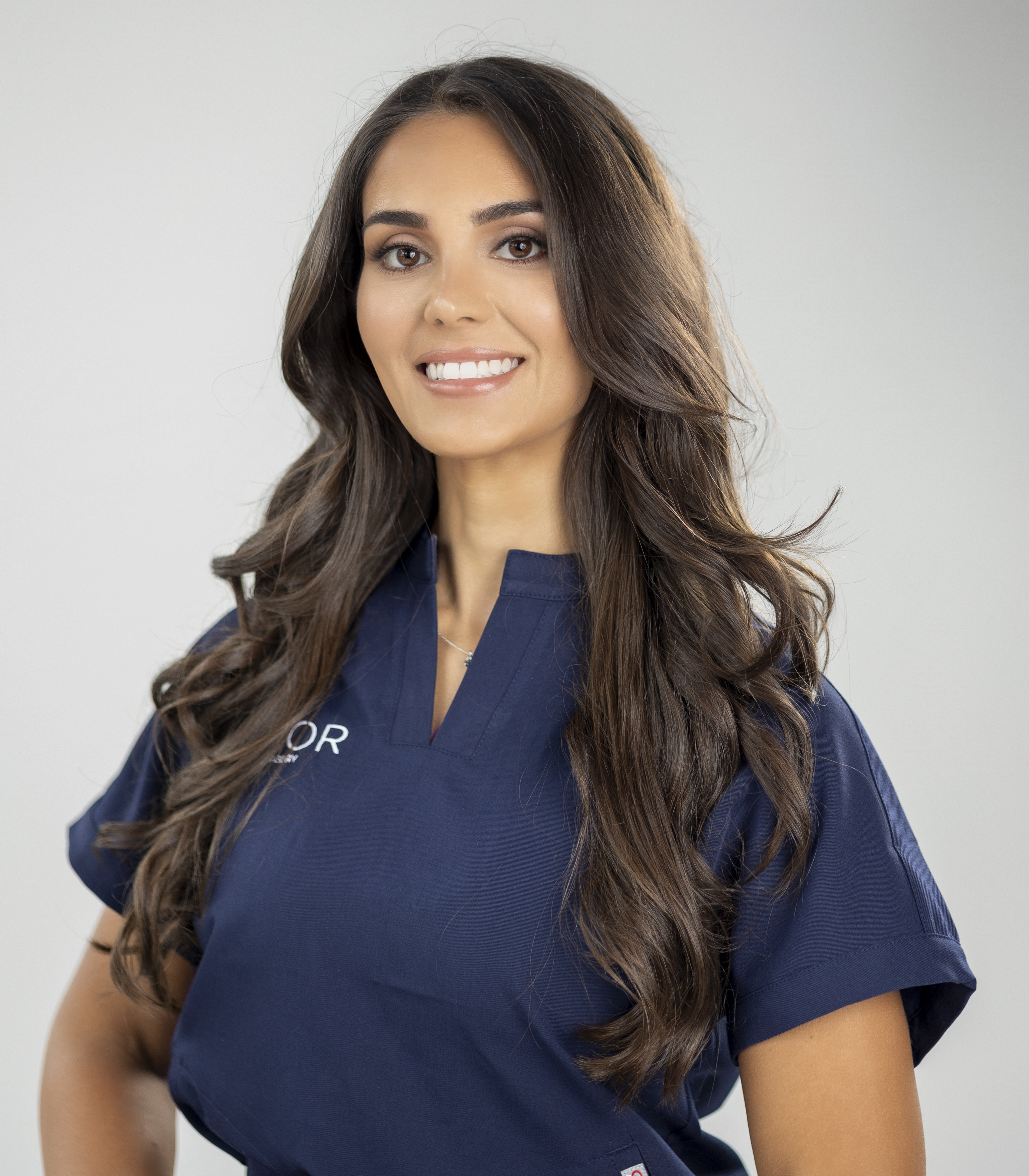
Book a consultation with Stephanie to experience this personalized, natural approach to Botox.
How Forehead Anatomy Shapes Natural Botox Outcomes
The distinction between dynamic and static lines guides realistic expectations. Dynamic wrinkles appear with movement, while static lines remain visible even when the face rests. Botox works best on dynamic forehead wrinkles and can gradually soften deeper static lines with consistent treatment over time.
The frontalis muscle lifts the eyebrows and creates forehead movement. Natural dosing depends on facial anatomy, muscle strength, and expression patterns. This tailored approach reduces unwanted lines while preserving essential expressions.
5 Principles of Natural Botox
- Low-dose micro-droplets preserve natural movement.
- Brow balance improves when the glabella is treated along with the forehead.
- Full-face integration prevents an isolated or “done” appearance.
- Expressive poses in photos confirm that animation remains.
- Precise anatomical mapping helps avoid danger zones.
Real Forehead Botox Transformations at Mirror Plastic Surgery
Case Study 1: 38-Year-Old Professional with Moderate Forehead Lines
This patient arrived with horizontal forehead creases that deepened during expression. Stephanie placed Botox strategically in the frontalis as part of a full-face plan. The result showed clear softening of lines while maintaining natural brow elevation.
She kept her ability to express surprise and concern, which mattered for her professional communication. The overall effect looked rested, not frozen.
Case Study 2: 45-Year-Old Correcting an Overdone “Frozen” Forehead
This patient previously received heavy dosing that left her forehead stiff and unnatural. She wanted movement back without losing smoothness. Stephanie selected Dysport and used a gradual approach to restore flexibility.
Dysport’s diffusion suited this goal and helped create a softer, more natural forehead appearance.
Case Study 3: 52-Year-Old First-Time Patient with Deep Forehead Furrows
This first-time patient worried about long-standing deep forehead lines. Stephanie designed a plan using Botox with an expectation of gradual improvement over several sessions. Botox softened the deep lines visible at rest, but complete removal did not occur in a single visit.
The plan focused on progressive refinement and prevention of further etching.
Injection Techniques That Support Natural Forehead Movement
Stephanie’s injection technique relies on detailed anatomical knowledge for safe neuromodulator placement in the forehead. She places the product in a way that reduces horizontal lines during animation while allowing the eyebrows to move naturally.
How to Avoid a Frozen Forehead and Maintain Balance
Preventing Common Pitfalls Like the Frozen Look
Heavy dosing creates the greatest risk for stiff, unnatural results. The frontalis muscles constitute a primary danger zone where improper injection can cause heavy brow, asymmetry, or a frozen appearance. Safe protocols favor superficial injections and avoid the central forehead midline.
The Line of Convergence, or C-line, separates the lower frontalis fibers that lift the brows from the upper frontalis fibers. Deep injections below the C-line risk brow ptosis, while targeted placement reduces this complication.
Coordinating Forehead Botox with the Rest of the Face
Natural forehead results depend on coordination with nearby areas. Forehead lines must always be treated in conjunction with glabellar lines for proper brow balance. This approach prevents the isolated, “stuck” look that signals poor technique.
Choosing Between Botox, Dysport, and Xeomin
Product choice influences how natural the result appears and feels. Xeomin often feels lighter and softer, which suits forehead treatments that aim to preserve movement, while Dysport can create softer effects in larger muscles. Stephanie’s experience with multiple neuromodulators supports tailored selection for each patient’s anatomy and goals.
Simple Aftercare and Long-Term Strategy for Natural Results
Evaluating before-and-after photos for natural results requires attention to motion, not just still images. Authentic documentation shows patients raising brows, frowning, or smiling, so you can see that expression remains while wrinkles soften.
Post-treatment care stays simple. Avoid rubbing or massaging the treated area for 24 hours. Remain upright for 4 hours after injections. Results usually appear over 3 to 7 days and last about 3 to 4 months. Regular injections over the years provide cumulative benefits, including a smoother forehead and fewer dynamic lines.
Current trends favor subtle, preventative treatment. Preventative Botox in the 30s can keep creases from becoming permanent. This approach aligns with a growing preference for maintenance instead of late correction.
Book a consultation with Stephanie to design a personalized plan for natural forehead enhancement.
Frequently Asked Questions
Can forehead Botox look natural?
Forehead Botox can look completely natural when an experienced injector uses proper technique and conservative dosing. The focus stays on softening unwanted lines while preserving essential expressions.
Skilled injectors often target the upper portion of the frontalis muscle. This pattern maintains the ability to raise the eyebrows and show emotion. The goal is a rested, refreshed look instead of a frozen or artificial result.
Does Botox get rid of existing forehead lines?
Botox effectively softens dynamic forehead lines that appear with movement and can gradually improve static lines that remain at rest. Moderate to deep lines often need several sessions for the best outcome.
Botox prevents lines from deepening and can significantly reduce their appearance. Very deep etched lines may respond better to a combination of Botox and dermal fillers. Improvement usually builds over multiple treatment cycles.
What are the forehead Botox danger zones to avoid?
The main danger zones include the central forehead and areas too close to the eyebrows. Injections in the central midline can interfere with natural brow elevation and create a heavy or droopy look.
The region within about 1.5 to 2 cm of the orbital rim also carries a higher risk of brow ptosis. The glabellar area near major blood vessels requires careful technique to avoid vascular issues. Professional injectors rely on anatomical landmarks and precise mapping to avoid these high-risk areas.
What does Botox look like after 10 years of use?
After 10 years of consistent Botox use, most patients notice smoother, more youthful-looking skin and fewer deep wrinkles. Facial muscles in treated areas often become less likely to form strong creases.
The skin can appear more refined because repetitive movement decreases, and collagen may stabilize. Mild muscle thinning can occur, but it usually supports the anti-aging effect. Current evidence does not show permanent damage or faster aging when Botox stops after long-term use.
Is 55 too old for Botox before and after results?
Age 55 is not too old for Botox. Many patients in their 50s and beyond see meaningful improvements.
Younger patients may notice more dramatic changes in dynamic lines, while mature patients often benefit from softening existing lines and slowing further deepening. Treatment plans at this age may adjust for skin elasticity and static lines, sometimes combining Botox with other modalities. Realistic expectations and an injector who understands mature anatomy remain essential.
Start Your Natural Botox Journey with Mirror Plastic Surgery
Natural-looking Botox results depend on anatomical expertise, artistic judgment, and personalized care. Mirror Plastic Surgery’s concierge model provides thorough assessment and customized treatment planning that prioritizes safety, function, and subtle aesthetics.
Stephanie DeSimone’s background in mathematics and anatomy, paired with her “less is more” philosophy, supports the refined, expressive results many patients want. Her experience with multiple neuromodulators and micro-dosing techniques allows her to tailor each treatment to facial structure and aesthetic goals.
Book a consultation with Stephanie today to begin your journey toward natural, beautiful results. Contact Mirror Plastic Surgery at 727-361-6515, email hello@mirrorplasticsurgery.com, or visit 780 4th Ave S, St. Petersburg, FL 33701. Follow transformations on Instagram @mirrorplasticsurgery, @dr.akashplasticsurgery, and @perfectlyplastics.
Disclaimer: Results may vary from person to person. Editorial content, before and after images, and patient testimonials do not constitute a guarantee of specific results.
