

Last updated: January 26, 2026
Key Takeaways on Fillers and Muscle Movement
- Dermal fillers cause myomodulation, mechanically restricting facial muscle movement with 18-22% bite force decline at 6 months and 12% zygomaticus strength reduction.
- Filler fatigue creates cumulative weakening, with 8-10% loss per session in 30% of patients, while true muscle atrophy shows no MRI evidence and remains temporary and reversible.
- Filler migration from muscle action and gravity creates asymmetry, and micro-droplet techniques plus ultrasound guidance reduce these risks by 20-30%.
- Biostimulatory fillers like Radiesse stimulate collagen for natural integration and better preservation of muscle function than hyaluronic acid in many patients.
- Expert care at Mirror Plastic Surgery uses anatomy-guided injections that prioritize safety, function, and natural aesthetics.
Why Mirror Plastic Surgery’s Concierge Model Protects Your Results
Mirror Plastic Surgery follows a concierge medicine model that places safety first, then function, then aesthetics. The team limits procedures to one or two per day instead of five to ten, so each patient receives detailed, unhurried care. Every visit includes an hour-long, top-to-bottom assessment that evaluates facial and body anatomy, movement, and goals. The practice remains supplier neutral and selects from Juvederm, RHA, Restylane, Radiesse, and other brands based on evidence and anatomy, not commissions. This process supports customized plans that protect muscle function and create natural, long-lasting results. Discover innovations at Mirror through a personalized consultation.
Meet Your Injector: Stephanie DeSimone’s Anatomy-First Approach
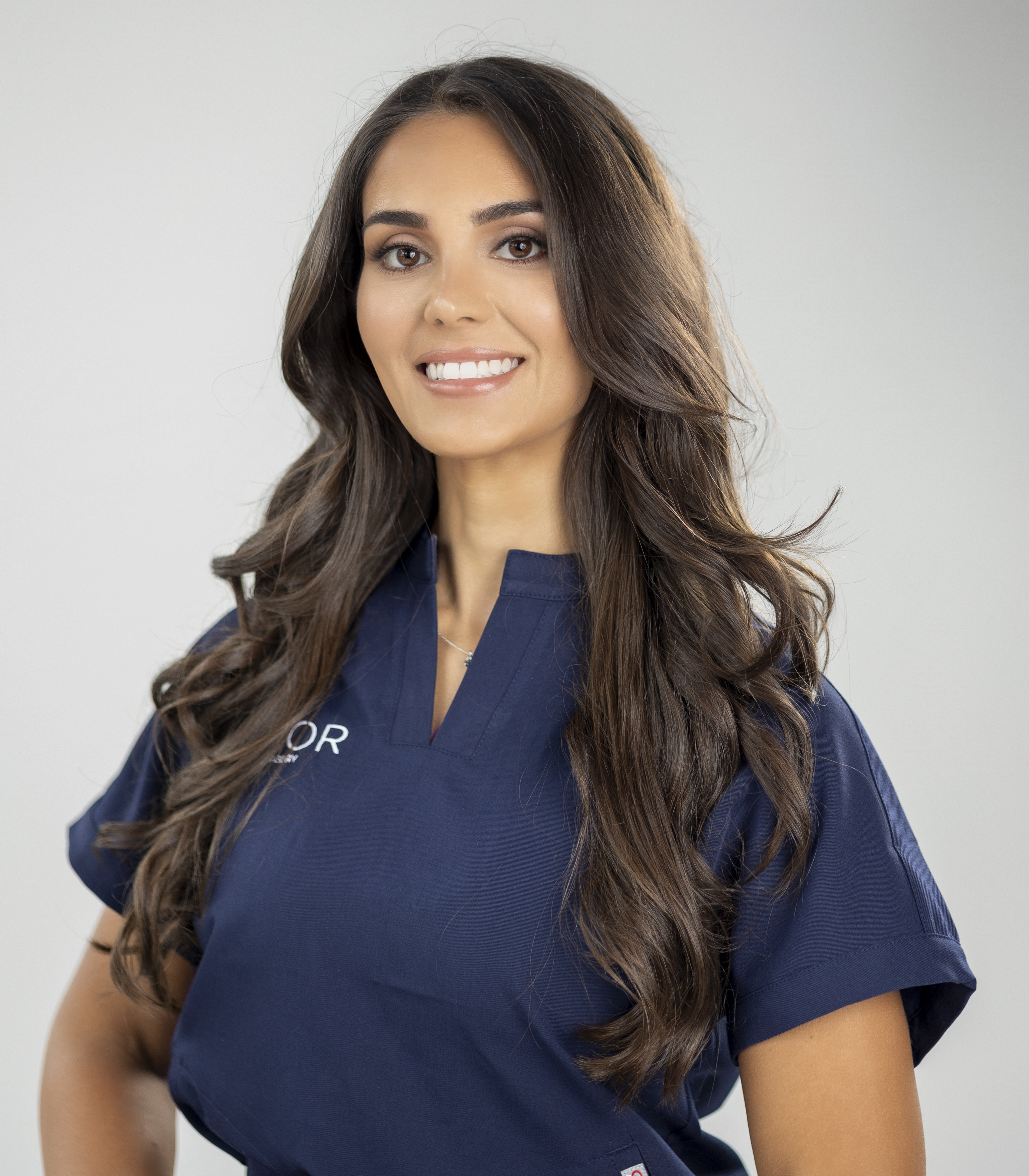
Stephanie DeSimone combines mathematical precision with deep anatomical training in every injection. Her Mathematics degree, years as a surgical assistant, and bodybuilding background give her a rare understanding of both surface contours and underlying muscle structure. She follows a “less is more” philosophy and restores your natural facial characteristics before adding volume, which keeps transitions between facial regions smooth and believable. Stephanie treats the full face, neck, and body with neuromodulators (Botox, Dysport, Xeomin, Daxxify, Jeuveau) and dermal fillers (Juvederm, RHA, Versa, Restylane, Radiesse, Evolysse). Her work is supported by Dr. Akash Chandawarkar, a Harvard-educated, Johns Hopkins-trained plastic surgeon with fellowship training at Manhattan Eye Ear & Throat Hospital. Book a consultation with Stephanie to experience anatomy-guided injection techniques.
How Fillers Affect Muscles: Key Concepts and Terms
Myomodulation describes how dermal fillers change facial muscle function. Filler volume restricts muscle excursion and produces a 12-25% decline in zygomaticus and masseter strength (PubMed). This effect comes from mechanical interference, not nerve toxicity, because the filler acts as a physical barrier to normal contraction. Filler fatigue refers to the cumulative weakening seen with repeated treatments, with 8-10% strength loss per session in about 30% of patients (PMC).
Filler migration happens when injected material shifts from its original position due to muscle action, gravity, and external pressure. This shift can block natural expressions and create visible asymmetry. True muscle atrophy from fillers has no MRI support, so current evidence points to mechanical effects rather than permanent tissue loss. Patients benefit from clear understanding of superficial versus deep injection risks, because deeper placement near muscle bellies increases the chance of myomodulation.
Hyaluronic acid fillers behave differently from biostimulatory fillers such as Radiesse. Biostimulatory treatments trigger collagen production and tissue regeneration, which can integrate more naturally with facial structures over time. Filler acts like a firm pillow compressing a set of springs, where the springs represent your muscles. Greater volume and stiffness create stronger compression and more restriction of movement.
High-risk injection zones include the masseter region, mid-cheek, and perioral areas, where muscles work constantly during chewing, smiling, and speaking. Careful depth control and conservative volume in these regions help preserve natural expression and comfort.
Current Filler Trends: From Overfilled to Functional and Natural
In 2026, more patients are requesting filler dissolutions and choosing treatments that respect natural aging. This shift reflects growing awareness of myomodulation and a desire to keep authentic facial movement. Muscle-preserving biostimulatory fillers have become more common, with calcium hydroxylapatite (CaHA) showing a 29% increase in skin thickness at 6 months through collagen stimulation instead of pure volume. Micro-droplet injection methods support this trend by lowering the risk of displacement, and studies report a 20-30% reduction in filler migration with precise, low-volume placement. Culture has moved away from overfilled faces toward balanced, expressive results. Advanced injectors now use 3D strain mapping and ultrasound guidance to avoid muscle interference zones and improve both safety and predictability.
What Patients Should Weigh Before Choosing Fillers
Patients considering dermal fillers need a clear view of both benefits and risks. Concerns about muscle effects remain valid, yet skilled providers place safety and function at the center of every plan. The most serious complications occur in high-risk areas such as the glabella, where vascular occlusion can cause tissue necrosis, although expert technique keeps this risk low. Stephanie’s bodybuilding-informed knowledge of muscle anatomy supports treatment plans that protect strength, symmetry, and expression. Ongoing maintenance includes scheduled follow-ups to track movement, volume, and comfort over time. Patients gain the best outcomes when they hold realistic expectations and choose providers who value safety over aggressive volume. Avoid complications with expert care that protects your long-term facial health.
Misconceptions About Fillers and Muscle Function
Many people believe dermal fillers do not affect muscle function. However, a meta-analysis of 12 randomized controlled trials shows a pooled 16.4% masseter strength decline at 6 months after injection. This mechanical interference appears across filler types, although placement and volume strongly influence the degree of change. High-volume, fast-paced practices increase migration and complication rates because they often skip thorough anatomical mapping and movement assessment. Mirror Plastic Surgery counters these issues with its concierge model, extended evaluations, and focus on full-face restoration instead of isolated spot filling. The team’s evidence-based approach sets realistic expectations and supports informed decisions that protect both appearance and function.
Frequently Asked Questions
Do fillers weaken facial muscles?
Dermal fillers can temporarily weaken facial muscles through myomodulation. Clinical data show an 18-28% reduction in bite force and muscle activation amplitude, depending on injection site and volume. This change comes from mechanical interference with contraction, not permanent muscle damage. Effects usually reverse within 12 months, and most patients regain about 85% of baseline strength. Careful technique and conservative dosing limit these changes while still delivering visible aesthetic improvement.
Can fillers cause muscle atrophy?
Dermal fillers do not cause permanent muscle atrophy based on current evidence. MRI volumetry studies reveal stable muscle cross-sectional areas even after multiple treatment sessions. The weakness that patients sometimes feel reflects mechanical restriction of contraction, not loss of muscle fibers. This difference matters because it confirms that filler-related muscle changes remain temporary and reversible, unlike true atrophy, which involves actual tissue loss.
What is filler migration?
Filler migration occurs when product shifts away from the original injection site under the influence of muscle movement, gravity, or external pressure. This shift can distort symmetry and interfere with natural expressions. Migration risk rises with large volumes, incorrect depth, and aggressive post-treatment massage. Experienced injectors reduce this risk through precise placement, thoughtful product choice, and volumes that match each patient’s anatomy.
What are the risks of long-term filler use?
Long-term filler use can contribute to filler fatigue, which appears in about 22% of patients after repeated sessions. This pattern includes progressive muscle weakness and subtle changes in expression. Other long-term concerns include migration, asymmetry, and the need for corrective work. When experienced practitioners use appropriate techniques, products, and intervals, long-term filler plans can remain safe and effective while preserving natural movement.
How can filler effects on muscles be reversed?
Hyaluronic acid filler effects can be reversed with hyaluronidase, followed by tissue recovery and rebalancing protocols. Most patients regain around 85% of baseline muscle strength within 12 months after dissolution. Successful reversal depends on accurate mapping of existing filler, targeted dissolution, and carefully planned corrective treatments that restore balance and expression. Expert guidance supports smooth recovery and more natural results.
Conclusion: Choosing Fillers That Respect Your Facial Function
Clear knowledge of how dermal fillers affect facial muscle movement helps patients choose treatments that match their goals and comfort level. Myomodulation and filler fatigue deserve attention, yet expert technique and thoughtful product selection keep these effects manageable. Mirror Plastic Surgery’s focus on safety, function, and aesthetics allows patients to enjoy natural-looking results while preserving expression and muscle health. The practice’s evidence-based planning and comprehensive assessments support stable, long-term outcomes. Prioritize your facial function today with personalized care that respects your anatomy and vision.
Book a Consultation at Mirror Plastic Surgery
Experience personalized aesthetic care with detailed, muscle-safe injection planning. Contact Mirror Plastic Surgery at 727-361-6515, email hello@mirrorplasticsurgery.com, or visit 780 4th Ave S, St. Petersburg, FL 33701. Follow @mirrorplasticsurgery, @dr.akashplasticsurgery, and @perfectlyplastics on Instagram for educational content and real patient results.
Disclaimer: Results may vary from person to person. Editorial content, before and after images, and patient testimonials do not constitute a guarantee of specific results.
