

Last updated: February 8, 2026
Key Takeaways for Natural, Never-Puffy Results
- Facial overfilling creates an unnatural “pillow face” when filler is placed incorrectly, so anatomical precision is essential.
- Restore deep structural support with periosteal injections first, then add superficial volume to keep facial harmony and movement.
- Use micro-droplet layering and proportional balancing to prevent chipmunk cheeks, duck lips, and other overfilled outcomes.
- Biostimulatory fillers like Radiesse stimulate long-term collagen and build structure more effectively than traditional HA fillers alone.
- Trust Mirror Plastic Surgery’s anatomical experts like Stephanie DeSimone for personalized assessments, and book your consultation today.
Why Mirror Plastic Surgery Delivers Natural Filler Results
Mirror Plastic Surgery uses a concierge medicine model that favors comprehensive care instead of high-volume, rushed treatments. Every step centers on safety, anatomy, and subtle, believable results.
- Hour-long initial consultations with detailed top-to-bottom anatomical assessments
- Safety-first philosophy that protects function before enhancing aesthetics
- Evidence-based treatment planning with supplier-neutral product selection
- Limited daily procedures so each patient receives focused attention
- Extensive anatomical training that helps prevent overfilling and distortion
This structure supports the level of personalization required for natural-looking, long-lasting outcomes.
Meet Your Injector: Stephanie DeSimone’s Precision Approach
Stephanie DeSimone combines a Mathematics degree, years as a surgical assistant, and bodybuilding experience to guide her injection style. This mix gives her a deep understanding of both visible contours and the subdermal anatomy that supports them.
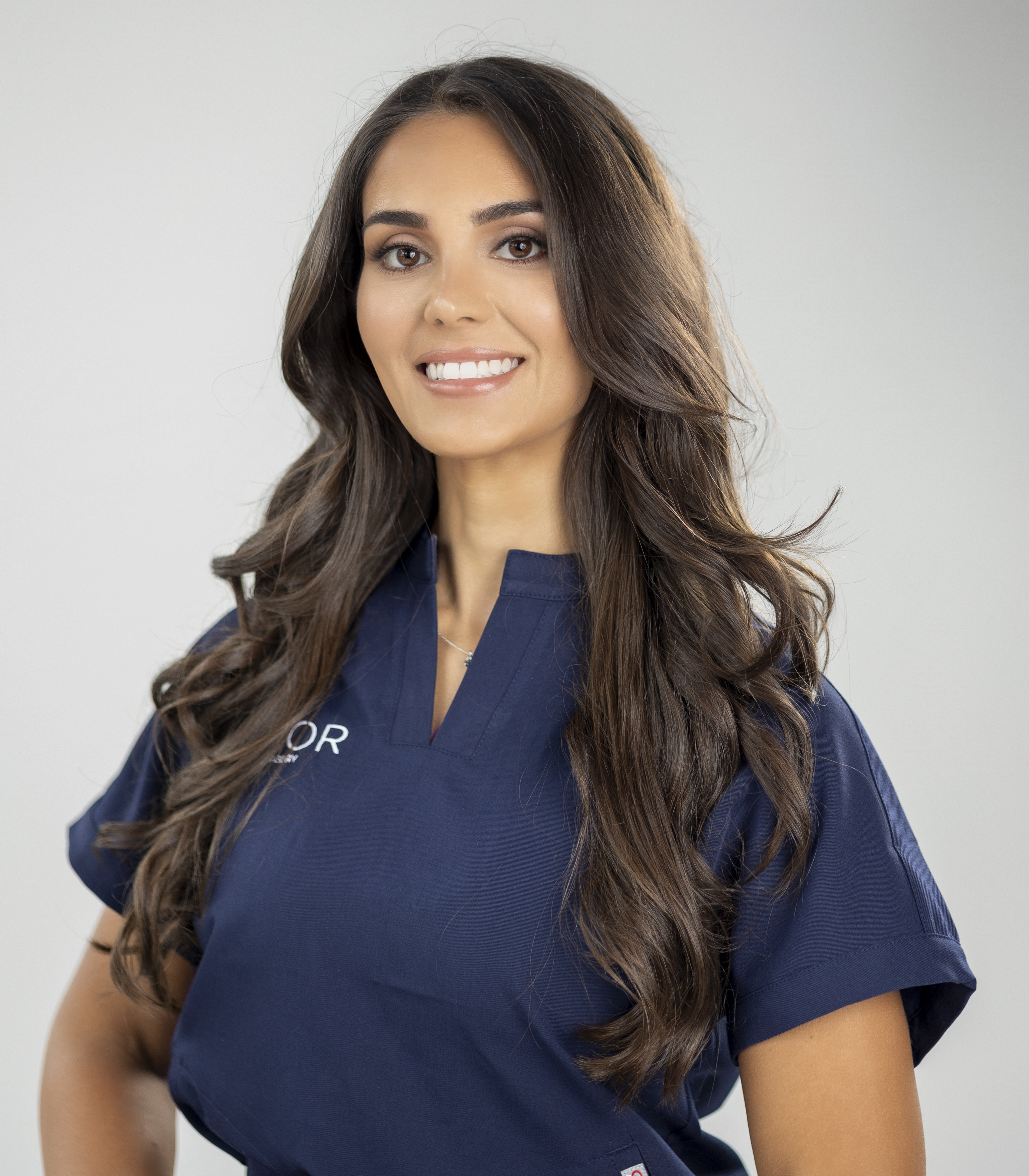
Her “less is more” philosophy restores your inherent facial character before adding extra volume. She focuses on rebuilding deep structural support with products such as Juvederm, RHA, Restylane, and Radiesse so your face moves naturally and expressions stay authentic.
Patients consistently describe her work as precise and corrective. One patient shared, “She fixed a cheek issue that other injectors had only made worse, something that had been bothering me for months, yet she corrected it in seconds with just a few microdroplets of filler. Absolute genius!”
Book a consultation with Stephanie to experience anatomy-based precision injections.
How Facial Anatomy Shapes Filler Placement
Facial aging starts with changes in bone and fat that create visible volume loss patterns. Bone remodeling includes orbital rim widening, maxilla retraction, and loss of height and projection in the mandible, which then alters the soft tissue envelope.
Volume loss affects both superficial and deep fat compartments. Deep fat provides structural support, and its depletion flattens three-dimensional architecture and shifts the face from a youthful V-shape to a more rectangular shape.
Key anatomical zones include:
- Temporal fat pads: Loss creates temple hollowing and upper face aging
- Malar fat pads: Shrinkage deflates the cheeks and makes nasolabial folds more prominent
- Deep medial cheek fat: Loss contributes to mid-face volume deficits
- Buccal fat pads: Diminution can create a gaunt, tired mid-face
Restoration and augmentation serve different purposes. Restoration uses deep, periosteal placement to lift descended tissues and rebuild support. Augmentation adds more superficial volume to refine contours once the structure is stable.
Recent studies show that deep plane techniques often provide better longevity and more natural movement than traditional superficial methods, especially for midface descent and nasolabial folds.
Learn your anatomy in a personalized assessment and understand how your unique structure influences aging and treatment.
Strategies Stephanie Uses to Avoid the Overfilled Look
Preventing an overfilled appearance requires a structured plan that respects anatomy and proportion. Stephanie follows a stepwise approach that prioritizes structure, balance, and restraint.
- Comprehensive Anatomical Mapping: She performs a full top-to-bottom assessment to identify specific volume loss patterns and structural deficits before designing a treatment plan.
- Deep Periosteal Placement: She targets deep fat compartments at the bone level to create lift and support instead of simply adding surface volume.
- Micro-Droplet Layering Technique: She uses very small volumes in micro-droplets across multiple points, which allows precise control and smoother integration with your own tissues.
- Proportional Facial Balancing: She applies mathematical and anatomical principles to maintain facial harmony, using her math background to analyze lift vectors and symmetry.
- Biostimulatory Foundation First: She often starts with structural fillers such as Radiesse for deep support, then adds hyaluronic acid fillers only where needed to avoid heavy, puffy results in dynamic areas.
Current trends increasingly favor this biostimulatory, structure-first approach for more durable and natural improvement.
Avoid pillow face with expert guidance from experienced anatomical specialists.
Common Overfilling Mistakes and How They Are Corrected
High-risk zones require special care because they overfill easily and distort facial harmony. Cheeks are especially vulnerable, and excessive filler here can create pillow face or chipmunk cheeks with rounded, puffy contours that separate awkwardly from the tear trough and nasolabial folds.
Frequent complications include:
- Chipmunk Cheeks: Caused by overfilling the superficial malar fat pad, which creates disproportionate mid-face volume.
- Duck Lips: Caused by heavy filler in the philtrum and vermillion border without respect for natural lip ratios.
- Marionette Line Worsening: Occurs when overfilled cheeks push tissue downward and deepen lower-face shadows.
Facial Overfilled Syndrome (OFS) develops when volume distribution no longer matches underlying anatomy. This imbalance blurs natural contours and changes how the face moves during expression.
Prevention depends on detailed pre-treatment assessment and personalized planning instead of standard “syringe count” approaches. Correction often requires hyaluronidase to dissolve excess hyaluronic acid filler, although careful technique remains far better than revision.
Correct and prevent with proven expertise in facial anatomy and proportional balancing.
2026 Filler Trends and How to Choose Your Injector
Current aesthetic trends in 2026 favor structural restoration instead of simple volume filling. The industry now focuses on support, longevity, and natural motion.
- Growing use of biostimulatory fillers for long-term collagen support
- AI-assisted facial mapping to refine anatomical assessments
- Greater attention to ethnic and gender-specific anatomical patterns
- Use of mathematical proportional analysis during treatment planning
When you choose an injector, prioritize anatomical knowledge and subtle results over aggressive volume. Review before-and-after photos for natural expressions and smooth transitions between facial zones.
Mirror Plastic Surgery’s concierge model and anatomical focus position the practice as a leading choice in the St. Petersburg and Tampa Bay area for patients who want refined, believable outcomes.
Schedule your assessment with anatomical specialists who understand facial harmony principles.
Frequently Asked Questions About Overfilling and Facial Structure
How do you avoid chipmunk cheeks with fillers?
Chipmunk cheeks occur when the superficial malar fat pad receives too much filler. Prevention focuses on deeper lateral zygomatic areas with micro-dosing that lifts rather than bulks.
Accurate anatomical assessment reveals your natural cheek projection and where support has been lost. This information guides restoration of youthful contours without creating round, overstuffed cheeks.
What is the riskiest place for dermal fillers?
The glabella, nose, and lips carry the highest risk because they contain dense vascular networks and limited space for expansion. These areas hold many arteries and have tight tissue planes, which raises the risk of vascular compromise, necrosis, and even blindness.
Temples and tear troughs also present a higher risk due to nearby superficial vessels. Safe treatment in these regions requires strong anatomical knowledge and conservative dosing.
How can you fix too much filler in the cheeks?
Overfilled cheeks usually need hyaluronidase to dissolve excess hyaluronic acid filler. The injector places the enzyme strategically into the overfilled zones, and changes often appear within 24 to 48 hours.
Some patients need more than one session, depending on the filler type, amount, and how long it has been in place. Careful planning and conservative techniques still offer the best protection against needing reversal.
What is the difference between fillers and biostimulators?
Hyaluronic acid fillers provide immediate volume and hydration and typically last 6 to 18 months. They are reversible and work well for surface refinement and quick correction.
Biostimulatory fillers such as Radiesse trigger your own collagen production for gradual structural improvement that can last 1 to 3 years. They are not reversible but often look more natural over time, especially when used for deep support.
How do deep fat pad techniques work?
Deep fat pad restoration uses injections at the periosteal level, close to the bone, where natural fat compartments attach. This method lifts descended tissues by rebuilding support instead of piling volume near the surface.
The technique requires precise knowledge of compartment boundaries and injection depth, which usually sits 2 to 3 millimeters deeper than traditional methods. Results often show smoother lifting and better longevity.
Do ethnic and gender differences change filler placement?
Ethnicity and gender significantly influence facial structure, so filler plans must adjust accordingly. Males often have stronger bone structure and a different ideal volume distribution, while females may benefit from softer contouring.
Variations in cheekbone height, nasal shape, and lip proportions across ethnic groups also guide treatment. Respecting these differences helps maintain cultural identity and prevents a “one-size-fits-all” look.
What is the best approach for long-term filler maintenance?
Long-term maintenance works best when treatments are staged, and structure comes first. Many patients benefit from biostimulatory fillers for deep support combined with periodic hyaluronic acid touch-ups for detailed work.
Neuromodulators can reduce strong muscle activity that might shorten filler longevity. Regular anatomical reassessment allows your plan to evolve with ongoing aging while preserving natural balance.
Conclusion: Structure, Restraint, and Anatomy First
Natural filler results depend on a clear understanding of facial anatomy, aging patterns, and proportional relationships. Avoiding pillow face starts with restoration-focused techniques that rebuild deep support before adding surface volume.
Mathematical analysis, anatomical expertise, and conservative dosing create a reliable framework for subtle, elegant outcomes. Mirror Plastic Surgery’s concierge model ensures each patient receives a tailored anatomical evaluation and thoughtful plan.
Stephanie DeSimone’s background in mathematics and anatomy supports precise facial harmonization without the overdone look often seen in high-volume practices. Book a consultation with Stephanie now for an anatomy-tailored plan that supports your long-term aesthetic goals and facial harmony.
Book a Consultation at Mirror Plastic Surgery
Experience Mirror Plastic Surgery’s comprehensive hour-long assessment, where anatomical expertise meets personalized care. Your injector will review your facial structure, aging patterns, and goals before building a customized treatment plan.
Contact Information:
- Phone: 727-361-6515
- Email: hello@mirrorplasticsurgery.com
- Address: 780 4th Ave S, St. Petersburg, FL 33701
- Instagram: @mirrorplasticsurgery
Mandatory Disclaimer
Disclaimer: Results may vary from person to person. Editorial content, before and after images, and patient testimonials do not constitute a guarantee of specific results.
