

Last updated: February 8, 2026
Key Takeaways
- Precise knowledge of facial anatomy guides natural volume restoration with dermal fillers by rebuilding deep fat compartments lost with age.
- Mirror Plastic Surgery offers concierge consultations with Stephanie DeSimone, who blends mathematical precision with advanced anatomical training.
- Targeted treatment of the midface, temples, and jawline uses fillers like Juvederm Voluma, Restylane Contour, and Radiesse for lift and support.
- Safety remains the top priority as expert injectors avoid danger zones such as the nose and tear troughs using careful depth control and aspiration.
- A “less is more” approach creates balanced, natural rejuvenation, so book a consultation with Stephanie at Mirror Plastic Surgery to plan your treatment.
Why Patients Choose Mirror Plastic Surgery
Mirror Plastic Surgery uses a concierge model that allows up to an hour for each consultation. Every plan follows a clear priority order: safety first, function second, and aesthetics third. This slower, detail-focused approach contrasts with high-volume clinics that may rush assessments and treatments.
The practice stays neutral with suppliers and selects products based on your anatomy and goals, not on sales quotas. This evidence-based, anatomy-driven method supports consistent, natural-looking results.
Meet Your Injector, Stephanie DeSimone
Stephanie DeSimone combines a Mathematics degree with years of surgical assisting experience. Her background supports a precise understanding of facial proportions and both surface and deep anatomy. Her bodybuilding experience further sharpens her awareness of muscular structure and symmetry.
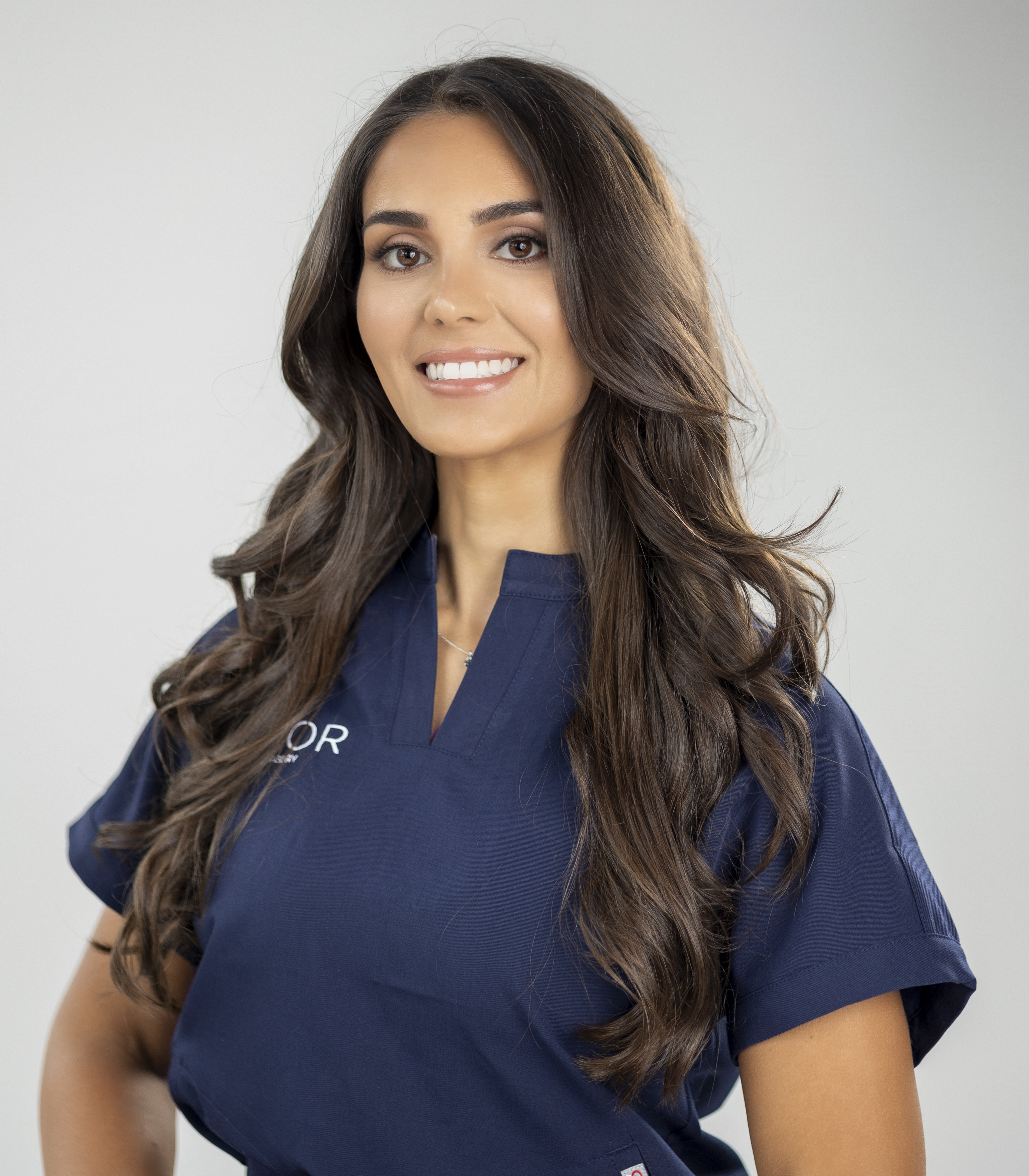
Stephanie focuses on full-face restorative treatments rather than isolated spot filling. She works with Juvederm, RHA, Versa, Restylane, Radiesse, and Evolysse. Her “less is more” philosophy favors subtle, balanced changes that refresh your features instead of dramatically altering them.
How Facial Anatomy Shapes Volume Restoration
Facial aging affects several layers at once. Skin thins and loses elasticity, fat pads shrink and shift in the cheeks, temples, and around the mouth, and retaining ligaments loosen. Bone remodeling also reduces cheek projection and softens the jawline over time.
Key zones for volume restoration include the temples, midface and cheeks, and jawline. Deep fat compartments support the midface and help maintain youthful contours. Their loss contributes to hollow under-eyes, deeper nasolabial folds, flattened cheeks, and early jowls. Targeting these compartments with the right filler and depth helps rebuild structure instead of simply puffing the surface.
Building Midface Support with Supra-Periosteal Fillers
The midface foundation depends on deep fat compartments such as the sub-orbicularis oculi fat (SOOF) and deep medial cheek fat (DMCF). Supraperiosteal injections reach these deep compartments using firm fillers with strong projection to restore volume and lift.
Hyaluronic acid fillers like Voluma perform well in this layer. Studies show that about 80% of patients had significant temple fullness improvement at 3 months, with 73% maintaining results at 1 year. Biostimulatory fillers such as Radiesse add structure and stimulate collagen for longer-term support.
Softening Temple Hollowing for Facial Harmony
Temple hollowing can make the face look gaunt and older, even when other areas appear youthful. Restoring this area improves overall balance between the upper and midface. Restylane Contour improved temple volume in patients with moderate-to-severe hollowing, with response rates of 91% at Month 3, 92% at Month 12, and 86% at Month 18.
The temporal fossa contains important vessels, so injections here require careful depth control and product choice. The goal is a smooth, natural contour that blends into the forehead and cheek without visible edges or lumps.
|
Zone |
Depth/Technique |
Filler Type |
|
Temples |
Deep boluses |
Restylane Contour |
|
Cheeks/Midface |
Supra-periosteal, sub-SMAS |
Juvederm Voluma, Radiesse |
|
Jawline |
Bone-deep |
Radiesse |
Safety First in Filler Danger Zones
Detailed anatomical knowledge helps reduce complications in high-risk regions. Vascular occlusion from fillers can cause skin necrosis, tissue loss, blindness, or stroke, and the nasal region carries the highest risk because of lateral nasal artery connections. Other high-risk areas include the under-eye region, forehead, and surrounding eye area.
Experienced injectors lower these risks through careful planning and technique. They use aspiration when appropriate, understand safe planes of injection, and may use ultrasound guidance in complex cases. Board-certified specialists trained in facial anatomy and complication management show lower complication rates.
Book a consultation with Stephanie to have your filler treatments planned and performed with this level of safety and precision.
Natural-Looking Results with a Less Is More Approach
Natural results come from restoring lost structure instead of simply adding volume. Three-layer ultrasound-guided midface rejuvenation with tailored HA fillers can create smooth, natural contours without reported side effects. This method uses firm high G′ HA on bone for structure, more elastic HA in superficial fat, and non-cross-linked HA just under the skin for hydration.
Full-face balancing prevents a “pillow face” look. Treatment focuses on lift, support, and proportion across the upper, mid, and lower face. Smooth transitions between regions help maintain your natural expressions and facial character.
Current Trends and Patient Choices
Recent trends highlight regenerative aesthetics and filler alternatives such as Alloclae, an off-the-shelf injectable donor fat and extracellular matrix product. This type of product can offer soft, natural volume that behaves more like your own tissue. Biostimulatory fillers such as Sculptra and Radiesse remain popular for their collagen-stimulating effects and longer duration.
Many patients now request subtle, anatomically precise treatments that avoid an overdone look. Interest in regenerative medicine and careful injection techniques reflects this shift. Learning the differences between temporary HA fillers, collagen-stimulating products, and fat transfer helps you choose the option that fits your anatomy, lifestyle, and goals.
Frequently Asked Questions
What are facial filler danger zones?
Facial filler danger zones are areas with dense or complex blood vessel networks where injections carry a higher risk. The most critical regions include the nose, under-eye tear troughs, temples, and the glabellar area between the eyebrows. These zones contain vessels that supply the skin, eyes, and sometimes deeper structures.
If a filler blocks one of these vessels, it can cause tissue damage, scarring, or even vision loss. The nasal area is especially risky because the lateral nasal artery connects with vessels that supply the eye and brain. Skilled injectors use careful depth control, aspiration when appropriate, and sometimes ultrasound guidance to reduce these risks.
How do you restore facial volume naturally with fillers?
Natural volume restoration focuses on rebuilding deep support rather than puffing the surface. Injectors target specific fat compartments such as the SOOF and deep medial cheek fat using supra-periosteal and sub-SMAS techniques. These layers help recreate youthful lift in the midface.
The approach also considers bone changes and ligament support. By layering different filler types at the correct depths, a skilled injector can restore structure and contour that look like your own features, only refreshed.
What are the best fillers for structural facial support?
High G-prime hyaluronic acid fillers and biostimulatory products work well for structure. Radiesse, which contains calcium hydroxylapatite, provides strong support in the midface and jawline and also stimulates collagen. Juvederm Voluma and Restylane Contour are reliable HA options for projection in the cheeks and temples.
Sculptra, made from poly-L-lactic acid, builds collagen gradually and suits patients who want a slower, long-lasting improvement in overall facial framework. The ideal product depends on the treatment area, your goals, and how quickly you want to see changes.
How can you avoid the overfilled look with dermal fillers?
Avoiding an overfilled look starts with conservative dosing and a clear plan. The focus stays on restoring lost support in deep layers instead of chasing every line at the surface. Product choice and injection depth both matter.
Many patients benefit from a staged approach with smaller treatments over time. Full-face assessment helps keep proportions balanced so one area does not look disconnected from the rest of the face.
What is the difference between dermal fillers and fat transfer?
Dermal fillers provide immediate, predictable results with minimal downtime. Hyaluronic acid fillers can be adjusted or dissolved if needed, which makes them ideal for precise contouring and fine-tuning. They work well for areas that need specific lift or definition.
Fat transfer uses your own fat, harvested with liposuction, then processed and injected. It can offer long-lasting or permanent volume and may bring regenerative benefits from stem cells. However, it involves surgery, variable fat survival, and a longer recovery. Fat transfer suits larger volume restoration, while fillers excel in detailed shaping.
What are the riskiest areas for facial filler injections?
The riskiest areas include the tear troughs, nose, temples, and glabellar region. The under-eye area has thin skin and lies close to important vessels and nerves, which increases the chance of vascular occlusion or visible irregularities. The nose has direct connections to vessels that supply the eye, so complications here can be severe.
Temple injections must avoid the temporal artery and nearby structures. These regions require advanced anatomical knowledge, careful technique, and experience managing complications if they occur.
Conclusion: A Structural Approach to Natural Rejuvenation
A detailed understanding of your facial anatomy turns filler treatment into structural restoration instead of simple volume addition. This approach supports natural, harmonious results that highlight your own features rather than masking them.
Book a consultation with Stephanie at Mirror Plastic Surgery to design a personalized facial volume plan that prioritizes safety, function, and your aesthetic goals.
Disclaimer: Results may vary from person to person. Editorial content, before and after images, and patient testimonials do not constitute a guarantee of specific results.
