

Last updated: February 13, 2026
Key Takeaways
- Body contouring includes surgical and non-surgical options that reshape stubborn fat, tighten skin, and refine curves with natural-looking results and minimal downtime.
- Mirror Plastic Surgery’s concierge model focuses on safety, function, and aesthetics through personalized consultations, with only 1–2 procedures scheduled each day.
- Non-surgical injectables such as Radiesse, AlloClae, and Avéli offer 1–2 year improvements for sculpting, cellulite reduction, and hip dips with low invasiveness.
- Key candidacy factors include a stable BMI under 30, good skin elasticity, and choosing FDA-approved treatments from qualified providers for safety and longevity.
- Patients ready for natural body harmonization can book a consultation at Mirror Plastic Surgery for evidence-based recommendations tailored to their anatomy.
Why Mirror Plastic Surgery’s Concierge Model Matters
Mirror Plastic Surgery’s concierge medicine model delivers comprehensive care through evidence-based treatment planning and clear, unbiased communication. The practice follows a safety, function, and aesthetics hierarchy, so every recommendation supports long-term health and natural results, not production targets. This structure contrasts with high-volume clinics where rushed consultations can increase the risk of asymmetry, overfilling, or later corrective procedures.
The team focuses on advanced non-surgical injectables, including biostimulatory fillers like Radiesse and Evolysse for natural body sculpting, AlloClae for buttocks and hip dip enhancement, and Avéli for cellulite treatment. These treatments create subtle, natural-looking changes while lowering the risks associated with surgery. The practice’s philosophy extends beyond single areas to full-body harmonization, using neuromodulators and fillers for the hands, neck, décolleté, knees, and buttocks.
Stephanie DeSimone: Your Dedicated Injector
Technical Precision With an Artistic Eye
Stephanie DeSimone combines mathematical precision with deep anatomical knowledge in every treatment plan. Her Mathematics degree, extensive experience as a surgical assistant, and passion for bodybuilding give her a detailed understanding of both surface contours and subdermal anatomy. This background supports precise injection techniques and thoughtful, stepwise treatment planning.
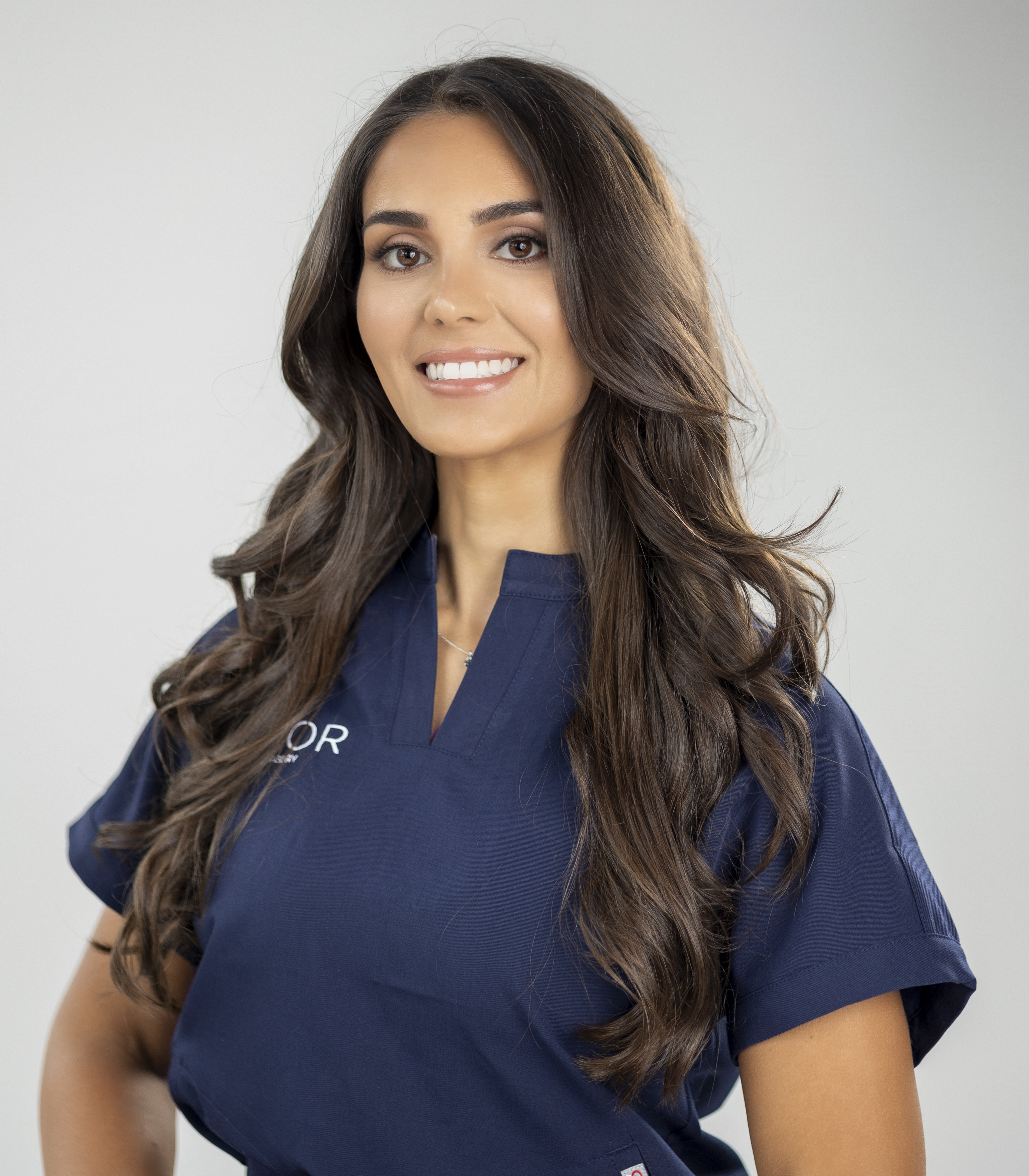
Stephanie focuses on non-surgical Brazilian Butt Lift procedures using biostimulatory fillers to refine gluteal shape, soften hip dips, reduce cellulite, and improve the appearance of stretch marks. Her approach to full-body harmonization uses neuromodulators and fillers to create balanced, proportional results. She follows a “less is more” philosophy that enhances existing features rather than dramatically changing them.
Core Body Contouring Concepts Explained
Body contouring includes surgical and non-surgical methods that reshape the body’s silhouette. Surgical options such as liposuction and tummy tucks remove fat and excess skin through incisions. Non-surgical options rely on different mechanisms. Injectable treatments trigger fat cell apoptosis and stimulate collagen through biostimulation. CoolSculpting uses controlled cooling to freeze fat cells, radiofrequency and ultrasound devices heat tissue to support collagen remodeling, and Kybella uses deoxycholic acid to dissolve fat.
A clear understanding of anatomical layers supports better and safer results. Subdermal fat distribution and skin elasticity strongly influence how a treatment looks over time. Fat cells destroyed with non-surgical methods are permanently processed by the liver and removed from the body. This outcome mirrors surgical fat removal but uses less invasive techniques.
Comparing Surgical and Non-Surgical Body Contouring
Each body contouring category offers specific advantages based on anatomy, goals, and lifestyle. The table below outlines key differences between major options.
|
Procedure Type |
Invasiveness/Downtime |
Longevity/Best For |
Side Effects |
|
Surgical (Liposuction/Tummy Tuck) |
High, requires anesthesia and weeks of recovery |
Permanent, best for major laxity after significant weight loss |
Scarring, infection, prolonged swelling |
|
Non-Surgical Injectables (Radiesse/AlloClae) |
Minimal, recovery from hours to a few days |
1–2 years, ideal for subtle sculpting and cellulite |
Bruising and temporary swelling |
|
CoolSculpting/RF |
Low, recovery over several days |
About 20–25% fat reduction in small pockets |
Numbness and possible contour irregularities |
|
Avéli/Kybella |
Minimal downtime |
Cellulite improvement and targeted fat dissolving |
Temporary redness and mild discomfort |
Mirror Plastic Surgery’s depth of experience with non-surgical injectables, especially AlloClae for natural gluteal contouring and Avéli for cellulite, gives patients effective alternatives to surgery while preserving a soft, natural appearance.
2026 Body Contouring Trends and New Technologies
Non-surgical treatments now dominate many aesthetic plans in 2026. Ultherapy PRIME® recently received FDA clearance for non-surgical skin tightening on the upper arms and abdomen, expanding ultrasound use beyond the face. EMSCULPT NEO gained additional FDA clearance for both aesthetic and medical indications, including pain relief and functional wellness support.
Biostimulatory fillers continue to grow in popularity because they stimulate natural collagen while adding immediate volume. These advances match patient preferences for treatments that look natural, involve minimal downtime, and carry lower surgical risk.
Key Candidacy and Safety Factors for Body Contouring
Successful body contouring starts with careful candidate selection and clear expectations. Ideal candidates usually maintain a stable BMI below 30 and show good skin elasticity. A weight-stable period of 6–12 months after major weight loss supports better outcomes by giving skin time to reach its natural recoil point.
Safety depends on choosing FDA-approved treatments and providers with strong anatomical training. Typical side effects from non-surgical procedures include temporary bruising, swelling, and mild discomfort that resolve within days or weeks. Recovery timelines vary by treatment, although most non-surgical options allow patients to return to normal activities quickly.
Longevity also differs by approach. Surgical procedures usually provide permanent changes, while non-surgical treatments last about 1–2 years and may need maintenance sessions. A clear understanding of these timelines helps patients plan both their investment and long-term care.
Book a consultation to review your candidacy, compare options, and map out a personalized treatment schedule.
Misconceptions and Real-World Challenges in Body Contouring
Several myths still surround body contouring. Fat cells destroyed with non-surgical methods do not move to other areas of the body. They are permanently metabolized and cleared by the liver. Home devices and unqualified providers often create uneven or minimal changes, which can lead to extra cost and corrective work.
Natural-looking results require precise anatomical understanding and an artistic eye. Mirror Plastic Surgery emphasizes thorough anatomical assessment and evidence-based planning to reduce the risk of unnatural contours or asymmetry that often appear after rushed, high-volume treatments.
Frequently Asked Questions
What is body contouring?
Body contouring includes surgical and non-surgical procedures that reshape the body’s silhouette by targeting fat deposits, tightening loose skin, or enhancing muscle definition. These treatments support areas that resist diet and exercise, address post-weight loss skin laxity, and soften age-related changes in body composition.
What is the difference between surgical and non-surgical body contouring?
Surgical body contouring uses incisions and tissue removal to create dramatic, permanent changes, although recovery takes longer. Non-surgical options use injectables, energy-based devices, or controlled cooling to create more subtle improvements with minimal downtime. The right choice depends on anatomy, goals, and lifestyle.
What are the common side effects of body contouring?
Non-surgical body contouring usually causes mild, short-term effects such as swelling, bruising, redness, or numbness that fade within days to weeks. Surgical procedures carry additional risks, including scarring, infection, and longer recovery. Mirror Plastic Surgery uses detailed pre-treatment assessment and precise technique to lower complication risk.
Where does fat go after body contouring?
When fat cells are destroyed during body contouring, they undergo apoptosis and are permanently removed through natural metabolic processes. The liver processes this cellular debris, and the fat does not shift to other body areas.
How long do non-surgical body contouring results last?
Non-surgical body contouring results usually last 1–2 years, depending on the treatment type, metabolism, and lifestyle. Maintenance sessions can extend these results. Surgical outcomes are generally long-lasting when patients maintain a stable weight.
Creating Natural, Harmonious Contours
Body contouring offers many ways to achieve natural, balanced proportions through both surgical and non-surgical methods. Strong results rely on detailed anatomical evaluation, evidence-based treatment choices, and skilled execution by qualified providers. Mirror Plastic Surgery’s concierge approach delivers personalized care that centers on safety, function, and subtle, natural-looking enhancement.
Book Your Body Contouring Consultation
Book a consultation to explore body contouring options tailored to your anatomy and aesthetic goals. Contact Mirror Plastic Surgery at 727-361-6515, email hello@mirrorplasticsurgery.com, or visit the St. Petersburg office at 780 4th Ave S, St. Petersburg, FL 33701. Follow the practice on Instagram @mirrorplasticsurgery, @dr.akashplasticsurgery, and @perfectlyplastics.
Disclaimer: Results may vary from person to person. Editorial content, before and after images, and patient testimonials do not constitute a guarantee of specific results.
