

Last updated: February 8, 2026
Key Takeaways for Safe Hip Dip Injections
- Verify board certification using ABMS and ABPS tools, confirm state medical licenses, and review specialty training before any hip dip injections.
- Hip dips come from natural anatomy, and specialized expertise helps prevent vascular complications while creating smooth, natural-looking contours.
- Biostimulatory fillers like Sculptra and Radiesse stimulate collagen for gradual, long-lasting hip dip correction, although they are used off-label for body contouring.
- Avoid red flags such as “board-eligible” providers, unrecognized boards, or no body contouring experience to reduce risks like necrosis or asymmetry.
- Choose Mirror Plastic Surgery for expert, concierge-style hip dip care with Stephanie DeSimone; book a consultation today for personalized, safe results.
Checklist to Confirm Board Certification and Credentials
Verifying your injector’s credentials starts with structured research using official medical databases and licensing tools. Follow this step-by-step checklist to confirm your provider meets strict safety and training standards.
1. Use ABMS Verification Tools
The American Board of Medical Specialties (ABMS) provides verification tools that confirm board certification status. Search by the provider’s last name and confirm their certification in a recognized medical specialty.
2. Check ABPS Certification for Plastic Surgeons
Use the American Board of Plastic Surgery (ABPS) “Find a Surgeon” tool to confirm plastic surgery board certification. Look for membership in the American Society of Plastic Surgeons (ASPS), which requires ABPS certification.
3. Verify State Medical License
Check your state’s medical board database to confirm an active, unrestricted license. In Florida, use the Department of Business and Professional Regulation (DBPR) website to verify current license status and any disciplinary history.
4. Confirm Relevant Specialty Training
Look for training in plastic surgery, dermatology, or advanced injector programs focused on aesthetics. Advanced certifications like CANS (Certified Aesthetic Nurse Specialist) demonstrate aesthetic skills beyond basic licensure.
5. Review Hip Dip Portfolio and Experience
Request before-and-after photos that specifically show hip dip correction. Ask about the number of hip dips and body contouring procedures performed each month and how long they have focused on this area.
Red Flags to Avoid
- Providers who describe themselves as “board-eligible” instead of fully board-certified
- Certifications from boards not recognized by ABMS
- No documented experience with body contouring or hip dip treatments
- Inability or refusal to provide credential verification when asked
Hip Dip Anatomy and Why Expert Technique Protects Your Safety
Hip dips, often called violin hips, are natural indentations between the hip bone and thigh bone that reflect skeletal structure, genetics, and fat distribution. These variations come from the relationship between pelvis and femur shape, along with muscle mass and fat patterns.
The hip region contains complex blood vessels and layered connective tissues that demand precise injection depth and placement. Deep injections can injure vessels and cause serious complications, while overly superficial placement can create migration or uneven contours.
Board Certification Compared With State Licensure
Patients stay safer when they understand the difference between licensure and board certification. State licensure grants basic legal permission to practice medicine, while board certification confirms advanced training and expertise.
State licensure alone does not prove skill in complex body contouring procedures. Board certification and accredited aesthetic training programs show that a provider has specific skills for safe, effective treatments.
Biostimulatory Fillers Used for Hip Dips: Sculptra and Radiesse
Modern hip dip correction often relies on biostimulatory fillers that trigger collagen production for gradual, long-lasting volume. These treatments support natural-looking contour changes and currently guide many non-surgical body contouring plans.
Sculptra (Poly-L-Lactic Acid) for Gradual Volume
Sculptra is FDA-approved for facial use and contains poly-L-lactic acid (PLLA), which stimulates collagen for gradual volume that can last up to two years. When used off-label for hip dips, Sculptra builds subtle, natural curves through controlled collagen regeneration over time.
Radiesse (Calcium Hydroxylapatite) for Structure and Lift
Radiesse contains calcium hydroxylapatite and holds FDA approval for facial applications, although many experts use it off-label for body contouring. This filler provides immediate structural support while also stimulating long-term collagen production.
Important Safety Note: No dermal filler currently holds FDA approval specifically for large-scale body contouring or hip dip correction. These procedures use fillers off-label and require advanced anatomical knowledge, careful planning, and thoughtful patient selection.
Stephanie tailors biostimulatory treatment plans to your anatomy and goals for natural hip dip correction. Book a consultation with Stephanie to review personalized options.
Why Patients Choose Mirror Plastic Surgery and Stephanie DeSimone
Mirror Plastic Surgery follows a concierge medicine model that focuses on depth of care instead of high-volume scheduling. Each patient receives up to an hour of consultation time, which allows detailed assessment, education, and customized treatment planning.
Stephanie DeSimone combines a mathematics background with extensive surgical assisting experience and a strong understanding of bodybuilding symmetry. This blend of analytical skill and aesthetic insight supports precise evaluation of both surface contours and subdermal anatomy.
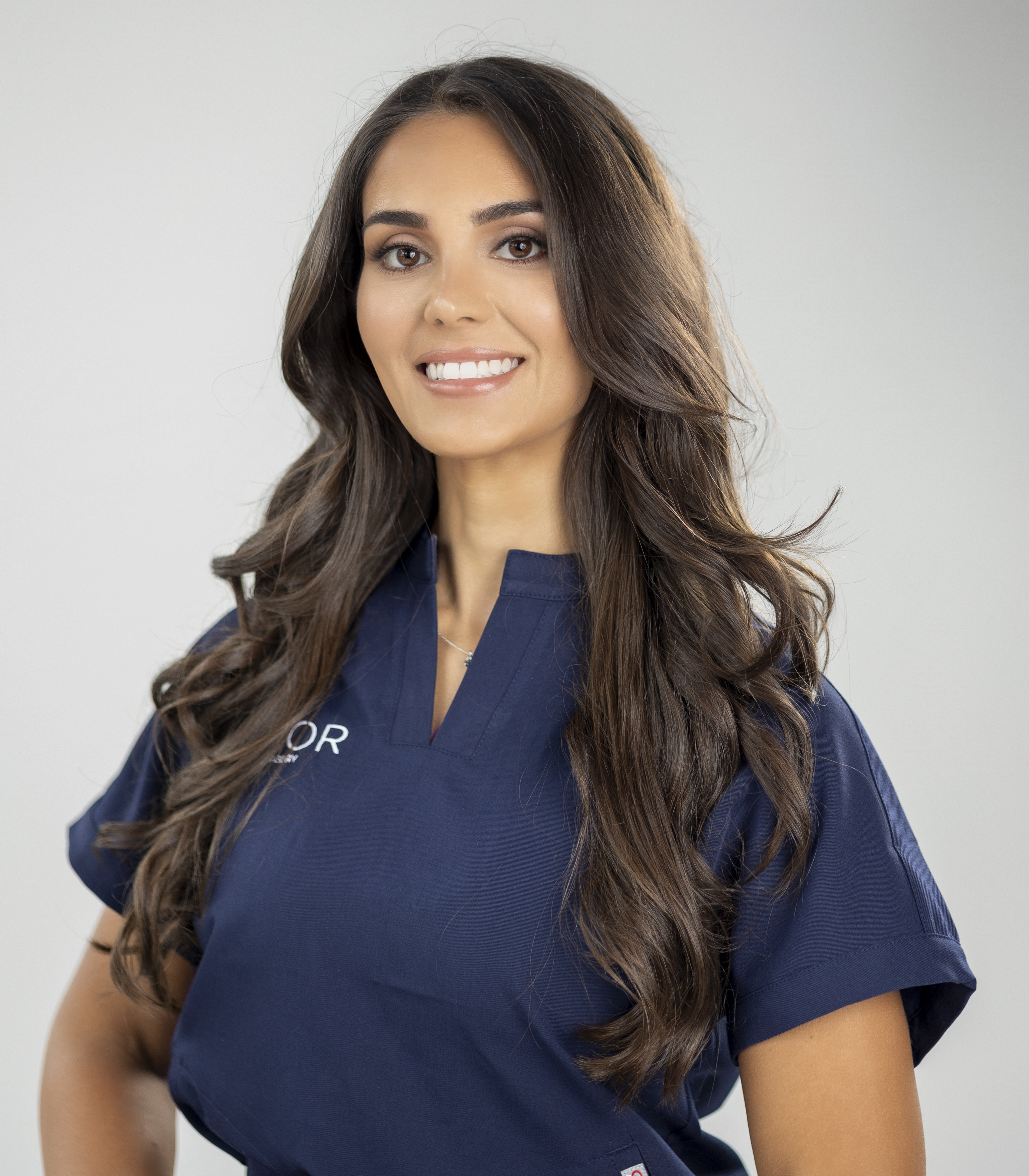
Her approach to non-surgical body enhancement centers on biostimulatory fillers such as Radiesse to create balanced, proportionate results. Safety-first protocols and deep anatomical knowledge support predictable outcomes for hip dip correction patients across the Tampa Bay area.
Mirror Plastic Surgery limits daily procedures to one or two patients, which contrasts with high-volume clinics that may treat many people each day. This structure keeps the entire team focused on your comfort, safety, and results from consultation through follow-up.
Core Concepts, Current Trends, and Key Patient Considerations
Core Concepts in Hip Dip Correction
Hip dip correction uses targeted placement of biostimulatory injectables to soften the indentation between hip and thigh. Strong results depend on understanding skeletal shape, fat distribution, and the right filler choice for each body type.
Reliable board certification checks involve ABMS, ABPS for plastic surgeons, and state medical boards. Additional aesthetic certifications signal training that goes beyond basic medical licensure.
2026 Trends in Non-Surgical Body Contouring
Current trends favor biostimulatory treatments that offer gradual, natural-looking enhancement with little downtime. Many patients now seek refined improvements that highlight their existing shape instead of dramatic transformations.
The prejuvenation movement also influences body contouring, as younger patients pursue early treatments to maintain collagen and slow volume loss.
Key Considerations Before Hip Dip Treatment
Successful hip dip correction usually involves a series of sessions spaced several weeks apart. Results appear gradually over three to six months as collagen builds, and full effects can last up to two years.
Ideal candidates hold realistic expectations, have enough tissue in the treatment area, and accept that biostimulatory fillers create progressive, not instant, changes.
Common Misconceptions About Hip Dip Fillers
Many people assume that any licensed provider can safely perform hip dip injections. Complications such as nodules, asymmetry, and overfilling often come from limited training or poor technique.
Another misconception links lower pricing with better value. High-quality biostimulatory fillers, advanced training, and extended appointment times require meaningful investment from the practice.
Some patients also expect instant, dramatic changes similar to surgery. Biostimulatory fillers instead deliver a gradual, natural enhancement that respects your underlying anatomy.
Frequently Asked Questions
How do I verify ABPS or ABMS certification for my injector?
Visit the ABMS website and use the physician verification tool by searching your provider’s last name. For plastic surgeons, confirm status through the ABPS “Find a Surgeon” database. These tools list official certification status and specialties. Always confirm active certification rather than relying on verbal claims or outdated certificates.
What if my injector is not board-certified?
Non-board-certified providers often carry a higher risk for complications, especially with complex procedures like hip dip correction. Some licensed practitioners may still have strong training, but board certification offers standardized proof of expertise. If board certification is not present, look for advanced aesthetic credentials and extensive, well-documented body contouring experience.
What’s the difference between board-certified and licensed for hip dip treatments?
State licensure grants basic legal authority to practice medicine and perform injections. Board certification shows extra, focused training in a specific medical field. For hip dip correction, board certification in plastic surgery, dermatology, or advanced aesthetic medicine signals the anatomical knowledge and injection skills needed for safe body contouring.
What questions should I ask a potential hip dip injector?
Ask about board certification, specific body contouring training, the number of hip dip procedures performed, filler types used, and the complication rates. Request before-and-after photos of similar cases, review how they manage complications, and discuss follow-up care. A qualified provider answers clearly, welcomes your questions, and supports informed decisions.
What are red flags when choosing a provider for body fillers?
Be cautious with providers who cannot verify credentials, lack a body contouring portfolio, promise “perfect” results, or pressure you to book quickly. Additional red flags include avoiding discussion of risks, working in a non-medical setting, or lacking a plan for handling complications. Trust your instincts if the interaction feels rushed or unprofessional.
Conclusion: Verify First, Then Choose Mirror for Expert Hip Dip Care
Verification of board certification and credentials forms the foundation of a safe hip dip treatment plan. The checklist in this guide helps you confirm that your injector has the training and experience needed for complex body contouring.
Mirror Plastic Surgery and Stephanie DeSimone provide a high standard of care for hip dip correction in the Tampa Bay area. Their concierge approach, combined with Stephanie’s anatomical expertise and focus on natural results, supports successful non-surgical body enhancement.
Do not compromise on safety or training when selecting your hip dip injector. Book a consultation with Stephanie today to experience personalized care that prioritizes your safety, function, and aesthetic goals.
Ready for natural, balanced hip dip correction? Book a consultation with Stephanie at Mirror Plastic Surgery for expert biostimulatory treatments tailored to your unique anatomy and vision.
Disclaimer: Individual results may vary. Consult a qualified medical provider to determine whether hip dip correction suits your needs. Sculptra and Radiesse are not FDA-approved specifically for hip dip correction; these uses are off-label. Mirror Plastic Surgery prioritizes patient safety and informed consent, so contact the practice for detailed information about risks, benefits, and expected outcomes.
