
Written by: Ellie Pranckevicius, FNP-BC, Aesthetic Nurse Practitioner & Aesthetic Injector | Facial Restoration & Regenerative Injectable Specialist, Mirror Plastic Surgery
Key Takeaways for Protecting Muscle on GLP-1s
- GLP-1 receptor agonists can cause 25–40% of total weight loss to come from lean mass unless resistance training and higher protein intake are in place.1
- Progressive resistance training 2–3 times per week can preserve up to 93% of lean mass during a GLP-1-related calorie deficit.1
- Daily protein intake of 1.2–1.6 g per kg of body weight, spread across 3–4 meals, supports muscle protein synthesis and limits lean-mass loss.
- DEXA or InBody scans at baseline, month 1, 3, and 6, plus grip-strength and chair-stand testing, allow early detection and correction of muscle decline.
- Mirror Plastic Surgery offers lab-guided, individualized GLP-1 and GLP-3R protocols to protect muscle while supporting weight-loss goals — request a protocol evaluation.
Why GLP-1 Medications Can Reduce Muscle Mass
GLP-1 receptor agonists drive weight loss primarily through appetite suppression and slowed gastric emptying, which creates a sustained caloric deficit. That deficit, not a direct drug effect on muscle tissue, causes most lean-mass reduction. In the STEP 1 trial, once-weekly semaglutide 2.4 mg produced a mean total body weight reduction of approximately 14.9% at 68 weeks, with DEXA sub-analyses showing that 30–40% of total weight loss was attributable to reductions in fat-free mass.1 A post-hoc analysis of SURMOUNT-1 showed reductions in both lean mass and fat mass with tirzepatide at week 72. A 2026 systematic review and network meta-analysis found that GLP-1RAs reduced lean mass by about 25% relative to total weight loss compared to controls. Older adults and those with baseline sarcopenia experience the steepest functional declines when no countermeasures are in place.
Strength Plan: Resistance Training to Protect Muscle on GLP-1s
Resistance training provides the most direct anabolic signal during a GLP-1-induced caloric deficit. A Sardeli 2018 meta-analysis of six RCTs1 found that resistance training three times per week during caloric restriction reduced 93.5% of the lean-body-mass loss (0.819 kg) in obese elderly individuals.
This structure works well for GLP-1 patients because it focuses on large muscle groups, progressive loading, and enough recovery to grow stronger between sessions.
- Frequency: 2–3 sessions per week, with at least 48 hours of recovery between sessions that target the same muscle group.
- Exercise selection: compound multi-joint lifts such as squat, hinge (deadlift or Romanian deadlift), horizontal press, horizontal row, and vertical pull.
- Loading: working sets in the 3–6 repetition range with progressive overload, followed by 1–2 lighter back-off sets.
- Progression: increase load by the smallest available increment once all working sets are completed with controlled form.
The Phillips et al. 2016 trial1 showed that 2.4 g of protein per kilogram of body weight per day, compared to 1.2 g, during a marked energy deficit plus intense exercise promoted greater lean-mass retention. Training and nutrition function as a single, integrated protocol rather than separate efforts.
Daily Protein Targets While Using GLP-1 Medications
The evidence-based daily protein target for adults on GLP-1 medications is 1.2–1.6 g per kilogram of body weight, with the lower end for sedentary individuals and the upper end for those performing resistance training (Phillips SM, Chevalier S, Leidy HJ, 2016, Appl Physiol Nutr Metab). For a 90 kg person, that equals 108–144 g of protein per day, which sits well above the general-population RDA of 0.8 g/kg.
Studies show that hitting these higher protein targets on GLP-1 receptor agonists reduces the share of total weight loss that comes from lean tissue. Longland 2016 demonstrated that consuming 2.4 g/kg/day during a 40% energy deficit plus high-intensity training allowed participants to gain 1.2 kg of lean mass while losing fat.1 To mirror those results, protein needs to be spaced across the day so each meal stimulates muscle protein synthesis.
Practical distribution guidelines:
- Spread intake across 3–4 meals per day.
- Target 25–40 g of protein per meal to fully stimulate muscle protein synthesis.
- Prioritize leucine-rich sources such as eggs, Greek yogurt, cottage cheese, chicken, fish, and whey protein.
- Consider creatine monohydrate and HMB as adjuncts when appetite suppression limits total food volume.
How GLP-3R and New Agents Compare for Muscle Preservation
Newer receptor agonists and adjunct compounds aim to shift more of the weight loss toward fat while sparing lean tissue. The table below highlights a key pattern: combining tirzepatide with apitegromab nearly halves lean-mass loss compared to tirzepatide alone, which can help patients who lose muscle despite following protein and training guidelines. It also compares lean-mass outcomes, functional findings, side effects, and monitoring needs across agents.
| Agent | Lean-Mass Loss (% of total weight lost) | Grip Strength / Functional Outcome | Side-Effect Profile | Monitoring Requirements |
|---|---|---|---|---|
| Semaglutide (GLP-1 RA) | ~30–40% (see STEP 1 data above) | Handgrip strength and knee extension MVC statistically unchanged at 12 weeks in a pilot trial (n=10) | GI symptoms such as nausea, vomiting, and diarrhea are common during dose escalation. | Baseline DEXA plus InBody, then repeat at months 1, 3, and 6, with leucine and albumin panels. |
| Tirzepatide (GLP-1/GIP dual agonist) | ~25–33% of total weight loss (SURMOUNT-1 DEXA subset) | Functional decline can occur without countermeasures and is preserved with resistance training. | GI symptoms similar to semaglutide, plus possible injection-site reactions. | Baseline DEXA plus InBody, then repeat at months 1, 3, and 6, with leucine and albumin panels. |
| Tirzepatide + Apitegromab (myostatin blocker) | 14.6% of total weight loss vs. 30.2% with tirzepatide + placebo (2026 Nature Medicine phase 2 trial, n=102, 24 weeks) | 1.9 kg more lean mass preserved vs. placebo, representing 54.9% greater lean-mass retention | Adverse-event rates were similar with apitegromab and placebo. | Baseline DEXA, then repeat at months 1, 3, and 6, plus myostatin-pathway labs and ongoing prescriber oversight. |
| GLP-3R Compounding | Reported to be less likely to cause muscle wasting than older GLP formulations, with head-to-head DEXA data still pending. | Functional outcomes tracked with grip strength and chair-stand testing at each monitoring visit. | Fewer GI symptoms reported compared with older GLP-1 formulations, with broader indications including insulin resistance and cardiovascular risk factors. | Baseline DEXA or InBody plus lab panel, then repeat at months 1, 2, 3, and 6 with concierge oversight. |
Note: The apitegromab–tirzepatide trial excluded individuals with diabetes, which limits generalizability. GLP-3R compounding at Mirror Plastic Surgery is supervised and sourced from batch-tested providers.
Book an appointment to discuss whether GLP-3R compounding fits your body composition goals.
Lab Monitoring and Strength Metrics That Keep Muscle on Track
Body weight alone cannot distinguish fat loss from muscle loss. DEXA scanning is the gold-standard tool for tracking body composition changes in GLP-1 patients because it precisely measures fat mass, lean mass, regional lean mass, visceral adipose tissue, and bone mineral density.
The recommended monitoring schedule follows this cadence:
- Baseline: DEXA or InBody scan, grip-strength test, chair-stand test, and full metabolic lab panel before or at the start of therapy.
- Month 1: InBody scan and grip-strength recheck, with protein or training adjustments if skeletal muscle mass drops more than 0.5 kg.
- Month 2: InBody scan plus leucine, albumin, and prealbumin labs.
- Month 3: DEXA scan, full lab panel, and functional strength reassessment.
- Month 6: Comprehensive DEXA review comparing all parameters to baseline.
Key action thresholds work together to flag problems early and guide adjustments. The first warning sign is a month-over-month lean-mass drop exceeding 5% on DEXA, which calls for a 10–15 g/day protein increase and 1–2 additional resistance training sessions to slow the decline. If phase angle also drops more than 0.3° between scans, that suggests a deeper issue with cellular health, so clinicians review protein intake, training load, and possible inflammatory conditions. Throughout this process, leucine should stay above 150 µmol/L to confirm that protein is available at the cellular level for muscle synthesis.
Timeline for Regaining Muscle After GLP-1 Therapy
Muscle lost during GLP-1 therapy can be rebuilt. A landmark study in Proceedings of the National Academy of Sciences and a 2019 review in Frontiers in Physiology established that myonuclei persist in muscle fibres after atrophy, which enables faster regrowth during retraining via muscle memory. Because of this cellular advantage, patients who lose muscle on GLP-1 therapy often regain strength faster than they initially built it.
Many individuals can recover a substantial portion of lost strength within weeks of consistent retraining and higher protein intake after GLP-1-associated muscle loss, with full lean-mass restoration typically occurring over several months.1 A 2025 case series published in SAGE Open Medicine documented three patients on semaglutide or tirzepatide who combined resistance training 3–5 days per week with high protein intake: one increased lean soft tissue by 2.5% while losing 26.8% body weight; another increased lean soft tissue by 5.8% while losing 13.2% body weight.1 These outcomes occurred under supervised, lab-guided care rather than unsupervised self-administration.
Risks of Buying Peptides Online Without Supervision
The online peptide market carries risks that supervised clinical care avoids. Without batch testing, a product labeled as a GLP-1 or GLP-3R compound may contain incorrect concentrations, undisclosed contaminants, or no active ingredient at all. No one adjusts the dose based on body composition data, and no practitioner screens for contraindications from pre-existing conditions or current medications.
Mirror Plastic Surgery uses a different model. All peptides come from reputable providers with documented batch testing. Each patient’s medical history and lab results are reviewed before starting any protocol, dosing is adjusted based on objective monitoring data, and direct text communication remains available throughout the patient’s course of care. This level of oversight separates medical treatment from anonymous online purchasing.
Start with a lab review and personalized protocol design.
Meet Your Peptide and Aesthetics Practitioner
The lead practitioner for peptide therapies and non-surgical aesthetics holds a Bachelor’s in Health Science from Boston University and a Master’s in Nursing from the University of South Florida. She spent four years in the Neuroscience ICU at Tampa General Hospital managing complex patients, which built a deep, practical understanding of metabolic physiology and the body’s capacity for recovery. Her background as a licensed esthetician, combined with advanced nursing credentials, allows her to connect aesthetic goals with the clinical science required to reach them safely.
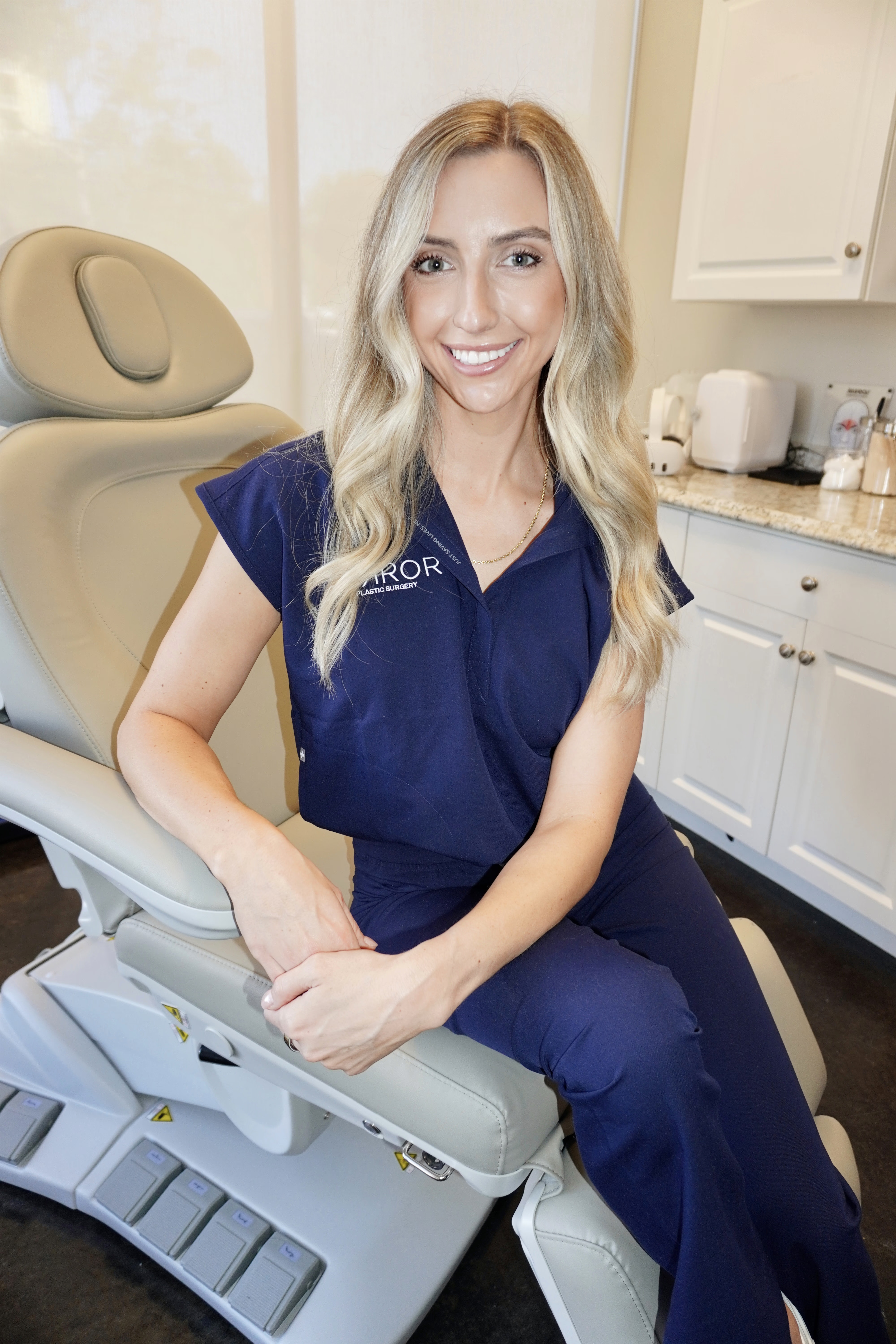
Her approach centers on education and transparency. She explains the physiology behind every recommendation in plain language, tells patients when a therapy is not yet necessary, and builds protocols around individual lab results rather than one-size-fits-all templates.
Frequently Asked Questions
Are GLP-1 and GLP-3R peptides FDA-approved?
FDA-approved GLP-1 receptor agonists such as semaglutide and tirzepatide are regulated prescription medications. GLP-3R compounding and many peptide therapies fall outside FDA regulation. The main risk comes from obtaining them through unregulated sources without medical supervision. At Mirror Plastic Surgery, every peptide is sourced from providers with rigorous batch testing, and therapy begins only after a thorough consultation and lab review with Ellie Pranckevicius.
Can I build muscle while on a GLP-1 medication?
Yes. The 2025 SAGE Open Medicine case series documented patients who increased lean soft tissue while losing significant total body weight on semaglutide or tirzepatide by combining resistance training 3–5 days per week with protein intakes in the 1.6–2.0 g/kg/day range.1 Building muscle during GLP-1 therapy requires a structured resistance training plan, consistent protein distribution across meals, and objective body composition monitoring to catch and correct any lean-mass decline early.
What happens if I stop taking GLP-1 or GLP-3R peptides?
Stopping peptide therapy without a maintenance plan usually brings a gradual return of appetite, potential weight regain, and loss of some metabolic benefits achieved during treatment. Muscle mass preserved or built during therapy can be maintained with ongoing resistance training and adequate protein intake. Mirror Plastic Surgery designs transition and maintenance protocols for patients who discontinue active therapy so results are sustained rather than reversed.
How is Mirror Plastic Surgery different from online peptide sources or high-volume clinics?
Mirror Plastic Surgery limits itself to one to two procedures or consultations per day, which allows up to an hour of dedicated time for each patient. Every peptide protocol follows a comprehensive lab panel, aligns with individual physiology, and is monitored with DEXA or InBody scans at defined intervals. Patients have direct text access throughout their protocol. This approach contrasts with online retailers that ship compounds without medical screening and with high-volume clinics that may not have capacity for individualized, ongoing oversight.
Will everyone see the same results with GLP-3R or GLP-1 therapy?
No. Outcomes vary based on genetics, baseline body composition, adherence to protein targets, training consistency, age, and the specific peptide protocol used. This variation makes a personalized approach essential. Mirror Plastic Surgery’s evaluation process, which includes medical history, lab results, and body composition baseline, exists to create a protocol calibrated to each patient’s physiology rather than a standardized template.
Conclusion: Choosing a Safe, Muscle-Protective GLP Path
GLP-1 muscle loss is a real and measurable risk, yet it does not have to define your outcome. Evidence shows that a substantial portion of total weight loss on GLP-1 receptor agonists can come from lean mass when no countermeasures are in place, and that this proportion drops when patients follow supervised protein targets, progressive resistance training, and regular body composition monitoring. Newer options such as GLP-3R compounding add tools for patients who experience significant lean-mass loss or GI side effects on standard formulations. The quality of oversight often separates strong results from disappointing ones, with lab-guided, individualized care outperforming unsupervised self-administration.
Mirror Plastic Surgery’s concierge model supports this level of nuanced, ongoing management. Ellie Pranckevicius brings neuroscience ICU clinical depth and aesthetic expertise to every peptide consultation, and each protocol is backed by objective data from the first appointment forward.
1 Results may vary from person to person. Editorial content, before and after images, and patient testimonials do not constitute a guarantee of specific results.
Peptide therapy is intended for wellness and optimization purposes and is not prescribed to diagnose, treat, cure, or prevent disease unless specifically stated. Many peptides are not FDA-approved and may be used off-label. Some have limited long-term safety data, with a potential for unknown risks, complications, or desensitization with prolonged use.