
Written by: Dr. Akash Chandawarkar, Board Certified Plastic Surgeon, Mirror Plastic Surgery
Key Takeaways
- Collagen production declines about 1% per year after age 30, so targeted peptide therapy can help restore skin density and barrier function.1
- A legitimate peptide consultation includes a full medical history, baseline labs, contraindication screening, and a personalized protocol.
- Only licensed physicians (MD/DO) or qualified nurse practitioners in certain states can prescribe peptides; estheticians and RNs without delegation cannot administer injectable peptides.
- Results require consistent use. Elasticity and barrier improvements typically appear at 12 weeks, with GHK-Cu benefits often visible in 4–8 weeks.1
- Schedule a physician-supervised consultation at Mirror Plastic Surgery to receive evidence-based peptide care tailored to your skin-health goals.
What Happens During A Peptide Consultation For Skin Health?
A legitimate consultation for peptides to improve skin health follows a structured clinical sequence. At Mirror Plastic Surgery, this consultation runs 30–60 minutes with Dr. Akash Chandawarkar directly. The seven steps below reflect what that process involves.
- Comprehensive Medical History Review And Goal Setting. The physician reviews your current health status, prior diagnoses, medications, supplements, and the specific skin concerns driving the visit.
- Lab Testing And Review. Thyroid, liver, kidney, diabetes markers, and hormone panels are reviewed. If labs are not already available, they are ordered before any protocol begins.
- Contraindication Screening. The physician screens for active cancer, pregnancy, breastfeeding, copper metabolism disorders for GHK-Cu, uncontrolled cardiovascular disease, and relevant medication interactions before prescribing any peptide.
- Delivery-Method Selection. Topical, oral, or injectable routes are selected based on the specific skin concern, the peptide’s pharmacokinetics, and your physiology and comfort with self-administration.
- Custom Protocol And Peptide Stack Design. The physician designs a personalized protocol. This may include individual peptides or combinations such as the Glow Stack (GHK-Cu, BPC-157, TB-500) based on labs, goals, and clinical findings.
- Administration Training. You receive clear reconstitution instructions, syringe selection guidance, injection site rotation technique, and storage requirements. Many patients also receive video demonstrations.
- Ongoing Monitoring And Follow-Up. Lab markers are rechecked at defined intervals, dosing is adjusted based on response, and the physician remains accessible for questions throughout the protocol.
No step in this sequence is optional. Skipping lab review, contraindication screening, or follow-up monitoring turns a medical protocol into a retail transaction.
Who Can Prescribe Peptides For Skin?
Because many peptides are not FDA-regulated, the prescriber’s credentials and the quality of clinical oversight matter even more. Physicians (MD/DO) hold full prescribing authority in all 50 states for any legally available substance, including off-label use that meets standard-of-care requirements. Nurse practitioners hold full independent practice authority in 28 states plus Washington, D.C. In all other states, NPs require a collaborative or supervisory agreement with a physician. Physician assistant prescribing authority is state-specific. Registered nurses cannot prescribe peptides and must operate under a delegation framework that requires a patient-specific order from a licensed prescriber before administering any injectable peptide. Estheticians and cosmetologists cannot administer peptide treatments via injection in any state.
When evaluating a provider, verify four things: board certification, personal lab review before any protocol, formal contraindication screening, and ongoing monitoring instead of a one-time sale. These criteria define physician-supervised care for peptide therapy.
Who Is Dr. Akash Chandawarkar?
Dr. Akash Chandawarkar, MD, is the founder of Mirror Plastic Surgery and the lead physician for all peptide therapies at the practice. He is board certified by the American Board of Plastic Surgery and graduated with Honors from Harvard Medical School through the Harvard-MIT Division of Health Sciences and Technology. His clinical training included a seven-year integrated plastic and reconstructive surgery residency at Johns Hopkins University, followed by fellowship training in aesthetic surgery at Manhattan Eye Ear & Throat Hospital (MEETH)/Lenox Hill Hospital. He also completed the Stanford University Biodesign Innovation Fellowship, a program that trains physician-innovators to identify unmet clinical needs and develop technological solutions. Every peptide protocol at Mirror Plastic Surgery is designed and supervised by Dr. Chandawarkar personally.
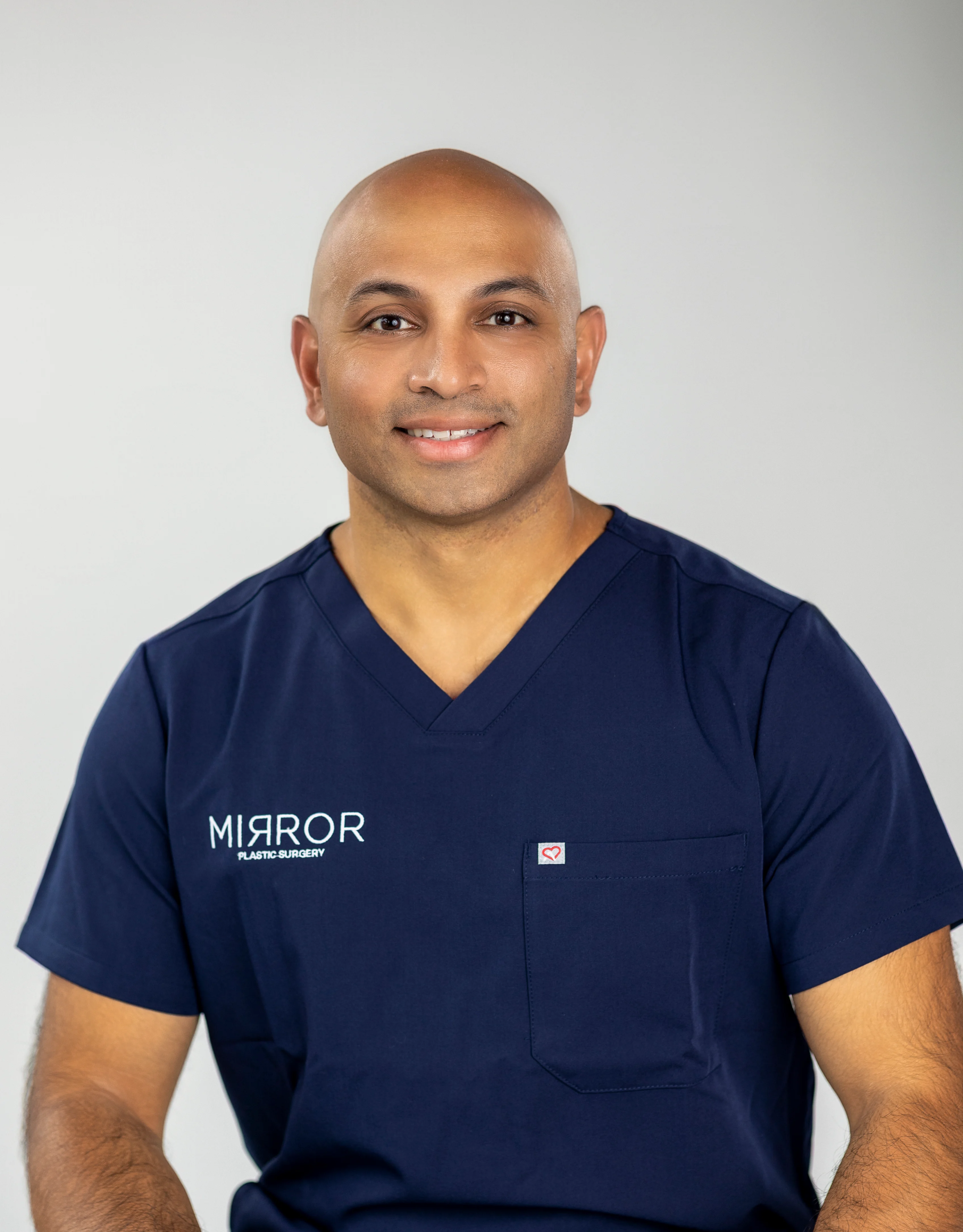
Credentials determine who can prescribe, and the labs they order determine whether a protocol is safe to start. The next section explains what a responsible baseline panel includes.
What Labs Are Ordered Before Peptide Therapy?
A responsible baseline panel before initiating peptide therapy for skin health includes thyroid function, liver enzymes, kidney markers, diabetes markers, and a hormone panel. Each category serves a specific clinical purpose.
- Thyroid Panel (TSH, Free T3, Free T4). GH stimulation can accelerate the conversion of T4 to active T3, sometimes unmasking subclinical hypothyroidism that would otherwise blunt treatment response. Thyroid status also directly influences collagen synthesis and skin aging.
- Liver Enzymes (ALT, AST). Active liver disease or significantly elevated enzymes are a relative contraindication. Liver function governs peptide clearance and safe dosing.
- Kidney Markers (eGFR, Creatinine). An eGFR below 60 mL/min/1.73m² warrants specialist input before initiating any peptide protocol. Renal function affects clearance rates.
- Diabetes Markers (Fasting Glucose, Fasting Insulin, HbA1c). Fasting insulin is one of the most valuable metabolic markers available. Elevated insulin with normal glucose is the earliest sign of insulin resistance, and it directly informs safe dosing decisions.
- Hormone Panel. Testosterone, estrogen, DHEA, and cortisol levels inform collagen and skin-aging protocols. They also identify hormonal drivers that may need to be addressed alongside peptide therapy.
At Mirror Plastic Surgery, labs are reviewed during the consultation itself. If a patient does not have recent results, labs are ordered before any protocol begins. Any provider who suggests starting peptide therapy without baseline labs is skipping a critical safety step.
Topical Vs. Oral Vs. Injectable Peptides For Skin
Delivery route is a clinical decision based on the peptide’s pharmacokinetics, the skin concern being addressed, and the patient’s physiology. The evidence base differs meaningfully across routes.
For topical delivery, the 2026 Renke and Chinellato narrative review in the International Journal of Molecular Sciences notes that topical peptides are generally non-toxic and non-irritating for most people, with minimal systemic absorption through intact skin. The American Academy of Dermatology identifies sunscreen and moisturizer as the two most effective anti-aging products and recommends daily use of a broad-spectrum sunscreen with an SPF of 30 or higher.
For oral collagen peptides, a 2026 systematic review and meta-analysis by Batool et al. published in the Journal of Cosmetic Dermatology pooled 35 randomized controlled trials with 2,534 participants. It found statistically significant improvements in skin hydration, elasticity, and barrier function1, with the elasticity benefit emerging specifically in the Week 12 subgroup. Evidence for wrinkle reduction and dermal densification remains limited and inconsistent. After removing a high-leverage outlier, the corrected pooled effect for wrinkles was negligible and statistically indistinguishable from placebo.
For injectable peptides, most peptides are not orally stable because digestive enzymes degrade them, so subcutaneous injection is the predominant route for systemic effect. Injectable peptides such as GHK-Cu, and stacks like the Glow Stack (GHK-Cu, BPC-157, TB-500), are used at Mirror Plastic Surgery for collagen and elastin production, melasma, and systemic inflammation. Route selection depends on the individual’s labs, goals, and physiology.
How Long Does It Take For Peptides To Improve Skin?
Timelines vary by peptide, delivery route, and individual physiology. Some clients report early changes within days, while collagen and skin-quality changes require longer, consistent use.
In the 2026 Batool et al. meta-analysis, elasticity and barrier improvements required at least 12 weeks of supplementation. The same analysis found no significant benefit at Weeks 4 or 8. For GHK-Cu specifically, skin improvements become evident after 4–8 weeks of consistent use.1
Individual variation is the norm. Genetics, diet, lifestyle, and protocol adherence all influence outcomes. Maintenance protocols are typically needed to sustain benefits, and stopping peptide therapy produces a gradual return toward baseline.
What Are The Downsides Of Peptide Therapy For Skin?
Contraindications and limitations exist and must be addressed honestly before any protocol begins.
Active cancer is a primary concern for growth-hormone-axis peptides, because GH signaling intersects with cell-growth pathways and increasing GH/IGF-1 in a patient with active malignancy could theoretically affect tumor biology. Pregnancy and breastfeeding are contraindications across peptide classes, since no therapeutic peptide currently offered has adequate pregnancy safety data. GHK-Cu is contraindicated in patients with Wilson’s disease or copper metabolism disorders. Medication interactions, particularly with immunosuppressants, diabetic medications, and nitric oxide-modulating drugs, require a thorough medication reconciliation before any protocol begins.
The risks of unsupervised use compound these clinical concerns. Without physician oversight, there is no third-party testing for product quality, no screening for pre-existing conditions, and no individualized dosing. A 2024 market-surveillance study by Ashraf et al. published in the Journal of Medical Internet Research made test purchases from six illegal online pharmacies and found every delivered sample severely substandard, with products labeled “99% purity” measuring at 14.37%, 8.97%, and 7.7% actual purity and bacterial endotoxin present in all samples.
Medically Supervised Peptides Vs. Online Peptide Sellers
The difference between supervised and unsupervised peptide use centers on four areas: lab review, sourcing, dosing, and follow-up. The table below shows how each side handles them.
| Attribute | Physician-Supervised Consultation | Online Peptide Seller |
|---|---|---|
| Lab Review And Contraindication Screening | Thyroid, liver, kidney, diabetes markers, and hormone panels reviewed or ordered before protocol initiation. Contraindications formally screened per established clinical guidance. | No lab review, no contraindication screening, and no medical consultation to review health history. |
| Sourcing And Batch Testing | Peptides sourced from licensed 503A/503B compounding pharmacies with third-party certificates of analysis per FDA compounding framework requirements. | Independent testing shows products labeled “99% purity” can measure as low as single-digit actual purity, with contamination risks. |
| Dosing And Personalization | Protocol designed around individual labs, physiology, and goals. Delivery route selected based on clinical assessment. | One-size-fits-all dosing. Some peptides safe at therapeutic doses become dangerous at the higher doses frequently recommended in online communities. |
| Ongoing Monitoring And Physician Access | Follow-up labs at defined intervals and direct physician access for questions, dose adjustments, and refills. Follow-up monitoring is essential for safety and dose optimization. | No follow-up, no clinical monitoring, and no physician available if an adverse reaction occurs. |
Mirror Plastic Surgery sources peptides from reputable providers with rigorous batch testing and provides concierge support throughout the protocol, including direct text access to Dr. Akash Chandawarkar for questions and refill requests.
Do Dermatologists And Plastic Surgeons Recommend Peptides?
Some peptides have promising evidence for skin health, while others remain less established. Recommendations depend on the specific peptide, the delivery route, and the patient’s health profile. Board-certified plastic surgeons and dermatologists who offer peptides typically do so with lab review and monitoring, which is the same framework that separates clinical care from retail wellness.
Dr. Akash Chandawarkar’s approach is explicitly educational and evidence-based. He tells clients when a service is not yet necessary for them and prioritizes long-term outcomes over short-term revenue. That orientation toward informed decision-making rather than protocol sales reflects a physician-authored recommendation in practice.
Common Misconceptions About Peptide Therapy
Several widespread misunderstandings shape how people approach peptide therapy for skin.
- Peptides Are Only For Weight Loss. GLP-1 receptor agonists are the most publicly visible peptides, but the class is far broader. Peptides are used for inflammation management, collagen and elastin production, hair and nail health, energy, anxiety, and post-surgical recovery. Skin health is a primary application.
- Buying Peptides Online Equals A Physician-Supervised Protocol. Research chemicals sold online are different from peptides prescribed by a medical provider and compounded by a licensed pharmacy. They may share the same name but are regulated, sourced, and tested in completely different ways.
Frequently Asked Questions
Are Peptides FDA-Approved?
Many peptides used in skin health and wellness protocols are not FDA-approved drugs. Some, like semaglutide and tirzepatide, are FDA-approved for specific indications. Others, including GHK-Cu, BPC-157, and TB-500, are not on any final approved compounding list, though several are scheduled for Pharmacy Compounding Advisory Committee review. The absence of FDA approval does not mean a peptide is ineffective. It means the quality of sourcing and the rigor of medical oversight become the primary safety variables. At Mirror Plastic Surgery, peptides are sourced from providers with rigorous batch testing, and every protocol is medically supervised.
What Are The Risks Of Using Peptides Without Supervision?
The primary risks of unsupervised peptide use are product quality and clinical unsuitability. Without physician oversight, there is no third-party testing to confirm what is actually in the vial, no screening for pre-existing conditions that may make a specific peptide dangerous, and no individualized dosing. As noted earlier, independent testing of grey-market products has shown purity can fall to single-digit percentages despite “99%” labels. Beyond product quality, self-administering a peptide without contraindication screening, such as using a growth-hormone-axis peptide without cancer screening or GHK-Cu without ruling out copper metabolism disorders, carries clinical risks that online forums cannot mitigate.
What Happens If I Stop Taking Peptides?
If peptide therapy is discontinued, the effects gradually diminish, similar to stopping any health regimen. For skin-focused protocols, collagen and elastin support from peptides like GHK-Cu tapers off, and the underlying aging processes resume. For inflammation-targeted protocols, inflammation is likely to return toward its prior baseline. Maintenance protocols are typically needed to sustain benefits. Stopping should occur with physician guidance, because some peptides require tapering rather than abrupt discontinuation.
Will Everyone See The Same Results?
Results from peptide therapy vary significantly from person to person.1 Genetics, diet, lifestyle, baseline lab values, the specific peptides used, the delivery route, and protocol adherence all influence outcomes. The 2026 Batool et al. meta-analysis found substantial heterogeneity in response even within controlled trial populations, with I² values above 90% for elasticity and barrier function outcomes. This level of variability explains why a personalized protocol built around individual labs and physiology produces different outcomes than a one-size-fits-all approach.
Can Peptides Help With Melasma And Collagen Loss?
GHK-Cu is used at Mirror Plastic Surgery specifically for collagen and elastin production and for melasma, both individually and as part of the Glow Stack (GHK-Cu, BPC-157, TB-500). The evidence base for GHK-Cu in skin remodeling includes controlled studies documenting measurable increases in skin thickness and dermal collagen density, reductions in fine lines, and improvements in wound healing relative to placebo1. For collagen loss more broadly, oral hydrolyzed collagen peptides have demonstrated statistically significant improvements in skin hydration and elasticity in the 2026 meta-analysis of 35 RCTs, with the elasticity benefit emerging in the Week 12 subgroup. Evidence for macroscopic wrinkle reduction remains inconsistent. Whether injectable, topical, or oral delivery is appropriate depends on your labs, the severity of the concern, and your clinical profile, which are all reviewed during the consultation.
Do I Need Labs Before Starting?
Yes. Labs serve two functions: confirming candidacy by ruling out contraindications and establishing the biomarkers that will be tracked to measure whether therapy is working. Any provider who initiates a peptide protocol without reviewing or ordering baseline labs is skipping a foundational safety step. At Mirror Plastic Surgery, labs are reviewed during the consultation. If a patient does not have recent results, they are ordered before any protocol begins.
Conclusion: Why The Consultation Is The Treatment
For anyone considering peptides to improve skin health, understanding what a legitimate consultation involves is the central question. Because many peptides are not FDA-regulated, the quality of medical oversight is the single biggest determinant of both safety and results. A real consultation includes a full medical history, specific lab panels, contraindication screening, delivery-route selection, custom protocol design, administration training, and ongoing monitoring.
Those answers all point to the same conclusion: the consultation itself functions as the treatment plan. Mirror Plastic Surgery’s concierge consultation with Dr. Akash Chandawarkar in St. Petersburg/Tampa, available in person and via telehealth nationally, is built around that standard of care. From inflammation and autoimmune conditions to weight management and anti-aging, Mirror Plastic Surgery offers advanced peptide therapies that address a wide range of health and wellness concerns. Schedule a consultation to explore how tailored peptide protocols can support your skin and overall health goals.
Disclaimer: Many peptides are not FDA-regulated. Results vary by individual. Professional medical supervision is important before initiating any peptide protocol. This article is educational in nature and does not constitute medical advice.
1 Results may vary from person to person. Editorial content, before and after images, and patient testimonials do not constitute a guarantee of specific results.
Peptide therapy is intended for wellness and optimization purposes and is not prescribed to diagnose, treat, cure, or prevent disease unless specifically stated. Many peptides are not FDA-approved and may be used off-label. Some have limited long-term safety data, with a potential for unknown risks, complications, or desensitization with prolonged use.