
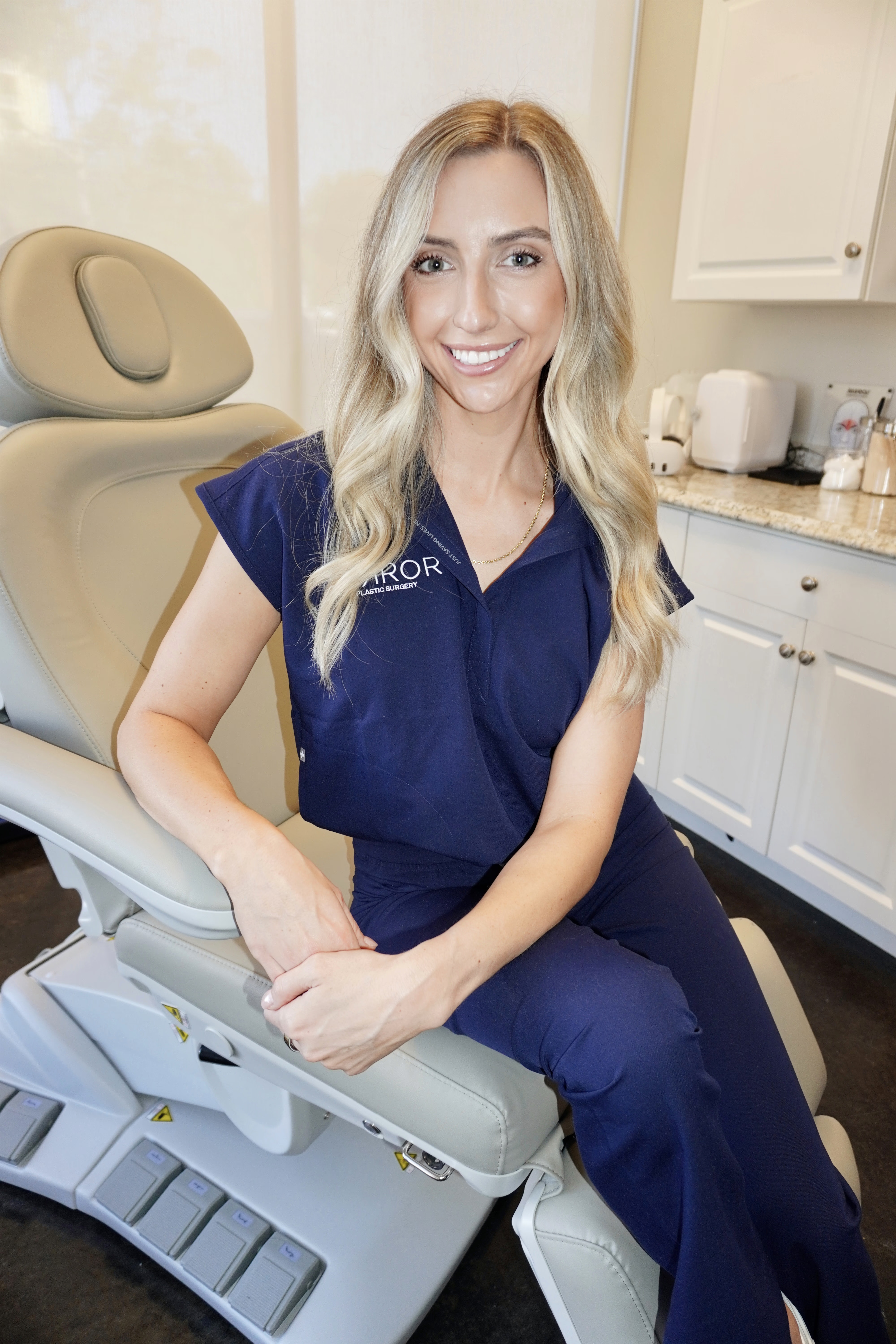
Written by: Ellie Pranckevicius, FNP-BC, Aesthetic Nurse Practitioner & Aesthetic Injector | Facial Restoration & Regenerative Injectable Specialist, Mirror Plastic Surgery
Key Takeaways on GLP-1 Injection Pain
-
GLP-1 injection pain is usually mild and brief, and good technique and preparation can reduce it further.1
-
Simple steps help most patients: warm the medication to room temperature, let alcohol dry, rotate sites, use fresh needles, and inject at the right angle and depth.1
-
Persistent pain, nodules, or allodynia often come from reusing the same site and should be evaluated by a clinician.
-
Site choice affects comfort and absorption. The abdomen is usually most comfortable, with the thigh and upper arm as alternatives based on access and body type.
-
Patients with ongoing discomfort may benefit from newer peptide formulations under medical supervision.1 Schedule a consultation at Mirror Plastic Surgery to explore personalized options.
Why GLP-1 Injections Can Hurt
GLP-1 injection pain is one of the most common tolerability concerns among patients using semaglutide, tirzepatide, and related receptor agonists. The discomfort comes from both how the body senses pain and how the injection is performed. Subcutaneous tissue contains nociceptors, or pain-sensing nerve fibers, that react to needle insertion, the pH and temperature of the solution, and mechanical disruption of the tissue.
Technique also matters. Cold medication, wet alcohol on the skin, a dull or reused needle, and repeated injections into the same spot all heighten the pain signal. Injection site reactions can occur with GLP-1 receptor agonists, so clear technique education often becomes one of the most effective ways to improve comfort. The following steps translate that education into practical actions you can use right away.
Step-by-Step Ways to Make GLP-1 Injections Hurt Less
The steps below address the main technical causes of GLP-1 injection site pain and offer specific ways to reduce discomfort.
-
Bring medication to room temperature. Remove the pen or vial from the refrigerator 20–30 minutes before injection. Cold solution feels sharper and moves more slowly through the needle. It also stimulates cold-sensitive nociceptors. If time is tight, hold the pen in your palm for 5–10 minutes as a quick warm-up.
-
Let alcohol dry completely. After swabbing the skin, wait a full 30 seconds before inserting the needle. Wet alcohol pushed under the skin causes a sharp, chemical sting that you can easily avoid by waiting.
-
Rotate injection sites in a consistent pattern. Rotating among the abdomen, thigh, and upper arm reduces injection site reactions for GLP-1 receptor agonists. Use a simple mental grid. Divide each zone into quadrants and move clockwise each week so no small area is overused.
-
Apply a cold compress beforehand. A clean ice pack or chilled gel pack held against the site for about 60 seconds numbs superficial nerve endings. This reduces the sting without affecting how the medication absorbs. Remove the pack, let the skin return to a neutral temperature, then inject.
-
Use a fresh needle every time. Needle tips develop microscopic barbs after just one use. A fresh needle passes through tissue more cleanly and feels smoother. A reused needle drags, which increases pain and the risk of local tissue trauma.
-
Insert at the correct angle and depth. For most adults, a 90-degree angle with a 4–6 mm needle reaches the subcutaneous layer without entering muscle. Injecting too shallowly places medication within the skin itself and can create a raised, painful bleb. Injecting too deeply can reach muscle, which is more vascular and more sensitive.
Allodynia and Post-Injection Nodules at GLP-1 Sites
A subset of patients on long-term GLP-1 therapy develop allodynia from semaglutide or related agents. In allodynia, normally non-painful contact, such as light clothing or gentle pressure, causes pain at previously injected sites. This pattern differs from brief injection pain and often reflects sensitized local nociceptors or early lipohypertrophy.
Post-injection nodules are firm, palpable lumps under the skin that form when medication is repeatedly placed in the same small area. The tissue responds by forming fibrous changes. Strict site rotation usually allows both allodynia and nodules to improve over time. Persistent or worsening changes should be evaluated to rule out infection or granuloma formation.
How Injection Site Choice Affects GLP-1 Pain
The abdomen is often the most comfortable and practical of the three approved subcutaneous sites. It is easy to see and reach, which supports consistent technique. The periumbilical zone, within about two inches of the navel, should be avoided because the skin there is thinner and more densely supplied with nerves. The outer thigh offers a broad surface area for rotation and works well for patients who dislike abdominal injections, although absorption can be slightly slower.
The upper arm, specifically the posterior mid-deltoid region, is the least accessible for self-injection and works best when another person gives the dose. In patients with low body fat, this area carries a higher risk of accidental intramuscular injection. For most people, comfort and absorption together make the abdomen the first-choice site, with the thigh as a dependable backup.
Injection Reactions That Need Medical Attention
Certain symptoms go beyond expected GLP-1 injection site pain and require prompt clinical evaluation.
-
Redness, warmth, or swelling that spreads more than 2–3 cm from the injection site or worsens after 48 hours
-
Purulent discharge or open skin breakdown at the site
-
Fever together with local site changes, which may signal cellulitis or an abscess
-
A firm, enlarging nodule that does not improve after avoiding that site for at least four weeks
-
Spreading pain, numbness, or tingling that extends beyond the immediate injection area
-
Severe allergic symptoms such as hives, throat tightness, or difficulty breathing after injection
Any of these findings should prompt you to stop injecting into the affected site and contact a qualified provider the same day.
When Newer Peptide Formulations May Help
Some patients continue to experience GLP-1 injection site pain even after improving technique. Others develop recurrent nodules or allodynia that interfere with treatment. These situations may call for a discussion about newer-generation peptide formulations. GLP-3R compounding represents one such option.
It is a newer peptide with a similar mechanism to GLP-1 and is reported to have fewer side effects, a lower likelihood of muscle loss, and broader indications that include insulin resistance, weight management, and cardiovascular risk factors.1 Because these formulations are not FDA-regulated, the quality of sourcing and the rigor of clinical oversight strongly influence both safety and results.
At Mirror Plastic Surgery in St. Petersburg, Florida, peptide therapies are led by Ellie Pranckevicius, FNP-BC, a board-certified Family Nurse Practitioner. She holds a Bachelor’s in Health Science from Boston University and a Master’s in Nursing from the University of South Florida.
Her four years of critical-care experience in the Neuroscience ICU at Tampa General Hospital inform her approach to safety and monitoring. Ellie’s combined background in esthetics and advanced clinical nursing supports a detailed understanding of both the metabolic mechanisms behind GLP-1 therapies and the patient-experience factors, including injection discomfort, that affect long-term adherence.
Schedule a consultation to discuss whether a newer peptide formulation fits your health profile.
How Ellie Evaluates GLP-1 and GLP-3R Options
Choosing between a standard GLP-1 prescription, a compounded newer-generation formulation, or a broader peptide protocol involves several connected clinical steps. First, a detailed medical history helps identify contraindications such as a personal or family history of medullary thyroid carcinoma, pancreatitis, or relevant autoimmune conditions. These factors can rule out certain medications entirely. Once contraindications are addressed, lab-guided protocols that include thyroid, liver, kidney, diabetes markers, and hormone panels establish a baseline.
These results guide dosing and allow objective tracking of your response over time. As noted earlier, quality sourcing remains non-negotiable when considering any compounded formulation. Supervised concierge care, where a clinician reviews labs, adjusts dosing, and stays available between appointments, offers a very different level of safety than unsupervised online purchasing, where these safeguards are absent.
Practical Checklists for GLP-1 Users
Pre-injection checklist:
-
Medication at room temperature for at least 20 minutes
-
Fresh needle attached immediately before use
-
Injection site chosen from your rotation schedule and not used in the past week
-
Skin swabbed and alcohol completely dry before needle insertion
-
Optional cold compress applied briefly and removed before injection
Post-injection monitoring:
-
Note any redness, swelling, or nodule formation and record which site you used
-
Watch for systemic symptoms such as nausea, dizziness, or allergic reactions for about 30 minutes
-
Flag any site that stays tender or firm longer than 72 hours
Questions to ask any provider:
-
What labs will you review before starting or changing my protocol?
-
How do you source your peptides, and is batch testing documentation available?
-
What is your plan if I develop persistent injection site reactions?
-
Are newer formulations such as GLP-3R appropriate for my goals?
Peptide therapies, including GLP-1 and GLP-3R options, intersect with broader metabolic health goals such as managing chronic inflammation, supporting post-surgical recovery, and improving long-term body composition. A supervised, lab-guided protocol that reflects your individual physiology, current medications, and lab markers produces more reliable outcomes than a self-directed regimen.1
Start your personalized protocol to receive a lab-guided approach and ongoing concierge support throughout your therapy.
Frequently Asked Questions
Is GLP-1 injection pain normal, and how long does it typically last?
A brief pinch or sting at the moment of injection is a normal response and usually fades within minutes. Mild tenderness or a small red mark can last for a few hours. Pain that continues longer than 48 hours, spreads beyond the injection site, or appears with swelling and warmth is not typical and should be evaluated by a clinician.
Can I use the same injection site every time to reduce pain?
Using the same site repeatedly does not reduce pain and increases the risk of lipohypertrophy. Lipohypertrophy is a buildup of fibrous fatty tissue that impairs medication absorption and can cause persistent nodules and allodynia. Systematic rotation across multiple sites within each anatomical zone supports both comfort and consistent drug delivery.
What is the difference between supervised peptide therapy and buying GLP-1 products online?
Supervised therapy includes a clinical review of your medical history and labs, sourcing from suppliers with documented batch testing, individualized dosing, and ongoing monitoring for side effects and response. Unsupervised online purchasing offers none of these protections. Without third-party quality testing, the actual peptide content of an online product remains unknown. Without a clinical assessment, contraindications such as a personal history of pancreatitis or thyroid disease may go unnoticed. The risk profile of supervised care and unsupervised purchasing is not comparable.
What is GLP-3R, and how does it differ from standard GLP-1 medications?
As discussed earlier in the article, GLP-3R is a newer-generation compounded peptide with a reported reduction in gastrointestinal side effects and muscle loss compared with standard GLP-1 medications. It targets similar metabolic pathways but is used more flexibly for issues such as insulin resistance and cardiovascular risk factors. Because GLP-3R is not FDA-regulated, careful clinical oversight is essential for safe use.
Does Mirror Plastic Surgery offer remote consultations for peptide therapy?
Yes. Mirror Plastic Surgery serves patients in person at its St. Petersburg, Florida location and remotely across the United States, including Hawaii and Alaska. The full process, including consultation, lab review, protocol design, and follow-up, can take place through telemedicine. Ellie Pranckevicius is available via text for ongoing questions, refill requests, and between-appointment support, which provides a level of access that distinguishes concierge care from higher-volume telemedicine platforms.
Summary: Managing GLP-1 Injection Pain Safely
GLP-1 injection pain is manageable and, for most patients, depends heavily on technique. Thoughtful preparation with room-temperature medication, dry alcohol, fresh needles, consistent site rotation, and correct insertion angle addresses many cases.
Persistent or worsening pain, nodules, or allodynia signal the need for clinical evaluation. For patients whose discomfort or side effects limit adherence to standard GLP-1 therapy, newer formulations such as GLP-3R, used under qualified medical supervision with lab-guided protocols, offer a structured alternative. Working with a practitioner who reviews your full health picture supports safer and more sustainable outcomes.1
Get started with a consultation at Mirror Plastic Surgery to review your labs, discuss your goals, and determine the peptide protocol best suited to your physiology.
1 Results may vary from person to person. Editorial content, before and after images, and patient testimonials do not constitute a guarantee of specific results.
Peptide therapy is intended for wellness and optimization purposes and is not prescribed to diagnose, treat, cure, or prevent disease unless specifically stated. Many peptides are not FDA-approved and may be used off-label. Some have limited long-term safety data, with a potential for unknown risks, complications, or desensitization with prolonged use.