
Written by: Ellie Pranckevicius, FNP-BC, Aesthetic Nurse Practitioner & Aesthetic Injector | Facial Restoration & Regenerative Injectable Specialist, Mirror Plastic Surgery
Key Takeaways
-
FDA-approved hyaluronic acid (HA) fillers are the safest lip augmentation option because they are biocompatible and fully reversible with hyaluronidase.
-
Restylane Kysse, Juvéderm Volbella XC, and Revanesse Versa are top dermatologist-recommended brands, each with unique formulations for natural movement and subtle volume.
-
Provider expertise outweighs brand choice. Board-certified injectors with emergency protocols and hyaluronidase on hand deliver the safest outcomes.
-
Recent 2026 research shows HA fillers can persist up to 15 years and expand in volume, so conservative dosing and long-term planning matter from day one.1
-
Schedule a personalized consultation at Mirror Plastic Surgery to determine the safest filler for your anatomy and goals.
Why Hyaluronic Acid Fillers Are the Gold Standard for Lip Safety
Hyaluronic acid is a naturally occurring substance found in skin, connective tissue, and joints. HA fillers carry a very low risk of allergic reactions because of their biocompatibility and the identical structure of HA across organisms. They are not completely non-allergenic, since unpredictable reactions can still occur from chemical modifications, additives, impurities, or individual patient tendencies.
The reversibility advantage. The enzyme hyaluronidase breaks down hyaluronic acid by cleaving the glycosidic bonds that hold the HA gel together. Visible dissolution usually begins within 30–60 minutes. Significant reduction appears at 24 hours, and complete dissolution of the targeted area typically occurs within 48–72 hours. This practical “undo button” is unique to HA fillers.
FDA approval and rigorous testing. Every HA filler in this guide that is marketed in the US holds an active FDA Premarket Approval (PMA) number. This includes RHA fillers (for example, P170002) and EVOLYSSE (P240022), which required clinical trials demonstrating safety and efficacy. Restylane Kysse’s approval, for example, followed a randomized, controlled, evaluator-blinded, multi-center pivotal study that met its primary endpoint of clinically meaningful improvement on a validated lip fullness scale.
Complication rates remain low. Severe complications from HA fillers occur at a rate of about 0.0041% across studies of over 290,000 cases. Vascular occlusion, the most serious complication, occurs in roughly 0.01% to 0.05% of all dermal filler procedures. These numbers show that HA fillers are very safe when paired with expert technique and strong emergency preparedness.
Top Dermatologist-Recommended Lip Filler Brands: A Detailed Comparison
These leading hyaluronic acid fillers are safe when administered by a qualified professional. The right choice depends on your anatomy, goals, and your injector’s clinical judgment.
-
Restylane Kysse — Galderma. Restylane Kysse received FDA approval on May 5, 2020, for lip augmentation and correction of upper perioral rhytids. It uses XpresHAn Technology (Optimal Balance Technology) to create a flexible monophasic, polydensified gel. This structure supports natural lip movement while providing soft, controlled volume. With a hyaluronic acid concentration of 20.0 mg/mL, Kysse delivers noticeable yet natural-looking fullness. Clinical studies show results lasting up to 12 months.1 Restylane Silk, approved June 13, 2014, offers a smaller particle size for very subtle enhancement and smoothing of vertical lip lines.
-
Juvéderm Volbella XC — Allergan. Juvéderm Volbella XC received FDA approval on June 7, 2016, for lip augmentation and correction of perioral rhytids in adults over 21. It uses Vycross technology, which blends different molecular weights of hyaluronic acid. This design creates a smooth, soft gel with a lower HA concentration of 15 mg/mL. Volbella works well for subtle volume, refined definition, and softening of fine lines. In the US pivotal study, about two-thirds of subjects showed improvement in lip fullness and perioral lines through one year.1 Juvéderm Ultra XC offers more robust volume for patients who prefer fuller lips.
-
RHA Kiss — Revance Therapeutics. RHA (Resilient Hyaluronic Acid) Kiss uses Teoxane’s Preserved Network Technology (PNT), a gentle, heatless manufacturing process that preserves the natural structure of hyaluronic acid. This structure allows the filler to move with facial expressions in dynamic zones like the lips. Many patients choose RHA Kiss when they worry about stiffness or an unnatural look. Note: RHA®3, not RHA Kiss, is FDA-approved for lip augmentation in the US. RHA Kiss is a CE-certified filler for lip augmentation in Europe.
-
Revanesse Versa — Prollenium. Revanesse Versa is an FDA-approved HA filler (PMA P160042) with a uniform, spherical particle size. This structure is associated with less post-injection swelling, supported by a clinical trial showing that 50% more patients treated with a comparable product experienced swelling than those treated with Revanesse Versa+. Its manufacturing process produces a purified hyaluronic acid gel that contains only trace amounts of gram positive bacterial proteins. It is contraindicated for patients with a history of allergies to such material, which may reduce the risk of inflammatory reactions in non-allergic patients. Versa is smooth and versatile, used for both lip augmentation and facial wrinkles.
|
Brand |
FDA Approval Status |
Best For |
Key Features |
|---|---|---|---|
|
Restylane Kysse |
Natural movement, soft volume |
XpresHAn Technology, 20 mg/mL HA, flexible monophasic gel |
|
|
Juvéderm Volbella XC |
Subtle enhancement, perioral lines |
Vycross technology, 15 mg/mL HA, smooth soft gel |
|
|
RHA Kiss |
Not FDA-approved for lips (CE-certified in Europe) |
Dynamic expression, natural feel |
Resilient HA structure, moves with facial expressions |
|
Revanesse Versa |
Approved (2020) |
Reduced swelling, versatile use |
Uniform particle size, highly purified low-protein gel |
While the brands above are safe choices when used correctly, not every filler on the market meets this standard. Some products and practices increase risk and deserve careful avoidance.
What to Avoid: Permanent Fillers and Unsafe Practices
Permanent fillers do not belong in the lips. Silicone and PMMA carry documented risks of migration, granuloma formation, and irreversible complications. If complications occur, surgical removal is the only option, and validated techniques for fully restoring natural lip appearance do not yet exist.
The FDA advises consumers to avoid dermal fillers sold directly to the public, which may be fake, contaminated, or not approved for use in the U.S. The American Academy of Dermatology also warns against needle-free filler devices because they can cause serious, permanent injury.
The Injector Factor: Why Expertise Matters More Than Brand
The person holding the syringe influences your safety more than the product in the syringe. A masterful injector can create beautiful results with any FDA-approved HA filler. A poorly trained injector can cause complications even with the most expensive product.
Qualities that define a safe injector include:
-
Board certification in plastic surgery, dermatology, or a related specialty
-
Specialized training in injectable treatments and facial anatomy
-
Documented experience with the specific filler products they use
Before booking with any provider, ask these questions:
-
Are you board-certified, and in what specialty?
-
How many lip filler procedures have you performed?
-
What brands do you use and why?
-
How do you handle complications like vascular occlusion?
-
Do you have hyaluronidase on hand if the filler needs to be dissolved?
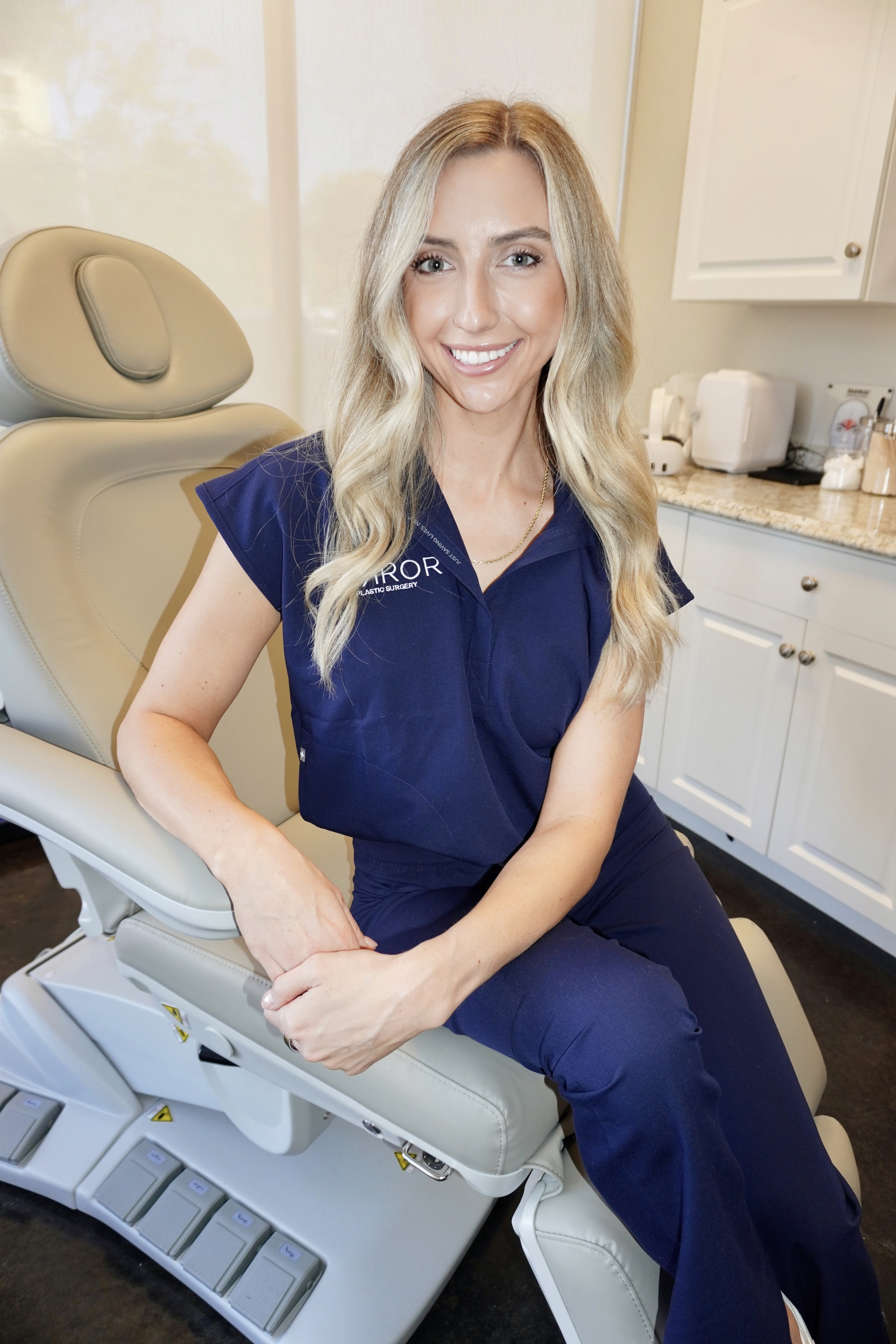
The Mirror Plastic Surgery difference. Ellie Pranckevicius, FNP-BC, brings a rare combination of esthetician training and advanced nursing expertise. She holds a Bachelor’s in Health Science from Boston University, completed a rigorous 600-hour aesthetics licensure program, and earned both her Bachelor’s and Master’s in Nursing from the University of South Florida. Before joining Mirror Plastic Surgery, she spent four years in the Neuroscience ICU at Tampa General Hospital. That experience sharpened her clinical judgment and deep understanding of human physiology. Dr. Akash Chandawarkar, founder of Mirror Plastic Surgery, is a Harvard-educated physician and Johns Hopkins-trained plastic surgeon with fellowship training in aesthetic surgery at the Manhattan Eye Ear & Throat Hospital (MEETH)/Lenox Hill Hospital.
Choosing the right injector shapes not only your immediate results but also your long-term experience with fillers. Recent research on longevity and dissolving highlights why that first decision matters so much.
Long-Term Considerations: Aging, Dissolving, and Filler Fatigue
The aesthetics industry is undergoing a meaningful shift in 2026. In 2024, U.S. plastic surgeons recorded over 5.3 million filler treatments, so demand remains strong, yet more patients now ask to dissolve filler or stop repeating treatment. Filler reversal requests have risen from 10–15% to 20–30% of patients at some practices, influenced by celebrities dissolving filler and a broader move toward natural, undetectable results.
What recent research reveals about filler longevity. A 2026 study in Plastic and Reconstructive Surgery Global Open (Issa et al.) used 3D MRI on 14 patients and found that the average volume of HA filler present was 2.8 times greater than the amount initially injected, with detectable filler persisting up to 15 years post-injection.1 The mean injected volume was 3.32 mL, while the mean volume measured by MRI was 12.26 mL. This statistically significant difference reinforces the value of conservative dosing and long-term planning from the very first treatment.
Dissolving filler: what to know. Hyaluronidase also dissolves some of the body’s natural HA in the treatment area. This effect can cause temporary hollowing. It usually resolves within 4–6 weeks as the body regenerates endogenous HA. Choosing an injector who doses conservatively and plans for the long term reduces the need for aggressive dissolving later.
At Mirror Plastic Surgery, the guiding philosophy is safety first, function second, aesthetics third. The team starts conservatively and builds gradually. This approach helps your lips age naturally alongside you and reduces the likelihood of corrective treatment later.
Realistic Expectations: Swelling, Downtime, and Results
A meta-analysis in Cureus found that swelling occurs in about 41% of lip filler patients, bruising in about 11%, and tenderness in roughly 2%, with these side effects typically resolving within a few days to a week.1 Final results usually settle within two weeks after initial swelling subsides.1
HA lip fillers typically last 6–18 months, depending on the product, your metabolism, and lifestyle factors.1 The lips move constantly, so filler metabolizes faster there than in static areas like the cheeks. A skilled injector aims for results that enhance your features and maintain your natural character. You should still look like yourself, only more refreshed.
Cost, Value, and the Risk of “Cheap” Filler
Mirror Plastic Surgery does not publish pricing because every treatment plan reflects your unique anatomy and goals. What you receive at Mirror goes well beyond the injection itself, including a comprehensive consultation, a personalized plan, and a supplier-neutral approach:
-
Up to an hour-long consultation with a comprehensive top-to-bottom assessment
-
A personalized treatment plan based on your unique anatomy and goals
-
A supplier-neutral practice, where product recommendations reflect your needs rather than commissions
-
Access to hyaluronidase and established emergency protocols if needed
-
A concierge experience with prompt responses via call, text, or email
Discount clinics may appear less expensive at first. They can also increase the risk of complications, unsatisfactory results, and corrective treatment that costs far more over time.
Frequently Asked Questions
What is the least toxic lip filler?
Hyaluronic acid fillers are considered the least toxic option because HA is a naturally occurring substance in the body, which makes it highly biocompatible with a very low risk of allergic reactions. FDA-approved HA fillers such as Restylane, Juvéderm, and Revanesse Versa meet rigorous safety standards through the FDA’s Premarket Approval process. The best choice for your anatomy and goals comes from an in-person consultation with a qualified injector.
Can lip fillers cause problems years later?
Research published in 2026 shows that HA fillers can persist much longer than previously believed, sometimes for many years, and can expand in volume over time. Severe complications remain rare, yet delayed inflammatory reactions can appear months or even years after injection, sometimes triggered by illness or immune activation. Conservative dosing, long-term planning, and ongoing assessment with your injector provide the safest path.
What happens to lip fillers as you get older?
Facial anatomy changes with age as you lose bone density and soft tissue volume. Filler placed years earlier may not move with these changes and can create an unbalanced appearance. The 2026 MRI study by Issa et al., discussed earlier, illustrates how filler can persist and expand over time. A conservative approach and regular reassessment with your injector allow your treatment plan to evolve with your natural aging process.
Are lip fillers losing popularity in 2026?
Lip fillers remain popular, as shown by the 5.3 million treatments mentioned earlier. The trend is shifting toward subtle, undetectable enhancement instead of dramatic transformation. More patients choose to dissolve filler or pause ongoing treatments, and reversal requests have increased at many practices. This movement toward natural results aligns closely with the philosophy at Mirror Plastic Surgery.
How do I choose a safe lip filler provider?
Look for board certification in plastic surgery, dermatology, or a related specialty, along with specific training in injectable treatments and facial anatomy. Confirm documented experience with the products they use and a properly equipped medical facility with emergency protocols. Ask whether hyaluronidase is available at every appointment and how the provider manages vascular complications. A safe, confident provider welcomes these questions and explains clearly why a specific product suits your anatomy.
The Safest Path to Beautiful Lips
The safest lip fillers are FDA-approved hyaluronic acid products such as Restylane, Juvéderm, and Revanesse Versa. These fillers are biocompatible and reversible with hyaluronidase. Brand choice matters, yet the injector’s expertise, anatomical knowledge, and commitment to your long-term well-being matter even more.
Mirror Plastic Surgery is located at 780 4th Ave S, St. Petersburg, FL 33701. You can call or text 727-361-6515, or email hello@mirrorplasticsurgery.com to take the next step.
Disclaimer: Results may vary from person to person. Editorial content, before and after images, and patient testimonials do not constitute a guarantee of specific results.
1 Results may vary from person to person. Editorial content, before and after images, and patient testimonials do not constitute a guarantee of specific results.