
Written by: Dr. Akash Chandawarkar, Board Certified Plastic Surgeon, Mirror Plastic Surgery
Key Takeaways
-
Buccal fat removal permanently eliminates a structural fat compartment that does not regenerate, while dermal fillers provide reversible volume that can be adjusted or dissolved over time.
-
Long-term observations suggest that about 40% of patients feel dissatisfied several years after buccal fat removal because natural aging can accelerate facial hollowing.1
-
Ideal candidates for buccal fat removal are usually between 25 and 40, with strong cheekbones and truly prominent buccal fat pads, while fillers safely treat a wider range of facial roundness causes.
-
Fillers placed along the cheekbones and jawline create definition without removing tissue, so patients can test contour changes before committing to permanent surgery.
-
Patients considering facial contouring benefit from a personalized anatomical assessment at Mirror Plastic Surgery to decide whether reversible or permanent options best match their long-term goals.
Quick Comparison: Permanent Reduction vs Reversible Addition
This comparison table outlines how buccal fat removal and cheek fillers differ across four clinically relevant dimensions. Every figure comes from peer-reviewed or professionally published sources cited inline.
|
Dimension |
Buccal Fat Removal |
Cheek Fillers (Hyaluronic Acid) |
Clinical Implication |
|---|---|---|---|
|
Reversibility |
Permanent, removed fat does not regenerate |
Fillers allow course correction, surgery does not. |
|
|
Long-term aging risk |
Compounds natural midface deflation, risk of premature hollowing flagged by Rohrich et al. (2021) |
Adjustable as anatomy changes, does not remove structural tissue |
Surgery front-loads a volume deficit that tends to worsen with age. |
|
Complication prevalence |
Bruising and swelling typical, serious complications rare with expert injector |
The surgical risk profile is meaningfully higher. |
|
|
Ideal candidate age range |
Mid-20s to mid-30s with genuinely prominent buccal fat and strong underlying bone |
Adults 21+ with midface volume loss, low cheekbone projection, or early deflation |
Fillers serve a broader age range safely. |
Buccal Fat Removal Regret: What Long-Term Outcomes Reveal
Satisfaction data for buccal fat removal vary widely based on study design and follow-up duration. One 2023 peer-reviewed study of 133 patients reported a 96% satisfaction rate with buccal fat removal, and a 2026 retrospective case series of 62 patients using the S.H.A.P.E. technique found 48.4% highly satisfied and 41.9% satisfied, with only 1.6% reporting dissatisfaction.1
These early results look encouraging, yet both studies share a critical limitation. Average patient age was about 32, and follow-up windows do not extend into the decades when natural volume loss accelerates.
That gap has real clinical impact. Roughly 40% of patients three or more years after buccal fat removal report dissatisfaction, most often because age-related facial volume loss compounds the surgical reduction and produces hollowed or gaunt cheeks.1 This figure reflects long-term clinical observation rather than short-term trial data.
The mechanism is straightforward. The buccal fat pad does not regenerate once removed, and injectable fillers rarely replicate the natural structure of the original fat pad when surgeons later attempt correction.
Candidate selection remains the strongest predictor of outcome. Nearly all buccal fat removal regret traces to wrong candidate selection, especially post-operative weight loss, GLP-1 medication-associated facial changes, or pre-existing skin laxity and low cheekbone projection. A peer-reviewed study in the Aesthetic Surgery Journal raised concerns that buccal fat removal in younger, non-aging patients could lead to long-term facial deformities and advised against aggressive removal in patients who have not yet experienced natural age-related volume loss.
Does Buccal Fat Removal Age You? How Anatomy Drives Long-Term Change
These aging concerns stem from the buccal fat pad’s unique anatomical role. The buccal fat pad, also called Bichat’s fat pad, is a deep, encapsulated structural fat compartment located between the masseter, buccinator, and other facial muscles. It differs from superficial subcutaneous fat and provides cushioning and structural support to the mid and lower cheek throughout adulthood.
Removing this pad does more than slim the cheek. It eliminates a foundational layer that the face relies on as surrounding tissues thin with age.
Facial aging involves compartment-specific deflation, including atrophy of deep medial cheek fat and buccal fat extensions, as a primary driver of visible midface aging, as described by Rohrich, Avashia, and Savetsky (2021). The buccal fat pad naturally involutes with age, so surgically removing it in a younger patient compounds a volume loss that was already going to occur and may produce a gaunt or prematurely aged midface by the forties or fifties.
As noted in the comparison above, natural midface volume loss accelerates between ages 30 and 60. A patient who removes buccal fat at 28 starts that process from a structurally depleted baseline.
Rohrich, Stuzin, et al. (Plastic and Reconstructive Surgery, 2021) specifically flagged the risk of premature aging and midface distortion, and Benjamin and Reish (Plastic and Reconstructive Surgery Global Open, 2018) titled their clinical review “Buccal Fat Pad Excision: Proceed with Caution” for this reason. A systematic review found that no study to date has tracked long-term facial-aging outcomes after buccal fat removal, so the premature aging risk remains plausible but unquantified by controlled long-term data.
Fillers vs Buccal Fat for a Round Face: Matching Treatment to Structure
A round or full face can arise from several anatomical patterns. It may reflect genuinely prominent buccal fat pads, low cheekbone projection, overall soft-tissue fullness, or a combination of these factors. This distinction determines which intervention, if any, makes sense.
Ideal candidates for buccal fat removal have objectively prominent buccal fat pads that create disproportionate lower-face fullness, rather than overall facial roundness or normal anatomical variation. They also need strong underlying malar bone structure.
For patients whose round appearance comes from low cheekbone projection or midface deflation instead of excess buccal fat, fillers treat the true anatomical deficit. Trévidic et al. (2022) used a “smiling cadavers” approach to show that filler placement in deep fat compartments, including buccal fat extensions, produces natural projection both at rest and during facial expression.
Hyaluronic acid fillers placed along the cheekbone create the appearance of a more defined midface without permanently changing anatomy. Strategic hyaluronic acid filler placement along the jawline, chin, and cheekbones can create facial definition while remaining fully adjustable or dissolvable as facial anatomy and aesthetic preferences change over decades, a flexibility buccal fat removal cannot provide.
Decision Framework: Candidacy Criteria for Surgery vs Fillers
The buccal fat pad’s structural role makes age and skin quality the two most consequential variables in any contouring decision. The criteria below reflect clinical evidence and the anatomical principles Dr. Akash applies at Mirror Plastic Surgery.
Factors that support considering buccal fat removal:
-
Age approximately 25–40 with genuinely full lower cheeks, a thick healthy soft tissue envelope, and a family history of preserved facial volume with aging, which means facial maturation is complete while significant natural volume loss has not yet begun.
-
The strong malar bone structure discussed earlier, confirmed on clinical examination to show disproportionate lower-face fullness, so the skeleton can support definition without over-hollowing.
-
Good skin quality and elasticity, along with a stable healthy weight, which allows the skin to redrape smoothly after fat removal.
-
Realistic expectations about subtle mid-cheek refinement rather than dramatic transformation, since this procedure fine-tunes contour instead of reshaping the entire face.
Factors that favor fillers as the appropriate first step:
-
Naturally low cheekbone projection, flat or deflated midface contours, or age-related volume loss from fat compartment depletion, where adding structure restores balance.
-
Age over 35–40, where natural fat loss will compound any surgical reduction, increasing hollowing risk.
-
Thin skin or minimal soft tissue coverage, where removal can make underlying structures more visible and create an unhealthy or tired look.
-
Desire for a reversible test of contour before committing to permanent change, which fillers provide through adjustability and dissolvability.
-
Family history of significant facial volume loss and thinning through the forties and fifties, which heightens concern about future hollowing after surgery.
One evidence-based protocol requires patients with flat or low cheekbones to first undergo cheekbone enhancement with hyaluronic acid fillers before any buccal fat removal is considered. This sequencing lets the surgeon see how the face responds to structural augmentation before permanently reducing volume.
Book a consultation with Dr. Akash to have your facial anatomy evaluated against these criteria with the depth and time a permanent decision requires.
Tampa-Specific Recovery Considerations for Surgery and Fillers
Tampa Bay’s climate introduces recovery variables that patients in cooler, drier regions rarely encounter. Peak swelling after buccal fat removal typically occurs around day 3, with swelling subsiding afterward.
In Tampa’s heat and humidity, swelling can linger longer and feel more pronounced, especially during summer months when temperatures often exceed 90°F.
Sun exposure creates a separate concern. Both post-surgical incision sites and filler injection points stay sensitive to UV radiation during healing. Patients should plan consistent broad-spectrum SPF use and limit direct sun exposure during the initial recovery window.
Outdoor activities that raise core body temperature, including beach time and outdoor exercise, can increase swelling and prolong recovery for both procedures.
For filler patients, Tampa’s heat does not meaningfully change product longevity, yet it can make the first few days more uncomfortable if swelling is not managed with cold compresses and head elevation. Mirror Plastic Surgery’s concierge approach tailors post-procedure guidance to each patient’s timeline and lifestyle rather than relying on a generic aftercare sheet.
Frequently Asked Questions
Is buccal fat removal permanent, and can it be reversed?
Buccal fat removal is permanent. The buccal fat pad does not regenerate once excised, and surgeons cannot reverse the procedure the way they can dissolve a filler.
Fat grafting from another body area can partially restore lost volume, yet it does not perfectly recreate the original anatomical compartment. This irreversibility explains why most surgeons recommend exhausting reversible options, including fillers and structural assessment, before proceeding with surgery.
At what age is buccal fat removal most appropriate?
Most evidence-based guidelines place the appropriate window between the mid-twenties and mid-thirties, with the upper boundary often cited closer to 35–40. Patients under 25 are usually advised to wait because facial structure continues maturing into the mid-twenties.
Patients over 40 are typically declined because natural midface volume loss is already accelerating, and surgical reduction compounds that trend. The patient’s family aging pattern, especially whether parents and older relatives maintained facial volume or experienced significant thinning, plays an important role in this assessment.
Can cheek fillers make a round face look slimmer?
Cheek fillers can create the visual impression of a slimmer, more defined face by adding projection along the cheekbone and creating shadow beneath it. This approach treats the most common anatomical cause of facial roundness, which is low cheekbone projection, without removing structural tissue.
The result remains adjustable and reversible, so fillers usually serve as an appropriate first step for patients who want to see how contour changes look before considering permanent surgery.
What is “hollow cheek syndrome” after buccal fat removal?
Hollow cheek syndrome describes an over-sculpted, sunken midface appearance that develops when buccal fat removal combines with natural age-related volume loss over later years. It appears most often in patients who were poor candidates for the procedure, such as those with low cheekbone projection, thin skin, or a family history of significant facial thinning.
The condition is difficult to correct because injectable fillers do not replicate the structural properties of the original buccal fat pad, and fat grafting usually provides only partial restoration.
How does Mirror Plastic Surgery approach the buccal fat removal decision?
Dr. Akash conducts a comprehensive, hour-long anatomical assessment that evaluates bone structure, skin quality, soft tissue thickness, family aging patterns, and the patient’s long-term goals before making any recommendation. Mirror Plastic Surgery’s guiding principle, safety first, function second, aesthetics third, means that permanent procedures are recommended only when the patient’s anatomy clearly supports them and reversible alternatives have been genuinely considered.
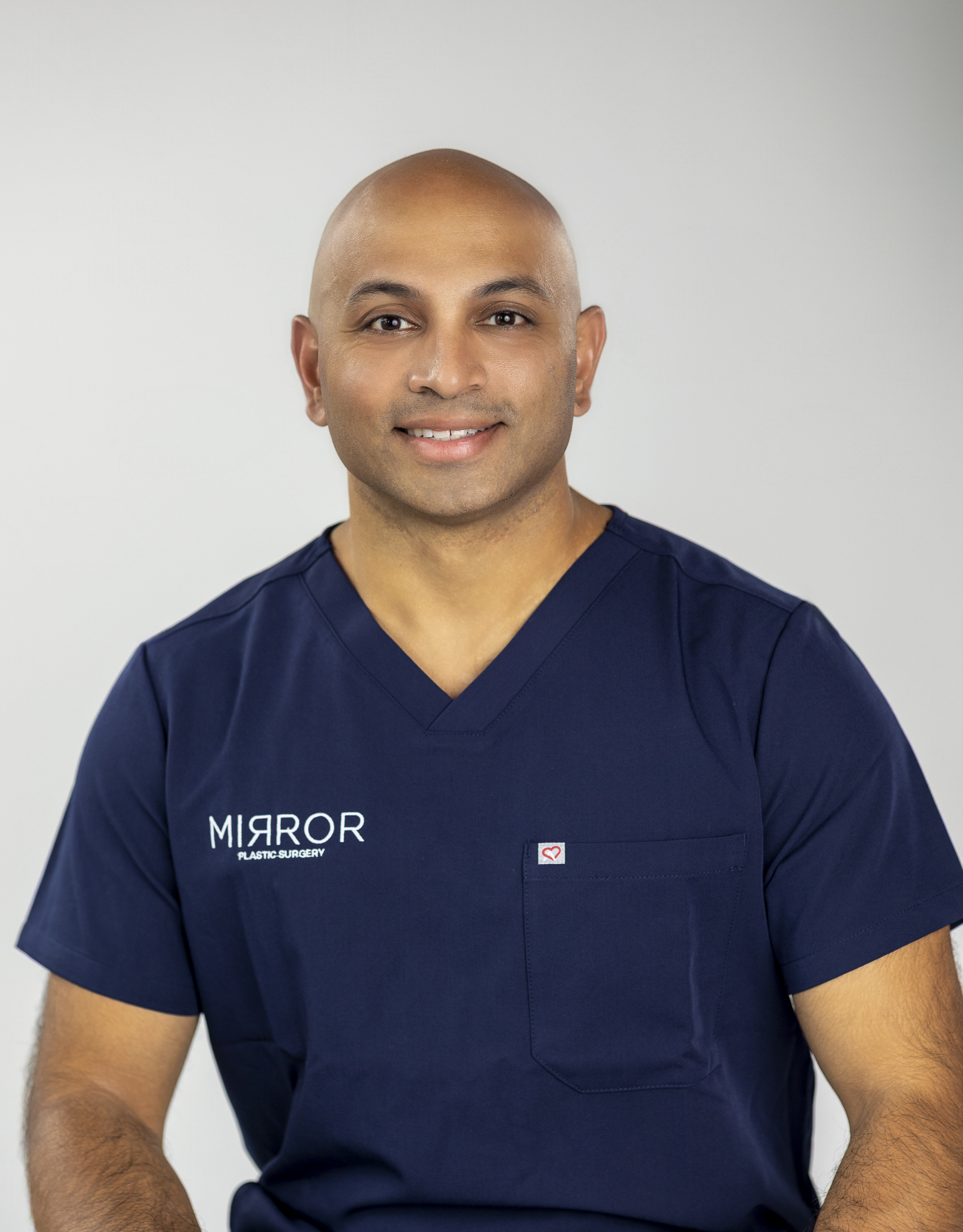
Patients who are not strong candidates for buccal fat removal hear that clearly, along with a detailed explanation of the anatomical reasoning.
Next Step: Personalized Consultation
The decision between buccal fat removal and cheek fillers depends on anatomy, age, skin quality, and a realistic projection of how your face will change over the next two to three decades. Current evidence supports treating permanent procedures as a last step rather than a first one, especially for patients under 40 whose natural volume loss has not yet fully expressed itself.
Dr. Akash brings Harvard-MIT medical training, a Johns Hopkins plastic surgery residency, and a MEETH aesthetic surgery fellowship to every facial-contouring evaluation at Mirror Plastic Surgery in St. Petersburg, Florida. Recognized by Newsweek as one of America’s Best Plastic Surgeons for two consecutive years, he limits his practice to one to two procedures per day so each patient receives a focused, evidence-based assessment.
Book a consultation with Dr. Akash to receive a thorough, anatomy-first evaluation of whether buccal fat removal, fillers, or a sequenced combination is the right approach for your face now and in the decades ahead.
1 Results may vary from person to person. Editorial content, before and after images, and patient testimonials do not constitute a guarantee of specific results.