
Written by: Ellie Pranckevicius, FNP-BC, Aesthetic Nurse Practitioner & Aesthetic Injector | Facial Restoration & Regenerative Injectable Specialist, Mirror Plastic Surgery
Key Takeaways for Melasma Peptide Treatment
- GHK-Cu, Melanostatin (nonapeptide-1), and glutathione have the most documented mechanisms for melasma management in 2026. None replace broad-spectrum photoprotection or first-line agents such as tranexamic acid.
- GHK-Cu supports skin barrier repair and calms inflammation but lacks melasma-specific clinical data. It works best as an adjunct within supervised protocols.
- Nonapeptide-1 acts as a competitive antagonist at the MC1R receptor. Daily use provides slower, targeted melanin reduction over 8–24 weeks.1
- Glutathione offers modest melanin-index reduction via oral or topical routes.1 IV administration carries FDA warnings and is not recommended for cosmetic use.
- At Mirror Plastic Surgery, lab-guided peptide protocols are tailored to each patient’s hormonal profile and skin history for safer, long-term melasma management.
GHK-Cu Peptide for Hyperpigmentation and Melasma
GHK-Cu is a naturally occurring copper-binding tripeptide involved in collagen synthesis, skin barrier repair, and antioxidant signaling. As of August 2026, GHK-Cu has no approved drug product anywhere, and no pharmacokinetic study measuring its half-life, clearance, or bioavailability in humans has been published for any route of administration.
Its role in melasma remains indirect. Copper peptides like GHK-Cu support skin barrier repair and reduce inflammation, offering a preventive benefit against new post-inflammatory hyperpigmentation, but they provide no established benefit for fading existing melasma pigment. A phase 2 randomized, double-blind, vehicle-controlled split-wound study of topical GHK-Cu gel (NCT07437586) began recruiting in February 2026, with primary completion estimated for early 2027. Results are not yet posted, so current guidance still relies on earlier, limited data.
The 2006 Miller randomized trial of 13 patients after CO2 laser resurfacing found no statistically significant difference between GHK-Cu and control regimens in erythema, wrinkles, or overall skin appearance at 12 weeks. Unsupervised injectable GHK-Cu carries additional risk. The injectable form was previously placed in FDA 503A category 2 for significant safety risks before its nomination was withdrawn, and variable compounding quality means purity and dosing remain uncertain without batch-testing documentation.
Within a supervised protocol, GHK-Cu functions best as an adjunctive barrier-support agent, used as one part of a broader stack rather than as a standalone melasma treatment. At Mirror Plastic Surgery, it is offered as a component of the Glow Stack alongside BPC-157 and TB-500, with lab-guided oversight to confirm suitability for each patient’s profile.
Schedule a consultation to determine whether GHK-Cu belongs in your personalized melasma protocol.
Nonapeptide-1 and New Peptide Options for Melasma in 2026
Melanostatin, the cosmetic trade name for nonapeptide-1, is one of the more targeted peptide options for melasma available in 2026. Nonapeptide-1 acts as a competitive antagonist of α-MSH at the MC1R receptor, blocking the upstream cAMP/MITF cascade that drives tyrosinase expression and melanin production. This upstream mechanism aligns well with hormonally driven melasma, where elevated α-MSH signaling amplifies pigment output.
In vitro at 100 μM, nonapeptide-1 inhibits approximately 25–35% of tyrosinase activity and reduces melanin content in cultured melanocytes by 27–43%.1 Because this mechanism operates at the receptor level rather than directly at the enzyme, nonapeptide-1’s receptor-level action depends on protein turnover time governed by the half-life of existing tyrosinase and melanocyte melanin turnover. This timing produces slower onset kinetics compared to direct enzyme inhibitors.
Nonapeptide-1 works best as a daily preventive agent, not a rapid corrector, with realistic timelines of 8–12 weeks for visible brightening and 12–24 weeks for more significant improvement.1 Effective topical concentrations are 0.01–0.05%, using liposomal or microemulsion delivery systems and airless or opaque packaging for stability and melanocyte penetration.
While nonapeptide-1 remains the most established MC1R-targeting option, newer peptides in this mechanistic class are entering clinical evaluation. An emerging peptide in this category, PTPD-12 showed significant melanin reduction in a 2025 randomized split-face trial of 20 Fitzpatrick III–IV patients with melasma and lentigines, with no adverse events reported.1 This early signal warrants attention as larger trials proceed.
Glutathione for Hyperpigmentation: What Current Evidence Shows
Glutathione is an endogenous tripeptide antioxidant that appears frequently in online discussions about hyperpigmentation. Its role in melanogenesis is dual. Glutathione inhibits melanin production by chelating copper at tyrosinase’s active site and shifting synthesis from eumelanin to lighter pheomelanin, while indirectly suppressing MITF via antioxidant effects.
The evidence base depends strongly on route of administration. Oral glutathione at 500 mg/day has randomized controlled trial support for modest melanin-index reduction.1 Intravenous glutathione for cosmetic skin lightening is a different category. IV glutathione for cosmetic skin lightening carries the FDA warnings mentioned earlier, including risks of Stevens-Johnson syndrome and organ dysfunction.
Glutathione also appears in combination protocols. Some studies have found that IPL combined with tranexamic acid plus glutathione was well tolerated and produced lower recurrence rates than IPL alone. This combination setting, which is supervised, route-specific, and paired with proven actives, reflects the most responsible way to use glutathione.
Comparing Evidence-Based Peptides for Melasma
Hormonal Triggers and Long-Term Melasma Control
Melasma does not resolve permanently. Melasma is a chronic, relapsing condition driven by UV, hormones, heat, and genetics, with pigment often deeper in the skin; it responds to treatment but recurs readily, especially with sun or hormonal triggers, and is managed rather than eliminated under clinician guidance.
The vascular component of melasma often receives less attention than it deserves. Melasma pathogenesis involves a vascular component with increased blood vessel number, density, and size plus telangiectatic erythema in lesional skin; UV radiation upregulates VEGF, FGF, and IL-8 to trigger angiogenesis and a vascular-pigmentary cascade. Peptide protocols that address only melanin synthesis without this vascular driver will deliver incomplete results.
A Delphi consensus study of 38 dermatologists across 11 countries recommends photoprotection with broad-spectrum sunscreens as an essential component of melasma therapy. No peptide protocol, supervised or unsupervised, produces durable results without daily broad-spectrum SPF use.
Maintenance therapy is equally non-negotiable. Melasma control requires ongoing maintenance therapy to reduce recurrence, and peptides such as nonapeptide-1 are best used as consistent daily support rather than short-term spot correctors. When maintenance protocols include systemic agents such as oral tranexamic acid, which at 250 mg twice daily for 12 weeks has demonstrated significant reductions in mMASI scores in randomized trials, medical supervision becomes essential because of clotting considerations. This requirement reinforces why unsupervised self-treatment carries meaningful risk.
Practitioner Expertise and Concierge Care at Mirror Plastic Surgery
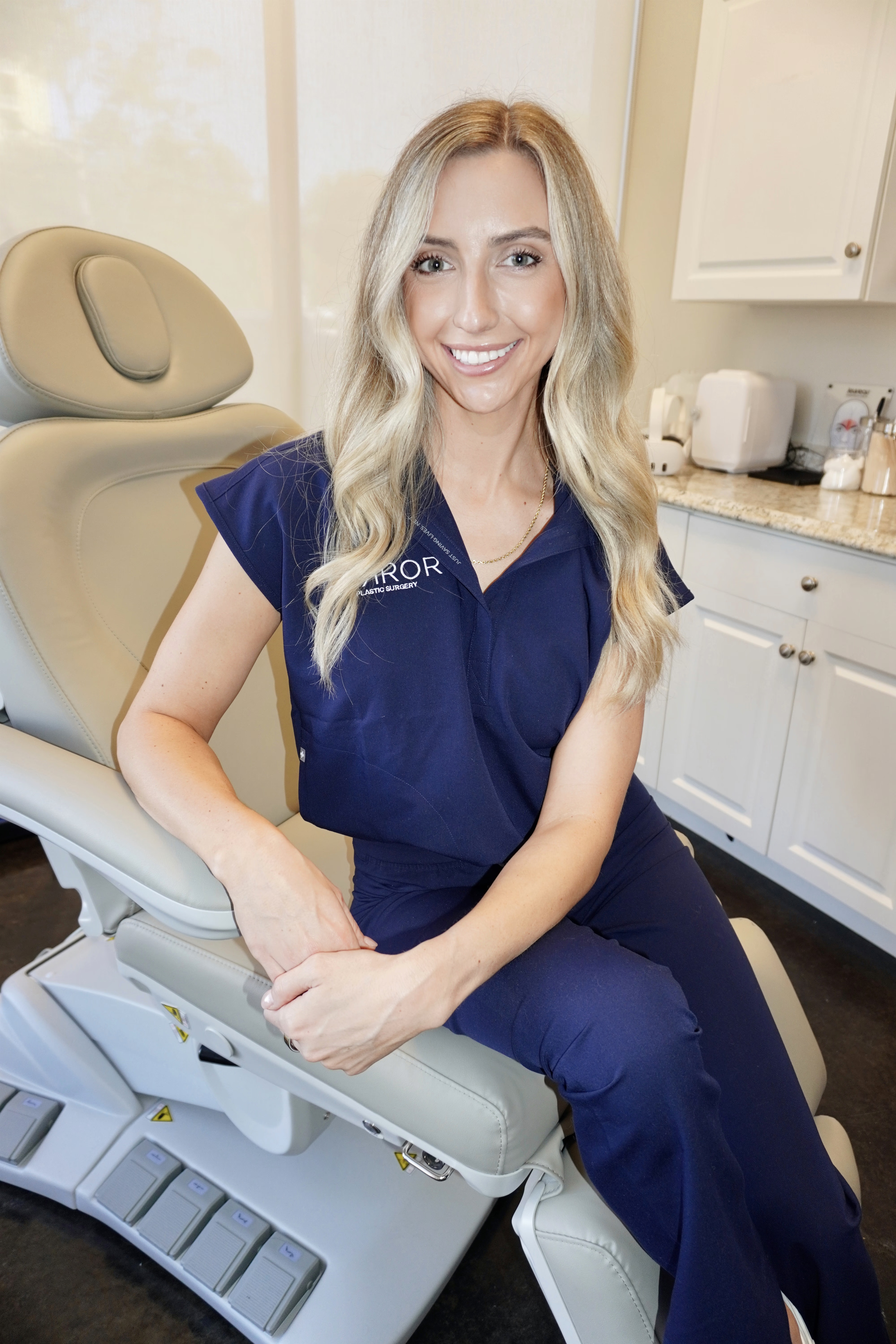
Peptide therapies at Mirror Plastic Surgery are led by Ellie Pranckevicius, FNP-BC, a board-certified Family Nurse Practitioner with four years of experience in the Neuroscience ICU at Tampa General Hospital, formal esthetician training, and advanced nursing credentials from the University of South Florida. This dual foundation in critical-care physiology and skin science allows her to evaluate melasma as both an aesthetic and systemic condition shaped by hormonal status, inflammatory markers, and metabolic health. Every peptide protocol begins with a comprehensive consultation that may include lab panels, and ongoing care is delivered through direct concierge access rather than high-volume, one-size-fits-all appointments.
Get your lab-guided melasma protocol built around your hormonal profile and skin history.
Risks, Limitations, and Realistic Expectations with Peptides
Several limitations apply to all peptide-based melasma treatments and should be clear before beginning any protocol.
- No peptide discussed here holds FDA approval for any indication, including melasma. These compounds are not regulated as drugs.
- Topical cosmetic peptides exhibit minimal skin penetration, and when penetration occurs, they are rapidly metabolized by aminopeptidases into amino acids. Formulation quality, including delivery system, packaging, and concentration, directly determines whether a peptide reaches its target.
- No single peptide replaces hydroquinone for melasma; peptide stacks serve as long-term, lower-safety-risk support rather than standalone cures.
- Results vary significantly by individual. Genetics, Fitzpatrick skin type, hormonal status, sun behavior, and protocol adherence all influence outcomes, so no guarantee of clearance is appropriate for any patient.
- Unsupervised sourcing from online retailers introduces purity and dosing risks that remain unaddressed without batch-testing documentation and clinical oversight.
Frequently Asked Questions
How long does it take to see results from peptide-based melasma treatment?
Timelines depend on the peptide, formulation, and depth of pigmentation. Nonapeptide-1 and decapeptide-12 typically produce initial softening of superficial pigmentation within 4–8 weeks of consistent daily use. Significant improvement often requires 12–24 weeks.1 Deeper dermal melasma takes longer because melanophages must clear pigment through lymphatic pathways. Glutathione via oral or topical routes also requires several weeks before measurable melanin-index changes appear. No peptide produces overnight results, and maintenance therapy is required to reduce recurrence after initial clearance.
Is it safe to use peptides for melasma without a doctor’s supervision?
Unsupervised use carries several distinct risks. Peptides sourced online without batch-testing documentation may contain incorrect concentrations or contaminants, so the product may be ineffective or harmful. Route selection also matters. IV glutathione, for example, carries FDA warnings for risks including Stevens-Johnson syndrome, while oral and topical routes have a more established safety record. Melasma driven by hormonal imbalances or systemic inflammation often requires lab evaluation to identify root causes, and topical peptides alone will not address these triggers. Medical supervision supports appropriate formulation, dosing, monitoring, and maintenance planning.
Can peptides replace hydroquinone or tranexamic acid for melasma?
Peptides do not replace these agents. Tranexamic acid and niacinamide hold the strongest randomized trial evidence for melasma, and triple combination cream containing hydroquinone, tretinoin, and fluocinolone acetonide remains a first-line topical treatment per dermatology consensus. Peptides such as nonapeptide-1, decapeptide-12, and glutathione fit best as adjunctive agents within a broader protocol. They offer a lower side-effect profile than hydroquinone, particularly for darker skin tones, but they do not match its standalone efficacy. A supervised protocol may combine peptides with tranexamic acid, niacinamide, and photoprotection for a more comprehensive approach.
What lab work is involved in a supervised peptide protocol for melasma at Mirror Plastic Surgery?
Ellie Pranckevicius conducts a comprehensive consultation that reviews medical history, hormonal status, and relevant lab markers. For melasma with suspected hormonal drivers, panels may include hormone levels, thyroid function, and inflammatory markers. This evaluation guides peptide selection, concentrations, and the decision to use adjunctive systemic agents such as oral tranexamic acid, based on clotting history and overall health. Lab results are reviewed before any protocol begins, and ongoing monitoring supports safe, long-term use.
Will melasma return after stopping peptide treatment?
Because melasma recurs readily after treatment, as noted earlier, pigment reduction achieved through any approach, peptide-based or otherwise, is not permanent without ongoing maintenance and strict photoprotection. Hormonal triggers such as oral contraceptives, pregnancy, and perimenopause can reactivate melanogenesis regardless of prior treatment success. A supervised maintenance protocol, typically involving lower-frequency application of the same or complementary agents alongside daily broad-spectrum SPF, is the standard approach to reducing recurrence. Stopping treatment entirely without a maintenance plan significantly increases the likelihood of return.
Conclusion: Where Peptides Fit in Melasma Care
Evidence from 2024–2026 positions nonapeptide-1 (Melanostatin), glutathione via oral or topical routes, and GHK-Cu as adjunctive tools within a broader, supervised melasma management framework, not as standalone cures. Decapeptide-12 carries the strongest direct tyrosinase-inhibition data among cosmetic peptides. None of these agents produces durable results without daily broad-spectrum photoprotection, hormonal assessment, and a maintenance plan designed around the individual’s triggers. The gap between unsupervised topical use and a lab-guided, clinician-monitored protocol represents the difference between managing a chronic condition and repeatedly treating its recurrence.
Mirror Plastic Surgery’s concierge model, led by Ellie Pranckevicius, FNP-BC, provides the clinical infrastructure, including comprehensive lab analysis, batch-tested peptide sourcing, and direct ongoing access, that evidence-based melasma management requires.
Begin your personalized peptide protocol with comprehensive lab analysis and ongoing clinical support at Mirror Plastic Surgery in St. Petersburg, Florida.
1 Results may vary from person to person. Editorial content, before and after images, and patient testimonials do not constitute a guarantee of specific results.
Peptide therapy is intended for wellness and optimization purposes and is not prescribed to diagnose, treat, cure, or prevent disease unless specifically stated. Many peptides are not FDA-approved and may be used off-label. Some have limited long-term safety data, with a potential for unknown risks, complications, or desensitization with prolonged use.