
Written by: Ellie Pranckevicius, FNP-BC, Aesthetic Nurse Practitioner & Aesthetic Injector | Facial Restoration & Regenerative Injectable Specialist, Mirror Plastic Surgery
Key Takeaways for Florida Patients
- FDA Category 2 restrictions removed GHRP-2 and GHRP-6 from legal compounding in Florida. Ipamorelin, CJC-1295, Sermorelin, and Tesamorelin now serve as compliant options for muscle preservation.
- A compliant consultation follows a clear sequence: detailed medical history, baseline labs including IGF-1, prescription through a Florida-registered compounding pharmacy, injection training, and follow-up monitoring at 8–12 weeks.
- Both statewide telehealth and in-person visits at Mirror Plastic Surgery’s St. Petersburg office meet Florida Board of Medicine standards and provide concierge-level continuity of care.
- Unregulated online vendors that lack batch-specific Certificates of Analysis, licensed pharmacy sourcing, and clinical oversight carry documented risks of contamination and under-dosing.
- Scheduling a personalized consultation with Mirror Plastic Surgery allows you to begin a lab-guided, compliant peptide protocol focused on safe muscle-mass maintenance in Florida.
The 2026 FDA Category 2 Restrictions and Today’s Legal GHRP Alternatives
GHRP-2 and GHRP-6 were added to the FDA’s Category 2 restricted list on September 29, 2023, and both remained on that list through the FDA’s April 22, 2026 update. Category 2 designation reflects documented safety concerns, including immunogenicity from aggregation and peptide-related impurities, API-characterization complexity, increased insulin requirements, and adverse events such as pancreatitis and death in critically ill study subjects. Category 2 peptides are prohibited from compounding for human use under 21 U.S.C. § 331, and pharmacies or businesses that dispense them face FDA enforcement, product seizure, and potential criminal charges.
The regulatory landscape shifted in February 2026. On February 27, 2026, HHS Secretary Robert F. Kennedy Jr. announced plans to reclassify approximately 14 peptides from Category 2 back to Category 1, although no formal FDA reclassification had occurred at that time. Within this evolving context, four legal alternatives now anchor compliant muscle-preservation protocols:
- Ipamorelin: A selective ghrelin receptor agonist that releases growth hormone with potency comparable to GHRP-6 but without appetite stimulation, prolactin elevation, or cortisol effects, which makes it the cleanest GH secretagogue currently available through compounding.
- CJC-1295: A GHRH analog that extends the natural growth hormone pulse. Many protocols pair CJC-1295 with Ipamorelin to support IGF-1 elevation and lean mass maintenance.1
- Sermorelin: A GHRH analog that preserves the somatostatin negative-feedback loop, which caps GH output and keeps the pituitary responsive. This feedback control matters for adults who want long-term endocrine stability.
- Tesamorelin: A growth hormone secretagogue with an active US FDA approval (BLA 022505, granted 2010). It is available by prescription for its approved indications and represents the most clearly defined legal option in this category.
With these compliant alternatives in place, Florida patients next need a clear path to access them safely through a structured medical consultation.
Step-by-Step Florida Consultation Sequence for GHRP Peptides
A compliant consultation for growth hormone-releasing peptides in Florida functions as a structured clinical sequence rather than a single quick visit. Each step protects the patient and satisfies Florida Board of Medicine standards for prescribing compounded medications.
- Medical History and Goal Assessment. The consultation starts with a comprehensive review of health history, current medications, fitness goals, and symptoms of age-related GH decline such as reduced lean mass, increased visceral fat, impaired recovery, and disrupted sleep. At Mirror Plastic Surgery, this session typically lasts 30–60 minutes and reflects the practice’s concierge focus on unhurried, detailed intake.
- Required Laboratory Panels. The minimum standard lab panel for any growth-hormone-releasing peptide program in Florida includes a comprehensive metabolic panel (CMP), CBC, fasting glucose, HbA1c, lipid panel, and IGF-1. Testosterone (total and free), LH, FSH, TSH, and a thyroid panel are added for broader hormone-focused protocols. Among these markers, IGF-1 serves as the central decision point for whether therapy is appropriate. A baseline IGF-1 level already at or above the age-appropriate reference range is a reason to withhold GH secretagogue therapy. The clinical goal is to support a declining axis, not to push an already high level even higher.
- Florida Board of Medicine Compounding Pharmacy Requirements. Any prescribed peptide must be dispensed through a licensed compounding pharmacy. To protect quality and accountability, Florida requires out-of-state 503B outsourcing facilities to register with the Florida Board of Pharmacy and submit quarterly compounding logs before shipping compounded medications to Florida residents. Mirror Plastic Surgery uses pharmacies that meet these requirements, provide batch-tested products, and supply verifiable Certificates of Analysis for each lot.
- Injection Training and Administration Guidance. Subcutaneous peptide injections require correct technique, reconstitution steps, and storage practices. Patients receive detailed instructions and video demonstrations so they can self-administer safely at home and handle vials confidently.
- Ongoing Lab Monitoring. Follow-up labs at 8 to 12 weeks represent the standard for monitoring peptide therapy. Clinics that never repeat labs are not practicing evidence-based medicine. The therapeutic target is a modest, physiologic IGF-1 rise within the age-appropriate reference range rather than a supraphysiologic spike.
Telehealth and In-Person Peptide Consultations in Tampa Bay
Florida telehealth has been authorized statewide since 2019 under Section 456.47 of the Florida Statutes. The law requires providers to meet the same professional standard of care, maintain equivalent medical records, and hold a valid Florida license, just as they would for in-person visits. As a result, the full consultation sequence above can occur via secure video for patients anywhere in Florida, with labs drawn at a nearby collection site.
Mirror Plastic Surgery supports both telehealth and in-person pathways. Statewide telehealth coverage allows care for patients across all 67 Florida counties without travel to St. Petersburg. For Tampa Bay residents, in-person consultations at the St. Petersburg office (780 4th Ave S, St. Petersburg, FL 33701) add hands-on clinical assessment, which benefits patients with complex metabolic histories or those who prefer face-to-face conversations.
The concierge model at Mirror Plastic Surgery applies to both formats. Unlike high-volume telehealth platforms that route patients through generic protocols or rotating providers, every peptide patient works directly with the same practitioner from initial consultation through lab review, protocol adjustment, and ongoing support via direct text access. This continuity of care contrasts with generalized telehealth services that emphasize speed over personalization.
Quality-Assurance Red Flags for Online Peptide Vendors
The grey-market peptide industry operates at large scale and often uses deceptive tactics. Many vendors label products “For Research Use Only. Not for Human Consumption” to avoid FDA oversight in a grey market estimated at $7–$10 billion annually. Independent testing has revealed the impact of this approach. A 2024 Journal of Medical Internet Research study found elevated endotoxin contamination in one of three semaglutide samples from online sellers and actual purity between 7.7% and 14.37% despite 99% label claims.
Specific red flags to avoid include:
- No batch-specific Certificate of Analysis from an independent third-party laboratory tied to the product’s lot number
- Cryptocurrency-only payment, no verifiable physical address, or anonymous business ownership
- Plain vials with only a printed sticker and no pharmacy name, lot number, expiration date, or storage instructions
- Prices far below licensed compounding pharmacy rates or shopping-cart checkout without any medical evaluation
- Vendors selling GHRP-2 or GHRP-6 for human use under any label, since these peptides cannot be legally marketed or sold for human consumption regardless of disclaimers
Mirror Plastic Surgery works only with reputable U.S. compounding pharmacies that provide documented batch testing and operate under USP 797/800 standards. No grey-market or research-chemical products appear in any protocol.
Florida Consultation Checklist for Safe GHRP Use
Use this checklist to confirm that any Florida provider offering GHRP peptide therapy for muscle preservation follows a compliant, evidence-based process:
- Review medical history and muscle-mass goals in a dedicated consultation of meaningful length.
- Order IGF-1, CMP, CBC, fasting glucose, HbA1c, and a lipid panel before starting any protocol.
- Confirm that prescriptions go through a Florida-registered compounding pharmacy with verifiable batch testing and Certificates of Analysis.
- Receive injection training and written administration instructions before beginning self-injections.
- Schedule follow-up labs at 8–12 weeks and ongoing monitoring with a board-certified or board-eligible practitioner.
Meet Ellie, Your Peptide Practitioner
The lead practitioner for peptide therapies at Mirror Plastic Surgery is Ellie Pranckevicius, FNP-BC. She holds a Bachelor’s in Health Science from Boston University, completed an aesthetics licensure program, and earned both her Bachelor’s and Master’s in Nursing from the University of South Florida. Her clinical background includes four years in the Neuroscience ICU at Tampa General Hospital, where she developed deep experience in physiology, metabolic health, and complex patient management.
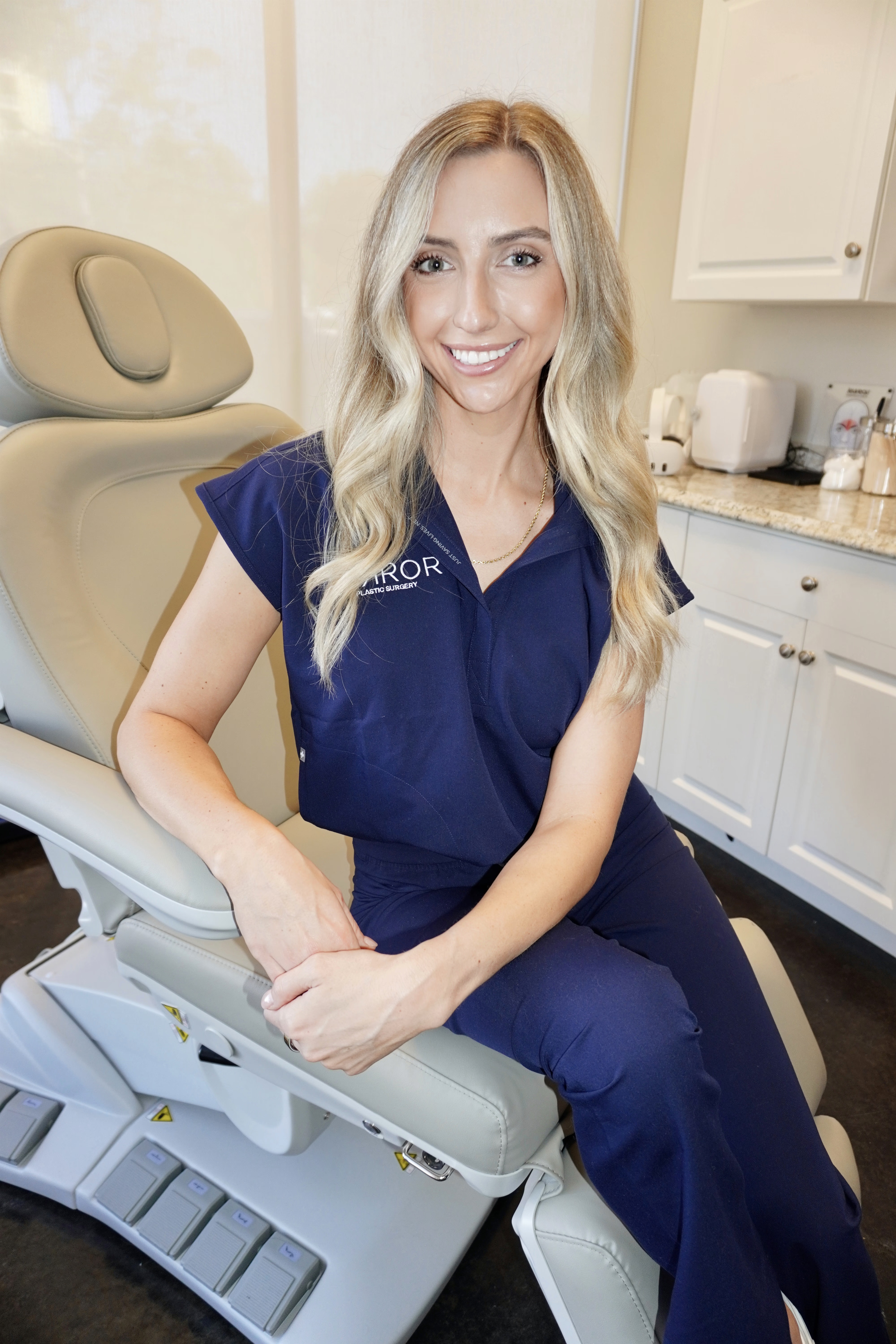
This combination of esthetician training and advanced nursing credentials allows Ellie to connect aesthetic goals with the clinical science required to pursue them safely. That blend shapes every lab-guided peptide protocol she designs.
Key Safety Considerations Before Starting Therapy
Not every adult seeking muscle preservation qualifies for GH secretagogue therapy. A baseline IGF-1 at the top of the age-appropriate reference range, active malignancy, uncontrolled diabetes, or specific endocrine conditions may contraindicate therapy or require careful modification. Data in middle-aged adults with pre-existing metabolic syndrome remain limited, and no GH secretagogue trial longer than two years has been published, so long-term risk profiles are not fully defined.
This ongoing monitoring, not just the initial baseline, separates supervised care from unsupervised use. A patient who buys peptides from an unregulated online source receives no IGF-1 baseline, no dose titration based on response, and no clinical oversight if side effects appear. Medically supervised protocols at Mirror Plastic Surgery include repeat labs, direct access to Ellie for questions and adjustments, and the ability to modify or stop therapy based on objective data rather than guesswork. All peptides come from pharmacies with documented quality control, a standard that unregulated vendors structurally cannot match.
Questions to Ask Any Florida Peptide Provider
Before committing to a peptide protocol with any Florida provider, ask these questions directly:
- What is your Florida license number, and will you personally conduct my consultation and follow-ups?
- Which compounding pharmacy will fill my prescription, and is it registered with the Florida Board of Pharmacy?
- Can you provide a batch-specific Certificate of Analysis for the peptide you plan to prescribe?
- What labs will you order before starting therapy, and when will you repeat them?
- Are the peptides in my protocol Category 1 compliant under current FDA guidance, and do you prescribe GHRP-2 or GHRP-6?
Conclusion and Next Step for Florida Muscle Preservation
With GHRP-2 and GHRP-6 now off the table, Florida patients have a clear path forward through the four remaining compliant alternatives, accessed only through the structured consultation sequence described above. Mirror Plastic Surgery’s concierge model, led by Ellie Pranckevicius, FNP-BC, delivers this full pathway for Tampa Bay residents in person and for patients statewide via telehealth. The practice’s focus on evidence-based, lab-guided care and quality-assured sourcing offers a safer option than unregulated online peptide vendors.
Frequently Asked Questions
Is medically supervised peptide therapy meaningfully safer than purchasing peptides online?
Medically supervised peptide therapy provides several concrete safety advantages over online self-sourcing. Unregulated vendors offer no third-party verification of vial contents, and independent testing of research-grade peptides has found products with far less active ingredient than labeled, contamination with bacterial endotoxins and heavy metals, and in some cases entirely different compounds than advertised. Injecting a contaminated or mislabeled product creates serious infection and systemic health risks without any clinical support.
At Mirror Plastic Surgery, therapy begins with a comprehensive lab panel to establish baseline IGF-1 and metabolic markers. Peptides come from licensed U.S. compounding pharmacies with documented batch testing and Certificates of Analysis. Ongoing monitoring allows dose adjustments based on actual physiological response, and if a problem arises, patients can reach their provider directly instead of an anonymous customer service inbox.
What realistic muscle-preservation outcomes can adults aged 35–55 expect from legal GH secretagogue therapy?
Adults should set realistic expectations for legal GH secretagogues. Agents such as Ipamorelin, CJC-1295, and Sermorelin stimulate the pituitary to release more of the body’s own growth hormone in a pulsatile, regulated pattern rather than delivering exogenous GH. Clinical data on related secretagogues in older adults show modest increases in fat-free mass and IGF-1, while strength gains appear less consistent.1
The preserved somatostatin negative-feedback loop limits GH output, which improves safety but also caps effect size. In practice, patients who pair these peptides with consistent resistance training and adequate protein intake often report better recovery, improved sleep quality, and gradual lean mass support over several months.1 Results vary based on genetics, diet, training consistency, baseline hormone status, and protocol design.1 A personalized, lab-guided plan offers the most reliable way to determine candidacy and track whether the therapy is producing the intended changes.
How does Mirror Plastic Surgery’s consultation process differ from a standard telehealth peptide service?
Mirror Plastic Surgery’s consultation process differs from high-volume telehealth platforms that focus on speed. Many large services rely on a brief online intake, a quick provider review, and a prescription with minimal individualization. Mirror Plastic Surgery instead schedules 30–60 minute consultations that include a full review of medical history, medications, fitness goals, and symptoms.
Lab panels are ordered and reviewed before any protocol begins, rather than skipped to accelerate sales. Peptides are sourced from pharmacies with verifiable batch testing instead of the lowest-cost supplier. Ongoing care includes direct text access to the provider for questions, refill coordination, and protocol adjustments based on follow-up labs at 8–12 weeks. The practice also limits daily patient volume to preserve the depth of attention each patient receives, which creates a concierge experience for Florida residents who want a provider who knows their name, their labs, and their goals.
1 Results may vary from person to person. Editorial content, before and after images, and patient testimonials do not constitute a guarantee of specific results.
Peptide therapy is intended for wellness and optimization purposes and is not prescribed to diagnose, treat, cure, or prevent disease unless specifically stated. Many peptides are not FDA-approved and may be used off-label. Some have limited long-term safety data, with a potential for unknown risks, complications, or desensitization with prolonged use.