
Written by: Dr. Akash Chandawarkar, Board Certified Plastic Surgeon, Mirror Plastic Surgery
Key Takeaways on Lip Fillers and Lip Lifts
- HA lip fillers are gradually metabolized by the body. When treatment stops, lips return to their baseline state without permanent deformation when proper technique is used.
- Sagging or a shelf-like upper lip after fillers reflects overfilling or poor technique, not an inevitable outcome of lip augmentation.
- Regret usually stems from unnatural results. HA fillers can be dissolved with hyaluronidase, and satisfaction reaches 68% when treatment matches individual anatomy.1
- Ethnicity, facial proportions, and lip anatomy vary widely, so whole-face assessment is essential for balanced, natural-looking results.
- At Mirror Plastic Surgery, Dr. Akash uses a safety-first, anatomy-driven approach for every lip consultation, and you can schedule a personalized assessment online.
How Dr. Akash Plans Natural, Safe Lip Augmentation
At Mirror Plastic Surgery in St. Petersburg, Florida, lip augmentation follows a clear hierarchy: safety first, function second, aesthetics third. Dr. Akash, a Harvard Medical School graduate, Johns Hopkins-trained plastic surgeon, and aesthetic surgery fellow at the Manhattan Eye, Ear and Throat Hospital (MEETH), applies this structure to every lip consultation. Named to Newsweek’s America’s Best Plastic Surgeons list two years in a row, he brings anatomical precision and evidence-based planning to a procedure that is often oversimplified elsewhere.
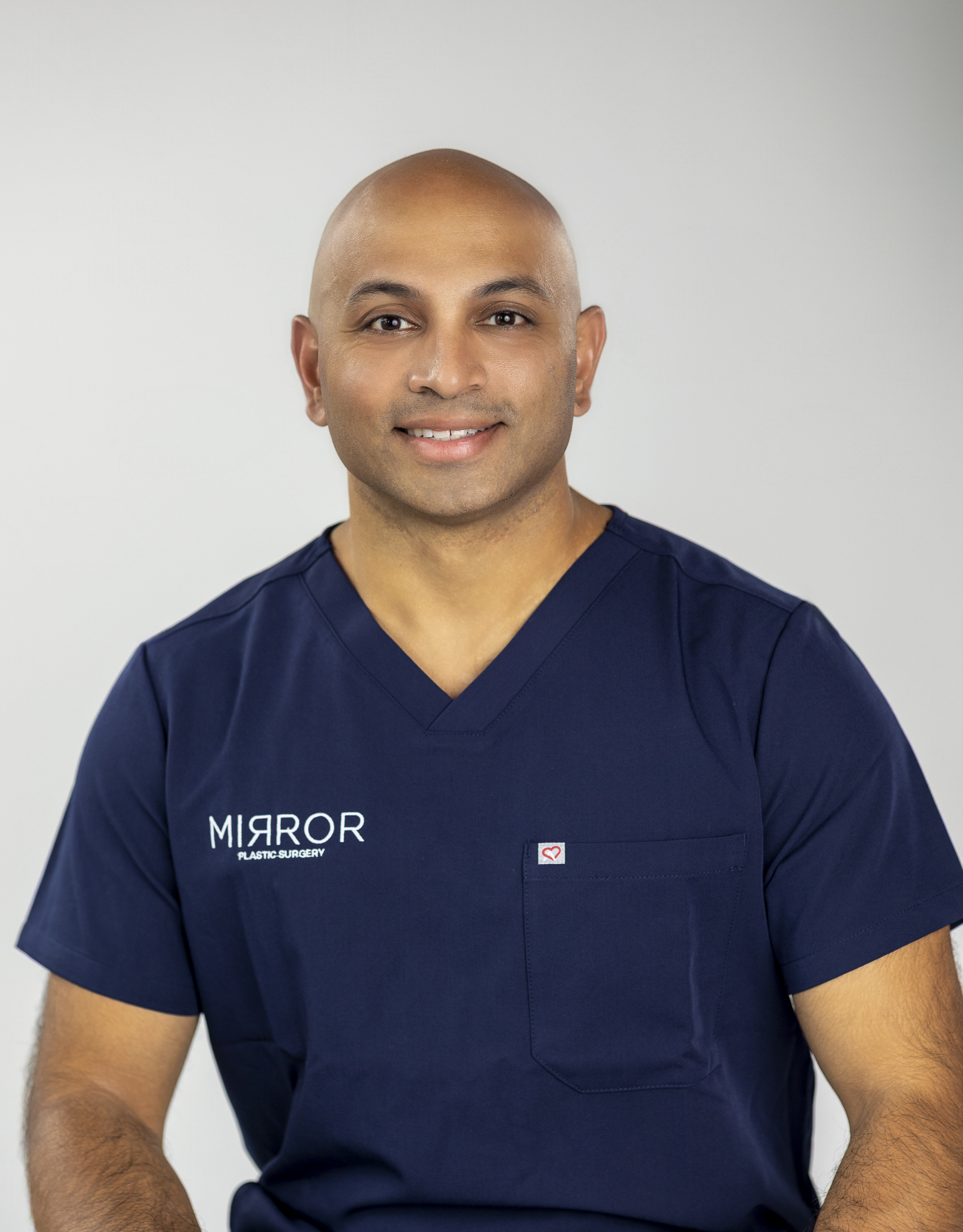
Consultations at Mirror Plastic Surgery can last up to an hour. During that time, Dr. Akash evaluates baseline lip anatomy, mucosal quality, facial proportions, prior filler history, and functional movement at rest and with expression. A proper consultation evaluates lip shape, facial balance, medical considerations, and dynamic movement to support anatomy-first planning and reduce adverse outcomes.
Schedule your personalized lip assessment with Dr. Akash to review anatomy-specific options and realistic outcomes.
Why Lips Do Not Automatically Sag After Fillers
Sagging after lip filler is not built into the procedure; it reflects technique-dependent complications such as overfilling and repeated layering without dissolution. In most cases, temporary HA fillers do not permanently stretch the lips. Very large, repeated overfilling over years may affect tissue elasticity, which is why conservative treatment is safer.
The subcutaneous layer of the lip is thin. A 2026 cross-sectional ultrasound study of 126 participants published in Plastic and Reconstructive Surgery found that the subcutaneous layer averaged less than 1 mm in both upper and lower lips, leading to intramuscular filler placement in most treated individuals. When volume exceeds what the tissue can contain, pressure pushes filler beyond anatomical boundaries. That pressure creates the shelf, blurred border, or heaviness that many people associate with an aged or distorted look.
Tissue atrophy occurs in less than 1% of patients after repeated high-volume filler treatments in areas with thinner skin1, as the material disrupts normal tissue architecture over time. Conservative dosing, careful product selection, and dissolving accumulated filler before adding more volume are the clinical standards that help prevent this complication.
How Often Do People Regret Lip Fillers?
Most regret after lip filler relates to unnatural results rather than the procedure itself. A 2025 Havas survey of 14,500 adults across 30 countries found that 71% of Prosumers want brands to challenge beauty stereotypes, and many prefer subtle, natural-looking changes. That concern is valid and points toward careful provider selection and technique, not a problem with HA fillers as a category.
Reversibility provides a structural safeguard against regret. HA lip fillers are fully reversible using hyaluronidase, an enzyme that breaks down the filler, with visible reduction typically seen within 24–48 hours. This safety net supports high satisfaction in clinical practice. In a clinical study of 60 patients treated with JUVÉDERM VOLBELLA XC for lip enhancement, 65.1% of those who did not receive a top-up injection rated the look and feel of their lips as extremely natural or very natural immediately after the first treatment.1
A 2025 meta-analysis cited in patient selection guidelines reported 68% patient satisfaction, 60% improvement in lip fullness, and 82% improvement in aesthetic appearance after hyaluronic acid lip filler1. Outcomes improved further when treatment matched individual anatomy instead of following a standardized volume protocol.
Common Patient Questions in Lip Consultations
Several questions come up repeatedly during consultations and shape how Dr. Akash plans treatment.
Does ethnicity affect lip augmentation planning? Yes, it affects planning in a meaningful way. A 2026 cross-sectional ultrasound study of 126 participants found that lip anatomy varied significantly by sex, race and ethnicity, body mass index, and age, supporting individualized treatment planning rather than one-size-fits-all techniques. Whole-face assessment, including cheek volume, chin position, nasolabial folds, and bigonial width, helps create proportionate results across different facial structures.
Is there pain during or after the procedure? Mild, short-lived discomfort is expected. A 2026 prospective study of lip flip procedures found that every participant experienced at least one mild, expected, transient adverse event, such as localized pain or general discomfort, all resolving spontaneously within 30 days without intervention. Most HA fillers contain lidocaine, and providers usually apply topical anesthetic before treatment.
When can patients resume normal activity, including intimacy? Most providers advise avoiding significant pressure on the lips for 24–48 hours after treatment to allow initial settling. This recommendation reflects practical caution rather than fragility of the result.
Lip Augmentation Options at Mirror Plastic Surgery
Lip augmentation includes several approaches, and the right choice depends on anatomy, goals, and whether the patient wants temporary enhancement or a structural change.
Temporary HA fillers remain the clinical standard for most people. Hyaluronic acid lip fillers typically last 12 to 18 months.1 No 2026 multi-center post-market study of HA fillers reporting 62.03% maintenance of medium lip fullness at 24 weeks appears in the evidence. The ability to reverse HA fillers with hyaluronidase makes them a strong choice for patients new to lip augmentation.
Botox lip flip changes lip position rather than volume. Objective 3D stereophotogrammetry in a 2026 study confirmed a statistically significant temporary increase in upper lip height at 15 days (from 8.31 mm to 8.74 mm, p=0.011) with no measurable change in lip volume, confirming that the effect occurs through neuromodulation rather than volumetric augmentation. It typically lasts between 2 and 5 months1 and works best for patients with mild upper lip inversion rather than those seeking structural volume.
Surgical lip lift offers a permanent option that shortens the philtrum and increases the show of the upper lip vermilion. This procedure suits patients with a long philtrum or significant age-related lip thinning that fillers cannot adequately correct. Mirror Plastic Surgery performs lip lift as an in-office minor surgical procedure.
Risks, Limitations, and Misconceptions About Lip Fillers
Documented complications of lip augmentation relate primarily to technique, not the filler product itself. Documented complications, including vascular occlusion, tissue ischemia or necrosis, delayed inflammatory nodules, filler migration, and chronic lip distortion, are technique-dependent rather than product-dependent.
Filler migration is the complication patients misunderstand most often. Migration is relatively rare and can create uneven contours or a lumpy appearance when it occurs. Improper placement, muscle movement from facial expressions, or external pressure can all contribute. These causes share a common theme: they disrupt the intended filler position and overload delicate tissue planes.
- Placement too superficially in the dermis allows filler to follow the path of least resistance toward areas of greater movement.
- Excess volume increases tissue pressure and forces HA filler beyond natural anatomic boundaries.
- Repeated injections without dissolving persistent previous filler, combined with constant orbicularis oris muscle movement, further encourages spread.
Augmentation may not suit patients with active perioral infection, significant autoimmune conditions, unrealistic expectations, or a desire for extreme volume. International experts advise caution with patients who have unrealistic expectations or want extreme results when selecting candidates for lip augmentation to reduce dissatisfaction.
Find out if you are a good candidate through a candidacy assessment that focuses on anatomy, safety, and long-term goals.
Frequently Asked Questions
How long do lip fillers actually last?
Most hyaluronic acid lip fillers typically last 12 to 18 months before the body fully metabolizes them. Duration varies based on the specific product, injected volume, individual metabolism, and lip mobility. Clinical data shows that measurable improvement over baseline can persist at 24 weeks, while peak fullness usually appears around 4 weeks after treatment.1 Lip flips with Botox typically last between 2 and 5 months. Surgical lip lifts create permanent structural change.
Can lip filler be reversed if I don’t like the result?
Yes. Hyaluronic acid fillers, the current clinical standard for lip augmentation, can be dissolved with hyaluronidase, an enzyme that breaks down the filler material. The dissolution process works quickly, and most patients notice visible improvement within a day or two. This reversibility offers a major safety and decision-making advantage compared with permanent options such as PMMA fillers, fat injections, or lip implants, which cannot be reversed this way and may require surgery if problems occur.
What causes the “duck lip” or shelf appearance, and can it be corrected?
The shelf or ridge above the upper lip, often called the “duck lip” appearance, occurs when filler migrates beyond the vermilion border. Overfilling, repeated layering of new filler over undissolved product, incorrect injection depth, or use of a high-G′ filler in a highly mobile tissue plane can all cause this look. This outcome is not inevitable with lip augmentation. When HA filler causes the issue, hyaluronidase can usually correct it. Prevention depends on conservative dosing, careful product choice, and an injector with precise anatomical knowledge of the perioral region.
How is lip augmentation at Mirror Plastic Surgery different from a med spa or high-volume clinic?
Mirror Plastic Surgery limits procedures to one or two per day so that Dr. Akash can focus fully on each patient before, during, and after treatment. Consultations can last up to an hour and include a whole-face anatomical assessment, evaluating lip mucosal quality, facial proportions, prior filler history, and functional movement, rather than a quick, volume-focused visit. Unlike high-volume clinics where appointments feel rushed, Dr. Akash dedicates extended consultation time and applies a safety-function-aesthetics hierarchy informed by his Harvard, Johns Hopkins, and MEETH training and dual recognition by Newsweek.
Is lip augmentation appropriate for everyone?
No. Absolute contraindications include active infection at the injection site, known hypersensitivity to hyaluronic acid or lidocaine, and bee sting allergy when hyaluronidase reversal may be needed. Relative contraindications that require careful assessment include unstable cardiovascular disease, active autoimmune conditions, and pregnancy or breastfeeding. Patients with small, dense, inelastic, or dehydrated lips face a higher risk of irregularities and superficial product visibility. Patients with unrealistic expectations or a desire for extreme results are also poor candidates. A thorough pre-treatment evaluation remains the only reliable way to determine individual suitability.
Meet with Dr. Akash at Mirror Plastic Surgery in St. Petersburg, Florida to discuss whether lip fillers, a lip flip, a lip lift, or no treatment is the right choice for your anatomy and goals.
1 Results may vary from person to person. Editorial content, before and after images, and patient testimonials do not constitute a guarantee of specific results.