Written by: Ellie Pranckevicius, FNP-BC, Aesthetic Nurse Practitioner & Aesthetic Injector | Facial Restoration & Regenerative Injectable Specialist, Mirror Plastic Surgery
Key Takeaways for Choosing an Injector in St. Petersburg
- Injector expertise and anatomical training matter far more than med-spa branding or price when you want natural facial rejuvenation.
- High daily procedure volume and template-driven plans increase risk and reduce individualized outcomes. Concierge models with limited daily cases support safer, more thorough assessments.
- Key 2026 standards include ultrasound guidance, supplier-neutral product selection, and a shift toward regenerative biostimulatory agents for longer-lasting, natural results.
- Patients should evaluate providers on credentials, consultation depth, anatomical mapping, documented complication protocols, and realistic expectations rather than marketing claims.
- Schedule a consultation with Ellie at Mirror Plastic Surgery to receive a full-face assessment grounded in anatomy and long-term outcomes instead of volume targets.
Why Injector Expertise Matters More Than Med-Spa Branding
A recognizable brand name does not confer anatomical knowledge. A 2026 Harley Street Institute systematic review concludes that the dominant determinants of harm from non-surgical facial injectables are operator training, regulatory environment, and clinic-level protocol rather than product brand or patient demographics. One structural factor that undermines these safety pillars is daily procedure volume. High-volume practices that schedule five to ten procedures daily create throughput pressure that can push even capable injectors toward rushed assessments and template-driven plans. Throughput pressure from non-clinician management companies that dictate syringe volume per shift can push good injectors into rushed assessments and out-of-scope shortcuts, which renewed corporate practice of medicine enforcement now targets.
The consequence for patients is measurable. Board-certified plastic surgeons achieve an overall complication rate of 0.74% in outpatient plastic surgery procedures, while injectors with minimal training may follow template dosing charts that ignore individual anatomy. Branding cannot substitute for that gap in training depth. This disparity in outcomes makes clinical credentials and practice structure more important than marketing when you select a provider.
At Mirror Plastic Surgery in St. Petersburg, non-surgical procedures are led by Ellie Pranckevicius, FNP-BC. Her background spans esthetics licensure with 600 hours of hands-on training, a Master’s in Nursing from the University of South Florida, and four years in the Neuroscience ICU at Tampa General Hospital. That clinical foundation, combined with the practice’s limit of surgeries to one to two per day, expresses an expertise-first model of care.
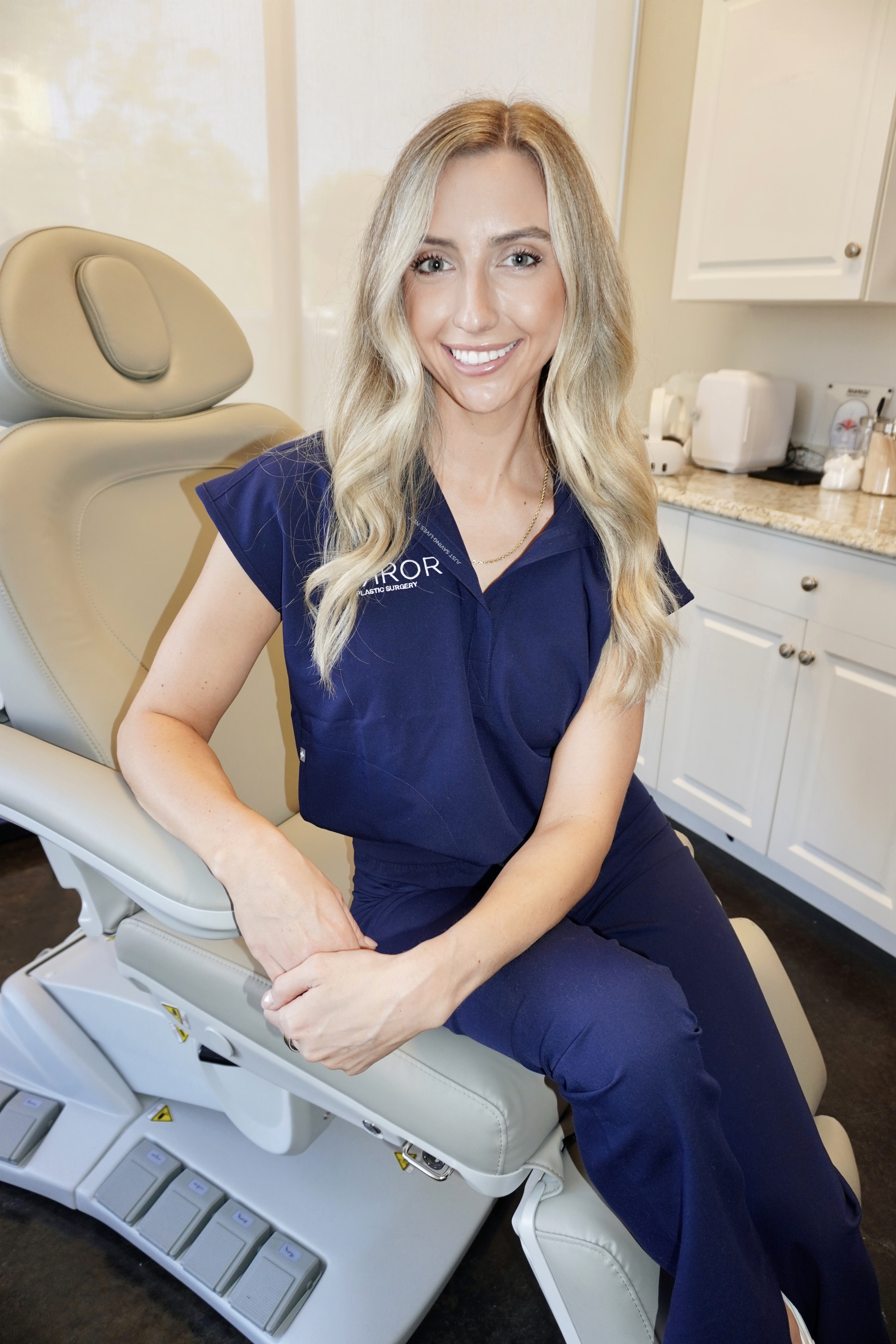
Schedule your assessment with Ellie to experience the difference that anatomical expertise and unhurried evaluation make in your treatment plan.
Key Injectable Terms Every Patient Should Know
Neuromodulators are botulinum toxin formulations, including Botox, Dysport, Xeomin, Daxxify, and Jeuveau. They temporarily reduce muscle activity to soften dynamic lines in the face, neck, masseters, and trapezius. Patients who sustain consistent quarterly neuromodulator treatments without extended lapses often see their unit counts stabilize or decrease slightly over two to three years because repeated chemodenervation reduces the strength of muscular habits.1
Biostimulatory fillers are injectable agents, principally poly-L-lactic acid (PLLA), poly-d,l-lactic acid (PDLLA), and calcium hydroxyapatite (CaHA). They stimulate fibroblast activity and extracellular matrix remodeling rather than simply replacing lost volume. Current evidence supports describing PLLA and CaHA as biostimulatory agents that drive durable tissue remodeling, not true tissue regeneration.1
Full-face balancing refers to an assessment and treatment strategy that evaluates the upper, middle, and lower facial thirds as an integrated system rather than treating isolated areas. Treatment sequencing in facial balancing prioritizes foundation and structural support in areas such as temples, cheeks, chin, and jawline before high-volume lip or fold correction, often resulting in secondary areas requiring less product than expected.1
Complication protocols are written, rehearsed procedures for managing adverse events including vascular occlusion. Minimum clinic readiness for safe filler practice includes in-date reversal agents on premises in adequate dose for full territory flood, a written dated and signed complication protocol read aloud within the last quarter, and a documented escalation pathway to named secondary-care providers including ophthalmology.
The Treatment-Planning Journey at a Safety-First Practice
A well-structured injectable consultation follows a defined sequence that protects both safety and outcome quality.
- Medical history and contraindication screening. The injector reviews prior injectable history, medications, allergies, and systemic conditions before any product discussion begins.
- Multi-view physical assessment. Assessment occurs at rest and in animation from frontal, oblique, lateral, and profile views. Static photographs support planning but do not replace in-person assessment of tissue quality, mobility, expression, and palpation findings.
- Anatomical mapping. Clinicians performing aesthetic injections map facial anatomy, identify key bony and ligamentous landmarks, and analyze the face in multiple views to determine asymmetry before injection.
- Individualized treatment plan. Product selection follows clinical objective, tissue plane, and anatomic location rather than a standard menu. Ellie’s approach connects product choice to facial identity. She prioritizes restoration of inherent facial characteristics first, then considers volume augmentation when it supports that goal.
- Informed consent and realistic expectations. A thorough consultation includes medical history review, physical examination, goal discussion, treatment options, risks, alternatives, and a follow-up plan to support careful individualized treatment planning.
- Treatment execution and follow-up. Conservative initial treatment with staged appointments for new patients or multi-region plans supports natural-looking results and allows reassessment after swelling resolves.
- Maintenance planning. Qualified practitioners build maintenance planning into the treatment protocol from the initial consultation rather than treating it as optional.
2026 Standards Shaping Facial Rejuvenation Injections
The injectable field has shifted materially in the past two years. Three developments define current best practice and work together to improve safety and outcomes.
Ultrasound guidance. A 2026 multicenter descriptive case series published in Cureus provided preliminary observations suggesting high-resolution ultrasound may be valuable for pre- and post-procedural anatomical evaluation and confirmation of filler or fat placement in hand rejuvenation. Emerging AR-assisted systems extend this benefit. A 2026 patent describes an augmented reality assisted ultrasound guidance system that integrates AI-driven segmentation to identify safe injection zones with proximity-based alerts of 2 mm for arteries, 5 mm for veins, and 3 mm for nerves.
Supplier-neutral product selection. No single product line suits every patient. Practices tied commercially to one supplier cannot objectively match product rheology, degradation profile, and tissue plane to individual anatomy. Mirror Plastic Surgery operates as a supplier-neutral practice. The team selects across brands including Juvederm, RHA, Versa, Restylane, Radiesse, and Evolysse based on clinical fit rather than quota. This product flexibility complements ultrasound guidance by aligning the right material with the right depth and location.
Shift toward regenerative biostimulatory agents. PDLLA microspheres activate fibroblasts, support ECM reinforcement, and enable sustained neocollagenesis with faster, more uniform degradation than PLLA and reduced risk of late granulomatous reactions. A multicenter double-blind randomized trial found that repeated PLLA injections produced statistically significant improvements in skin elasticity and hydration at 12 months compared with saline control.1 The injectable field is shifting from pure volumizing fillers toward regenerative treatments, with biostimulators gaining significant traction globally. This move toward regeneration pairs naturally with supplier-neutral selection and image-guided placement to support subtle, long-lasting results.
Red Flags to Watch for at Med Spas
Certain practice patterns reliably predict higher risk and lower outcome quality. Patients evaluating providers in the St. Petersburg and Tampa area should note the following warning signs.
- High daily procedure volume. Practices scheduling ten or more injectable appointments per day cannot provide the assessment depth that individualized anatomical planning requires.
- Template-driven treatment plans. Recommending the same product combination regardless of the patient’s facial structure, age, or prior treatment history indicates a protocol-over-anatomy approach.
- Absent or undocumented complication protocols. Lower complication rates cluster in regulated, clinician-led settings with written and rehearsed complication protocols, in-date hyaluronidase, defined escalation pathways, and longitudinal training.
- Absentee medical oversight. An absentee medical director who lends only a name and signature without documented recurring involvement in approving procedures, reviewing adverse events, or supervising delegation leaves the program without a defensible spine when investigators request evidence.
- Upselling by volume. Recommending more product than anatomy warrants reflects a commercial decision, not a clinical one. Restraint is a hallmark of injector expertise; an experienced injector can achieve meaningful improvement with modest volumes, while an under-trained provider may attempt to compensate for imprecise placement by using more filler.1
- Use of counterfeit or gray-market products. Counterfeit or diverted neurotoxins and fillers purchased from foreign or unauthorized sources may be mislabeled, improperly stored, or non-FDA-approved, and practices using them have faced board discipline, product seizures, and criminal exposure.
Questions That Reveal True Injector Expertise
Five questions cut through marketing language and surface the clinical depth of any injector. Use these at every consultation.
- “How do you assess my full face before recommending any treatment?” A qualified injector describes a structured multi-view assessment covering facial thirds, bone structure, fat compartment volume, tissue quality, and asymmetry, not a quick visual scan.
- “What is your complication protocol if vascular occlusion occurs?” The ASDS Task Force protocol for vascular occlusion requires stopping injection at signs of blanching or severe pain, injecting hyaluronidase, applying warm compresses, administering aspirin if not contraindicated, and referring emergently for vision changes or neurological symptoms. An injector who cannot describe this sequence clearly has not rehearsed it.
- “Are you supplier-neutral, or do you have a preferred brand arrangement?” Commercial relationships with a single distributor constrain product selection to what is available rather than what is appropriate for a given patient’s anatomy.
- “How many procedures do you perform per day, and how long is the initial consultation?” The answer reveals whether the practice model allows for individualized assessment or prioritizes throughput.
- “What would you recommend I not do yet, and why?” An injector willing to advise against a procedure demonstrates clinical honesty. Ellie Pranckevicius is known for telling patients when an expensive service is not yet necessary, which builds long-term trust rather than short-term revenue.
Decision Factors to Weigh When Comparing Providers
When you compare providers, weigh these criteria in order of clinical importance.
- Credentials and training depth. Deep understanding of facial anatomy, including vascular structures, danger zones, fat compartments, and facial layers, forms the critical foundation that separates safe, skilled injectors from those relying on luck. Ellie holds an FNP-BC designation, a Master’s in Nursing, and 600 hours of esthetics training, supplemented by four years of Neuroscience ICU clinical judgment.
- Consultation length. The World Academy of Cosmetic Surgery 2026 guidelines note that consultations must cover goals, risks, and alternatives thoroughly. Mirror Plastic Surgery dedicates up to an hour per initial consultation.
- Anatomical mapping approach. Individualized injectable treatment planning requires tailoring approaches to each patient’s unique anatomy and aging patterns, including volume loss in specific fat compartments and bone resorption, rather than applying volume-driven or shortcut methods.
- Safety protocols. Confirm that reversal agents are on-site, that a written complication protocol exists, and that escalation pathways to secondary care are documented.
- Realistic outcome expectations. Filler does not reliably correct significant skin laxity, etched rhytides, pigment concerns, poor texture, or heavy tissue descent. When tissue quality is the primary issue, regenerative strategies, energy-based treatments, skincare, or surgical consultation may be more appropriate.
- Maintenance planning. A provider who builds maintenance into the initial plan is thinking longitudinally about your results. Fillers typically need refreshing on a recurring schedule, while biostimulators like poly-L-lactic acid can maintain improvements for extended periods after an initial series.
Risks, Limitations, and Trade-Offs of Injectables
Injectable facial rejuvenation carries real risks that informed patients should understand before proceeding.
Vascular occlusion is the most serious filler complication. Vascular occlusion rates are reported at 1 per 6,410 needle syringes versus 1 per 40,882 cannula syringes in facial filler procedures, with microcannulas associated with 77.1% lower odds of occlusion than needles. Vascular occlusion can cause skin necrosis or permanent blindness if filler enters or compresses an artery connected to the ophthalmic circulation, with a roughly four-hour salvage window for cutaneous tissue and only minutes for retinal ischemia.
Variable longevity means results do not last forever. Non-surgical facelift results from radiofrequency microneedling and HIFU typically persist for 12 to 18 months with proper skincare maintenance, while neuromodulators last three to six months.1
Common misconceptions include the belief that treating one area in isolation produces balanced results and that more product equals better outcomes. Both assumptions produce the overdone appearance that patients most want to avoid. Patients today are more informed and discerning and are not chasing drastic transformations, preferring comments like “You look great! Have you been on holiday?” over “Have you had your lips done?”
Asymmetry risk increases when injectors treat areas without evaluating the face as a whole. A full-face strategy that sequences structural support before focal correction reduces this risk in a systematic way.
High-Volume vs. Concierge Care at Mirror Plastic Surgery
The structural differences between high-volume and concierge injectable practices affect safety, assessment depth, and long-term outcomes in ways that are not obvious from a website or price list.
Daily procedure limits determine how much time and cognitive attention each patient receives. High-volume practices may schedule ten or more injectable appointments per day. The practice’s daily procedure limits, mentioned earlier, ensure that each patient receives focused attention. The same philosophy governs non-surgical treatments to preserve the focus required for individualized assessment.
Depth of assessment in a concierge model includes a structured top-to-bottom evaluation of facial anatomy, emotional drivers for treatment, long-term goals, and prior injectable history. Before placing any filler, a skilled practitioner conducts a careful evaluation of the patient’s facial anatomy, proportions, and symmetry; reviews prior treatment history; and engages in an honest conversation about goals and realistic expectations. High-volume models compress this step.
Long-term patient relationships are a structural outcome of the concierge model. When an injector sees a patient across multiple years, treatment decisions account for cumulative product load, tissue changes over time, and evolving aesthetic goals. Ellie Pranckevicius likens aesthetics to dentistry, where lasting outcomes require consistent maintenance and patient education, and she applies that longitudinal mindset to each plan.
1
See how a concierge approach changes your injectable experience by scheduling with Ellie for the individualized attention described in this section.
Frequently Asked Questions
How long does a facial injectable consultation at Mirror Plastic Surgery typically take?
Initial consultations with Ellie Pranckevicius are structured to last up to an hour. That time covers a comprehensive top-to-bottom assessment of facial anatomy, a review of medical history and prior injectable history, an open discussion of aesthetic goals and emotional motivations, and a detailed explanation of any recommended treatment plan including realistic expectations, risks, and maintenance requirements. This length is intentional. A meaningful anatomical mapping, contraindication review, and personalized multi-region plan cannot be completed in a 15-minute appointment.
What is the difference between a biostimulatory filler and a traditional volumizing filler?
Traditional volumizing fillers add immediate physical volume to a treated area and are gradually metabolized by the body over time. As explained in the key terms section above, biostimulatory fillers work by activating your body’s own collagen production rather than simply adding volume. The key practical difference for patients involves timing and feel. Volumizing fillers give quicker, more obvious changes, while biostimulators build results gradually and often feel more like your own tissue. Biostimulatory outcomes also tend to last longer after an initial series, which can reduce how often you need retreatment.1 Ellie selects between these categories based on each patient’s anatomy, tissue quality, and goals rather than defaulting to one product type.
What credentials should I look for in a facial injectable provider in Florida?
In Florida, nurse practitioners may administer neuromodulators and dermal fillers within a supervisory relationship with a licensed physician. The minimum credential baseline includes an active APRN license, board certification, and completion of a training program covering facial anatomy, injection techniques, product pharmacology, and complication management. Beyond licensure, meaningful expertise develops through supervised clinical hours, structured mentorship, and ongoing education in advanced anatomy and complication protocols. Ellie Pranckevicius holds FNP-BC board certification, a Master’s in Nursing from the University of South Florida, 600 hours of esthetics training, and four years of Neuroscience ICU experience at Tampa General Hospital. This combination provides both the clinical judgment to recognize complications early and the anatomical depth to avoid them. Her work at Mirror Plastic Surgery occurs under the oversight of Dr. Akash Chandawarkar, a Harvard-educated, Johns Hopkins-trained plastic surgeon.
How do I know if I need a surgical consultation instead of injectables?
Injectables address volume loss, dynamic lines, and mild to moderate structural changes most effectively. They are not the appropriate primary intervention for significant skin laxity, heavy tissue descent, etched static rhytides, or pigment and texture concerns that require resurfacing or surgical correction. A qualified injector identifies these boundaries during the assessment and refers patients to surgical consultation when indicated. At Mirror Plastic Surgery, Ellie’s injectable work can be complemented by Dr. Akash Chandawarkar when surgical options align better with a patient’s goals. This integrated model, where the same practice covers both non-surgical and surgical pathways, supports honest recommendations rather than advice constrained by what a single provider can offer.
Making an Informed Decision About Injectables in Tampa Bay
Choosing an injectable provider in St. Petersburg or Tampa is a clinical decision, not a consumer one. The factors that predict safe, natural, long-lasting results, including injector credentials, consultation depth, anatomical mapping, complication readiness, supplier neutrality, and maintenance planning, do not appear clearly in a price list or a social media feed. The practitioner’s credentials and willingness to decline treatment matter more than equipment owned.
A defining trend in 2025–2026 consultations is the shift toward natural, undetectable results and preservation-based aesthetics, with practitioners prioritizing refined preservation, regenerative sculpting, and subtlety over dramatic transformation. That standard requires time, anatomical knowledge, and a practice model built around the patient rather than the schedule.
Mirror Plastic Surgery’s concierge model, which includes hour-long consultations, limited daily procedures, supplier-neutral product selection, and a safety-first philosophy, is designed to meet that standard consistently. Ellie Pranckevicius brings a rare combination of esthetics training, advanced nursing expertise, and Neuroscience ICU clinical judgment to every full-face assessment. When surgical options are relevant, Dr. Akash Chandawarkar’s Harvard and Johns Hopkins training provides an integrated pathway that few practices in the Tampa Bay area can offer.
Take the next step: contact Ellie at Mirror Plastic Surgery to schedule your comprehensive assessment. The practice is located at 780 4th Ave S, St. Petersburg, FL 33701. Reach the team by phone or text at 727-361-6515 or by email at hello@mirrorplasticsurgery.com.
Disclaimer: Results may vary from person to person. Editorial content, before and after images, and patient testimonials do not constitute a guarantee of specific results.
1 Results may vary from person to person. Editorial content, before and after images, and patient testimonials do not constitute a guarantee of specific results.