Written by: Dr. Akash Chandawarkar, Board Certified Plastic Surgeon, Mirror Plastic Surgery
Key Takeaways
- Non-surgical hair restoration slows miniaturization and can modestly increase density when follicles remain biologically active.1 It cannot create new follicles or restore hair in permanently bald areas.
- Seven evidence-ranked options, from daily minoxidil-finasteride to PRP, microneedling, LLLT, SMP, and hair systems, each match specific Norwood stages, budget ranges, and lifelong maintenance levels.
- Accurate diagnosis drives success. Trichoscopy and bloodwork confirm viable follicles and rule out non-androgenetic causes before any protocol starts.
- Emerging 2026 therapies such as clascoterone 5% and Acorn Biolabs Secretome show meaningful promise, while human hair cloning remains years away. Patients benefit most by starting physician-led treatments now.
- Book a consultation with Dr. Akash at Mirror Plastic Surgery to receive a trichoscopy-guided plan that matches your follicle viability, loss stage, and long-term goals.
What Non-Surgical Hair Restoration Actually Delivers
Non-surgical hair restoration rescues follicles that are still alive but shrinking. The biological ceiling is fixed. Once follicles are miniaturized beyond recovery or gone, these treatments cannot create new hair in completely bald areas. The American Academy of Dermatology does not state that a shiny bald scalp indicating follicular scarring prevents natural hair regrowth. Every option below operates within that constraint.
Quick Comparison of Seven Options by Stage, Cost, and Maintenance
The following table ranks seven evidence-based approaches by their suitability for different loss stages, budget levels, and maintenance needs. Use it to see which options align with your current Norwood or Ludwig classification before reviewing the detailed explanations.
| Option | Best Norwood / Ludwig Stage | Relative Budget | Maintenance Frequency |
|---|---|---|---|
| 1. Minoxidil + Finasteride (combination) | Norwood I–IV / Ludwig I–II | Low | Daily, lifelong |
| 2. PRP / PRF Therapy | Norwood I–IV / Ludwig I–II | Moderate | Every 3–6 months after initial course |
| 3. Acorn Biolabs Secretome (Conditioned Media / EV) | Early-to-moderate; higher response at earlier stages | Moderate–High | Physician-determined; ongoing |
| 4. Microneedling + Topical Minoxidil | Norwood II–V / Ludwig I–III | Low–Moderate | Initial series of 4–6 sessions; 2–3 maintenance sessions per year |
| 5. Low-Level Laser Therapy (LLLT) | Mild–moderate thinning; adjunct role | Low–Moderate | 10–20 min, 2–4 times weekly, ongoing |
| 6. Scalp Micropigmentation (SMP) | Any stage; cosmetic only; most impactful at Norwood 6–7 | Moderate | Touch-ups as pigment fades |
| 7. Hair Systems | Advanced loss; any stage for cosmetic coverage | Moderate (ongoing) | Re-bonding every 4–6 weeks |
Schedule your trichoscopy assessment to determine which option or combination matches your Norwood stage, follicle viability, and long-term goals.
How Non-Surgical Options Compare to Hair Transplant
Follicle viability and loss stage determine whether non-surgical treatment can rival or delay a transplant. The primary goal is to slow or stop loss within the first six months. Modest regrowth of about 10–20 percent occurs only when living miniaturized follicles remain. The seven options below are ranked by evidence strength.
-
Minoxidil + Finasteride Combination. Combined finasteride and minoxidil slows or halts hair loss in many patients with androgenetic alopecia. Minoxidil extends the anagen phase and increases blood supply. Finasteride blocks conversion of testosterone to DHT. A meta-analysis of seven randomized controlled trials found that topical minoxidil-finasteride combination therapy produced clinically meaningful improvements over minoxidil alone in hair density, hair diameter, and global photographic assessment.1 Side effects include scalp irritation from minoxidil and, for oral finasteride, risks of sexual dysfunction and mood changes. Failure point: stopping finasteride leads to resumption of miniaturization and loss of gains within 12 to 18 months. Medications cannot restore hair in completely bald areas. This reflects biology, not dosage.
PRP / PRF Therapy. A 2025 meta-analysis of 43 randomized controlled trials with 1,877 participants found activated PRP effective at increasing hair density compared to placebo. PRP treatment in androgenetic alopecia increases hair density by approximately 10–30 hairs/cm² compared to baseline or control groups.1 In a case series of 11 women with female pattern hair loss, three monthly i-PRF+ injections produced mean increases in hair follicles containing hair per mm² of 62 percent at 3 months and 97 percent at 6 months, with new hair growth reported as early as 6–8 weeks. Side effects are usually limited to brief injection-site discomfort, redness, or swelling when prepared and administered under sterile conditions. Failure point: PRP does not address DHT, the hormonal driver of androgenetic alopecia. Even strong responders often continue losing hair overall because the root cause remains untreated. PRP rarely produces meaningful regrowth in very advanced hair loss, such as Norwood V+ or Ludwig III, or when follicles have been inactive long enough for dermal papillae to be replaced by scar tissue.
Acorn Biolabs Secretome (Conditioned Media / Extracellular Vesicles). Mirror Plastic Surgery offers Acorn Biolabs Secretome, a conditioned media and extracellular vesicle platform, as an injected or topical treatment. Conditioned media has increased hair density and thickness in studies, with some research showing added benefit when combined with minoxidil. Extracellular vesicle therapy increased hair count by 28 percent and hair thickness by 14 percent in a randomized controlled trial, with retrospective data showing density gains up to 45 percent and higher responses in early-stage androgenetic alopecia.1 Across all 20 studies in the 2026 Behrangi et al. systematic review, only mild, transient adverse events such as injection-site pain, redness, or bruising were reported. Failure point: standardization of these therapies remains crucial, with emphasis on transparency, reproducibility, and patient safety. Physician-led selection and protocol design are essential to maximize outcomes.
Microneedling + Topical Minoxidil. A 2025 meta-analysis of 12 randomized controlled trials involving 631 patients found that adding microneedling to topical minoxidil produced significantly greater hair count improvements than minoxidil alone. Microneedling creates controlled micro-injuries that enhance topical absorption and stimulate collagen production. Side effects include transient redness, scalp swelling, and tenderness that resolve within 24–48 hours. Failure point: microneedling plus minoxidil remains a medical-management approach rather than a permanent corrective procedure. Benefits depend on continued treatment. It is contraindicated in scarring alopecias and active scalp infections.
Low-Level Laser Therapy (LLLT). Systematic reviews and meta-analyses of FDA-cleared home-use LLLT devices have shown significant increases in hair density compared to sham treatment. The efficacy of photobiomodulation as a monotherapy for androgenetic alopecia remains debated because device parameters are inconsistently reported. Side effects are typically mild, such as scalp warmth, tingling, or temporary early shedding. Failure point: the effect size is small and data weaker than marketing suggests, so clinicians rarely recommend it as a primary treatment. It cannot regrow hair in fully scarred or long-inactive follicles.
Scalp Micropigmentation (SMP). SMP deposits pigment into the scalp dermis to simulate follicular units and create the visual impression of density or a shaved head. For men at Norwood 6–7, SMP alone can transform appearance by creating the look of a closely cropped head of hair without donor grafts or surgical recovery. Side effects are cosmetic, including color mismatch and fading. Failure point: SMP fades over time and requires touch-ups. Results depend heavily on practitioner skill to match natural hair color and pattern. It adds no real hair and provides no follicular stimulation.
Hair Systems. Hair systems provide instant full coverage for advanced loss. They are removable, require regular cleaning, refitting, and eventual replacement, and can be affected by sweat, swimming, and humidity. Patients can wear hair systems while using medications such as minoxidil or finasteride or while saving for a transplant, which allows reversible sequencing of non-surgical options without permanent commitment. Failure point: skipping re-bonds, leaving systems on too long without cleaning, or using cheap adhesives can promote bacterial growth or traction alopecia underneath the system.
While the seven options above represent today’s evidence-based toolkit, many patients still wonder whether waiting for future treatments makes more sense. The next section explains what is realistically coming in 2026 and what remains years away.
Breakthrough Hair Loss Treatments on the 2026 Horizon
2026 Breakthrough Watch
Clascoterone 5 percent (Breezula) completed Phase 3 trials with 1,465 patients and showed up to 539 percent relative improvement in target-area hair count versus placebo.1 FDA NDA submission is targeted for early 2027. Clascoterone acts as a topical androgen receptor antagonist without systemic DHT suppression. It represents the first new therapeutic mechanism for androgenetic alopecia in more than 30 years.
On the regenerative frontier, in February 2026, researchers at Japan’s RIKEN Institute and collaborators identified the missing third cell type required for lab-grown hair follicles and achieved high-efficiency functional follicle growth in lab conditions for the first time. Human trials and regulatory approvals will still take years, so the technology remains unavailable in 2026. Hair cloning is estimated to be 5–10 years from mainstream clinical availability, so patients seeking results today should not wait.
A 2026 scoping review by Gupta et al. concluded that stem cells and exosomes show promising, though still limited, clinical evidence in inducing hair regrowth for androgenetic alopecia and that standardization of these therapies is crucial. Acorn Biolabs Secretome, available now at Mirror Plastic Surgery, represents the most clinically accessible iteration of this technology under physician oversight.
Targeted Ways to Stimulate Hair Follicles
Effective follicle stimulation matches the mechanism to the biological state of each follicle. The approaches below describe how stimulation works within the ranked options above and how each contributes to a broader plan.
- Pharmacologic stimulation: Minoxidil prolongs the anagen phase and increases follicular blood supply. Early shedding after starting minoxidil is expected and does not signal treatment failure. It usually appears in weeks 2 to 8 as the drug pushes resting follicles into a new growth phase.
- Growth factor delivery: PRP delivers growth factors including PDGF, VEGF, TGF-β, and IGF to stimulate dermal papilla cells, promote angiogenesis, prolong the anagen phase, and reduce follicular inflammation. This mechanism supports follicles that still have biological activity.
- Mechanical stimulation: Microneedling creates controlled micro-injuries that stimulate collagen production and blood flow while enhancing absorption of topical treatments such as minoxidil. It serves primarily as an amplifier rather than a standalone therapy.
- Photobiomodulation: LLLT uses red light wavelengths to improve mitochondrial function in follicles. It works best as a consistent contributor alongside medical therapy instead of a solo treatment.
- Regenerative signaling: Conditioned media and extracellular vesicles from Acorn Biolabs Secretome deliver paracrine signals that support dermal papilla cell activity and follicular cycling. This approach fits patients who still have viable follicles but want a regenerative adjunct.
Non-genetic hair loss causes such as hormonal imbalances, thyroid disorders, elevated cortisol, nutritional deficiencies, and postpartum changes require medical evaluation first. Treating DHT-driven loss in a patient with a different underlying driver will not address the root cause. Physician-led trichoscopy and bloodwork form the essential first step before any stimulation protocol.
Get your follicle viability assessment for a trichoscopy-guided evaluation that identifies which follicles are still viable and which stimulation protocol is appropriate for your anatomy.
Why Physician Expertise Changes Hair Restoration Outcomes
Accurate diagnosis separates a protocol that stabilizes thinning from one that wastes months on the wrong modality. Many patients have spent significant resources on ineffective plans because nobody performed proper trichoscopy first. Diagnosis decides treatment, not the other way around.
Dr. Akash at Mirror Plastic Surgery brings a standard of anatomical precision to hair restoration that high-volume clinics structurally cannot match. His training path explains this. A Harvard Medical School education (cum laude, Honors) followed by a seven-year integrated plastic and reconstructive surgery residency at Johns Hopkins University built his surgical skill base. An aesthetic surgery fellowship at Manhattan Eye, Ear and Throat Hospital (MEETH) refined the cosmetic judgment needed for natural hairline design. His Stanford University Biodesign Innovation Fellowship adds a technology-evaluation lens that guides evidence-based treatment selection. Board certification by the American Board of Plastic Surgery and recognition in America’s Best Plastic Surgeons 2025 by Newsweek for two consecutive years confirm that this combination meets the highest peer-reviewed standards.
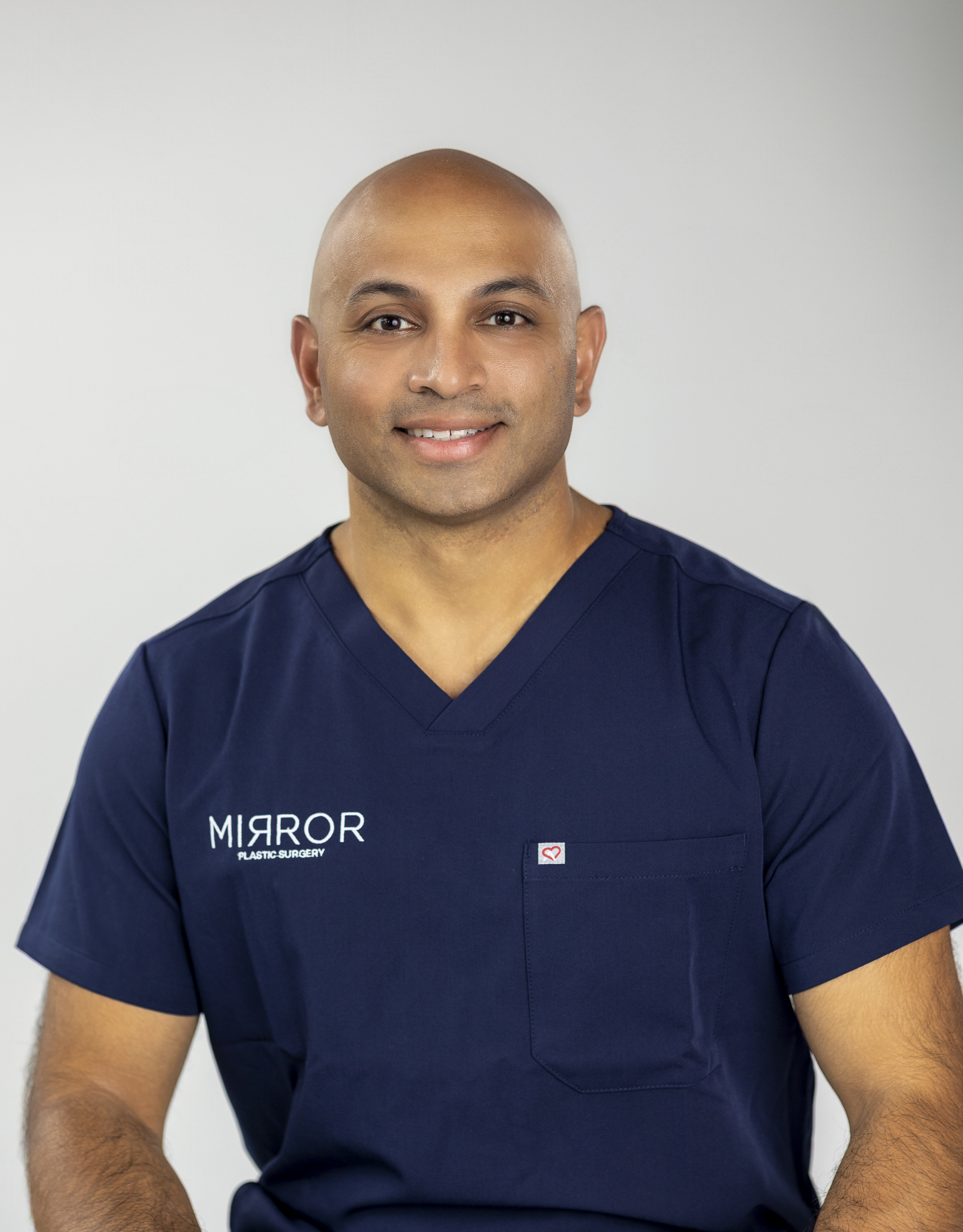
Dr. Akash, Board-Certified Plastic Surgeon Mirror Plastic Surgery’s concierge model limits the practice to one to two procedures per day, a deliberate structural choice that ensures every patient receives an hour-long consultation, a top-to-bottom anatomical assessment, and a treatment plan grounded in the safety-function-aesthetics hierarchy. This structure contrasts directly with high-volume clinics performing five to ten procedures daily, where protocol selection is rarely individualized and failure points often go unaddressed.
For hair restoration, this model means detailed follicle viability mapping before any modality is selected, sequenced combination protocols where mechanisms are distinct and side-effect profiles do not overlap, and long-term oversight instead of one-off procedures. Acorn Biolabs Secretome is offered at Mirror Plastic Surgery because its conditioned media and extracellular vesicle platform aligns with the evidence base for regenerative adjuncts while meeting the practice’s standard for supplier-neutral, evidence-driven selection.
Frequently Asked Questions
Am I a candidate for non-surgical hair restoration?
Candidacy depends on follicle viability, not simply the degree of visible thinning. As explained earlier, non-surgical treatments work only when follicles remain biologically active, and a smooth, shiny scalp showing no vellus hairs under trichoscopy signals that threshold has been crossed. Patients with early-to-moderate androgenetic alopecia, roughly Norwood I–IV in men and Ludwig I–II in women, are the strongest candidates. Patients with long-standing advanced loss at Norwood V–VII should discuss surgical options. A proper evaluation includes medical history, trichoscopic scalp examination, Norwood or Ludwig staging, and bloodwork to rule out thyroid disease, iron deficiency, or other non-androgenetic causes that require different treatment.
How long does it take to see results from non-surgical hair restoration?
Most non-surgical treatments require three to six months of consistent use before visible improvement. Full results are best assessed at twelve months. Reduced shedding is typically the first observable change and appears three to six weeks after starting pharmacologic or injectable therapy. Visible density improvement on standardized photography takes three to six months for PRP and conditioned media approaches. Minoxidil requires at least six months of consistent daily use before efficacy can be judged. Patients should avoid judging any protocol before the three-month mark and should use standardized photography under consistent lighting to detect changes as modest as a 10 percent density increase.
What are the main reasons non-surgical hair restoration stops working?
Two distinct failure modes explain most disappointments. The first is biological. Once follicles have transitioned from miniaturized to completely non-functional, no non-surgical therapy can revive hair production. Clinical signals that this threshold has been crossed include a bald zone that has been smooth and shiny for more than two to three years, absence of vellus hair on trichoscopy, or no measurable density change after completing a full four-to-six session course at six months. The second failure mode is behavioral. Compliance is the main ceiling for success. Inconsistent use of finasteride, incomplete PRP protocols, or stopping treatment after initial gains leads to a return toward baseline hair loss trajectory within six to twelve months. Non-surgical hair restoration works best when viewed as managing a chronic condition rather than completing a finite course.
Can non-surgical treatments be combined safely?
Combination treatment can be safe and effective when guided by a physician. Mechanisms should be distinct and side-effect profiles should not overlap. The evidence-based foundation is pharmacologic therapy, such as minoxidil or finasteride, with PRP, LLLT, or microneedling layered in after confirming viable follicles through clinical exam. Clinicians should add one treatment at a time and wait six to eight weeks before introducing another to monitor for side effects and attribute efficacy. Minoxidil should not be applied within 24 hours after microneedling because of increased systemic absorption risk. Oral and topical finasteride should not be combined without physician supervision. Contraindications for injectable therapies such as PRP include anticoagulant use, active scalp infection, platelet disorders, uncontrolled systemic disease, and pregnancy.
When should I escalate from non-surgical treatment to a hair transplant consultation?
Escalation becomes appropriate when an optimized non-surgical protocol of twelve or more months fails to stabilize loss or produce measurable density improvement. It is also appropriate when trichoscopy confirms follicular absence in affected areas or when loss has reached Norwood V or above with adequate donor density in the occipital zone. Most practitioners prefer to see a stable hair loss pattern across at least twelve months before recommending surgery. Patients under age 25 are generally advised to pursue medical stabilization first because ongoing loss trajectory remains unpredictable and premature surgery risks unnatural results as native hair continues to thin. Non-surgical treatment remains essential even after transplantation to protect surrounding native hair from ongoing androgenetic progression.
Next Step: Moving From Research to a Plan
Non surgical hair restoration alternatives to hair transplants can deliver meaningful stabilization and modest density improvement in early-to-moderate androgenetic alopecia when follicles remain viable, protocols follow evidence, and maintenance is sustained. These options do not reverse advanced loss, cannot regenerate absent follicles, and require lifelong commitment to preserve gains. The difference between a protocol that works and one that wastes time is an accurate diagnosis and a physician who understands the anatomy, the biology, and the long-term plan.
The concierge model described above, with its structural focus on diagnostic precision over volume, provides the physician-led oversight that generic clinics cannot offer. This structure supports careful staging, realistic expectations, and ongoing adjustment as your hair responds.
Start your personalized treatment plan and receive an anatomy-driven assessment for non surgical hair restoration alternatives to hair transplants. You will learn exactly which options match your follicle viability, loss stage, and long-term goals.
1 Results may vary from person to person. Editorial content, before and after images, and patient testimonials do not constitute a guarantee of specific results.