
Written by: Ellie Pranckevicius, FNP-BC, Aesthetic Nurse Practitioner & Aesthetic Injector | Facial Restoration & Regenerative Injectable Specialist, Mirror Plastic Surgery
Key Takeaways
- Systemic skin aging stems from declining collagen, chronic inflammation, and impaired cellular repair, which topical products alone cannot fully address.
- The Glow Stack (GHK-Cu + BPC-157 + TB-500) is the cornerstone medically supervised protocol for full-face and full-body rejuvenation, targeting collagen synthesis, inflammation reduction, and tissue repair at the same time.
- Injectable delivery under medical supervision provides systemic bioavailability and deeper tissue effects, which outperforms topical application for comprehensive skin rejuvenation goals.
- Quality sourcing from batch-tested compounding pharmacies and ongoing lab monitoring are essential to reduce risks associated with unregulated peptide products.
- Individuals ready for a personalized peptide protocol can book a consultation at Mirror Plastic Surgery.
The Three Safest Medically Supervised Stacks for Full-Body Results
These three stacks represent the most clinically rational options for full-face and full-body skin rejuvenation under medical supervision. Each stack is selected based on mechanistic evidence, relative safety data, and suitability for personalized protocols.
- The Glow Stack (GHK-Cu + BPC-157 + TB-500): This is the primary stack for systemic skin rejuvenation. GHK-Cu drives collagen and elastin production. BPC-157 addresses systemic inflammation and supports tissue repair. TB-500 promotes soft-tissue healing and reepithelialization. Together, they target the three core drivers of skin aging: collagen loss, inflammation, and impaired repair. This combination forms the cornerstone of our skin rejuvenation protocols.
- GHK-Cu Monotherapy (Injectable or Topical): Individuals whose primary concern is collagen decline, photoaging, and skin laxity without significant systemic inflammation may benefit from GHK-Cu alone. A 2018 review by Pickart and Margolina confirmed GHK-Cu’s role in stimulating collagen I, III, and IV, elastin, and glycosaminoglycan production in dermal fibroblasts, which makes it the most defensible single-peptide choice for skin-directed goals.
- BPC-157 + TB-500 (The Wolverine Stack): Individuals with significant systemic inflammation, post-procedure recovery needs, or connective tissue concerns alongside skin aging may respond well to this two-peptide combination. It addresses the inflammatory and repair pathways that underlie both skin and soft-tissue deterioration. This stack forms the anti-inflammatory foundation of the Glow Stack and can be used independently when collagen-specific support is a secondary priority.
Individuals who want to identify the stack that best fits their biology can book a consultation for a personalized assessment.
Core Peptides Used in Full-Body Skin Rejuvenation
GHK-Cu (Copper Tripeptide-1) is the copper complex of the tripeptide glycyl-L-histidyl-L-lysine, a naturally occurring peptide first isolated from human plasma by Loren Pickart and M. Thaler in 1973. It binds copper and acts on dermal fibroblasts to upregulate collagen, elastin, fibronectin, and glycosaminoglycans. Bioinformatic analyses indicate GHK-Cu influences expression of 31.2% of human genes by a criterion of greater than 50% change, including pathways associated with tissue repair and anti-inflammatory signaling. It also modulates matrix metalloproteinase activity, degrading damaged collagen while preventing excessive breakdown, which supports coordinated tissue remodeling rather than simple collagen accumulation.
BPC-157 (Body Protective Compound 157) is a synthetic pentadecapeptide derived from a protein found in gastric juice. A 2026 narrative review in the International Journal of Molecular Sciences states that experimental evidence demonstrates BPC-157 supports angiogenesis, collagen synthesis, and fibroblast activity in research models, while noting that human clinical data remain limited and further controlled trials are needed. Its primary clinical application in supervised protocols is systemic inflammation reduction and soft-tissue repair.
TB-500 (Thymosin Beta-4 fragment) is a synthetic analogue of Thymosin Beta-4, a naturally occurring protein involved in cell migration, wound healing, and inflammation regulation. In rat full-thickness wound models, Thymosin Beta-4 increased reepithelialization by 42% at day 4 and up to 61% at day 7 over saline controls, which supports its role in accelerating tissue repair.1
Topical vs. Injectable Delivery for Skin Rejuvenation
The route of administration fundamentally changes how a peptide behaves in the body. Individuals who want full-body rejuvenation rather than localized surface improvements must consider whether a peptide can reach deep tissue and systemic circulation. That distinction determines its ability to address collagen decline and inflammation throughout the body, not just at the application site. The table below compares the two primary delivery methods across the factors that matter most for systemic skin rejuvenation goals. Evidence levels reflect the current state of published human clinical data and should not be interpreted as equivalence of outcomes.
| Delivery Route | Bioavailability | Full-Body Reach | Evidence Level (Human) |
|---|---|---|---|
| Topical | Typically <<0.1% (often undetectable) of applied topical peptide dose reaches the dermis without penetration enhancers or delivery systems, and GHK-Cu at ~404 Da sits near the 500 Dalton passive-penetration threshold. | Primarily local, with minimal to no systemic absorption for most peptides. | Moderate for GHK-Cu, with multiple small RCTs for skin surface outcomes, and limited for BPC-157 and TB-500 topically. |
| Injectable (Subcutaneous) | Subcutaneous injectable delivery of biopharmaceuticals including peptides achieves bioavailabilities ranging from 20–100% in humans, typically lower than the 100% of intravenous administration. This route bypasses the stratum corneum entirely, and many unmodified injectable peptides reach peak plasma concentrations within approximately 5–60 minutes after subcutaneous administration. | Systemic, with reach into deep tissue, connective tissue, and full-body circulation. | Stronger for systemic endpoints, although large human RCTs for injectable GHK-Cu specifically remain absent, and BPC-157 and TB-500 human data remain limited to small reports. |
For full-face and full-body rejuvenation goals, injectable delivery under medical supervision is the rational choice when systemic collagen support, inflammation reduction, and deep-tissue repair are the objectives. Topical GHK-Cu remains a validated adjunct for surface-level skin outcomes and fits well within a combined protocol.
How Medically Supervised Peptide Therapy Works at Mirror Plastic Surgery
Peptide therapy begins with a comprehensive 30–60 minute consultation. This session covers full medical history, current medications, skin and wellness goals, and any prior peptide or supplement use. For skin rejuvenation protocols, relevant lab panels, including liver function markers, copper metabolism indicators when appropriate, and inflammatory markers, are reviewed or ordered before any protocol begins.
Based on consultation findings and lab results, a custom peptide stack and administration protocol are designed for the individual. Patients receive detailed instruction on reconstitution and self-administration technique, supported by video demonstrations when helpful. Ongoing direct access remains available for questions, dose adjustments, and refill coordination throughout the protocol. Follow-up lab reviews are scheduled to monitor safety markers, and any meaningful changes in liver enzymes or metabolic panels prompt clinical evaluation. A reasonable monitoring approach includes baseline liver function tests before starting, a follow-up after a few months, and then periodic rechecks.
This concierge structure, which includes one-on-one access, lab-informed protocols, and ongoing support, separates medically supervised care from unregulated online sources.
Book a consultation to begin with a thorough lab-informed evaluation.
Current Landscape of Peptide Use for Skin Rejuvenation
Aesthetic medicine in 2026 is shifting away from isolated topical products and toward lab-monitored, full-body systemic protocols. A 2026 narrative review by Renke and Chinellato in the International Journal of Molecular Sciences examined 106 articles and concluded that therapeutic peptides such as GHK-Cu show promise for skin rejuvenation through stimulation of collagen I and III, elastin, fibronectin, and glycosaminoglycan production while modulating up to 30% of human genes to reverse cellular aging phenotypes. The same review stresses that further clinical studies are required before most novel peptides can be used safely in humans under medical supervision rather than unsupervised self-experimentation.
Quality sourcing now sits at the center of safe peptide use. Health Canada warns that unauthorized injectable peptide products may contain too much, too little, or none of the active ingredient, as well as contaminants such as solvents, heavy metals, particles, or microbials. Mirror Plastic Surgery sources exclusively from reputable compounding pharmacies with documented batch testing for potency, sterility, endotoxin, and pH, which sets a standard that unregulated online suppliers do not meet.
Combination therapy is also gaining traction. Combination therapy using both injectable and topical peptides produced 60% greater improvement in skin quality scores compared to single-method treatment in one comparative analysis, which supports the rationale for multi-modal protocols under clinical oversight.1
Important Considerations for Individual Results
Several factors shape outcomes and timelines for peptide-based skin rejuvenation.
- Personalization: Genetics, baseline inflammatory status, hormonal profile, diet, and lifestyle all influence how an individual responds to a given peptide stack. No protocol works universally for every patient.
- Timeline: Meaningful improvements in skin elasticity and barrier function from collagen-supporting interventions can occur within 8 weeks, and longer use often yields greater benefits.1 Shorter durations tend to show negligible or inconsistent effects. Injectable protocols for anti-aging and skin repair typically show initial results within 2–4 weeks, with full outcomes assessed at 12 weeks and beyond.1
- Maintenance: Benefits diminish when therapy is discontinued, similar to stopping any health regimen. A maintenance protocol is typically required to sustain results achieved during an active treatment phase.
- Outcome variability: Results vary significantly between individuals. A thorough evaluation, including medical history and lab results, forms the basis for realistic expectation-setting.
- Contraindications: Pregnancy and breastfeeding are contraindications for injectable peptide treatments due to insufficient safety data. Patients with active or recent cancer history require particular caution given theoretical effects on angiogenesis.
Risks and Limitations of Peptide Therapy
The primary risks associated with peptide therapy for skin rejuvenation usually arise from unregulated sourcing and unsupervised use rather than from the peptides themselves.
- Liver considerations: Concern about GHK-Cu liver effects is biologically plausible because the liver is the primary copper storage organ, but no published human clinical trial documents systemic toxicity or liver harm at cosmetic or typical research doses. The copper in GHK-Cu is chelated rather than free-ionic. Individuals with Wilson’s disease or other copper metabolism disorders should not use copper-containing peptides. Baseline and follow-up liver function monitoring are standard practice in supervised protocols.
- Contamination risk: Contamination in research-grade peptide products, including impurities, residual solvents, or bacterial endotoxin, poses a more concrete liver risk than the peptides themselves. Pharmaceutical-grade sourcing with batch testing directly addresses this concern.
- Unregulated sources: Systemic administration of GHK-Cu in humans for cosmetic or anti-aging indications lacks robust trial evidence; copper homeostasis is tightly regulated, and exogenous delivery carries risks of hepatotoxicity, Fenton-type free-radical oxidative damage, and potential contribution to neurodegeneration when sourced and administered without clinical oversight.
- Batch testing importance: Gray market peptides carry elevated risks of mislabeling, contamination, and inconsistent dosing compared to pharmacy-compounded products that undergo mandatory batch testing for potency, sterility, endotoxin, and pH.
Common Misconceptions About Peptide Stacks
- Peptides are only for weight loss. Weight management peptides such as GLP-1 receptor agonists represent one category. GHK-Cu, BPC-157, and TB-500 operate through entirely different pathways that target collagen synthesis, tissue repair, and inflammation, none of which are weight-loss mechanisms.
- Results are permanent without maintenance. Peptide therapy supports biological processes that require ongoing signaling. When therapy stops, the supported pathways return toward their baseline state. Maintenance protocols are a standard component of long-term planning.
- All peptide sources are equivalent. The regulatory and quality gap between compounding pharmacies with documented batch testing and unregulated online suppliers is substantial. Unauthorized products may contain contaminants including solvents, heavy metals, and microbials, which batch-tested, supervised sources are designed to avoid.
- Topical peptides deliver the same systemic results as injectables. Evidence of efficacy or safety for a peptide via one route of administration does not support claims about the same peptide via a different route, because bioavailability, absorption kinetics, peak concentrations, tissue distribution, and safety profiles differ fundamentally.
About Our Clinical Team and Approach
Peptide therapy at Mirror Plastic Surgery is led by a board-certified Family Nurse Practitioner with a clinical background that spans high-end medical aesthetics and four years in the Neuroscience ICU at Tampa General Hospital. She holds a Bachelor’s in Health Science from Boston University, completed an aesthetics licensure program, and earned both her Bachelor’s and Master’s in Nursing from the University of South Florida. Her dual background as a trained esthetician and advanced practice clinician allows her to evaluate both the aesthetic goals a patient wants to achieve and the physiological science required to get there safely.
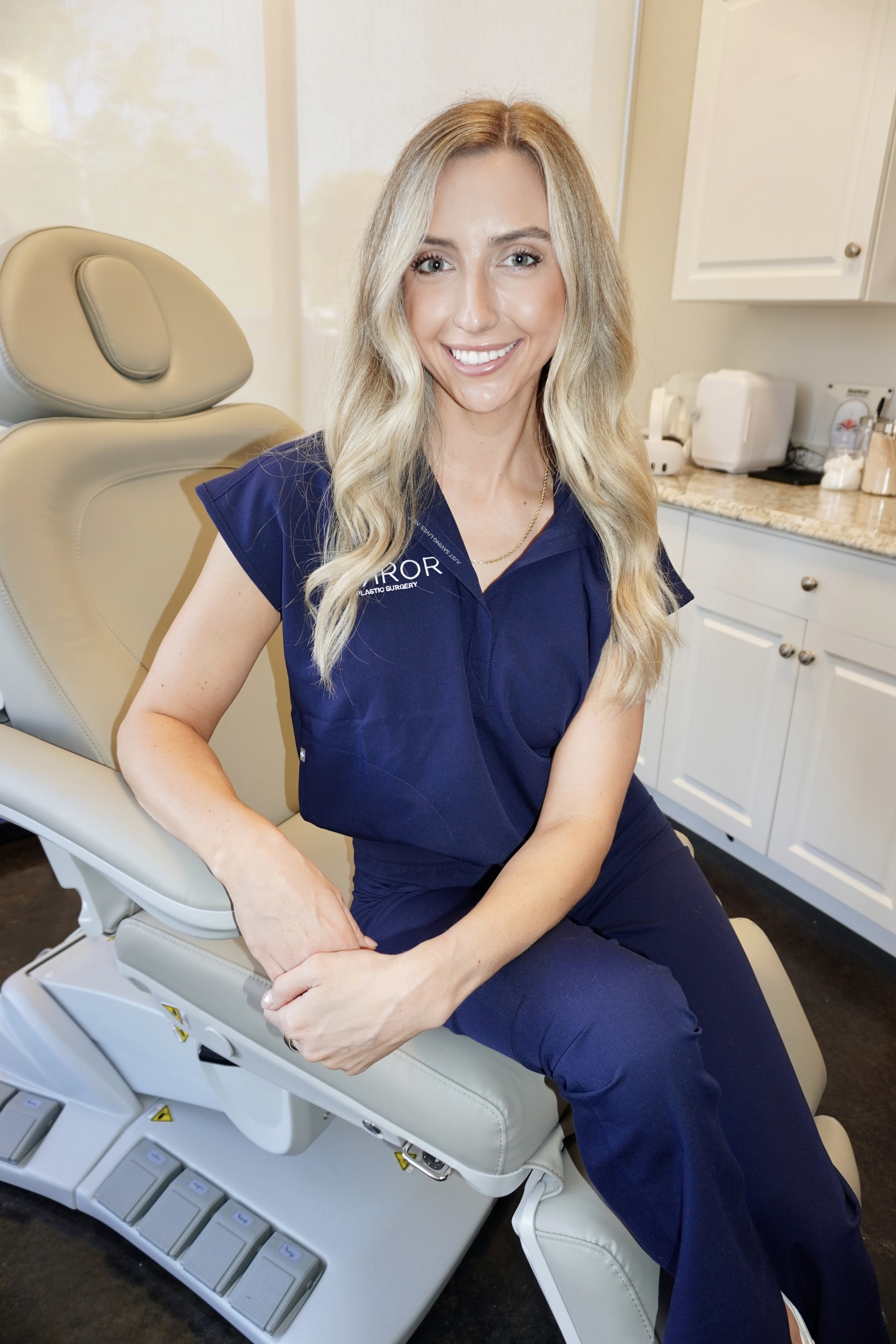
Our approach to peptide therapy is rooted in education and transparency. Every recommendation is explained in plain language, patients are informed when a protocol is not yet warranted, and direct concierge access is provided throughout the treatment journey. When surgical considerations arise, care is complemented by a Harvard-educated physician, a Johns Hopkins-trained plastic surgeon, and a fellowship-trained aesthetic surgeon at Manhattan Eye Ear and Throat Hospital.
Frequently Asked Questions
Safety of the Glow Stack for Women Over 40
GHK-Cu, BPC-157, and TB-500 have each demonstrated favorable safety profiles in available research, with the most common side effects being mild, transient injection-site irritation. For women over 40, the primary safety considerations include pre-existing copper metabolism conditions, current medications, and baseline liver and metabolic health. These factors are evaluated through lab review before any protocol begins at Mirror Plastic Surgery. Pregnancy and breastfeeding remain contraindications for injectable peptide therapy due to absent safety data in those populations. Outside of those conditions, medically supervised use with quality-sourced compounds and monitoring represents a rational approach for this demographic.
Liver Effects of Peptides and Monitoring Practices
Peptides are metabolized as proteins and are broken down into amino acids through normal protein metabolism, rather than processed by the liver’s cytochrome P450 enzyme system. This pattern reduces baseline liver risk compared to many oral medications. The copper component of GHK-Cu is chelated rather than free-ionic, and a typical dose contains copper in the microgram range, which sits well below established tolerable upper intake levels. Individuals with Wilson’s disease or other copper metabolism disorders should not use GHK-Cu. At Mirror Plastic Surgery, baseline liver function tests are obtained before starting any injectable peptide protocol, with follow-up panels scheduled after the first few months and periodically thereafter. Any meaningful elevation in ALT or AST prompts clinical evaluation and protocol adjustment.
Compounds That Should Not Be Stacked With GHK-Cu, BPC-157, or TB-500
No published head-to-head studies have evaluated the Glow Stack combination directly, and no peer-reviewed dose-finding studies have established formal stacking rules for these three peptides together. From a clinical standpoint, the primary concerns involve compounds that share overlapping mechanisms in ways that could amplify unintended effects. Examples include stacking multiple angiogenesis-promoting peptides in individuals with cancer history, or combining copper-containing compounds with other copper-elevating supplements in individuals with borderline copper metabolism. Growth hormone secretagogues require particular caution in patients with any history of malignancy. Ellie reviews each patient’s full supplement and medication list during consultation to identify any interactions or contraindications before designing a protocol.
Use of Peptide Therapy After Cosmetic Procedures or Surgery
Post-procedural peptide protocols represent a recognized application at Mirror Plastic Surgery. BPC-157 and TB-500 both support tissue repair and inflammation reduction, which makes them relevant in recovery contexts. Timing, dosing, and stack composition in the post-procedural setting are individualized based on the procedure performed, healing trajectory, and the patient’s overall health profile. Ellie coordinates post-surgical peptide protocols with Dr. Chandawarkar’s surgical team when applicable, ensuring that the peptide approach complements rather than conflicts with the recovery plan.
What Happens When Peptide Therapy Stops
When a peptide protocol is discontinued, the biological processes it was supporting, such as collagen synthesis signaling, inflammation modulation, and tissue repair activity, return toward their pre-treatment baseline over time. The rate of regression varies by individual, protocol duration, and the underlying condition being addressed. For skin rejuvenation goals, a maintenance protocol at reduced frequency is typically recommended after an initial active treatment phase to sustain the results achieved. Ellie discusses realistic maintenance expectations during consultation and adjusts protocols over time based on patient response and goals.
Conclusion: Choosing a Supervised Peptide Plan
Systemic skin aging responds best to interventions that address its root mechanisms, including collagen pathway decline, chronic inflammation, and impaired cellular repair, rather than surface-level treatments alone. The Glow Stack (GHK-Cu + BPC-157 + TB-500), administered under medical supervision with lab monitoring and quality-sourced compounds, represents a clinically rational approach for full-face and full-body skin rejuvenation. The evidence base for individual components is promising, the safety profile under supervision is favorable, and the personalized, monitored structure of care at Mirror Plastic Surgery directly addresses the risks that make unsupervised peptide use inadvisable.
Every protocol at Mirror Plastic Surgery begins with an honest, thorough evaluation rather than a one-size-fits-all recommendation. Health-conscious adults in the St. Petersburg or Tampa Bay area who have reached the limits of topical products and want a supervised, evidence-informed systemic approach can take the next step with a direct conversation with Ellie.
Book an appointment with Ellie to receive a personalized lab-informed protocol designed for your biology, your goals, and your long-term skin health.
Regulatory Disclaimer: GHK-Cu, BPC-157, and TB-500 are not approved by the U.S. Food and Drug Administration for any therapeutic indication. These compounds are available through compounding pharmacies and are used in clinical practice under practitioner supervision. The information in this article is educational in nature and does not constitute medical advice. Individual results vary. All peptide protocols at Mirror Plastic Surgery are prescribed and monitored by a licensed healthcare provider following individualized clinical assessment.
1 Results may vary from person to person. Editorial content, before and after images, and patient testimonials do not constitute a guarantee of specific results.
Peptide therapy is intended for wellness and optimization purposes and is not prescribed to diagnose, treat, cure, or prevent disease unless specifically stated. Many peptides are not FDA-approved and may be used off-label. Some have limited long-term safety data, with a potential for unknown risks, complications, or desensitization with prolonged use.