
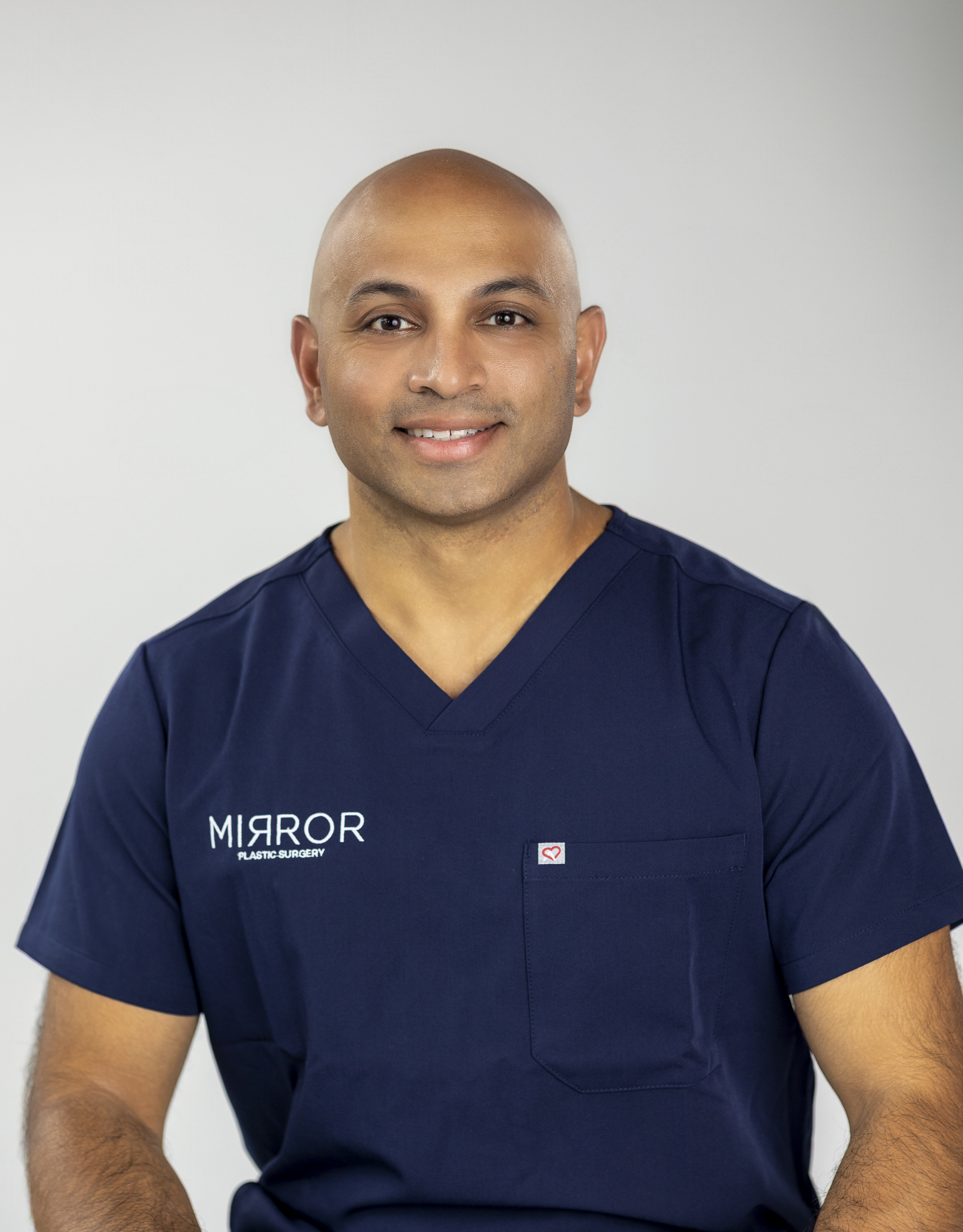
Written by: Dr. Akash Chandawarkar, Board Certified Plastic Surgeon, Mirror Plastic Surgery
Key Takeaways
- Post-pregnancy abdominal changes often include diastasis recti and excess skin that exercise cannot reverse, so full abdominoplasty usually provides the most complete core restoration and contour change.1
- Full abdominoplasty repairs the entire abdominal wall with permanent sutures, removes extra skin, and repositions the navel, while mini procedures rarely suit meaningful postpartum diastasis recti.
- Safe abdominoplasty requires strict criteria, including finishing breastfeeding, reaching a stable weight, and stopping smoking, which lowers complication risk and supports long-term results.
- Choosing a board-certified plastic surgeon with high tummy tuck volume, hospital privileges, and an accredited facility strongly influences safety and durability after pregnancy.
- Schedule a personalized consultation at Mirror Plastic Surgery for a detailed evaluation and a tailored post-pregnancy tummy tuck plan with Dr. Akash.
Full Abdominoplasty After Pregnancy: What It Involves
Full abdominoplasty is a surgical procedure that treats the entire abdominal wall from the pubic area to the rib cage. The operation uses a hip-to-hip horizontal incision just above the pubic hairline plus a second small incision around the navel. The surgeon lifts the abdominal skin away from the muscle wall, repairs diastasis recti by suturing the rectus muscles together along their full vertical span using permanent sutures, removes excess skin, and repositions the belly button.
Diastasis recti is common after multiple pregnancies and produces a persistent abdominal bulge that comes from muscle separation rather than fat. Because the separation typically extends from the pubis to the xiphoid process, only a procedure that plicates the rectus muscles across their entire length can restore functional core integrity. At Mirror Plastic Surgery, Dr. Akash restores the entire abdominal musculature from chest to pubic area to rebuild core support and create natural, athletic contours.1
Schedule a one-on-one consultation to see whether full abdominoplasty fits your anatomy and post-pregnancy goals.
Tampa Bay Tummy Tuck Pricing After Pregnancy
Once you understand what full abdominoplasty involves, the next practical step is planning for cost. Tummy tuck pricing in the Tampa Bay area varies based on the extent of the procedure, the complexity of diastasis recti repair, anesthesia fees, facility costs, and the surgeon’s training and case volume. The American Society of Plastic Surgeons recorded 171,064 abdominoplasty procedures performed in the United States in 2024, reflecting sustained demand that has influenced market pricing across Florida.
At Mirror Plastic Surgery, pricing is never standardized. Every patient receives a personalized quote during consultation based on her specific anatomy, the degree of muscle separation, the amount of skin to be removed, and whether adjunct procedures are appropriate. This approach reflects a commitment to honest, non-quota-driven care rather than package pricing designed to upsell services.
Request a detailed cost estimate during a comprehensive evaluation tailored to your body and recovery plan.
Medical and Lifestyle Factors That Can Delay a Tummy Tuck
Several medical, timing, and lifestyle factors can delay or prevent abdominoplasty. The American Society of Plastic Surgeons advises deferring abdominoplasty until the patient is fully recovered, hormonally stable, and ideally at or near her goal weight, with a typical minimum wait of six months postpartum and longer if breastfeeding.
Surgeons commonly evaluate the following factors during pre-operative assessment:
- Active breastfeeding: Patients must wait at least three months after the last feeding due to prolactin effects on estrogen levels and skin tissue quality.
- Incomplete family planning: A future pregnancy can undo repaired abdominal muscles and skin, so surgeons recommend completing childbearing first.
- Weight instability: Patients should reach a stable weight plateau for at least six months before surgery, because major changes afterward can stretch repaired tissues.
- Active smoking: Patients must stop smoking for four weeks before and four weeks after abdominoplasty to reduce risks of skin necrosis and poor wound healing.
- Elevated BMI: A BMI under 30 creates better surgical conditions and supports more durable results1.
- Uncontrolled medical conditions: Cardiovascular disease, unmanaged diabetes, or clotting disorders require clearance and optimization before any elective surgery.
- Insufficient postpartum recovery: Operating too soon after childbirth raises risks such as blood clots, poor wound healing, and unpredictable aesthetic outcomes due to ongoing hormonal and weight fluctuations.
Mirror Plastic Surgery uses rigorous pre-operative evaluations, including advanced in-office ultrasound assessment, to confirm that each patient is a safe and appropriate surgical candidate before planning any procedure.
Patient Satisfaction and Long-Term Results After Tummy Tuck
Patient satisfaction with abdominoplasty remains consistently high when surgeons select the right procedure and apply sound technique.1 RealSelf reports a 95% “Worth It” rating for tummy tuck procedures based on thousands of patient reviews1.
Regret most often stems from three avoidable situations. Patients may choose a limited procedure when a full abdominoplasty was anatomically indicated, undergo surgery before completing childbearing, or select a surgeon based on price instead of credentials and case volume. A mini tummy tuck performed when a full procedure is needed can pull the belly button out of position and create a mismatched appearance between upper and lower abdomen.
Long-term durability depends heavily on technique. Published recurrence rates for rectus diastasis repair vary across studies, which shows that surgical method and follow-up quality directly influence how long results last. Recent studies using endoscopic sublay repair report low recurrence rates of diastasis recti and highlight how meticulous technique supports durable outcomes.1
Pain Comparison: Lipo 360 vs Full Tummy Tuck
Full abdominoplasty with diastasis recti repair usually causes more postoperative discomfort than liposuction alone, including Lipo 360. The primary source of discomfort after abdominoplasty is the muscle repair rather than the skin incision. Patients describe early tummy tuck recovery pain at 4 to 6 out of 10, often as deep tightness and soreness instead of sharp stabbing pain, with the peak in the first 72 hours.
Modern multimodal pain management has reduced opioid dependence after abdominoplasty. Transversus abdominis plane (TAP) blocks placed during surgery lower postoperative pain and reduce the amount of opioid medication needed. Long-acting local anesthetics placed during surgery blunt pain for the first three days after abdominoplasty, decreasing reliance on opioids compared to procedures performed a decade ago. Many patients who have had both a C-section and a tummy tuck report that modern abdominoplasty recovery feels similar to or milder than C-section recovery because of these advances.
Mini, Full, and Extended Abdominoplasty for Postpartum Cores
The three primary abdominoplasty techniques differ in anatomical reach, scar length, and functional outcome for postpartum patients.
A mini abdominoplasty treats only the lower abdomen below the navel. It uses a shorter incision, does not reposition the belly button, and performs only partial lower muscle repair, which makes it unsuitable for significant diastasis recti. A mini abdominoplasty cannot treat skin laxity above the navel or meaningfully improve upper abdominal muscle tone. It fits patients with a firm upper abdomen, a small isolated lower pooch, intact core muscles, and no diastasis recti above the navel, which describes very few postpartum patients.
A full abdominoplasty treats both upper and lower abdomen with a hip-to-hip incision, repositions the belly button, and performs full rectus plication to repair diastasis recti using permanent sutures reconnecting the muscle edges from ribs to pubis. It removes a substantial sheet of skin, often eliminating stretch marks below the navel, and creates a narrower waistline with clearer separation between the upper and lower abdomen. Most postpartum patients with diastasis recti need this procedure.
An extended abdominoplasty treats loose skin and fat that extend to the flanks and sometimes the lower back. It uses an incision that extends around the sides (270 degrees or more) with full rectus plication and belly button repositioning. Surgeons select this option for patients with widespread postpartum laxity beyond the central abdomen.
Mirror Plastic Surgery avoids mini tummy tucks that only treat the lower abdomen, because these procedures can leave functional deficits and aesthetic mismatch when diastasis recti is present. This comprehensive approach, described earlier, prioritizes anatomical integrity over limited procedures that leave unresolved core weakness.
Explore which abdominoplasty technique fits your anatomy and functional goals during a detailed consultation.
How to Choose a Tampa Tummy Tuck Surgeon: A Safety Checklist
Surgeon selection is the single most consequential decision in post-pregnancy abdominoplasty. The criteria below create a clear, stepwise framework for evaluating safety and fit.
Start by confirming core credentials that prove formal training and ongoing oversight:
- ABPS board certification: The American Board of Plastic Surgery (ABPS) is the only ABMS-recognized board certifying physicians in plastic surgery. Certification requires an accredited plastic surgery residency, a written qualifying examination, and an oral certifying examination that includes a year-long operative case log. Verify status at certificationmatters.org or abplasticsurgery.org.
- Hospital privileges: Hospital credentialing provides independent review of training, outcomes, and competence even when procedures occur in outpatient settings. Dr. Akash holds hospital privileges, which adds a safety layer if rare complications arise.
- Accredited surgical facility: Procedures should take place in facilities accredited by AAAASF, AAAHC, or The Joint Commission.
- Board-certified anesthesiologist: Anesthesia should be administered by a board-certified physician anesthesiologist, not by the surgeon acting in both roles.
After confirming credentials, look at experience and practice structure:
- Annual procedural volume: For post-pregnancy body contouring, patients should ask the surgeon how many of the specific procedures they perform per year. Ask specifically about full abdominoplasty with diastasis recti repair.
- Consultation depth: A surgeon who limits daily operative volume to one or two cases and spends up to an hour in consultation signals a commitment to individualized care that high-volume practices rarely match.
- Transparent communication: The surgeon should explain anatomy, realistic outcomes, and risks clearly, without upselling or minimizing the limitations of any procedure.
Dr. Akash meets every criterion on this checklist. He is board certified by the American Board of Plastic Surgery, completed a seven-year integrated plastic and reconstructive surgery residency at Johns Hopkins University, and holds an aesthetic surgery fellowship from the Manhattan Eye, Ear and Throat Hospital (MEETH), one of the most competitive aesthetic training programs in the country. His medical degree comes from the Harvard-MIT Division of Health Sciences and Technology, and he graduated from Harvard Medical School with Honors. Mirror Plastic Surgery performs one to two surgeries per day, and every new patient receives an hour-long consultation, which contrasts sharply with high-volume practices that may perform five to ten surgeries daily.
Tampa Recovery Notes: Swelling, Climate, and Follow-Up Logistics
Recovery from full abdominoplasty follows a predictable timeline, and Tampa’s heat and humidity add practical details that patients should plan for early. The early recovery phase after abdominoplasty lasts roughly two weeks, with swelling settling over two to three months and the final result plus scar maturation taking up to one year. Most patients return to desk work within about two weeks after a tummy tuck and resume full activity including exercise around the six-week mark1. Strenuous exercise, heavy lifting, and core work typically require six weeks or more before resumption to protect the muscle repair.
Following this general timeline, Tampa-area patients should also account for climate-specific steps:
- Wearing a compression garment continuously during the first weeks to manage swelling and support the repair, which becomes especially important in Florida’s heat that can worsen fluid retention.
- Beginning short, gentle walks on day one or two to reduce DVT risk and keeping walks indoors or in air-conditioned environments during the initial weeks to avoid heat-related swelling.
- Avoiding direct sun exposure on the incision for at least six months, because UV exposure in Tampa’s climate can darken healing scars significantly.
- Arranging childcare support for at least the first two to three weeks, since lifting children is restricted during early recovery.
- Attending all scheduled follow-up appointments; Mirror Plastic Surgery’s one-to-two-surgeries-per-day model keeps the entire clinical team focused on each patient’s postoperative progress.
Common complications of abdominoplasty include seroma, infection, hematoma, and skin necrosis. Careful adherence to postoperative instructions and close follow-up with an experienced surgeon are the main factors patients can control to lower these risks.
Your Next Step Toward Post-Pregnancy Abdominal Repair
Post-pregnancy abdominoplasty is a significant surgical decision that deserves a thorough, unhurried evaluation by a surgeon with deep anatomical expertise. The key step is a comprehensive consultation that addresses your specific anatomy, diastasis recti severity, skin laxity pattern, timing relative to your last delivery, and long-term goals, rather than a quick assessment designed to move patients through a high-volume schedule.
Mirror Plastic Surgery is located at 780 4th Ave S, St. Petersburg, FL 33701, and serves the greater Tampa Bay area. Every consultation with Dr. Akash allows enough time to review your history, examine your abdomen, and discuss realistic options in detail.
Arrange a consultation with Dr. Akash to begin an evidence-based evaluation of your post-pregnancy abdominal restoration options.
Frequently Asked Questions
How long should I wait after my last pregnancy before scheduling a tummy tuck in Tampa?
Most board-certified plastic surgeons recommend waiting six to twelve months after your last delivery before abdominoplasty. This window allows the uterus to fully involute, pregnancy hormones including relaxin and prolactin to normalize, and abdominal tissues to stabilize. If you are breastfeeding, surgery should be delayed until at least three months after your final feeding so hormones can recover and tissue quality can be assessed accurately. Weight should remain stable for at least three to six consecutive months before scheduling. Patients who delivered by caesarean section are generally advised to wait the full twelve months. At Mirror Plastic Surgery, Dr. Akash reviews each patient’s individual timeline during a comprehensive hour-long consultation instead of applying a rigid rule.
Will a mini tummy tuck fix my diastasis recti?
In most postpartum cases, a mini tummy tuck does not adequately address diastasis recti. A mini abdominoplasty is limited to the lower abdomen below the navel and can only perform partial lower muscle repair. Because diastasis recti after pregnancy usually involves muscle separation from the pubis to the rib cage, a procedure that cannot reach the upper abdominal wall leaves the functional deficit in place. Only a full abdominoplasty, which plicates the rectus muscles along their entire vertical span using permanent sutures, restores complete core integrity. Performing a mini tummy tuck when a full procedure is anatomically indicated can also distort belly button position and create an aesthetic mismatch between the upper and lower abdomen. Mirror Plastic Surgery does not perform mini tummy tucks for patients with clinically significant diastasis recti for this reason.
What makes Mirror Plastic Surgery different from other Tampa tummy tuck providers?
Mirror Plastic Surgery follows a safety-first, function-second, aesthetics-third philosophy that sets it apart from high-volume practices. Dr. Akash limits the practice to one to two surgeries per day, so every patient receives the full attention of the surgical team before, during, and after the procedure. Each new patient receives an hour-long consultation that includes an in-depth anatomical assessment, honest discussion of realistic outcomes, and a personalized treatment plan. His credentials include a medical degree from Harvard Medical School through the Harvard-MIT Health Sciences and Technology program, a seven-year integrated plastic surgery residency at Johns Hopkins University, and an aesthetic surgery fellowship at the Manhattan Eye, Ear and Throat Hospital. The practice also employs board-certified physician anesthesiologists and operates in an accredited surgical facility, with Dr. Akash holding hospital privileges as an additional safety safeguard.
What is the recovery timeline for a full tummy tuck after pregnancy, and how does Tampa’s climate affect it?
Most patients return to desk work about two weeks after full abdominoplasty, with light daily activities increasing between weeks two and four. Strenuous exercise, heavy lifting, and core-specific training remain restricted for at least six weeks to protect the muscle repair. Swelling usually settles over two to three months, and final scar maturation can take up to one year.1 Tampa’s subtropical climate adds specific considerations: heat and humidity can worsen postoperative swelling, so indoor recovery spaces and air-conditioned walking routes matter during the first several weeks. Direct sun exposure on the incision should be avoided for at least six months, because Florida’s UV intensity can cause hyperpigmentation of healing scars. Compression garment use becomes especially important in warm weather to manage fluid retention. Mirror Plastic Surgery’s low daily surgical volume keeps the clinical team available for close postoperative follow-up throughout recovery.
Is a tummy tuck after pregnancy covered by insurance?
Abdominoplasty is classified as an elective cosmetic procedure and is not covered by health insurance in the vast majority of cases, even when diastasis recti repair is included. Insurance coverage for diastasis recti repair alone may be considered in rare situations involving documented functional impairment, but this requires pre-authorization and remains uncertain. Patients should contact their insurance provider directly to review specific policy terms. At Mirror Plastic Surgery, every patient receives a transparent, personalized cost estimate during consultation based on her anatomy and the scope of the procedure, with no standardized package pricing or pressure to add services.
1 Results may vary from person to person. Editorial content, before and after images, and patient testimonials do not constitute a guarantee of specific results.