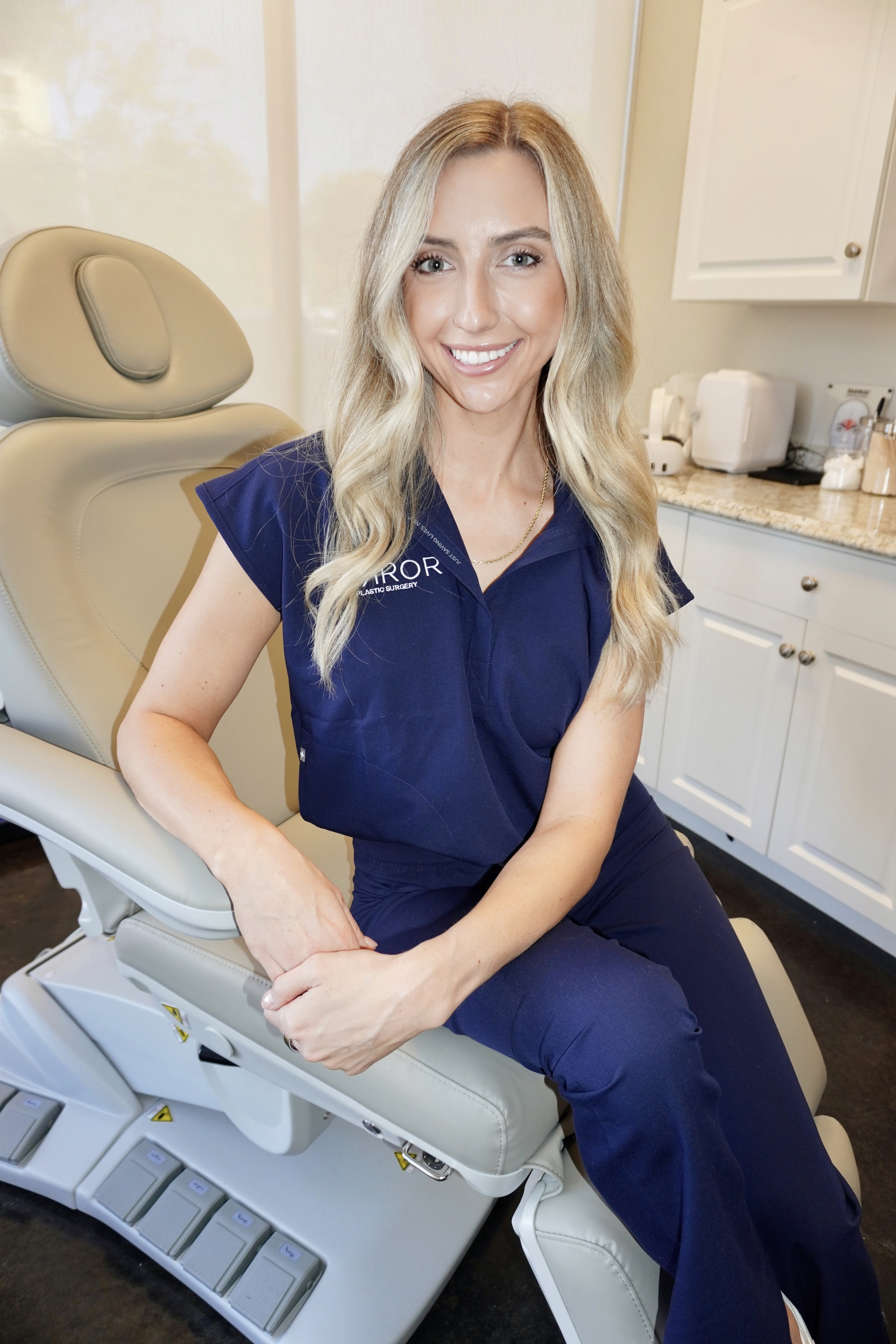
Written by: Ellie Pranckevicius, FNP-BC, Aesthetic Nurse Practitioner & Aesthetic Injector | Facial Restoration & Regenerative Injectable Specialist, Mirror Plastic Surgery
Key Takeaways for Tampa Bay Adults
- Non-surgical facial rejuvenation now accounts for 80% of procedures, so provider expertise and anatomical assessment drive natural, lasting results in St. Petersburg and Tampa Bay.
- The four core treatment categories (neuromodulators, dermal fillers, energy-based devices, and resurfacing) work best in combination plans that address collagen loss, fat pad shifting, and muscle weakening at the same time.
- Use a six-step checklist (verify credentials, assess consultation depth, confirm product neutrality, understand maintenance needs, review complication protocols, and evaluate long-term relationship models) before booking any medical spa treatment.
- Tampa Bay’s subtropical climate and active social calendar require strategic treatment timing, with fall scheduling often ideal so collagen remodeling peaks during social season.
- Book a consultation with Ellie at Mirror Plastic Surgery to receive a personalized, anatomy-first facial rejuvenation plan tailored to your goals and Tampa Bay lifestyle.
Core Non-Surgical Facial Rejuvenation Options in 2026
The four foundational categories of non-surgical facial rejuvenation each address a distinct layer of facial aging.
- Neuromodulators (Botox, Dysport, Xeomin, Daxxify, Jeuveau) relax muscles of facial expression to soften dynamic lines while preserving natural movement.
- Dermal fillers, including hyaluronic acid and biostimulatory agents such as Radiesse and Sculptra, restore volume to depleted fat compartments and stimulate the body’s own collagen production.
- Energy-based tightening devices such as radiofrequency microneedling platforms like Morpheus8 and focused ultrasound systems like Ultherapy remodel subdermal tissue and trigger collagen synthesis without incisions.
- Resurfacing treatments such as microneedling, fractional lasers, and chemical peels improve skin texture, tone, and pigmentation at the epidermal and superficial dermal levels.
While these four categories form the foundation of non-surgical rejuvenation, the defining 2026 shift in aesthetic medicine moves away from single-modality, volume-focused correction toward multi-modality combination therapies that address collagen loss, fat pad shifting, and muscle weakening simultaneously. Radiofrequency microneedling platforms like Morpheus8 combine fractionated radiofrequency energy with physical microneedling to remodel subdermal tissue, with documented increases in collagen density and elastin fiber production after a single treatment. Exosome therapy is emerging as a regenerative adjunct, supporting cellular communication to accelerate tissue regeneration. New monopolar radiofrequency platforms such as Cynosure Lutronic’s XERF combine two frequencies to target multiple tissue depths for structural tightening with zero downtime.
Six-Step Checklist for Vetting Any Tampa Bay Med Spa
Use this checklist before booking any facial rejuvenation treatment in the Tampa Bay area so you can confirm that a provider meets the standard of care for safe, natural, and durable results.
- Verify credentials and medical oversight. The American Society of Plastic Surgeons identifies board-certified plastic surgeons, facial plastic surgeons, and dermatologists as the only three medical specialties requiring comprehensive training in the treatments typically offered at med spas. Confirm that the injector holds an active, unrestricted state license and that a qualified medical director oversees clinical operations. A current license confirms legal authority to practice but does not confirm training on specific equipment or protocols, so request device-specific training certificates as well.
- Assess consultation depth. The American Med Spa Association recommends a medical examination to establish the practitioner-patient relationship before med spa procedures. This standard exists because a rushed 10-minute intake, a meaningful red flag, cannot provide the depth needed for proper assessment. In contrast, providers who dedicate an hour to a top-to-bottom anatomical assessment can identify the root causes of facial aging rather than treating only the symptom a patient points to.
- Confirm product neutrality. Practices tied to a single manufacturer’s portfolio may recommend products based on supply agreements rather than patient anatomy. A supplier-neutral practice selects among neuromodulators, dermal fillers, and biostimulatory agents based on individual skin quality, age, tissue depth, and aesthetic goals.
- Clarify the maintenance philosophy. Morpheus8 RF microneedling results typically last 12–18 months with proper maintenance and annual touch-up sessions.1 Any provider who frames treatment as a one-time event rather than a long-term relationship misrepresents how non-surgical rejuvenation works. Ask how the practice structures follow-up and reassessment.
- Ask about complication protocols. Responsible practices prioritize ongoing training in complication prevention and maintain resources such as hyaluronidase, epinephrine, and AEDs to execute emergency protocols at any time. An October 2025 FDA safety communication on radiofrequency microneedling cited reports of burns, scarring, fat loss, disfigurement, and nerve damage, some requiring surgical intervention, which confirms that complication readiness is non-negotiable.
- Evaluate the long-term relationship model. The most natural long-term filler results come from an evolving, personalized strategy that adapts treatment plans as the face changes over time, rather than repeating the same injection pattern at every visit. Providers who track your anatomy across years produce more consistent, identity-preserving outcomes.
How a Thoughtful Treatment Plan Comes Together
A well-structured non-surgical rejuvenation plan follows a consistent sequence, even though the specific modalities vary by patient. The process begins with a comprehensive consultation that explores the patient’s emotional motivations, long-term goals, and medical history. A detailed anatomical assessment follows, evaluating facial thirds, volume distribution, skin laxity, skeletal framework, and dynamic muscle movement. Full-face assessment evaluates six key factors before any treatment: facial proportions across upper, middle, and lower thirds; volume distribution in fat compartments; skin laxity and texture; skeletal framework and bone resorption; dynamic muscle movement patterns; and patient goals with lifestyle considerations. This structured review gives the provider the information needed to judge whether non-surgical options can meet the patient’s goals.
Candidacy review then determines whether non-surgical options are appropriate or whether a surgical consultation would better serve the patient’s goals. A personalized plan follows with clear rationale for each recommended product or device, realistic timelines, and expected maintenance intervals. Treatment is executed with precision, and structured follow-up allows the provider to assess tissue response before any additional correction is considered. Gradual, staged treatment produces better long-term natural results than single large interventions because each stage can be assessed before the next, the face adapts incrementally, and the risk of overcorrection is reduced.1
Risks, Limits, and Myths Around Non-Surgical Rejuvenation
Non-surgical facial rejuvenation carries real limitations that informed patients should understand before committing to a treatment plan. Result longevity varies by modality, patient biology, sun exposure, and adherence to maintenance. Non-surgical treatments cannot remove significant excess skin or fully replicate the dramatic lift of surgery for patients with heavy jowls or turkey neck.1
Filler migration and asymmetry are documented risks when volume is placed without full-face structural context. Treating smile lines without midface support worsens heaviness, overfilling lips without chin support creates imbalance, and enhancing cheeks without addressing temple hollowing creates disconnected contours. Beyond immediate complications, patients should understand that the “one-and-done” expectation ranks among the most common misconceptions, because non-surgical rejuvenation functions as a maintenance discipline rather than a single event. Additionally, a prior history of energy-based device treatments or permanent fillers can complicate future surgical planning. Tissue tethering or scarring from prior treatments can increase surgical complexity during future facelifts, requiring waiting periods of three to six months after microneedling.
Comparing the Main Treatment Categories
The four categories introduced earlier each serve distinct purposes when integrated into a comprehensive plan, and their timelines and protocols differ in meaningful ways.
- Neuromodulators address dynamic muscle-related lines. Onset typically occurs within three to seven days, and results last three to four months on average. They represent the lowest-risk injectable category when placed by a trained provider with anatomical expertise.
- Biostimulatory fillers (Radiesse, Sculptra) stimulate the body’s own collagen rather than simply adding volume. Results develop gradually over weeks and can last 18–24 months, which suits patients who prioritize longevity over immediate correction.1
- Radiofrequency microneedling (Morpheus8) offers the subdermal remodeling described earlier with typical downtime of 24–48 hours1. Most protocols require two to four sessions spaced four to six weeks apart. Morpheus8 is FDA-cleared for dermatologic procedures involving coagulation and contraction of soft tissue, but at higher energy levels greater than 62 mJ/pin its use is limited to Fitzpatrick skin types I–IV.
- Focused ultrasound (Ultherapy) has explicit FDA clearance for non-invasive lifting of the eyebrow, submentum, neck, and décolletage. It is not the only energy-based device with such clearances for the eyebrow, submentum, and neck, and results often last 12–24 months.1
- Resurfacing treatments including fractional lasers and microneedling improve surface texture, pigmentation, and fine lines with minimal structural impact. They work best as adjuncts to foundational injectable or energy-based work rather than as standalone structural solutions.
Tampa Bay Climate and Lifestyle Planning Tips
St. Petersburg and Tampa Bay’s subtropical climate introduces variables that directly affect treatment timing, recovery, and result longevity. Year-round UV intensity accelerates collagen degradation and increases post-treatment hyperpigmentation risk, particularly for ablative resurfacing procedures. Non-light-based energy devices such as radiofrequency microneedling offer minimal downtime and broad applicability across all skin phototypes, which makes them practical for patients who cannot fully avoid sun exposure during recovery.
High ambient humidity supports skin hydration but can complicate post-treatment wound care if protocols are not followed precisely. Tampa Bay’s active social calendar, concentrated around winter season events, spring galas, and summer outdoor activities, makes treatment timing a practical planning consideration. Scheduling energy-based treatments in the fall allows the three-month collagen-remodeling peak to align with peak social season. Providers familiar with local lifestyle patterns can build maintenance schedules that account for these rhythms rather than applying a generic national protocol.
Frequently Asked Questions
Who is a good candidate for non-surgical facial rejuvenation?
Most adults in their 30s through 60s with mild to moderate signs of facial aging, including volume loss, dynamic lines, skin laxity, or uneven texture, qualify for some form of non-surgical rejuvenation. Candidacy is best determined through a full-face assessment that evaluates bone structure, fat compartment distribution, skin quality, and muscle activity together. Patients with significant excess skin, heavy jowling, or structural descent that exceeds what injectables and energy devices can address may be better served by a surgical consultation. An honest provider will identify that threshold and refer accordingly rather than overselling non-surgical options.
How long do results from injectable and energy-based treatments last?
Longevity varies by modality and individual biology. Neuromodulators typically last three to four months, though some formulations like Daxxify are designed for extended duration. Dermal fillers last 9–18 months depending on the product and placement area. Biostimulatory fillers such as Radiesse can last 18–24 months. Radiofrequency microneedling results develop over three to six months and maintain the 12–18 month longevity noted earlier, provided patients follow sun protection protocols. Focused ultrasound results often last 12–24 months. Maintenance intervals are not fixed, because they depend on how your face responds, how your anatomy changes over time, and lifestyle factors including sun exposure and skincare adherence.
What is the difference between a rushed med-spa consultation and a full-face assessment?
A rushed consultation typically focuses on the concern a patient names, such as a specific line or a single area of volume loss, and recommends a product to address it in isolation. A full-face assessment evaluates the entire face as a connected structural system, identifying how changes in one region affect surrounding areas. For example, a patient presenting with under-eye hollows may actually benefit most from midface volume restoration, which lifts and supports the under-eye transition without direct treatment of the trough itself. Full-face assessments also explore the emotional motivations behind a patient’s request, establish realistic expectations, and produce a phased plan rather than a single-session fix. The difference in outcomes between these two approaches is significant and well-documented in the clinical literature on facial balancing.
Is it safe to combine multiple non-surgical treatments in one session?
Combination treatments now represent the 2026 standard of care for comprehensive facial rejuvenation, but sequencing and timing matter. Some combinations, such as neuromodulators with dermal fillers, are routinely performed in the same session. Others, such as energy-based devices combined with biostimulatory fillers, may be staged across separate appointments to allow tissue response assessment and reduce swelling that could obscure results. A provider with deep anatomical knowledge and experience across multiple modalities is best positioned to determine which combinations are safe and appropriate for a specific patient’s tissue quality, prior treatment history, and goals. Patients with a history of prior energy-based treatments should disclose this fully, because it can affect both safety and surgical planning if a facelift is ever considered in the future.
When should I consider a surgical consultation instead of non-surgical options?
Non-surgical rejuvenation works best for patients with mild to moderate aging changes where volume restoration, muscle relaxation, and collagen stimulation can produce meaningful improvement. When significant excess skin is present, when jowling or neck laxity is advanced, or when prior non-surgical treatments have reached their structural limit, surgery may produce more durable and proportionate results. A practice that offers both surgical and non-surgical expertise, and that prioritizes safety and function over procedure volume, will give an honest assessment of which path is appropriate rather than defaulting to the revenue-generating option. At Mirror Plastic Surgery, Ellie’s non-surgical work is complemented by the surgical expertise of Dr. Akash Chandawarkar, a Harvard-educated, Johns Hopkins-trained plastic surgeon, which ensures patients receive guidance across the full spectrum of options.
Choosing Concierge-Level Facial Rejuvenation in Tampa Bay
The best medical spa facial rejuvenation outcomes in the Tampa Bay area do not depend on which device a practice owns or which filler brand it carries. They depend on the depth of anatomical assessment behind every treatment decision, the honesty of the provider-patient relationship, and the commitment to long-term maintenance instead of one-and-done procedures. Mirror Plastic Surgery’s concierge model, built on hour-long top-to-bottom assessments, supplier-neutral product selection, and a safety-first philosophy, addresses each of the variables that separate natural, durable results from the rushed, volume-driven outcomes that drive patients to seek corrections.
Ellie Pranckevicius, FNP-BC, brings a rare combination of esthetician training, advanced nursing credentials, and four years of neuroscience ICU clinical experience to every facial rejuvenation consultation. Her full-face approach prioritizes foundational restoration before volume augmentation, which supports seamless transitions across facial regions and results that look rested rather than treated.
Disclaimer: Results may vary from person to person. Editorial content, before and after images, and patient testimonials do not constitute a guarantee of specific results.
1 Results may vary from person to person. Editorial content, before and after images, and patient testimonials do not constitute a guarantee of specific results.