
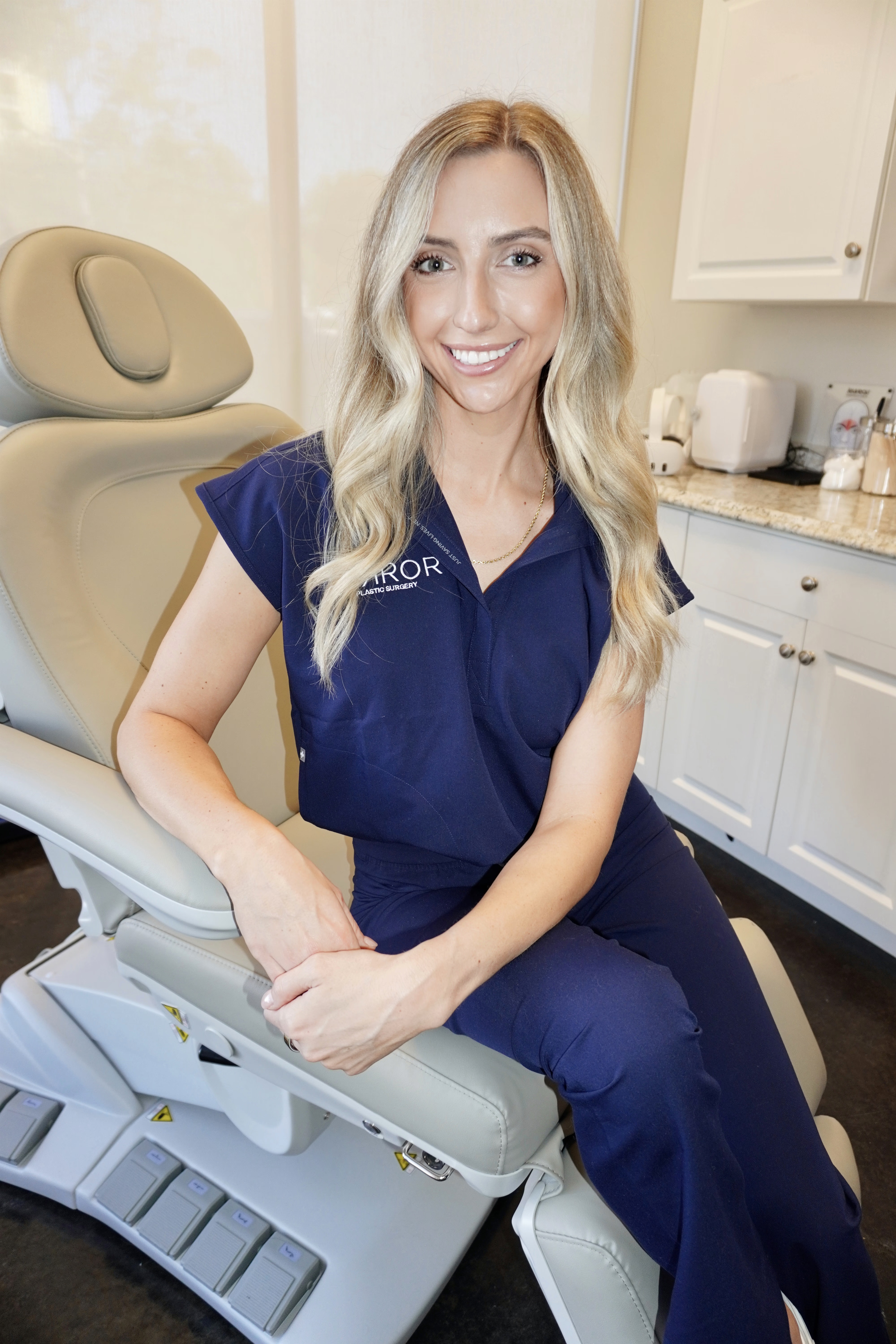
Written by: Ellie Pranckevicius, FNP-BC, Aesthetic Nurse Practitioner & Aesthetic Injector | Facial Restoration & Regenerative Injectable Specialist, Mirror Plastic Surgery
Key Takeaways for Fair-Skinned Patients
- Laser hair removal is safest for fair-skinned patients (Fitzpatrick I–II) when the wavelength matches your skin and hair and a qualified provider performs the treatment.
- Four variables determine candidacy: skin type, hair color, sun exposure history, and medications or medical conditions.
- Absolute and relative contraindications such as active infections, photosensitizing medications, pregnancy, and suspicious lesions must be identified through comprehensive screening before treatment begins.
- Common side effects like redness and swelling are usually mild and short-lived, but strict sun avoidance is critical in Florida’s intense UV environment to prevent pigment changes.
- Start your personalized evaluation with Ellie at Mirror Plastic Surgery to receive a physician-overseen plan tailored to your skin, your hair, and Florida’s sun.
Safety Checklist for Fair-Skinned Laser Candidates
Four core variables determine whether laser hair removal is appropriate for you:
- Skin type. Mayo Clinic confirms that fair skin with dark hair carries the lowest risk profile because the laser energy targets follicular melanin instead of the surrounding epidermis.
- Hair color. Blonde, white, gray, and red hair often contain lower pigment levels that can limit absorption of laser energy, so these colors respond less predictably to standard laser modalities.
- Sun exposure history. Recent and post-procedure sun exposure increases the likelihood of pigmentary changes and burns. In Florida’s year-round UV environment, this factor requires explicit protocol management before every session.
- Medical conditions and medications. Photosensitizing medications can modify risk and must be disclosed before treatment begins. Hormonal disorders such as PCOS may also influence hair growth and treatment efficacy.
These four variables form the foundation of safe candidate selection. They only protect you when your provider takes time to assess them thoroughly.
Clinical Disqualifiers for Laser Hair Removal
Several conditions represent absolute or relative contraindications that a careful provider must identify before scheduling treatment:
- Active skin infection usually requires postponing treatment until the infection resolves.
- Recent consensus indicates that a six-month waiting period after isotretinoin is not required before laser hair removal or similar procedures.
- Photosensitizing medications and intramuscular gold therapy can be contraindicating factors that must be identified through a complete medication and history review.
- Pregnancy requires postponement. Nursing, broken or very dry skin, and a history of keloid scarring may require individualized clinical judgment.
- Suspicious pigmented lesions should be evaluated before laser treatment.
High-volume clinics frequently conduct abbreviated intake screenings that miss these disqualifiers, which is why Mirror Plastic Surgery’s hour-long consultation reviews your full medication list, sun exposure history, and skin condition before any treatment is planned. This extended intake is especially critical in Florida, where the intense UV index means sun-exposure history must be reassessed at every visit, not just the first. If you cannot confirm reliable photoprotection between sessions, treatment is postponed until that variable is controlled, consistent with guidance recommending sun protection before and after laser procedures.
Schedule your disqualifier screening with Ellie before your first session to confirm that you are a safe candidate for treatment.
Side Effects of Laser Hair Removal on Fair Skin
The most common side effects, including discomfort, swelling, and redness, typically resolve within one to three days. For Fitzpatrick I–II patients, the risk of dyspigmentation is lower than in darker skin types because epidermal melanin content is reduced, but the risk remains present.
Uncommon complications documented across clinical literature include:
- Blistering, crusting, scarring, and changes in skin texture
- Posttreatment hypopigmentation with alexandrite and ruby lasers when parameters are incorrect
- Paradoxical hypertrichosis, an uncommon side effect reported across different skin types and less common in fair skin
- Herpes simplex outbreaks, infections, and permanent skin lightening or darkening in rare cases
Fair-skinned patients in Florida face a specific compounding risk because even a mild tan between sessions elevates epidermal melanin temporarily and narrows the safety margin. The Florida-specific sun protocol mentioned earlier becomes even more critical after treatment. Post-treatment care requires broad-spectrum SPF 30+ daily and avoidance of direct sun exposure for at least two weeks after each session. Because consistent protection is essential in Florida’s UV environment, Mirror Plastic Surgery builds this protocol into every treatment plan and reinforces it at each follow-up visit as an ongoing safety checkpoint.
Why Some People Regret Laser Hair Removal
Regret in laser hair removal usually stems from three factors: poor candidate selection, unrealistic expectations about hair color limitations, and treatment by inexperienced providers using incorrect settings.
Treated hair often regrows finer and lighter after laser sessions1, which can reduce efficacy over subsequent treatments if the hair loses enough pigment. Patients who were not counseled on this progression before starting a series frequently report dissatisfaction.
Most patients see hair reduction after the first treatment, and multiple sessions are needed for lasting results.1 Providers who fail to explain this trajectory in advance create unrealistic expectations.
Mirror Plastic Surgery’s supplier-neutral stance means Ellie selects technology based on your anatomy and hair characteristics, not on equipment quotas or vendor relationships. Outcome education happens before the first session and includes a clear explanation of what laser can and cannot achieve for your specific hair type and color.
At-Home Devices vs Professional Treatment for Fair Skin
Laser hair removal can be dangerous in inexperienced hands and may cause burns, permanent changes to skin color, and scars. At-home devices operate at significantly lower fluences than clinical systems, which reduces efficacy and does not eliminate risk, especially for users who misjudge their skin type or treat recently tanned skin.
At-home devices also lack integrated cooling systems, real-time parameter adjustment, and clinical oversight that reduce complication rates in professional settings. Safe laser hair removal depends on matching laser type and settings to patient characteristics and performing test spots before full treatment. At-home protocols cannot reliably reproduce this level of customization.
Mirror Plastic Surgery’s in-office treatments include pre-treatment patch testing, continuous cooling, and structured follow-up to monitor skin response across the full treatment series.
Discuss your candidacy with Ellie to determine whether professional laser treatment is the right step for your skin type and hair color.
Laser Technology Comparison for Fitzpatrick I–II Skin
Three laser wavelengths are most commonly used in hair removal for fair skin. Once you decide that professional treatment is appropriate, the next decision involves which laser technology offers the safest and most effective match for your skin and hair. Each wavelength balances efficacy and risk differently for Fitzpatrick I–II patients, so understanding these tradeoffs helps you evaluate whether your provider is choosing technology for your anatomy rather than for their equipment inventory. The table below summarizes suitability, efficacy evidence, and risk considerations.
| Laser Type | Wavelength | Efficacy for Fitzpatrick I–II | Risk Notes |
|---|---|---|---|
| Alexandrite | 755 nm | Significant long-term hair reduction can be achieved with the alexandrite laser after a series of sessions in lighter skin types1 | Safe for Fitzpatrick I–III, strong melanin absorption at shorter wavelength suits low epidermal pigment. Hypopigmentation can occur when parameters are incorrect. |
| Diode | 810 nm | More favorable objective outcomes than IPL at 30-week follow-up, with lower hair counts and thinner residual shafts1 | Higher pain scores and more frequent transient perifollicular edema and carbonization than IPL, with all adverse events transient. These findings align with the short-term redness and swelling described earlier. |
| Nd:YAG | 1064 nm | Effective for hair removal but typically used for darker skin types because of deeper penetration and lower melanin absorption | Requires appropriate ocular protection as with all lasers and is generally reserved for darker skin types. |
When Laser Hair Removal Is Not the Right Choice
As noted in the safety checklist, light-colored hair responds poorly to laser treatment because it lacks sufficient melanin for reliable energy absorption. For patients with light or transparent hair, electrolysis remains the only FDA-cleared method for permanent hair removal and is usually the more appropriate clinical recommendation.
Patients with hormonal conditions driving excess hair growth, such as PCOS, should understand that laser hair removal reduces existing hair but does not treat the underlying hormonal cause, often necessitating ongoing maintenance as new hair continues to grow.
Mirror Plastic Surgery’s consultations are structured to deliver this information clearly. If laser is not the right tool for your hair type or medical history, that assessment is communicated directly, consistent with the practice’s philosophy of education before aesthetics.
Choosing a Qualified Provider in Florida
The American Academy of Dermatology recommends choosing a board-certified dermatologist or appropriately trained clinician under direct physician supervision to minimize the risk of burns, permanent pigment changes, and scarring. In Florida, where outdoor UV exposure is constant, provider selection carries additional weight.
A qualified provider for fair-skinned Florida patients should demonstrate:
- Board-certified physician oversight and a structured supervision model
- Comprehensive pre-treatment screening that includes medication review, sun exposure history, and patch testing
- Technology selection based on patient anatomy, not on equipment inventory
- A documented Florida-specific sun avoidance protocol applied before and after every session
- Structured follow-up across the full treatment series, not single-session encounters
Mirror Plastic Surgery meets each of these criteria. Ellie Pranckevicius, FNP-BC, brings dual training in esthetics and advanced nursing, including four years in the Neuroscience ICU at Tampa General Hospital, to every laser evaluation. Her assessments occur under the oversight of Dr. Akash Chandawarkar, a Harvard-educated, Johns Hopkins-trained plastic surgeon with fellowship training in aesthetic surgery. The practice’s concierge model limits patient volume so that no evaluation feels rushed and no protocol is abbreviated.
Conclusion and Next Steps
Laser hair removal is safe for fair skin when the wavelength matches your hair color and skin type, contraindications are identified through thorough clinical screening, and a rigorous sun avoidance protocol is followed before and after every session. Serious long-term complications are rare when qualified practitioners perform these procedures, and Fitzpatrick I–II patients carry the most favorable baseline risk profile of any skin type.
The variables that determine outcomes, including laser selection, fluence settings, sun exposure management, and candidate screening, are clinical decisions that require anatomical knowledge and honest communication. These are the standards Mirror Plastic Surgery applies to every patient in the St. Petersburg and Tampa Bay area.
Start your personalized evaluation with Ellie at Mirror Plastic Surgery to receive a complete, physician-overseen assessment and a treatment plan built around your skin, your hair, and Florida’s unique sun environment.
Frequently Asked Questions
How many laser hair removal sessions does a fair-skinned patient typically need?
Most patients with Fitzpatrick I–II skin and dark hair require between four and eight sessions, spaced several weeks apart, to achieve significant and lasting hair reduction.1 Hair grows in cycles, and laser energy only affects follicles in the active growth phase at the time of treatment, so multiple sessions are necessary. After the initial series, some patients need periodic maintenance treatments as dormant follicles become active. The exact number of sessions depends on the treatment area, hair density, hair color, and how consistently you follow sun avoidance protocols between appointments. Mirror Plastic Surgery’s consultations establish realistic session expectations before any treatment begins.
Can I get laser hair removal in the summer if I live in Florida?
Florida’s year-round sun intensity makes sun exposure management one of the most important safety variables in laser hair removal. Treatment remains possible in summer but requires strict adherence to pre- and post-treatment photoprotection, including broad-spectrum SPF 50 or higher, protective clothing, and avoidance of direct sun exposure for at least four weeks before and after each session. If you have a recent tan or cannot reliably maintain sun avoidance because of lifestyle or work, postponing treatment is the safer clinical decision. Mirror Plastic Surgery assesses sun exposure history at every visit and adjusts scheduling accordingly rather than treating on a fixed calendar regardless of skin condition.
Does laser hair removal work on blonde or red hair in fair-skinned patients?
Standard laser hair removal is significantly less effective on blonde, red, white, or gray hair because these hair colors contain lower levels of melanin that may not absorb laser energy effectively. Fair skin with light-colored hair is one of the few combinations where a favorable skin-type profile does not translate into favorable treatment outcomes. For patients with light or transparent hair, electrolysis is the only FDA-cleared method for permanent hair removal and is usually the more appropriate recommendation. Mirror Plastic Surgery’s consultations address this distinction directly, and Ellie will advise against laser treatment when your hair color profile makes meaningful results unlikely.
What should I do to prepare for laser hair removal if I have fair skin?
Preparation for laser hair removal in fair-skinned patients includes shaving the treatment area 24 hours before the session and avoiding waxing, plucking, or threading for at least four weeks beforehand. Self-tanning products should be discontinued for at least two weeks before treatment. Sun exposure and tanning beds should be avoided for at least four to six weeks before each session. A full medication review is required because certain antibiotics, retinoids, herbal supplements like St. John’s Wort, and other photosensitizing agents must be disclosed and may require temporary discontinuation. Patients with a history of herpes simplex should discuss prophylactic antiviral medication with their provider before the first session. Mirror Plastic Surgery reviews all of these factors during the initial consultation and provides written pre-treatment instructions tailored to your history.
How is Mirror Plastic Surgery’s approach different from a medical spa or chain clinic?
Mirror Plastic Surgery conducts hour-long initial evaluations that review your full medical history, medication list, sun exposure patterns, skin condition, and hair characteristics before any treatment is planned. Technology selection is based on your individual anatomy, not on which device the practice has a financial incentive to use. Ellie Pranckevicius, FNP-BC, brings dual training in esthetics and advanced nursing to every assessment, and all non-surgical treatments occur under the oversight of Dr. Akash Chandawarkar, a board-certified plastic surgeon. The practice’s concierge model limits daily patient volume so that each evaluation receives the time and clinical attention it requires. This approach contrasts with high-volume clinics that conduct abbreviated screenings, apply standardized protocols regardless of individual anatomy, and prioritize throughput over personalized care.
Disclaimer: Results may vary from person to person. Editorial content, before and after images, and patient testimonials do not constitute a guarantee of specific results.
1 Results may vary from person to person. Editorial content, before and after images, and patient testimonials do not constitute a guarantee of specific results.