
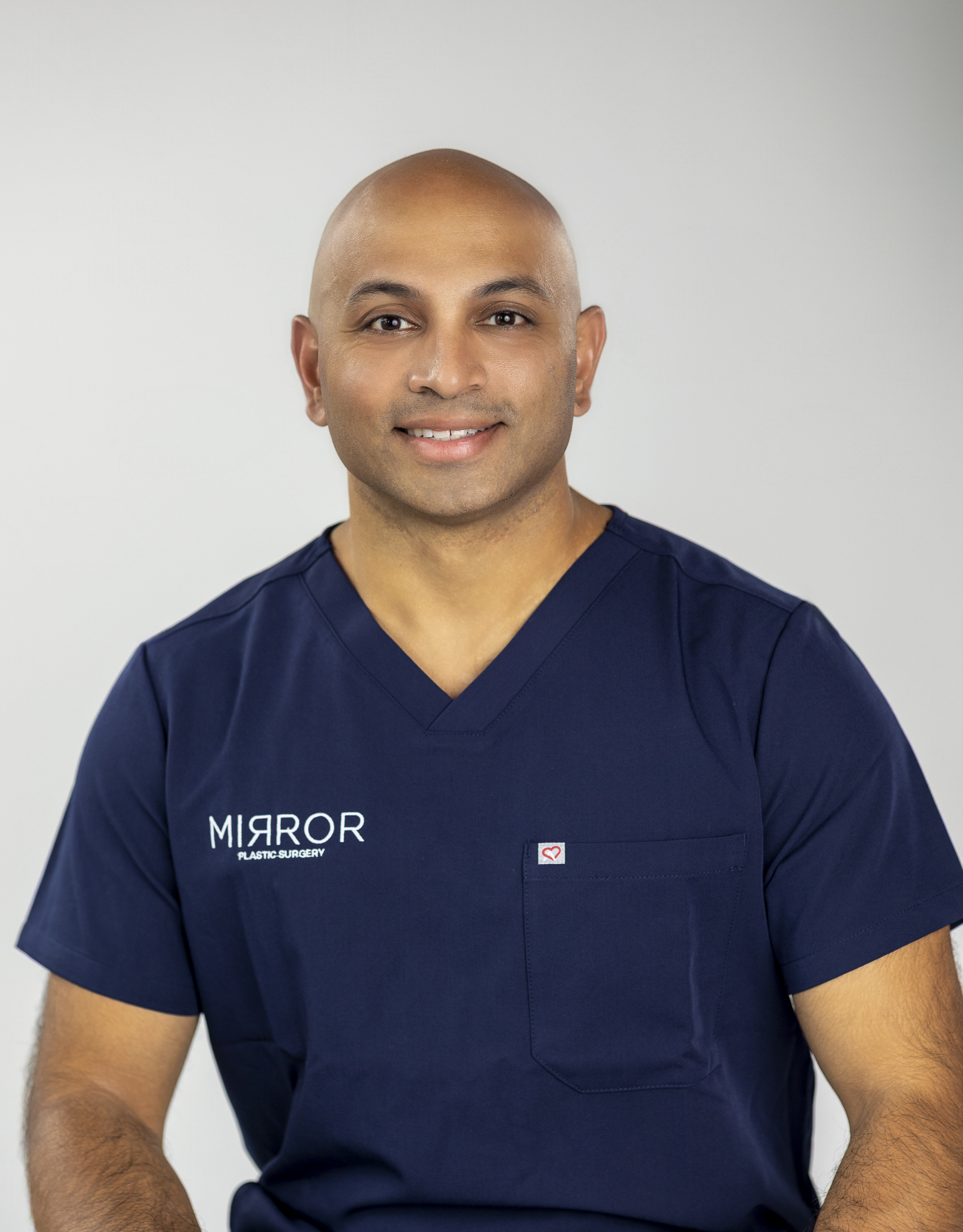
Written by: Dr. Akash Chandawarkar, Board Certified Plastic Surgeon, Mirror Plastic Surgery
Key Takeaways
- Premium concierge plastic surgery follows four measurable standards: 1–2 surgeries per day, physician-led consultations, board-certified anesthesiologist oversight, and coordinated private recovery support.
- High daily surgical volumes increase complication risk, while limiting procedures to one or two per day supports undivided clinical attention and safer outcomes.1
- Dr. Akash’s elite training at Harvard-MIT, Johns Hopkins, MEETH, and Stanford Biodesign, plus consecutive Newsweek recognition, creates a credential profile unmatched by other Tampa Bay practices.
- Structured recovery coordination, including private RN support and fly-in logistics, is built into pre-operative planning rather than left for patients to arrange on their own.
- Patients seeking the highest standard of safety and personalized care can schedule a consultation to experience concierge-level service firsthand at Mirror Plastic Surgery.
Executive Summary
Tampa Bay’s aesthetic surgery market spans high-volume clinics performing five to ten procedures daily and boutique practices that advertise concierge care. High-net-worth patients must verify that a practice’s daily operations match its marketing language. This report applies four evidence-based benchmarks to the Tampa Bay market and identifies Mirror Plastic Surgery as a local practice that satisfies all four criteria.
Start by discussing your goals with Dr. Akash in a physician-led consultation that covers every benchmark described in this report.
The Four Non-Negotiables of Premium Concierge Plastic Surgery
Regulatory bodies and clinical literature point to four standards that consistently separate genuine concierge care from volume-driven alternatives.
1. Daily surgical volume of 1–2 surgeries per day. High-volume practices often schedule five to ten procedures daily. At that pace, surgeon attention, anesthesia team focus, and operating-room resources are divided across multiple patients at once. Mirror Plastic Surgery limits its schedule to 1–2 surgeries/day. This structure keeps the entire clinical team focused on a single patient before, during, and after each procedure.
2. Physician-led consultations. The surgeon who performs the procedure must personally conduct the face-to-face consultation to preserve accountability and align the operative plan with real clinical findings. Delegating this step to a coordinator or sales representative is a recognized red flag. Mirror Plastic Surgery schedules consultations with Dr. Akash directly, covering anatomy, procedural rationale, risks, and realistic outcomes.
3. Board-certified anesthesiologist oversight. Informed consent, verified surgeon qualifications, and adherence to regulated facility standards form the non-negotiable pillars of perioperative patient safety. Mirror Plastic Surgery uses board-certified physician anesthesiologists, not nurse anesthetists working without physician supervision, for every surgical case.
4. Coordinated private recovery support. A review of more than 26,000 consecutive outpatient plastic surgery cases recommends post-operative monitoring in a nursing facility for patients undergoing combined procedures, longer operative times, or larger liposuction volumes. True concierge practices coordinate this infrastructure rather than leaving patients to arrange it independently, a standard Mirror Plastic Surgery builds into every surgical plan.
How Tampa Bay Practices Measure Against These Benchmarks
Most Tampa Bay providers meet one or two of the four criteria. A practice may employ a board-certified surgeon while still scheduling eight procedures daily, or offer a pleasant consultation experience while relying on a certified registered nurse anesthetist rather than a physician anesthesiologist. As established above, Mirror meets all four, and that consistency starts with the surgeon’s training foundation.
Surgeon Credentials: Fellowship Pedigree and Board Certification
Meeting the four concierge benchmarks requires a surgeon whose training prepared them to operate at that level. A 2026 survey of aesthetic surgery fellowship graduates found that fellows at one long-established program completed a median of 523 aesthetic cases, with facial aesthetics comprising the largest share of their subsequent practices. This finding shows how fellowship training shapes the depth of a surgeon’s procedural repertoire.
Dr. Akash’s training timeline exceeds the standard fellowship pathway at every stage:
- Undergraduate studies in Neuroscience and Nuclear Engineering at MIT
- Medical degree through the Harvard-MIT Division of Health Sciences and Technology (HST), graduating cum laude with Honors
- Seven-year integrated plastic and reconstructive surgery residency at Johns Hopkins University, including rotations at the R Adams Cowley Shock Trauma Center and the Curtis National Hand Center
- Aesthetic surgery fellowship at the Manhattan Eye, Ear and Throat Hospital (MEETH) / Lenox Hill Hospital, one of the most competitive programs in the country
- Biodesign Innovation Fellowship at Stanford University, training physician-innovators to identify unmet clinical needs and develop technological solutions
Dr. Akash is board-certified by the American Board of Plastic Surgery, holds hospital privileges for rare surgical complications, and has been named to America’s Best Plastic Surgeons 2025 (Newsweek) for two consecutive years. ABCS board certification for plastic surgeons requires completion of an ACGME-accredited residency plus an aesthetic fellowship meeting defined minimum case requirements, a bar Dr. Akash surpasses through his MEETH training alone.
Daily Surgical Volume and Patient Safety Data
Suitability decisions for cosmetic surgery should be evidence-based, documented, and protected from sales pressure, including assessment of medical history, psychological vulnerability, realistic expectations, and capacity to comply with recovery restrictions. High daily volumes compress the time available for this assessment at every stage of care.
Mirror Plastic Surgery’s 1–2 surgeries/day limit functions as an operational constraint that governs scheduling rather than a marketing slogan. Practices performing five to ten procedures daily divide surgeon attention, anesthesia team vigilance, and nursing resources across multiple simultaneous cases. The compounding effect on complication risk is measurable. Mirror Plastic Surgery also advises against combining too many procedures in a single session, consistent with evidence that stacking procedures exponentially increases complication rates. Robust recovery support becomes the natural next safeguard once volume and case complexity are controlled.
Recovery Support: Private Nursing and Fly-In Logistics
Out-of-town plastic surgery recovery programs increasingly emphasize pre-arranged infrastructure, such as vetted accommodations near the surgeon, post-op massage, transportation, and support services, rather than focusing solely on surgery booking. Mirror Plastic Surgery follows this model by planning recovery as carefully as the procedure itself.
For fly-in patients, Mirror Plastic Surgery coordinates recovery logistics around medical milestones rather than travel convenience. Board-certified plastic surgeons typically clear out-of-town mommy makeover patients for flights of two to three hours around day 7 to 10 post-op, with longer flights requiring clearance closer to day 10 to 14. Patients schedule all post-op appointments before booking return flights so travel timing follows medical clearance, not fixed itineraries.
Family members or friends, regardless of devotion, lack training to perform clinical wound assessment, interpret drain output, recognize early hematoma signs, manage multi-drug medication schedules, or make an escalation call to a surgeon at 2 or 3 AM. Private RN support fills this gap with clinical credentials that personal caregivers cannot replicate. Mirror Plastic Surgery integrates these services into pre-operative planning for patients whose procedures or medical histories warrant that level of oversight.
Discuss your fly-in logistics, recovery coordination, and personalized surgical plan directly with Dr. Akash during a dedicated consultation.
Questions to Ask and Hardest Recoveries: What Patients Should Know
A trustworthy aesthetic clinic provides a clear, itemized quote before treatment that includes consultation, anesthesia, the procedure itself, and any post-treatment follow-up visits, with any verbal discounts or promotional rates confirmed in writing. Patients evaluating Tampa Bay providers should ask five questions that together reveal whether a practice operates at a true concierge level.
Start with daily volume and ask, “How many surgeries does the surgeon perform on the day of my procedure?” That number determines whether you receive undivided attention or share clinical resources with several other patients. Next, verify who conducts your consultation, the operating surgeon or a coordinator, because only the surgeon who will operate can make accountable clinical assessments. Third, confirm whether the anesthesiologist is a board-certified physician, not a nurse anesthetist, since physician oversight represents a safety standard that separates concierge from volume-driven care. Fourth, ask what recovery coordination is included versus what you must arrange independently, because practices that leave logistics entirely to patients are not providing concierge-level support. Finally, clarify the after-hours complication protocol, since emergencies do not follow business hours and your access to the surgeon when something feels wrong becomes the ultimate test of a practice’s commitment.
The hardest recoveries, including tummy tuck, mommy makeover, body lift, and combined facial procedures, require the most structured post-operative infrastructure. Minimum stay requirements after plastic surgery range from 5–7 days for blepharoplasty to 14–21 days for tummy tuck or multiple combined procedures, with drain removal required before travel for any procedure involving drains. Mirror Plastic Surgery builds these timelines into the pre-operative planning process so patients understand recovery duration well before surgery dates are set.
Recovery-Partner Comparison Table
The table below compares structured private recovery services available to Tampa Bay and fly-in patients, highlighting that all four providers offer RN support while only services that coordinate directly with the operating surgeon can match protocols to the specific surgical approach rather than a generic template, a distinction Mirror Plastic Surgery prioritizes when vetting recovery partners. All figures are drawn from published provider information.
| Service | Private RN Hours | Fly-In Coordination | Surgeon-Specific Protocols |
|---|---|---|---|
| Aurum Recovery | 12-hour dedicated RN shifts | Luxury black car transport included in Essential package | Strict adherence to each surgeon’s post-operative protocol |
| Recovery Concierge | Packages of 4, 8, 12, or 24 hours; hourly vitals monitoring | Not specified | Follows surgeon-specific instructions; ISPAN-trained RNs |
| Beacon Concierge Nursing | Flexible RN shifts; drain, garment, and incision care | Greater Boston area; hotel or private residence | Procedure-specific protocols (BBL, breast aug, tummy tuck) |
| Aesthetic Aftercare | Tiered packages: 6, 8, 10, 24, or 48–72 hours | Surgical center pickup through recovery | Coordinates with operating surgeon’s post-operative plan |
Mirror Plastic Surgery coordinates directly with vetted recovery partners to ensure post-operative protocols reflect Dr. Akash’s specific surgical approach rather than a generic aftercare template.
Frequently Asked Questions
What makes Mirror Plastic Surgery different from other Tampa Bay plastic surgery practices?
Mirror Plastic Surgery operates on a concierge model defined by four measurable standards: a limit of one to two surgeries per day, consultations conducted personally by Dr. Akash, board-certified physician anesthesiologist oversight for every case, and coordinated private recovery support. Most Tampa Bay practices meet one or two of these criteria, while Mirror meets all four. Dr. Akash’s training timeline, detailed in the credentials section above, combined with two consecutive years on Newsweek’s America’s Best Plastic Surgeons list, creates a verifiable credential foundation that no other local practice currently matches.
How should I evaluate whether a plastic surgery practice is truly concierge?
Ask four direct questions before committing to any practice. First, how many surgeries does the surgeon perform on the day of your procedure? A genuine concierge practice caps this at one to two. Second, does the operating surgeon personally conduct your consultation, or is it delegated to a coordinator? Physician-led consultations remain non-negotiable in true concierge care. Third, is the anesthesiologist a board-certified physician? This distinction matters for safety oversight. Fourth, what recovery coordination is included in the practice’s standard of care? Practices that leave recovery logistics entirely to the patient are not operating at a concierge level regardless of their marketing language.
Can out-of-town or fly-in patients access Mirror Plastic Surgery’s concierge services?
Yes. Mirror Plastic Surgery serves fly-in patients from across the United States and coordinates recovery logistics around medical milestones rather than travel schedules. Pre-operative planning includes a discussion of minimum local stay requirements based on the specific procedure, post-operative appointment sequencing, and private recovery support options. Patients schedule all follow-up appointments before booking return flights so that travel timing is determined by surgeon clearance, not fixed itineraries. Dr. Akash’s consultation process, available in person or via a structured pre-visit, gives fly-in patients the same depth of assessment as local patients before any surgical commitment is made.
What are the hardest recoveries in plastic surgery, and how does Mirror Plastic Surgery support patients through them?
The most demanding recoveries involve combined procedures such as mommy makeovers, full body lifts, and complex facial surgeries including deep-plane facelifts. These cases involve longer operative times, multiple drain sites, activity restrictions spanning several weeks, and a higher baseline risk of complications if post-operative protocols are not followed precisely. Mirror Plastic Surgery addresses this by limiting daily surgical volume so the clinical team’s attention is undivided, by coordinating with board-certified physician anesthesiologists for every case, and by building recovery infrastructure, including private RN coordination and structured follow-up scheduling, into the pre-operative planning process rather than treating it as an afterthought.
Does Mirror Plastic Surgery perform non-surgical treatments under the same concierge philosophy?
Yes. Non-surgical treatments at Mirror Plastic Surgery prioritize long-term care over one-off procedures. Dr. Akash serves on advisory boards for companies developing technologies including Motiva for breast augmentation, AlloClae for adipose fillers, Avéli for cellulite treatment, and Radiesse for biostimulatory fillers. This role positions Mirror Plastic Surgery at the forefront of non-surgical innovation while maintaining the same evidence-based, anatomy-first philosophy that governs surgical care. Consultations for non-surgical treatments follow the same physician-led format, ensuring that every recommended treatment is grounded in the patient’s specific anatomy and long-term goals rather than a product quota.
Conclusion: Safer, More Natural Outcomes for High-Net-Worth Patients
Premium concierge plastic surgery functions as a measurable operational model defined by daily volume limits, physician-led consultations, anesthesiologist oversight, and structured recovery coordination, not a price tier or waiting-room aesthetic. Red flags in aesthetic consultations include pressure to commit immediately, guarantees of results, dismissiveness about risks, and inconsistencies between verbal claims and written consent documents. Sophisticated patients deserve objective criteria instead of marketing language.
Mirror Plastic Surgery satisfies every benchmark in this report. The training timeline and Newsweek recognition detailed throughout this report, along with the practice’s explicit 1–2 surgeries/day limit and physician-led consultations, are verifiable facts rather than claims. For Tampa Bay residents and fly-in patients who refuse to compromise on safety, credentials, or personalized attention, Mirror Plastic Surgery represents the evidence-based standard against which every other local option should be measured.
Schedule your consultation at Mirror Plastic Surgery’s St. Petersburg location and experience a Tampa Bay practice that meets every concierge benchmark.
1 Results may vary from person to person. Editorial content, before and after images, and patient testimonials do not constitute a guarantee of specific results.