
Written by: Ellie Pranckevicius, FNP-BC, Aesthetic Nurse Practitioner & Aesthetic Injector | Facial Restoration & Regenerative Injectable Specialist, Mirror Plastic Surgery
Key Takeaways on Long-Term Peptide Use
- GLP-1 receptor agonists like semaglutide and tirzepatide deliver substantial weight loss, yet many patients regain about 60% of lost weight within a year of stopping.1
- Non-GLP-1 peptide options, including GLP-3R compounded peptides, support muscle preservation and metabolic flexibility within supervised, multi-peptide protocols.
- Structured tapering with nutrition and behavioral support can reduce weight rebound after GLP-1 therapy, although some regain usually occurs.
- Lean-mass loss is a known risk of GLP-1 therapy. Growth-hormone secretagogues plus resistance training help protect muscle while targeting fat loss.
- At Mirror Plastic Surgery, patients receive lab-guided, personalized peptide protocols with ongoing monitoring. Schedule your consultation today to explore a sustainable weight-management plan.
Do You Have to Take Peptides Forever?
Many patients do not remain on GLP-1 medications long term. Persistence data from a 2026 cohort study of 33,607 commercially insured adults show that one-year adherence to semaglutide and tirzepatide has improved in recent years, yet a meaningful share of patients still discontinue within the first year.
For those who stop treatment, the consequences are well documented. In the STEP 1 extension trial, adults who stopped semaglutide after achieving a mean 17.3% weight loss regained 11.6 percentage points within 52 weeks, leaving a net loss of only 5.6% from baseline.1 The SURMOUNT-4 trial showed a similar pattern. Participants who withdrew from tirzepatide regained approximately 20 percentage points of body weight in the year after abrupt discontinuation.1
Clinicians use structured tapering to soften this rebound. Many obesity-medicine clinics apply gradual reverse titration for semaglutide, paired with nutrition follow-up, behavioral support, and monitoring during and after dose reduction.
Patients using medically supervised non-GLP-1 peptide protocols follow the same general principle. Ongoing maintenance, either through continued low-dose use or periodic cycling, is usually needed to sustain results. With a personalized stack, Ellie can adjust individual components based on lab data instead of relying on indefinite use of a single high-potency drug.
Comparing GLP-3R and Semaglutide for Long-Term Results
This comparison table summarizes average weight loss during treatment, documented regain after stopping, and lean-mass impact, using 2025–2026 data.
| Agent | Average Weight Loss (Active Treatment) | Regain Rate After Discontinuation | Lean-Mass Impact |
|---|---|---|---|
| Semaglutide (GLP-1) | ~12.9% (placebo-subtracted)1 | ~60% of on-treatment loss within 1 year1 | ~39% of weight lost is lean mass (STEP 1)1 |
| Tirzepatide (GLP-1/GIP dual) | 15–21% over 72 weeks depending on dose in adults without diabetes1 | Approximately 20 percentage points regained within 1 year post-discontinuation (SURMOUNT-4)1 | Lean mass loss observed (SURMOUNT-1). Nutrition and resistance training are recommended to help mitigate this effect. |
| GLP-3R (compounded, supervised) | Emerging data suggest weight loss comparable to the GLP-1 class, with a broader metabolic profile addressing insulin resistance and cardiovascular risk factors. Head-to-head trial data remain pending. | Large randomized trials on regain after GLP-3R discontinuation are not yet available. Without structured maintenance, patterns are expected to resemble other incretin-based therapies. | Early reports suggest a lower risk of muscle wasting than older GLP-1 formulations. Independent randomized confirmation is in progress. |
Retatrutide, a triple GLP-1/GIP/glucagon agonist, shows the highest weight-loss performance in current trials. In the TRIUMPH-1 trial extension, individuals with baseline BMI ≥35 on 12 mg retatrutide achieved up to an average of 30.3% body weight loss at 104 weeks1. This potency comes with tradeoffs. Roughly 18% of participants taking the highest dose discontinued treatment because of side effects in a Phase 3 trial. The 2026 Lancet review confirms the pattern seen in STEP 1 and other trials: weight regain commonly occurs if incretin-based treatment is discontinued, so strong on-treatment efficacy still requires a maintenance strategy.
GLP-3R compounding at Mirror Plastic Surgery offers a next-generation alternative. Patients often report fewer gastrointestinal side effects than with older GLP-1 formulations. Protocols can also address insulin resistance and cardiovascular risk factors and are integrated into a personalized stack instead of a single standalone drug.
Protecting Muscle While Losing Weight with Peptides
GLP-1 therapies can reduce lean body mass along with fat. The 2026 Lancet review highlights that substantial weight loss from incretin-based therapies can be accompanied by reductions in lean body mass, which makes muscle-preserving strategies essential.
Clinicians address this with a combined pharmacologic and lifestyle plan. Adequate protein intake and consistent resistance training form the foundation, since lean mass can represent a significant share of total weight lost on GLP-1 medications.
Within a supervised peptide protocol, growth-hormone secretagogues such as sermorelin and ipamorelin support natural growth hormone production and help maintain muscle. Ipamorelin produces significantly less cortisol and prolactin elevation than other secretagogues at doses that raise GH, which makes it a selective option for patients who prioritize muscle preservation while losing fat. BPC-157 supports muscle, tendon, and joint repair by addressing systemic inflammation, which helps patients train consistently.
A 2026 case series by Wong et al. found that after switching to reduced-frequency GLP-1 maintenance dosing, skeletal muscle mass remained stable while body fat continued to decline. These findings suggest that thoughtful dose adjustment can support muscle-preservation goals more effectively than always pushing to maximum doses.
Why Supervised Peptide Therapy Beats Online Sources
The unregulated online peptide market introduces risks that are separate from the medications themselves. Gray-market products often lack verified purity, so buyers have no reliable information about active ingredient concentration, sterility, or contaminants.
Medical supervision closes these gaps. At Mirror Plastic Surgery, Ellie Pranckevicius orders comprehensive lab panels, including thyroid, liver, kidney, diabetes markers, and hormone panels, before starting any weight-management peptide protocol. The practice sources peptides from providers with documented batch testing, and ongoing monitoring tracks metabolic markers, weight trends, and side-effect signals throughout treatment.
The 2026 Joint TOS/OMA/OAC Expert Guidance Statement supports individualized obesity care. NHS England’s 2026 interim commissioning guidance for tirzepatide also requires wraparound care and supervision. These standards highlight the level of active oversight that online sources cannot match.
Mirror Plastic Surgery’s Three-Phase Peptide Protocol
Mirror Plastic Surgery uses a clear three-phase structure for supervised peptide care.
- Phase 1: Lab-Guided Assessment. A 30-to-60-minute consultation with Ellie covers medical history, current medications, and existing lab results. If recent labs are unavailable, she orders new panels. This baseline defines the safest and most targeted starting point for the protocol.
- Phase 2: Active Weight-Loss Phase. Ellie initiates an individualized peptide protocol, which may include GLP-3R compounding, sermorelin or ipamorelin for muscle support, or a custom stack. Regular check-ins track weight, appetite, metabolic markers, and side effects. Protein targets and resistance training are built in from the beginning to protect lean mass.
- Phase 3: Individualized Taper or Stack Transition. As patients approach their weight-loss goals, Ellie shifts the protocol into maintenance. This stage may involve dose reduction, longer intervals between injections, or a transition to a different peptide combination. The 2026 Wong et al. case series showed that reduced-frequency maintenance dosing can sustain or improve metabolic outcomes, which supports this tailored approach. Lab monitoring continues throughout.
Ellie remains available by text or scheduled telemedicine visits during all three phases. This continuity reflects concierge-level care rather than a high-volume or anonymous online model.
Start your personalized assessment today
Important Factors in Long-Term Peptide-Based Care
Several key factors shape long-term outcomes with peptide-based weight management.
- Regulatory status. Many peptides, including GLP-3R compounding, are not FDA-approved for weight management. FDA-approved GLP-1 agents such as semaglutide and tirzepatide have the strongest regulatory backing and the most extensive trial data. The ACP’s 2026 living clinical guideline recommends that clinicians and patients discuss harms and benefits, costs, values, and preferences when selecting medications for overweight or obesity. The same shared-decision framework applies to non-FDA-regulated peptides, making informed, supervised choices essential.
- Individual variability. Genetics, baseline metabolic health, diet, activity level, and adherence all influence results. The 2026 TOS/OMA/OAC guidance includes health-related quality of life among important outcomes in obesity treatment, recognizing that individual response, not population averages, defines clinical value.
- Nutrient monitoring. The 2026 Asian Indian consensus notes that individuals on GLP-based therapies can develop nutrient deficiencies. Periodic micronutrient monitoring should therefore accompany any weight-management peptide protocol.
- Combination with lifestyle and surgery. The 2025 expert consensus on GLP-based therapies concludes that long-term peptide-based obesity care requires multidimensional support that integrates nutrition and body-composition monitoring rather than medication-only approaches. For some patients, this multidimensional framework extends to surgical interventions that address body-contouring or reconstructive goals that peptides alone cannot meet. In those cases, Ellie’s metabolic protocols can be complemented by Dr. Akash Chandawarkar’s surgical expertise.
Explore your personalized combination protocol
Meet Your Peptide and Aesthetics Practitioner
Ellie Pranckevicius, FNP-BC, leads peptide therapies and non-surgical aesthetics at Mirror Plastic Surgery. She holds a Bachelor’s in Health Science from Boston University, completed an aesthetics licensure program, and earned both her Bachelor’s and Master’s in Nursing from the University of South Florida. Her clinical foundation includes four years in the Neuroscience ICU at Tampa General Hospital, where she developed deep expertise in physiology, metabolic health, and complex patient management. She later practiced at a high-end medical spa in Boston, gaining a dual command of aesthetic assessment and advanced clinical science that she now applies to peptide care.
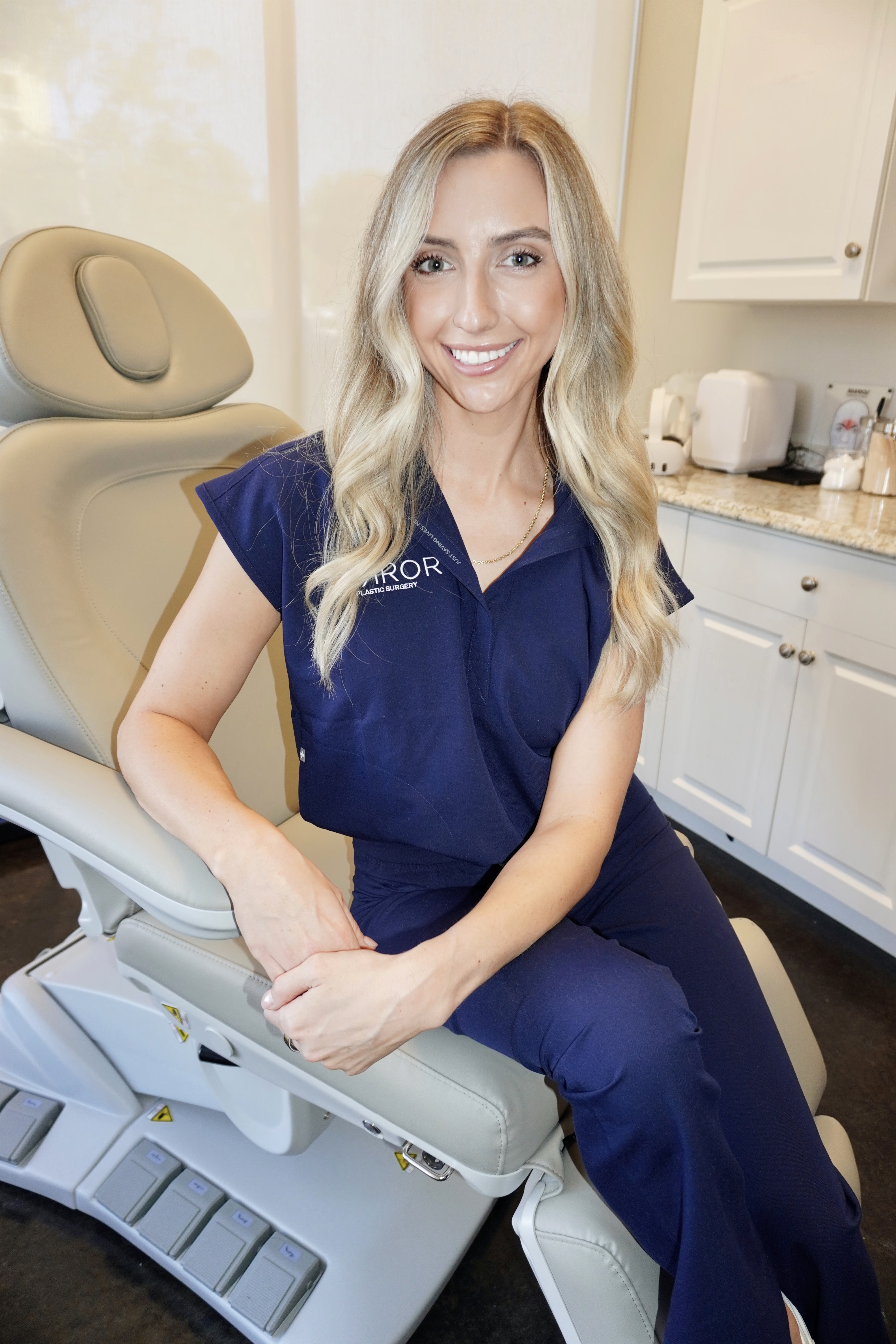
Ellie’s approach centers on education and transparency. She explains the physiology behind each protocol in clear language, tells patients when a therapy is not yet necessary, and prioritizes durable outcomes over quick fixes. Every protocol is built from lab data and individual health history rather than a standard template. When a patient’s goals call for surgical expertise, Dr. Akash Chandawarkar, who is Harvard-educated, Johns Hopkins-trained, and fellowship-trained at Manhattan Eye Ear & Throat Hospital, provides complementary care within the same practice.
Schedule your consultation with Ellie
Frequently Asked Questions
Are the peptides offered at Mirror Plastic Surgery FDA-approved?
Many peptides used in clinical wellness settings, including GLP-3R compounding and growth-hormone secretagogues such as sermorelin and ipamorelin, are not FDA-approved for weight management. FDA-approved GLP-1 agents such as semaglutide and tirzepatide carry the most extensive regulatory backing. At Mirror Plastic Surgery, every peptide protocol begins with a comprehensive lab assessment and medical history review. The practice sources peptides from providers with documented batch testing for purity and accurate dosage, which is a critical safeguard for compounds that do not have formal FDA indications. Ellie reviews regulatory status, supporting evidence, and the individual risk-benefit profile of each recommended therapy before treatment starts.
What happens to my weight if I stop taking peptides?
As discussed earlier, weight regain after stopping peptide therapy is common because the physiological drivers of weight, including appetite hormones, metabolic rate, and insulin sensitivity, do not permanently reset during treatment. Mirror Plastic Surgery addresses this risk with a structured Phase 3 taper or stack transition that may include dose reduction, longer intervals between doses, or a shift to a maintenance peptide combination. Ongoing lab monitoring and weight tracking guide these adjustments, while lifestyle reinforcement such as protein targets, resistance training, and behavioral tools supports more durable results.
Will everyone see the same results with peptide therapy?
Results vary widely from person to person.1 Genetics, baseline metabolic health, coexisting conditions, diet, activity level, sleep quality, and adherence all influence outcomes. Population-level trial averages, such as 11% weight loss for semaglutide or 16% for tirzepatide, represent mean values across large groups, and individual results can fall well above or below those numbers. This variability explains why Mirror Plastic Surgery performs in-depth lab panels and a detailed medical history review before recommending any protocol. A custom peptide stack built from individual data is more likely to match a patient’s specific physiology than a standardized prescription.
Can peptides be combined with resistance training or dietary changes for better results?
Peptides work best when paired with nutrition and training. Expert consensus consistently recommends adequate protein intake and resistance training to minimize lean-mass loss during any weight-management peptide protocol. Peptides such as sermorelin and ipamorelin support natural growth hormone production, which aids muscle retention and complements the anabolic stimulus of strength training. BPC-157 helps address musculoskeletal inflammation that can limit training capacity. Ellie incorporates nutritional targets and activity guidance into every weight-management plan and treats lifestyle modification as a core element, not an optional add-on.
How does Mirror Plastic Surgery’s approach differ from buying peptides online?
Online peptide sources usually provide no medical supervision, no lab-guided dosing, and no verified quality control. Without third-party batch testing, consumers cannot confirm active ingredient concentration, sterility, or the absence of contaminants, which creates safety concerns independent of the peptide itself. Mirror Plastic Surgery sources peptides only from providers with documented batch testing, performs comprehensive lab panels before and during treatment, and offers direct concierge access to Ellie via text or telemedicine throughout the protocol. This level of individualized oversight, including monitoring for nutrient deficiencies, metabolic changes, and side effects, is not available through unregulated online channels.
1 Results may vary from person to person. Editorial content, before and after images, and patient testimonials do not constitute a guarantee of specific results.
Peptide therapy is intended for wellness and optimization purposes and is not prescribed to diagnose, treat, cure, or prevent disease unless specifically stated. Many peptides are not FDA-approved and may be used off-label. Some have limited long-term safety data, with a potential for unknown risks, complications, or desensitization with prolonged use.